Intimate gathering benefits LTCC music program

An afternoon of live music, food and drink is designed to raise money for the Lake Tahoe Community College Music Department to be able to buy instruments.

The Lake Tahoe Community College Foundation and David Brock Music are putting on the Sept. 29 3pm event at a private residence in Stateline.

Music will include performances by LTCC faculty members Mark Williams (tenor and piano), Anna Helwing (soprano and piano), and Jon Smart (guitar). Additional music will be performed by co-host David Brock (organ and piano).

Advance reservations are required and seating will be limited to 40 people. The ticket price is $100 per person. Bring or mail a check for $100 per guest payable to the LTCC Foundation/Music Department, c/o Peter Bostic, LTCC Foundation Office, 1 College Drive, South Lake Tahoe, CA 96150 or purchase tickets at the college bookstore or online. A street address and directions for the event will be provided with the purchase of a ticket.

For more information, call Peter Bostic at (530) 541.4660, ext. 245.


Debt remains from Nev. Fire Safe Council

By Andrew Doughman, Las Vegas Sun

Firefighters and small businesses in Nevada and California have a simple request for the federal government.

Pay up.

They cleared brush, chopped down trees, and then submitted invoices in expectation that they’d be paid soon after. But that was more than two years ago, and they’re collectively still owed $2.56 million.

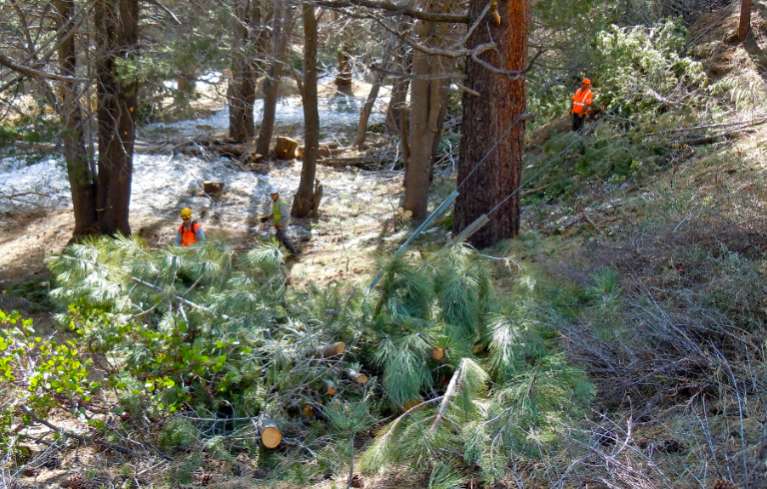
Lake Christopher in South Lake Tahoe has trees removed in 2011. Photo/LTN file

Lake Christopher in South Lake Tahoe has trees removed in 2011. Photo/LTN file

Meanwhile, lawmakers such as Sen. Harry Reid, D-Nev., have decried the role of climate change in the wildfires ravaging the West and Sen. Dean Heller, R-Nev., has called for more fire prevention funding in a year when such funds seem to have dried up.

But those who have already performed the work are hoping that their simple request to be compensated for it will become a priority for the government.

“It’s work completed, and I haven’t been paid, so yeah, it’s not good,” said James Piercy, owner of Arbor Care, a Lake Tahoe small business that did some of the brush work in the Tahoe basin. “For the last two years, we called them on a weekly basis following up in what the status of payment was going to be and they strung us along forever, and this year we just pretty much gave up on trying to call them.”

Read the whole story


Truckee River Day needs volunteers

The 18th annual Truckee River Day is Oct. 20.

Volunteers have their choice of half- or full-day restoration projects with different levels of difficulty. There will be 12 to 15 projects including trail relocation in Johnson Canyon, native plantings to help restore areas in the Coldstream Canyon floodplain, moving barriers in Martis Lake to eradicate aquatic weeds, and conducting surveys of invasive New Zealand Mud Snails in the Truckee River.

Projects start at 9am or 11am and finish between 2 and 3pm.

The River Fair will be from 1-4pm at Granite Flat Campground. This community event is presented in partnership with Sierra Watershed Education Partnerships and will feature environmental activities for kids and adults, and the annual fish release at 3pm. Food will be available for purchase from Red Truck.

Everyone is invited, not just volunteers.

To participate in this year’s restoration projects, call (530) 550.8760, ext. 1 by Oct. 11.


Truckee path receives $1.5 mil. grant

Truckee has received a $1.5 million grant for the Highway 89 Mousehole Pedestrian and Bicycle Improvement Project.

Mousehole project was one of 52 transportation projects in 37 states selected to receive a total of approximately $474 million in TIGER (Transportation Investment Generating Economic Recovery) funding.

The Mousehole project is apedestrian-bicycle railroad undercrossing that will connect trails east of the existing Highway 89 Mousehole tunnel.

To date, funding from several sources has been committed to the development and construction of this project, which is estimated to have a total project cost of almost $12 million.

The project design is underway and the town anticipates putting the project out to bid next summer, with construction starting in 2015.


Author to be in Kings Beach signing books

Elk Grove author R.J. Machado De Quevedo will be signing books Sept. 13 from8:30am-5pm at the North Tahoe Event Center, 8318 N. Lake Blvd., Kings Beach.

In the supernatural mystery thriller “The Deceiver” college student Melanie Bishop finds herself stranded across the globe and thrust into the middle of an otherworldly battle that’s been raging since the dawn of time. Melanie makes a decision that will change her life forever. But choosing to accept her role and her destiny doesn’t mean the battles are over. It means the war has just begun.

For more information, call 877.727.0697 or email michelle@keymgc.com.


State honoring S. Lake Tahoe disabled advocate

By Kathryn Reed

Becoming an advocate for the disabled wasn’t something David Kelly aspired to be. There is not one defining moment that led him on this 30-plus year mission.

“I saw what I thought was people being treated unfairly,” Kelly said. That was in South Lake Tahoe in the early 1980s. The 70-year-old has been on a mission ever since to fight for equality.

He’s never received a dime for his efforts – of which he is extremely proud.
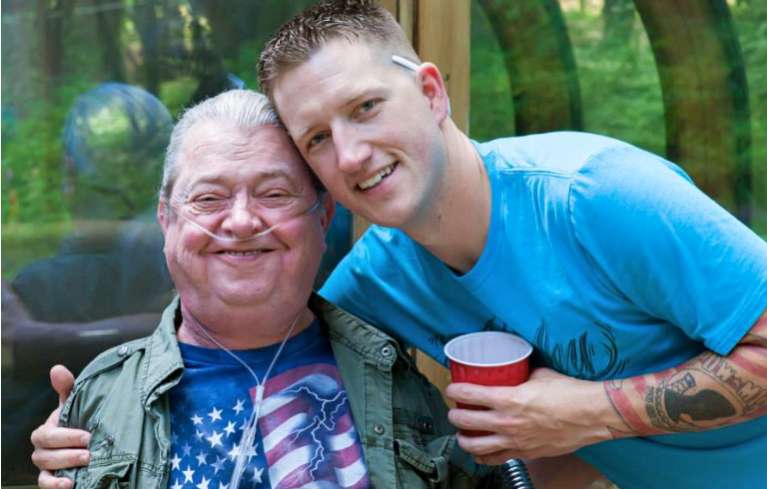
David Kelly with his son, Jason. Photo/Provided

David Kelly with his son, Jason. Photo/Provided

“I do it because it needs to be done,” Kelly told Lake Tahoe News.

Today, the state of California is recognizing his efforts. The South Lake Tahoe resident has been named one of the state’s 50 Notable People in the Disability Community. The Department of Rehabilitation on its website is honoring the 50 people with their profile being the main feature for one week, and then remaining there. Kelly’s week starts Sept. 12.

People selected are “individuals who inspire others by their advocacy, leadership, accomplishments, achievements, and/or dedication to the disability movement and to employment, independence, and equality of Californians with disabilities,” according to the state website.

John Pillsbury, who works for the Department of Rehabilitation and is the secretary of the Tahoe Area Coordinating Council for the Disabled, of which Kelly chairs, nominated Kelly.

“I am continuously moved by his honesty and courage to move on issues to help our residents,” Pillsbury told Lake Tahoe News. “He has a done a great job. He does the right thing.”

Kelly has post polio syndrome. He has far exceeded the life expectancy many doctors told him he would have. He is a fighter. And “no” is not a word in his vocabulary even when people say it to him.

Former South Lake Tahoe City Councilmember Kathay Lovell remembers having an immediate connection with Kelly. In large part this had to do with Lovell’s dad having polio and never thinking of him as handicapped – the word that was in vogue when she was growing up.

“I find David to be an incredibly astonishing man. He has accomplished many things in our community,” Lovell told Lake Tahoe News. “He has persevered to do projects that by anyone else’s imagination were probably impossible to do.”

Kelly is the man behind Tahoe Senior Plaza, Kelly Ridge (named in his honor), and Sky Forest Acres. These three developments are affordable housing for seniors and those with disabilities.

“A lot of people were involved, but without Dave they would not have gotten off the ground,” Pillsbury said.

Kelly is not done. He is working on creating another affordable housing complex in the city.

Other goals are to develop a shelter and build transitional housing for the disabled.

He will be in Minden on Friday because he received a call from a concerned citizen about the plans to change things at the courthouse there that could affect the disabled.

A couple phone calls a week come in from people asking for his advice or help with matters. While he is not an attorney, he knows the law, people to call and how to make change happen.

“My biggest gripe with politicians is they make up laws and not one of them is disabled. They don’t see what is really needed,” Kelly said. “They have all the best intentions in the world, but half of them are not needed or are useless laws. They should have rethought how the law is used. It makes it harder on businesses, harder on recreation and harder on everybody.”

Kelly was one of the first people to criticize disabled attorney Scott Johnson when he came through town suing businesses. He said that is not the way to bring about change. It’s the way to make money.

Besides being chairman of TACCD, Kelly is also on several other boards related to the disabled.

And while Kelly has received numerous awards in his lifetime, to be named one of the top 50 advocates for the disabled in California is the crowning achievement. He said he is humbled to be in the company of the 49 others.

Opinion: Collaboration needed regarding Syria

By Jimmy Carter

The only way to be assured that Syrian chemical weapons will not be used in the future is not through a military strike but through a successful international effort.

Regardless of the postponed congressional vote regarding the use of military force, other actions should be taken to address the situation in Syria, including an urgent effort to convene without conditions the long-delayed peace conference the United States and Russia announced in May. A resolution in the U.N. General Assembly to condemn any further use of chemical weapons, regardless of perpetrator, would be approved overwhelmingly, and the United States should support Russia’s proposal that Syria’s chemical weapons be placed under U.N. control. A military strike by the United States is undesirable and will become unnecessary if this alternative proposal is strongly supported by the U.N. Security Council.

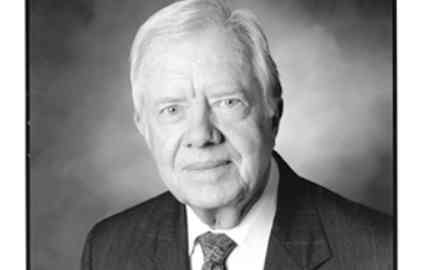
Jimmy Carter

Jimmy Carter

If fully implemented in dozens of sites throughout Syria, this effort to secure the chemical weapons would amount to a cease-fire, with a large U.N. peacekeeping force deployed. In the best of circumstances, this could lead to convening the Geneva peace conference, perhaps including Iran, that could end the conflict.

Some have predicted catastrophic consequences to the credibility of President Obama and our country if Congress were to reject his request for approval of military action against the Assad regime in Syria. These dire predictions are exaggerated. It is no reflection on the president that he expressed his decision clearly to our citizens and to the world, properly sought congressional concurrence and has done his utmost to implement his decision by securing necessary votes in the House and Senate. All U.S. presidents have been forced to endure highly publicized rejections of major proposals concerning both domestic and international issues. This is to be expected in any democratic nation, as has occurred recently in Britain and might soon happen in France.

It requires a lot of political courage to risk a public rejection, especially when the decision is believed to be right but known to be unpopular with the public, many allies and top military leaders. There is a special problem when the Security Council is divided on an issue the United States considers crucial and when our NATO allies refuse to take a stand. It is well known that some of the president’s political adversaries will not support any conceivable proposal he might make, that dovish members of Congress are likely to oppose military action and that some congressional hawks want strong and sustained action to change the course of the Syrian civil war. Going ahead with limited military action after a rejection by Congress would amplify many of these critical voices.

The president has wisely refused to answer media questions about how he would proceed if his efforts failed in Congress. If and when a vote takes place, there will be many factors involved, but the assumption of compliance is best because supportive votes would be lost by the president saying he would ignore a negative vote. Many legislators will be looking, at least in part, for popularity with constituents who strongly oppose using force. For those who are eager to see a strike against Syria, a presidential pledge to attack without approval would make it possible to achieve their objective without alienating voters back home. And for those who oppose military action but are willing to alienate constituents because of loyalty to the president, his pledge to ignore a congressional decision might lessen their commitment to him.

Despite all of the back and forth, some facts about the situation are generally accepted. Incontrovertible proof has been presented by Secretary of State John Kerry that there has been horrific use of chemical weapons in Syria. The international community should take concerted action to discourage or prevent a repetition of this crime. Although Security Council condemnation of Syrian President Bashar al-Assad is not possible because of division among world leaders about who is responsible for the atrocity, and a strong condemnatory resolution is likely to be vetoed, the ultimate goal of deterring future use of weapons of mass destruction would be greatly enhanced if the major powers were unanimous in their commitment.

Many members of Congress are still in a quandary concerning the ultimate consequences of an attack. The Syrian regime has had adequate time to intermingle war materiel and civilians, and more noncombatants in Syria will be vulnerable to U.S. missiles and bombs. Any casualties among them will be exaggerated and exploited to bring additional condemnation on the United States within the Arab world. The effect of limited airstrikes would be transient at best, but a sustained and robust action is more likely to incur a deeper and more lengthy U.S. involvement and result in additional waves of refugees.

Despite the claims and counterclaims that have surrounded the chemical attack near Damascus on Aug. 21 and an unknown number of earlier attacks, the issues are now clearly defined. The main goals of condemning the use of these outlawed weapons and preventing their further use can still be realized by concerted international action.

Jimmy Carter is former president of the United States.


Overweight kids learning about willpower

By Bonnie Rochman, Wall Street Journal

A recent research program is testing an intriguing hypothesis: Can overweight children be taught to eat less by putting their favorite dishes right in front of them?

Kerri Boutelle, a professor of psychiatry and pediatrics at UC San Diego’s School of Medicine, calls her willpower-enhancing technique “cue exposure.” The aim is to train the brain of overweight and obese children to reduce the desire to eat when they’re not actually hungry. And since many impulses to eat come from triggers in our environment, such as getting an urge to snack while watching TV, interrupting such automatic responses can help children cut down on mindless eating.

Boutelle, working with children between the ages of 8 and 12, recently completed a four-month study with 40 obese kids and conducted an earlier eight-week study involving 36 overweight children. The results: Children seem capable of learning to subdue their food cravings, but it isn’t clear how long the willpower lasts after the experiments are over.

In the studies, the participants are given a favorite food, such as a brownie, and told to rate their craving on a scale of 1 to 5—1 means “I can resist this,” and 5 is “I’m dying for it,” Boutelle says. The children are instructed to put the brownie down, wait 30 seconds and rate their cravings again. Another rating is recorded after the participants sniff the brownie, then again after taking a small bite and later after staring at it for five minutes. Finally, Boutelle directs the children to throw the brownie away.

Read the whole story


Kiwanis putting on SeptOberfest event

SeptOberfest is Sept. 26 at MontBleu in Stateline.

This is a fundraiser for Kiwanis Club of Tahoe Sierra. The event starts at 6pm.

Tickets are $35 in advance — call (530) 318.9197. Tickets are $40.

The event includes a German buffet, and beer and wine tasting all night. There will also be silent auction.


‘Patient dumping’ results in lawsuit against Nev.

By Laila Kearney, Reuters

SAN FRANCISCO – The city of San Francisco is suing the state of Nevada for busing patients, many of them indigent and mentally ill, from a public hospital in Las Vegas to the Bay Area without plans for continued care.

The lawsuit, filed on Tuesday in San Francisco Superior Court, seeks $500,000 in reimbursement of public funds claimed to have been used to care for the out-of-state patients as well an injunction barring Nevada from dumping more patients in California in the future.

“Homeless, psychiatric patients are especially vulnerable to the kind of practices Nevada engaged in, and the lawsuit I’ve filed today is about more than just compensation. It’s about accountability,” San Francisco City Attorney Dennis Herrera said in a statement about the lawsuit, filed as a class action but not yet certified as such by the court.

The state-run Rawson-Neal Psychiatric Hospital in Las Vegas came under fire in April, after the Sacramento Bee reported that hospital staff had given as many as 1,500 patients one-way bus tickets to California and 46 other states between 2008 and 2013.

Read the whole story