TAP looking for festival vendors

Tahoe Arts Project is hosting the second annual Holiday Festival on Nov. 16 from 10am-5pm at South Tahoe Middle School’s multipurpose room.

This event will feature arts and crafts vendors, entertainment, and fun and games for the entire family. Admission is free.

Vendors are still being sought. For more info, go online. For questions, call (530) 542.3632.


Free pesticide use class for Nevadans

University of Nevada Cooperative Extension, in partnership with the Nevada Department of Agriculture, is offering a free workshop Oct. 2 to train people throughout the state how to properly handle and use pesticides.

The workshop is meant for certified applicators, people who regularly handle pesticides as part of their jobs, such as farmers, ranchers, park employees and groundskeepers.

The training will be at the Washoe County Cooperative Extension office, 4955 Energy Way, Reno and will be made available via videoconference to 12 other Cooperative Extension locations throughout Nevada, including Battle Mountain, Carson City, Caliente, Elko, Ely, Eureka, Fallon, Gardnerville, Hawthorne, Lovelock, Winnemucca and Yerington. The training runs from 7:30am-4:30pm.

The Oct. 2 workshop will help those who have not yet been certified to prepare for the next Certified Pesticide Applicator exam. .

Limited seating is available for the Oct. 2 workshop. Preregister by the Sept. 27 deadline by contacting Hefner at (775) 336.0247 or hefnerm@unce.unr.edu.


Festival expands beyond just Kokanee

The U.S. Forest Service Lake Tahoe Basin Management Unit and the Tahoe Heritage Foundation will host the Fall Fish Festival on Oct. 5-6 at Taylor Creek.

Formerly the Kokanee Salmon Festival, the Fall Fish Festival will focus on the variety of fish species that live in Lake Tahoe and its rivers. In addition to the Kokanee, these species include the federally threatened Lahontan cutthroat trout and little-known smaller fish, such as speckled dace.

The weekend events feature trail runs, children’s activities, and educational and streamside programs. Proceeds from T-shirt sales and the trail runs benefit Forest Service conservation education programs in the Lake Tahoe Basin.

The festival will run from 10am-4pm each day.

There will be a special appearance by Smokey Bear.

Speaking of bears, some black bears in the area have learned to feed on the spawning salmon, and visitor center staff routinely encounter unsafe situations as guests get too close to the bears.

The Fall Fish Festival and Oktoberfest at Historic Camp Richardson Resort occur the same weekend, so the parking lot at the visitor center fills quickly. The Forest Service encourages attendees to bike, walk or take public transportation to the event.

For more information and a complete schedule of activities, call (530) 543-2674 or go online.

The Taylor Creek Visitor Center is located three miles north of South Lake Tahoe on Highway 89.


S. Tahoe balances budget without using reserves

By Kathryn Reed

For the first time in five years South Lake Tahoe’s budget is balanced without using reserves, cutting staff or cutting services.

The $1 million ongoing deficit has been wiped off the books at least for the 2013-14 budget that will be presented to the City Council on Sept. 17.

“It’s because we have a different budget philosophy,” City Manager Nancy Kerry told Lake Tahoe News. “I was able to strip $1 million from the budget.”

A thorough scrubbing of the budget has been done. Budgeting is now based on expected expenses, not expected revenues. For example departments that every year budgeted $5,000 for supplies but only spent $2,000 will now get a line item of $2,000 for supplies.

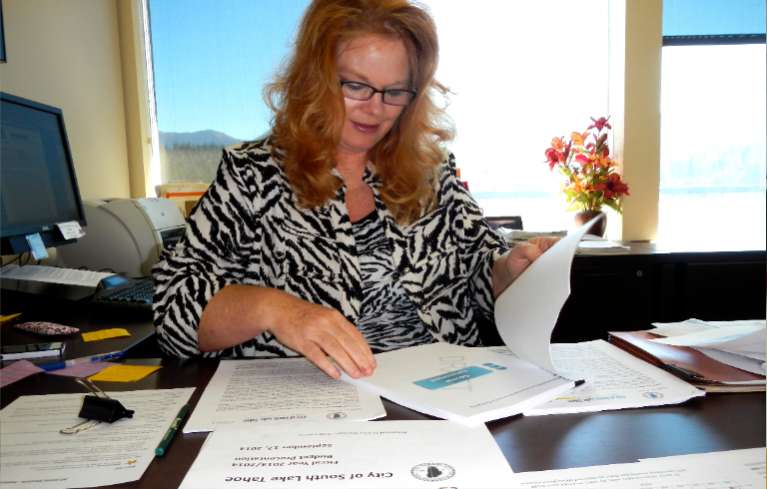
South Lake Tahoe City Manager Nancy Kerry reviews budget documents. Photo/Kathryn Reed

South Lake Tahoe City Manager Nancy Kerry reviews budget documents. Photo/Kathryn Reed

While these excesses in the past were carried over each year in the unassigned excess reserve account, it also meant the budget did not reflect true costs. This excess is on top of the 25 percent reserve the council established in 2004. (In 2003 the city had zero dollars in reserves.)

There is still a balance in this excess reserve account. The city has allocated $700,000 from it to buy a building and vacant parcel in the industrial area with the goal of moving the fleet yard on Rufus Allen Boulevard there. This in turn would provide more recreation opportunities in that area. The property is in escrow.

The city’s total budget is about $90 million, with approximately $30 million being the general fund. The general fund is where payroll and the day-to-day bills get paid.

About $20 million – or 64 percent – of the general fund pays for salaries, pensions, health care and other benefit costs. Police services cost the most, taking up 27 percent of the general fund, fire at 15 percent, and public works-general government at 8 percent.

Kerry said it makes sense for the city’s greatest expense to be people because the city is in the business to provide services to the public and it takes people to provide those services.

While revenues are doing better, the approach is to be conservative and have a true midyear review in March. If there is “extra” money, then the council can decide if it wants to hold onto it or spend it.

The council will be asked to start thinking now about what it would want to do if it even had a small pot of cash like a couple hundred thousand dollars to spend in six months. Public input will be sought how to spend that money.

Not everything costs millions of dollars. A few years back the city spent about $30,000 to put in the popular dog park.

Hal Cole and Brooke Laine are on the council’s budget committee. Their ideas include dedicating money to improve the look of Highway 50, putting a percentage toward recreation infrastructure, and money for roads.

“We need to look at our core values and needs,” Laine told Lake Tahoe News.

She would rather have the discussion early about what to do with “extra” money than wait. This allows for a more thoughtful discussion.

What Kerry is proposing is to change the way the city operates. Instead of spending everything in the good years and struggling in the lean years, be prudent every year. This also means using the public’s money for public projects – this includes infrastructure, recreation and then people.

“Employees need to realize that investing in the public is investing in themselves,” Kerry said.

That doesn’t mean the employees aren’t being considered. In the budget is money for a full time fire chief, after having funded this position on a part-time basis the last fiscal year.

Property, hotel and sales taxes are the city’s three main revenue sources.

Property taxes have taken a serious hit as the value of housing has gone down. However, the median price of a single-family residence in South Lake Tahoe has increased 23 percent from July 2012 to July 2013. The city is forecasting 1 percent to 2 percent increases in property taxes through 2018.

While occupancy has been higher at South Shore hotels for the past two summers, national indicators are that the economy is still sluggish. That is why the city is not banking on transient occupancy taxes dramatically increasing. But they are on an upward momentum. The budgeted increase is 1 percent for a total of $4.85 million.

The expenses that are nearly crippling the city are what it has to pay for employee pension and health benefits. And that doesn’t even take into account the city’s $53.6 million unfunded pension liability or $45 million unfunded health care liability.

The city pays $3.6 million a year into the California Public Employee Retirement System. As of Oct. 1, 2012, all employees pay their share of PERS – which ranges between 7 percent and 9 percent of their salary.

Public entities are not allowed to change the formula for current employees. This must be done by the Legislature. Change is slow, and what change has occurred affects new hires who have not been part of CalPERS before. And it is not reasonable for entities to abandon CalPERS.

Kerry is proposing the adoption of a pension trust fund to help balance the good and bad investment years. This philosophy has a lot to do with seeing the employer rate jump 155 percent from 2004 to today.

“The real problem is health care,” Kerry said.

There are 785 people receiving health benefits from the city. Only 170 of them are active employees. Half of that total number never worked for the city. This is because years ago a city manager thought it a good idea to give spousal benefits to retirees that continued even after the employee died.

The city is self-insured. This means it pays all the medical bills. It comes out to more than $4 million a year. (This is 13 percent of the general fund.) Employees don’t pay any sort of monthly premium for their health care. They have a $750 deductible with a maximum annual payment of $4,000.

To begin to solve the problem the city is having Medicare-eligible retirees use Medicare supplements as their secondary insurance rather than the city’s plan as their secondary insurance; the goal is early retirees who are not 65 will be able to have health plans through the Affordable Health Care Act; and the city will look at options that could include having a provider and not being self-insured.

Kerry warns that without those three changes the city may have to only offer catastrophic health care benefits.

—-

This is a copy of Kerry’s budget message that will be discussed Tuesday at the council meeting, which starts at 9am at Lake Tahoe Airport.


Being grateful is changing the world

By Mandy Kendall

It’s hard sometimes when things don’t go quite the way you expected or wanted to remember the things that are going the right way or are just as you wanted.

Even though it might not seem like it at times, many believe we are more fortunate now than at any other time in history. Whether you believe that or not, it is never a bad time to be grateful for what we do have.

Studies are showing that time and time again an “attitude of gratitude” has many benefits.

Mandy Kendall

Mandy Kendall

According to the American Psychological Association, teenagers who are grateful have “a more positive outlook on life, are better-behaved and more hopeful than their less grateful peers.” The Journal of Happiness Studies quoted in 2010 that “grateful high school students have higher GPAs than their non-grateful counterparts.”

The Journal of Applied Psychology: Health and Wellbeing discovered that subjects who journaled what they were grateful for just before going to bed, fell asleep faster and stayed asleep longer. A study in the American Journal of Cardiology found that appreciation and positive emotions are linked with changes in heart rate variability” and “may be beneficial in the treatment of hypertension and in reducing the likelihood of sudden death in patients with congestive heart failure and coronary heart disease.”

David Steindl-Rast is a monk who gave the closing talk at the 2013 TEDGlobal. He said, “Gratefulness can change our world in immensely important ways. If you’re grateful, you’re not fearful. If you’re not fearful, you’re not violent. The grateful act out of a sense of enough, not scarcity, so they are willing to share. Being grateful does no less than change the power balance of life. It’s a nonviolent revolution that even revolutionizes the concept of revolution. Grateful people are joyful people; the more joyful people are, the more we’ll have a joyful world.”

So, it seems that being grateful does much more than give you that warm fuzzy feeling. Considering all the potential physical, mental and global health benefits of gratitude I thought I would devote this week’s Qwik-e tips to an Attitude of Gratitude and how to practice one.

Just think — about what you are truly grateful for. It could be simply the fact that it is a beautiful day and you are glad to be alive. You could get really specific and think of people, places, feelings or experiences. Let your imagination run wild.

Tell someone — what you are grateful for, or even tell them that you are thankful they are in your life.

Start or end your day — by writing down at least one thing a day that you are grateful for. Studies have shown this boosts mental and physical health.

When things are not quite going to plan — just pause a moment, take a deep breath and think of something you really appreciate. It can really help to put things in perspective.

If you feel that something is missing in your life — or there is something that you must have, just take some time to remember and appreciate what you have already.

If you encounter something, or someone, that is negative — take a moment to find something positive about it, or them.

Pay a compliment daily — to help someone, and you, feel appreciation.

Pay your gratitude forward — if you really appreciate something, help others enjoy it too. (If you truly love your morning coffee, maybe pay for the coffee of the person behind you in line.) Find a way to donate some time, money or skills to a cause that gives other people something to be grateful for.

Until next time.

Mandy Kendall operates Health Connective in South Lake Tahoe, which aligns wellness seekers with their ideal wellness provider. If you have questions, would like some advice, or would like to request some Qwik-e tips on any health and well-being topic, drop her an email at connect@healthconnective.com or keep an eye out on Lake Tahoe News for regular Qwik-e tips on how to make healthy changes one Quick and Easy step at a time.


Letter: Barton employees help Bread & Broth

To the community,

Over 100 diners lined up for the salmon dinner that was served by Bread & Broth at St. Theresa Church Grace Hall on Sept. 9. Families, seniors on limited incomes, working poor and those living outdoors were thrilled with the generous portions of cheesy baked potatoes, stirred fried vegetables, green salad and fruit salad that were served with the salmon.

To show their appreciation, the dinner guests applauded enthusiastically when Tahoe Orthopedics & Sports Medicine Group was introduced as the evening’s Adopt A Day sponsor.

“Volunteering is very rewarding for anyone who participates in an Adopt A Day event,” said Dr. Steve Bannar.

Bannar, Heather Crnich, Rhonda Fischer and Barb Nicholas represented the Tahoe Orthopedics & Sports Medicine Group as they worked alongside Bread & Broth volunteers. They packed “give away” bags, worked the serving line and dessert tables and cleaned tables, stacked chairs and vacuumed the eating area at the end of the evening. The four volunteers from TOSM took their role as B&B helpers seriously and did a great job of helping throughout the evening.

“This is a great organization worthy of the community’s support,” added Bannar.

What makes Bread & Broth so successful in feeding the hungry of South Lake Tahoe are our donors, sponsors and volunteers. B&B would like to acknowledge and thank the Tahoe Orthopedics & Sports Medicine Group and their staff for their monetary donation and volunteer support.

To help B&B as a donor or sponsor, please contact me at (530) 542.2876 or carolsgerard@aol.com.

Carol Gerard, Bread & Broth


Snippets about Lake Tahoe

boys and girls club• Fernando Vargas is now the executive director of Lake Tahoe Boys & Girls Club.

• Lake Tahoe Resort Hotel’s $5 million upgrade of the South Lake Tahoe Property is expected to be completed in mid-December.

• Dickson Realty’s 7,048-square-foot building on Donner Pass Road in Truckee is expected to be completed in August 2014.

• The Rite Aid Foundation gave a $3,200 grant to Boys & Girls Club of Placer County.

• Katharine Miller is now the branch manager at the South Lake Tahoe library.


Caregiver abuse cases puts Calif. patients at risk

By Ryan Gabrielson, Center for Investigative Reporting

California regulators routinely have conducted cursory and indifferent investigations into suspected violence and misconduct committed by hundreds of nursing assistants and in-home health aides – putting the elderly, sick and disabled at risk over the past decade.

In 2009, the state Department of Public Health quietly ordered its investigators to dismiss nearly 1,000 pending cases of abuse and theft – often with a single phone call from Sacramento headquarters. The closing of cases en masse came after officials determined their swelling backlog had become a crisis.

Four years later, state investigators are opening and closing investigations into suspected abuse without ever leaving their desks, the Center for Investigative Reporting and KQED have found. In some instances, caregivers who have sexually assaulted or abused patients have retained their licenses and moved to other facilities.
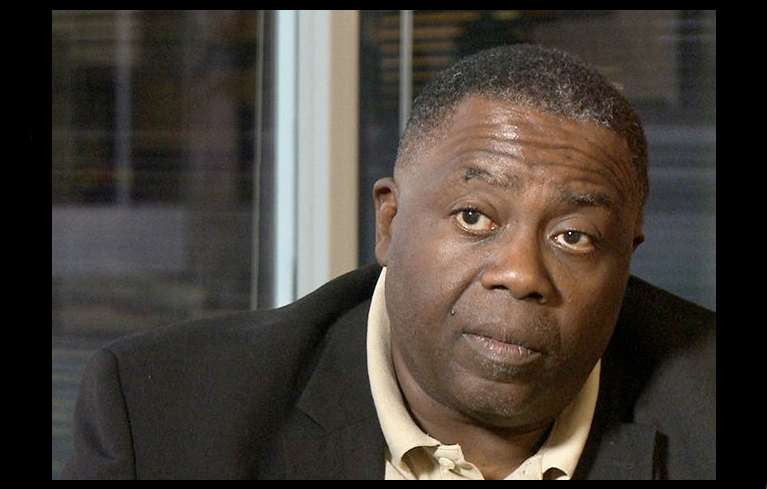
 “I would tell anybody, do not count on the government taking care of you,” said Brian Woods, former director of the Department of Public Health’s West Covina office. Credit: Adithya Sambamurthy/The Center for Investigative Reporting

Brian Woods, former director of the Department of Public Health’s West Covina office, says don’t count on the government.
Photo/Adithya Sambamurthy/Center for Investigative Reporting

An estimated 160,000 nursing assistants and in-home health aides are employed throughout California. These workers – all regulated by the Department of Public Health – are certified to work in hospitals, nursing homes, mental health facilities, developmental centers and private homes.

Since the mass dismissal of cases in 2009, the overwhelming majority of allegations of abuse and misconduct have been closed without action. The state also has dramatically reduced the number of license revocations for aides suspected of abuse and misconduct.

And it mostly has stopped referring cases to the California Department of Justice for possible prosecution of crimes, according to state prosecutors and the Department of Public Health.

In addition, the department’s Southern California investigations office, which once had 11 full-time examiners, is nearly empty. Internal documents show abuse cases from Los Angeles, San Diego, Santa Barbara and Riverside mostly now go to Sacramento headquarters. There, investigators rarely receive approval from supervisors to visit nursing and group homes where abuse and neglect have been alleged.

For some who have worked in the system, the state has abandoned its duty to protect the vulnerable.

“I would tell anybody, do not count on the government taking care of you,” said Brian Woods, former director of the Department of Public Health’s West Covina office.

From 2004 to 2008, the state’s health regulators accumulated more than 900 cases in Southern California, including alarming allegations that involve suspicious deaths.

“I was appalled,” said Marc Parker, who was the public health department’s investigations chief for much of the past decade. “There were hundreds and hundreds and hundreds of unassigned, uninvestigated complaints in file drawers.”

Then, on top of their normal workload, investigators were ordered by supervisors in Sacramento to begin clearing the backlog at a rapid pace, until they were nearly all dismissed by 2011. On average, cases had lingered for two years before they were cleared.

Little is known about theses cases because they were not fully investigated. But internal case logs kept by the state in Sacramento offer a chilling, yet faintly detailed outline of allegations – including suspicious deaths, severe injuries, numerous sexual assaults, egregious neglect and theft of belongings.

One log entry lists a caregiver who allegedly “hit, peed on and seduced” a patient, but does not list a facility, city or county. Another notes a nursing assistant at an unnamed Los Angeles facility who was accused of exposing himself and asking for oral sex from a resident. Both caregivers still are working at the facilities.

More than 230 log entries simply read “physical or sexual abuse” and little else beyond a date and county where the alleged incident took place.

Public health regulators have all but stopped alerting the California attorney general’s office of patient deaths alleged to involve abuse. The attorney general has an entire division – the Bureau of Medi-Cal Fraud and Elder Abuse, which has 41 lawyers – that specializes in prosecuting such cases. By law, health regulators are required to report all suspected crimes to the division.

From 2007 to 2009, the department referred a total of 88 deaths to state prosecutors for investigation into elder abuse, according to figures from the attorney general. During the following three years, that number dropped to 14.

Regulators sent two death cases to prosecutors in 2011 and three in 2012.

One case that has remained unsolved is the suspicious death in 2006 of Elsie Fossum, a 95-year-old woman who lived at Claremont Place Assisted Living in Southern California. Fossum was a teacher and librarian in eastern Los Angeles County for most of her life and moved into Claremont two years before she died.

Although she had been found severely injured on the floor of her bedroom, the California Department of Public Health dismissed it as an accidental fall from bed. The department closed the abuse allegation in February, classifying it as unsubstantiated.

With injuries to her mouth so severe that she stopped eating and drinking, Fossum died of dehydration in a hospice three weeks after she was found injured. A nursing assistant at the facility who was caring for Fossum at the time of her injuries – and who had made repeated disparaging remarks about the elderly woman, according to state records – quit soon after the injuries and took a similar job at a nearby facility.

Now, seven years after Fossum died – and following questions from reporters – the Los Angeles County Sheriff’s Department has opened a criminal inquiry into the death. The case remains unsolved, and the nursing assistant, Sabrina Bengoa, has not been charged with a crime. She did not respond to requests for comment by phone or at her home.

“When you’ve got agencies looking at it, you figure they’re going to find something if something’s there,” said Jim Fossum, Elsie’s nephew, who lives in Brainerd, Minn. “Not that they’d just put the thing away and forget about it, essentially.”

Records show the public health department rarely takes action even in the face of damning evidence. Under the administrations of Govs. Arnold Schwarzenegger and Jerry Brown, the number of nursing assistants and in-home health aides removed from the job for crimes against the sick and vulnerable has declined sharply.

In 2006, the department revoked or denied a caregiver’s certification in 27 percent of complaints it investigated. That figure shrank to 7 percent three years later as regulators eliminated the backlog.

Meanwhile, the number of cases closed without action has soared. Statewide, public health investigators in 2012 finished 81 percent of their cases without taking action against an accused caregiver, up from 58 percent in 2006.

The Department of Public Health is fixing how it handles allegations against nursing assistants, Anita Gore, an agency spokeswoman, said in a prepared statement. “Organization and operation of the Investigations Section, including Southern California, are currently being addressed.”

State officials said they can’t explain why there has been a steep drop in the number of abuse deaths forwarded to law enforcement.

“We don’t understand that decline in numbers,” said Dr. Ron Chapman, director of the Department of Public Health. “It’s very concerning to me, and we’re looking into it.”

Chapman said the backlog of cases was “inexcusable (and) should not have occurred.”

“We’ve made lot of progress since then,” he said. “So today, any complaints that come in, they get screened within 48 hours, and we’re not building a backlog today.”

Mark Zahner – California’s chief prosecutor on elder abuse cases until August – said he had not asked the Department of Public Health why there are now so few cases. In an interview in April, he said he did not believe state regulators were withholding death cases.

“It would be weird,” Zahner said, “because I don’t see how that would do anybody any good.”

Nevertheless, Paul Greenwood, head of the San Diego County district attorney’s elder abuse unit, said public health regulators long have refused to provide his office cases to prosecute. The drop in abuse death cases sent to state prosecutors is shocking, Greenwood said, and worrisome.

“I don’t know how many nursing homes there are in California or how many deaths a year there are in the facilities, but the number is going to be huge,” Greenwood said. “And to think there are only two suspicious deaths, I just frankly cannot believe that.”

Phoning it in

The Department of Public Health is in charge of keeping dangerous people out of the health care business.

In a well-run department, when there is an allegation of abuse, inspectors immediately should open a case, visit the facility, collect law enforcement records, interview people at the scene and make a determination about what happened. If they uncover abuse, the department is required to revoke the certification of any accused caregiver and report the matter to law enforcement and the attorney general’s office.

Parker, the former investigations chief, said his boss, Evon Lenerd, wanted complaints closed efficiently and quickly. Lenerd ordered Parker’s staff to conduct nearly all investigations by phone, without visiting care facilities where abuse allegations have arisen.

But Parker said investigators find the most severe problems when they walk through health care facilities. They often find new cases that haven’t been reported.

“Good investigators have big eyes,” said Parker, who retired in December 2011.

Closing cases by phone is “just ridiculous,” he said. “They’re missing huge amounts of information. The job is not being done.”

Listen to an insider’s view

Marc Parker, the public health department’s former investigations chief, talks about closing cases over the phone.

Lenerd, head of the professional certification branch, declined several interview requests.

The Department of Public Health denies directing investigators to close cases primarily by phone. “If preliminary phone calls and other reviews during a desk investigation determine a field component is warranted, then a field investigation is conducted,” wrote Gore, the department spokeswoman.

She wrote that investigations have been delayed due to a “change in resources.”

In July, the California State Auditor criticized the Department of Public Health for being slow to investigate allegations of misconduct at state institutions for the developmentally disabled.

Also, the department never has released a report detailing its enforcement activities, which state law mandates. Therefore, the auditor wrote, “the effectiveness of its enforcement practices, particularly those related to developmental centers, remains uncertain.”

Investigative shortcomings, however, extend everywhere Californians receive care.

Internal state records and court files obtained by the Center for Investigative Reporting show the Department of Public Health has failed repeatedly to strip nursing assistants of their certification until years after confirming they had harmed patients.

Despite evidence of serious crimes, one of the least-active offices is the department’s southern branch, established to pursue allegations from Bakersfield to the Mexican border. Just off Interstate 10 in the suburbs east of Los Angeles, the investigations section is on the ninth floor of an office tower encircled by chain restaurants and retail.

The branch once employed 11 full-time investigators. It appeared deserted when reporters visited on a weekday afternoon in late July. No investigators were present; rows of cubicles sat empty. Another visit months earlier revealed a single person working in the office.

Chapman, the public health director, said there are supposed to be investigators working in Southern California. “As far as I know, there’s staff down south,” he said.

Even when employees filled the office, Southern California cases received little attention for years. A department examination in 2010 – written by Kim Krazynski, then the branch’s new investigations director – detailed disarray. She compared the branch to an engine to explain the problems’ severity.

“If a single factor is malfunctioning, the engine will misfire and organizational performance will suffer,” Krazynski wrote. “In the case of the Southern Region Office, all components that make up the engine are either malfunctioning or are completely absent.”

One misfire came in March 2008, when nursing aide Jason Joslin physically abused one or more patients at a Riverside County health care facility, according to internal case logs. The department opened an investigation immediately. Details of the case were not available.

No action followed until November 2011, when the state spiked Joslin’s California certification and decided to add his name to the federal exclusion list, maintained by the U.S. Department of Health and Human Services’ inspector general to alert the public to bad caregiver.

The revocation came too late.

Joslin moved to Seattle in March 2010 and quickly obtained a temporary nursing assistant license from Washington state, regulatory records show. By August of that year, Joslin was fully credentialed in his new state.

Joslin did not respond to written interview requests sent by email and social media.

His license is active through mid-January 2014, and his record appears clear. The Department of Public Health has not yet included Joslin on the exclusion list.

Criminal convictions

Not even criminal convictions ensure swift action.

On Oct. 5, 2007, a 59-year-old female patient was lying awake on her bed at the Del Rio Sanitarium in Bell Gardens when Ricky Diocampo assaulted her. Diocampo, a nursing assistant, pushed his hands under the woman’s clothes to fondle her breasts and genitals, investigation records show.

The patient is diagnosed with schizoaffective disorder, a debilitating mental illness that causes delusions and mood swings. Because of her mental health condition, she cannot legally consent to sex.

On that October day, a third person was in the bedroom. Another employee stood in a corner on a ladder, painting ceiling trim, when he made eye contact with Diocampo. His presence didn’t deter the nursing assistant, records show.

Seven weeks after the assault was witnessed, the state Department of Public Health assigned the case to investigator Reginald Mitchell, who also was the investigator on the Elsie Fossum case.

A year passed before the attorney general’s office filed three criminal charges against Diocampo, who was arrested and spent four days in jail. Two of the counts – for sexual assault and battery of an institutionalized person – require convicts to register as a sex offender. The third count was for abuse of a dependent adult.

Diocampo, under an agreement with the Los Angeles County district attorney’s office in 2009, pleaded guilty to the patient abuse charge. He received two years of probation and wasn’t designated a sex offender.

Diocampo remained an authorized California nursing assistant and home health aide for three months after his conviction, when his certificate expired. Such a deficiency can be explained to employers as a paperwork error with the state.

The criminal proceedings did nothing to spur Mitchell, the public health investigator, to strike Diocampo’s certification, according to department case logs and email correspondence.

Mitchell did not check on the sexual assault case for almost two years after Diocampo pleaded guilty. A new supervisor took over the Department of Public Health’s office in West Covina in early 2011 and asked Mitchell for an update on his oldest open investigations – nine cases from 2006 and 2007.

Regarding the Diocampo case, Mitchell responded in a March 23, 2011, email that he was “waiting on a return call back” from the attorney general’s office.

The state revoked Diocampo’s certification five weeks later.

No significant regulatory hurdles blocked Diocampo from working with vulnerable patients during the three-and-a-half-year investigative delay. It is unknown whether he was employed at health care facilities during that period.

He was convicted of domestic violence in Los Angeles County in April 2012. Diocampo did not respond to calls and notes left at his home requesting an interview.

Diocampo is now on the federal exclusion list. Prospective employers quickly would learn that Diocampo is barred from working at health care facilities, should he apply in the future.

The public health department’s handling of these cases is unacceptable, said Parker, the former investigations chief. However, he added, with investigators today working cases primarily by phone, many abuses by nursing aides likely are closed with no action or never discovered.

Parker’s 2011 retirement after two decades with the department was an earlier exit than intended, he said, but he couldn’t abide by cursory reviews of violent crimes.

“I couldn’t stop what was happening,” he said, “and I couldn’t protect the public.”


Calif. set to raise minimum wage to $10/hour

By David Siders, Sacramento Bee

A bill to raise the minimum wage in California to $10 an hour raced forward at the Capitol on Wednesday, with Democratic lawmakers poised to approve the measure and Gov. Jerry Brown announcing he would sign it.

The increase in the state’s minimum wage from $8 to $10 by 2016 would be the first since 2008, when it was raised by 50 cents to $8.

“The minimum wage has not kept pace with rising costs,” Brown said in a statement. “This legislation is overdue and will help families that are struggling in this harsh economy.”

The Democratic governor’s announcement came after Assembly Bill 10, by Assemblyman Luis Alejo, D-Watsonville, was amended Wednesday to raise the minimum hourly wage to $10 sooner than previously proposed. The bill is moving through the Legislature as lawmakers near the end of session this week.

The measure would raise the minimum hourly wage from $8 to $9 on July 1, 2014, and then to $10 on Jan. 1, 2016. Under an earlier version of the bill, the minimum hourly wage would not have reached $10 until 2018.

Read the whole story


Party to focus on readying garden for winter

The Tahoe Area Sierra Club and Aspen Hollow Nursery are having an Autumn Garden Party on Sept. 19.

There will be wine, food and lots of tips to get your garden ready for winter.

The event is at the South Lake Tahoe nursery from 4:30-7pm.

Cost is $10 at the door.