Opinion: Eric Holder’s drug war deception

By Steve Kubby

While some are celebrating the recent remarks by attorney general Eric Holder at the American Bar Association convention in San Francisco, a more sober analysis is deeply disturbing.

It’s been eight months since Holder promised a decision on the federal response to Colorado and Washington legalizing weed. Instead of an answer, Holder offers us Drug War Lite. No let up in DEA raids, no mass release of nonviolent pot prisoners, no relief for medical marijuana growers or dispensaries, no end to arrests and prosecutions, but lighter sentences for some.

Holder even publicly acknowledged and praised U.S. attorney for Northern California, Melinda Haag, just prior to his remarks about the unintended consequences of the drug war, suggesting that the war against medical marijuana will continue unabated.

Steve Kubby

Steve Kubby

Haag has been an outspoken opponent of medical marijuana and has personally targeted some of the best run dispensaries in her jurisdiction, such as Harborside, Berkeley Patients’ Group and Richard Lee’s Blue Sky. Meanwhile, the Obama administration is only in its fifth year and yet it has conducted a record 170 DEA raids, resulting in 61 Federal indictments. Compare that to George W. Bush’s eight-year legacy of 40 DEA raids, resulting in one federal indictment.

“How dare the attorney general come to San Francisco and talk about drug policy and completely fail to address medical cannabis,” Steve DeAngelo, proprietor of what’s been billed as “the world’s largest pot shop,” told the Huffington Post. “Of all the reforms that should be made, certainly the first should be to get medicine into the hands of people who are suffering.

“Given that the entire country has been waiting for the administration to clarify their position on Colorado and Washington, I think the attorney general’s comments this morning were just a side-stepping of the central issue,” DeAngelo said.

Holder also observed that “too many people of color have been arrested.” Under the Obama administration, a larger percentage of people of color have been arrested than in Apartheid South Africa. How many more? According to the Prison Policy Initiative, incarceration rates of Apartheid South Africa, at its racist worst, are no contest. Under the Obama administration, the current incarceration rate is five times greater for people of color than at anytime in South Africa.

According to legal scholar Michelle Alexander, more African Americans are under correctional control today than were enslaved in 1850. Alexander’s book, “The New Jim Crow”, offers a devastating account of a legal system doing its job perfectly well. We have simply replaced one caste system (Jim Crow) for another one (imprisonment, parole, detention) that keeps the majority of minorities in a permanent state of disenfranchisement. Nothing in Eric Holder’s speech offers any real fix to the our current Jim Crow justice system.

Frankly, it’s embarrassing how major reform organizations are celebrating this phony “victory.” Until this Jim Crow justice system is scrapped and until cannabis is removed as a controlled substance, any talk about legal reform is just more of the same old lies and government deception.

Steve Kubby is a resident of South Lake Tahoe.


Baby boomers packing on the pounds

By Anita Creamer and Phillip Reese, Sacramento Bee

In her professional life, Sacramento public relations executive Kassy Perry has long represented health organizations trying to combat California’s obesity problem. In her personal life, she has struggled with weight loss, trying with little success to drop the 30 pounds she gained after age 50. Today, at 52, she’s active and athletic. But the weight won’t melt away.

She feels embarrassed that she hasn’t lost the weight, she said, and she’s frustrated with the often simplistic approach weight-loss advocates take.

“It’s easy to say people need more education,” Perry said, “like they don’t know not to have a box of doughnuts and a gallon of juice first thing in the morning.

“We know better. It’s not just that people are ignorant.”

Across the nation, the number of baby boomers who are overweight or obese continues to climb, and as a group, they have hit middle age much heavier than the previous generation. Almost three of four people ages 49 to 67 – the baby boom generation – are overweight or obese in the four-county Sacramento region, according to a new survey from the UCLA Center of Health Policy Research.

Read the whole story


Researchers study why sudden cardiac arrest occurs in morning

By Huffington Post

Sudden cardiac arrest — when your heart stops functioning because of an electrical disturbance, which can lead to death if not treated immediately with CPR or defibrillation — is known to occur more often between the hours of 6am and 10am. But why?

According to new research, it could have something to do with levels of a protein called KLF15, which regulates electrical activity in the heart.

Dr. Mukesh Jain of Case Western Reserve University and colleagues found that people with heart failure tend to have low levels of this protein. Plus, they found in mice that this protein seems to be the link between circadian rhythm — the body’s internal clock — and sudden cardiac arrest.

“Sudden cardiac death due to this electrical instability causes an estimated 325,000 deaths annually in the United States alone,” Jain said in a statement. “That includes the three out of four heart disease deaths in people aged 35-44. In all too many cases, there is no second chance. The first event is the last event. Our research points the way toward possible ways of easing that toll — new drugs that could reduce that risk, for example.”

Read the whole story


USFS, Coke agree to watershed protection deal

By Tammy Webber, AP

CHICAGO — The U.S. Department of Agriculture and Coca-Cola signed a five-year agreement Friday to restore watersheds that have been damaged or altered by development, wildfires and agriculture as part of an initiative to slow runoff and replenish groundwater on federal lands.

Such efforts are increasingly important to corporations and farmers who rely on water and to tens of millions of people whose drinking water originates in the national forest system, Agriculture Secretary Tom Vilsack said. But federal budget cuts and the wide scope of the problem have the USDA turning to partnerships with nonprofit groups and corporations for help.

“We need to look creatively at ways to leverage our resources or attract outside resources,” said Vilsack, who along with Coca-Cola Americas President Steve Cahillane will announce the partnership at the Midewin National Tallgrass Prairie outside of Chicago. A wetland at the 18,000-acre site is being restored by removing old agricultural drain tiles that divert almost 14 million gallons per year into waterways — and eventually down the Mississippi River — rather than allowing it to soak back into the ground.

It’s one of six projects that Coca-Cola has helped fund through a pilot program with the USDA’s U.S. Forest Service over the past two years, said Chris Savage, assistant director of the agency’s Watershed, Fisheries and Wildlife office. Others included restoring a wetland in the Sierra Nevada Mountains that helps supply water to San Francisco and restoring the landscape along Colorado’s South Platte River that was devastated by fire a decade ago.

Under the new agreement, the company and the Forest Service will work with two nonprofit foundations — the National Forest Foundation and the National Fish and Wildlife Foundation — to identify projects on federal lands. Corporate funding will go through the foundations, which also contribute money to the projects, officials said. There is no specific amount committed to the projects, but Vilsack said he expects “millions” will be spent.

Coca-Cola will emphasize projects that can be done fairly easily and improve resources in areas where the company withdraws water for production, said Bruce Karas, the company’s vice president of environment and sustainability for North America.

“Water stewardship is a key focus because … it’s in every product,” Karas said, adding that the company has pledged by 2020 to replenish as much water as it uses. The company has worked with universities and other organizations in the past, but partnering with the USDA could help it get the most from its investment because national forest lands often are the headwaters for important watersheds, Karas said.

The importance of restoring watersheds can’t be overstated, especially with climate change leading to weather extremes such as flooding and drought — and potentially more frequent and larger fires — at the same time manufacturers, residents and farmers increasingly compete for water, Vilsack said.

That’s particularly true in the West, he said, where wildfires have stripped the land of trees and other vegetation that once helped absorb water. The land, he said, “hardens like cement so rain runs off in a torrent” with ash, sludge and debris that makes its way into rivers and reservoirs. What’s more, the drinking water for about 60 million Americans originates in the national forest system.

“It’s about the quantity of water and availability,” he said.


Designers sought for Festival of Trees & Lights

The Barton Foundation is looking for tree designers for this year’s Festival of Trees & Lights, Dec. 4-8.

Each year, the festival presents about 13 designer trees for festival participants to vote on and bid on in order to raise money for the annual cause. This year the festival will benefit cardiology services at Barton.

Professional and new designers, creative types and artists are wanted.

For more info, contact Sara Conrad at sconrad@bartonhealth.org or (530) 543.5909.


National parks try to attract more diverse visitors

By Kirk Johnson, New York Times

LA PUSH, Wash. — Thrusting out into the Pacific Ocean, Olympic National Park can feel like a lost world, with its verdant forests, violent surf and cloud-shrouded peaks.

But to the four women who hiked down to the sand one recent afternoon, there was an added element of strangeness: race.

“We’ve been here for two days, walking around, and I can’t think of any brown person that I’ve seen,” said Carol Cain, 42, a New Jersey resident of Dominican and Puerto Rican roots, who was zipped up tight in her hooded, dripping rain jacket.

The National Park Service knows all too well what Cain is talking about. In a soul-searching, head-scratching journey of its own, the agency that manages some of the most awe-inspiring public places is scrambling to rethink and redefine itself to the growing number of Americans who do not use the parks in the way previous — mostly white — generations did.

Only about 1 in 5 visitors to a national park site is nonwhite, according to a 2011 University of Wyoming report commissioned by the Park Service, and only about 1 in 10 is Hispanic — a particularly lackluster embrace by the nation’s fastest-growing demographic group.

Read the whole story


Climate change warning issued at Tahoe conference

By AP

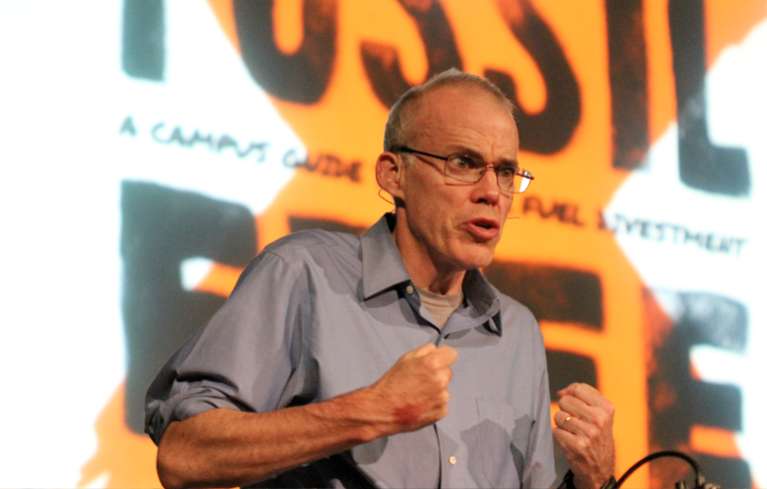
Author Bill McKibben has opened a Sierra Nevada conservation conference with a call for a “coordinated, global” effort to deal with climate change.

McKibben, in a keynote address at the Sierra Nevada Alliance’s annual conference in South Lake Tahoe, said change being made on the local level to deal with climate change will do little good unless it’s accompanied by change on a global level.

“Scientists are quite clear that we will raise the temperature 4 to 5 degrees in the course of this century on our current trajectory,” he said. “If that happens, then we can’t have civilization in the places and ways we’ve had them.”

Bill McKibben

Bill McKibben

The three-day conference, which began with McKibben’s speech Friday, also features a session on the impact of climate change on Western wildfires as well as workshops and field trips.

The alliance consists of over 85 member conservation groups that work to protect the Sierra.

“This year marks the Sierra Nevada Alliance’s 20th anniversary, and we are celebrating all our great work protecting and restoring the Sierra at this year’s conference,” said Joan Clayburgh, executive director of the alliance.

McKibben is founder of 350.org, an international movement aimed at solving the climate crisis with representatives in some 190 countries. He also is author of “The End of Nature” and other books and articles on climate change.

The activist said his group plans to stage 145 events in 25 states across the country on Sept. 21 to “draw the line” against the Keystone XL oil pipeline, which would carry oil derived from tar sands in western Canada to refineries along the Texas Gulf Coast.

Opponents are demanding that President Obama reject the pipeline, saying it would carry “dirty oil” that contributes to global warming.

Many business and labor groups support the 1,700-mile pipeline as a source of jobs and a step toward North American energy independence.

“At this point, 70 to 75 percent of Americans understand that global warming is very real, and the need to do something about it,” McKibben said. “The trick at this point is not to convert the other 25 percent. The fight is to get those who do know what’s going on as active and engaged as possible.”


Money is not the answer to happiness

By Doug Vermeeren

Although we live in the richest and most advanced society the world has ever known, many of us say we need more money in order to be happy.

Even some of those in the top percentile of earners often feel like they don’t have enough money.

The math is simple: More money does not equal more happiness. It’s our attitude toward money, not the amount, that influences our happiness the most.

Happiness researchers Elizabeth Dunn and Michael Norton, professors at the Harvard Business School, recently published research indicating that it’s not money that makes people happy, nor the things people buy with it. Rather, it’s the experiences one has that ultimately account for happiness.

How you experience your money on a day-to-day basis is what matters. If the software running in your brain is constantly reinforcing the message “it’s not enough”, then that is likely how you will see yourself and experience your life – as “not enough.”

Here are the three fallacies of abundance as it relates to happiness:

• We are all entitled to a certain amount of wealth: The feeling that we deserve or are owed a certain amount of wealth will always make us unhappy with whatever we have. While we are entitled to certain human rights, those do not include a winning lottery ticket. In reality, we are not owed any amount of abundance and, in fact, should count ourselves lucky if we’re able to meet our basic needs; many in the world are not. More of us, however, would be happier simply appreciating what we have.

• The result of our labors is money: Money is a means to an end, not an end in itself. This can be a challenge to keep in mind since so much of our lives are spent in the pursuit of money. We work and go to school to support ourselves and our families. We see things we want, and we know we need more money for them. Study after study shows, however, that what really makes us happy is what we do and who we do it with, and not how much money we spend.

• We’ll be happiest when we finally reach our goal: We are happiest when we are progressing toward a goal. When we lose sight of our goal, veer off the path toward our goal, and even achieve our goal, we’re less happy. Rather than setting one goal and deciding you will be happy when you meet it, you’ll be most happy if you continually set goals and relish your journey toward them.

Doug Vermeeren is an internationally renowned public speaker, author, movie producer and director.


Charities may vie for golf tournament cash

The American Century Championship has $85,000 to give to South Shore area charities.

Sixty thousand dollars was previously provided through on-site volunteer efforts to area high schools, Soroptimist International of South Lake Tahoe and others involved with the annual celebrity golf tournament. American Century Investments also distributed $30,000 among its three national cancer organizations: Livestrong, Expect Miracles Foundation, and American Cancer Society’s Making Strides Against Breast Cancer.

Local groups may download an application. The deadline to apply is Oct. 11. Recipients will be announced Nov. 1, with checks presented at the LTVA board meeting Nov. 14 at 3pm.


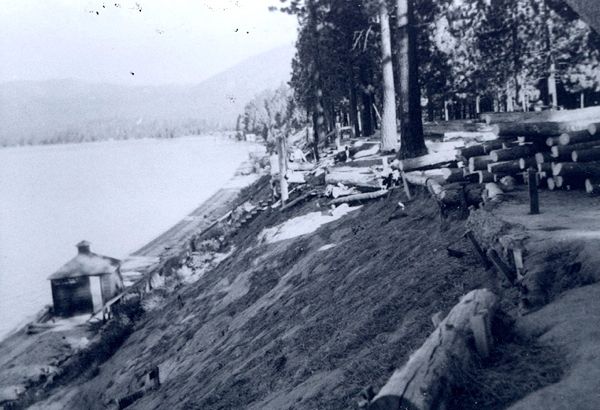
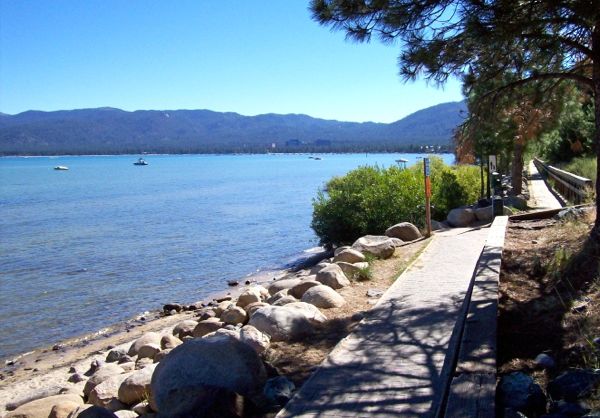
Then and Now: El Dorado Beach — always popular

Circa 1936 Photo/Lake Tahoe Historical Society

Circa 1936
Photo/Lake Tahoe Historical Society

Circa 1943 Photo/Lake Tahoe Historical Society

Circa 1943
Photo/Lake Tahoe Historical Society

El Dorado Beach in South Lake Tahoe has been a popular place for decades.

Dressing rooms used to be on the beach. For many years there was no restroom. The city put in bathrooms that opened last year when it created what is now Lakeview Commons.

To create the original park-like setting several trees had to be taken down.

— Lake Tahoe News

El Dorado Beach today. Photo/Bill Kingman

El Dorado Beach today. Photo/Bill Kingman