Former Block owner buys Michigan resort

Eneliko “Sean” Smith, who ran The Block hotel in South Lake Tahoe into the ground and required the court to mandate he pay the city back taxes, is now the owner of Sugar Loaf Resort in Michigan.

Smith and his partners bought the 560 acres for an undisclosed sum. Their plans are to transform the resort into a  snowboarding Mecca titled The RoK at Sugar Loaf for the 2014-15 season.

Eneliko "Sean" Smith

Eneliko “Sean” Smith

The resort has been closed for the last 10 years.

According to a press release, unpaid tax issues like what happened in South Lake Tahoe will never be an issue again. “I suffered very deeply and I truly learned from that mistake,” Smith said in a statement.

Like in Tahoe where he helped create “The Block” reality show, he plans to do something similar in Michigan beginning with an employee boot camp reality show in July 2014.

— Lake Tahoe News staff report


Neighborhood ‘libraries’ a growing phenomenon

By Robert Samuels, Washington Post

Philip Vahab loves it when strangers wander to the odd, wooden box outside his Northwest Washington rowhouse. Is it a birdhouse? Is it a fancy mailbox? Some ornamental, neighborhood talking point?

No. No. And kind of. The box is stuffed with paperbacks from Dean Koontz and Don DeLillo, free for the taking. Borrowers can return them — if they want — or trade them for a different book. At first blush, it might seem quaint. But the book house is a part of a burgeoning global literary movement just now taking root in the region.

The “Little Free Library” concept started four years ago in the Midwest, when an entrepreneur named Todd Bol watched his neighbors gobble up books placed outside his home. Back then, he dreamed that 2,500 similar libraries would be constructed by 2014. He was naive. There are already more than 10,000.

In the District, the first recorded little library belongs to Vahab. He built it in January, thinking it might be an interesting experiment for the Meridian Hill neighborhood.

He purchased a small, wooden model of a house on the Web, stained it and hoisted it onto a pole. He staked it amid the lush, little garden he had created in a swale near the edge of his front yard. Then he set down small red blocks, like crumbs in the woods, to lead pedestrians down the sidewalk to the library.

Read the whole story


Firefighters raising funds for breast cancer fund

Don’t be surprised to see South Lake Tahoe firefighters wearing pink this month.

The department is taking a strong stance against breast cancer in October.

A series of events this month are designed to raise money for the Susan G. Komen Foundation. Donations will be accepted on any engine and ambulance, as well as at each South Lake Tahoe fire station.

There will be a bowling fundraiser on Oct. 25 at Tahoe Bowl. Tahoe Bowl is donating 50 percent of the game and shoe revenue that night toward the fund, as well as 20 percent of dinner profits. For more info, click on the flyer.

Throughout the month SLTFD will be selling the pink shirts for $20. The firefighters union will have a slight benefit from these sales, and a generous donation will be made to the Susan G. Komen.


Angora burn trail system under construction

Updated Oct. 1 3:40pm: The Oct. 5 trail building day is canceled because of the federal shutdown.

By Kathryn Reed

One of the final pieces of the Angora burn restoration should be completed this fall – the trail system.

When the more than dozen miles worth of trails are finished, it will be possible to hike, ride a bike or a horse from the gun mount near the base of Echo Summit to Camp Richardson. The Long Term Angora Restoration Project encompasses only the trail network in the area that burned in 2007.

“We have laid it out for different experiences,” Garrett Villanueva, who heads the U.S. Forest Service’s trails team, told Lake Tahoe News. This means some areas will be more challenging than others. “The challenging trails off Tahoe Mountain will be rockier, they have more trail texture. We are trying to lay out the trails so they are not in a straight line, but so they follow the landscape and are interesting.”

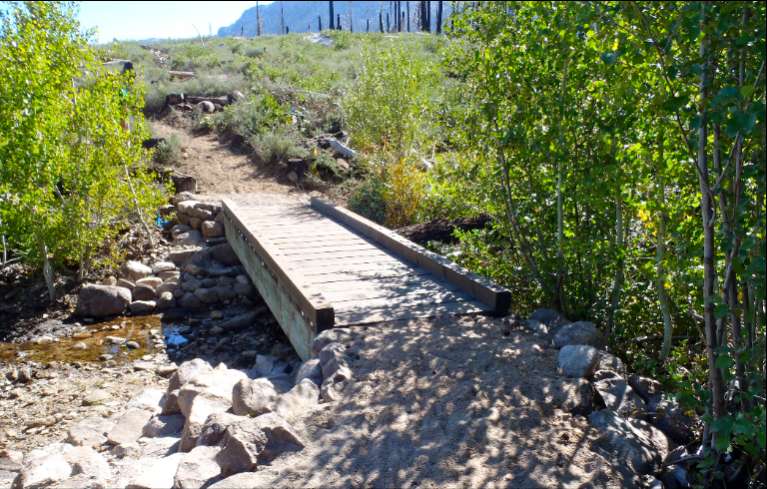
South Tahoe Association of Realtors paid for the bridge that crosses Angora Creek. Photo/Jordan Burge

South Tahoe Association of Realtors paid for the bridge that crosses Angora Creek. Photo/Jordan Burge

The grading work must end by Oct. 15 per Tahoe Regional Planning Agency rules. If need be, what doesn’t get done this year, will be wrapped up in the spring.

The delay in doing the work is because it took so long to get the necessary permits from agencies in the basin.

Trails that had been next to stream zones have been relocated to benefit the ecosystem and help with water quality issues.

The South Tahoe Association of Realtors paid for the bridge going over Angora Creek. Some of their members, along with TAMBA volunteers and anyone else will be helping the Forest Service with a trail day on Oct. 5.

STAR created the Angora Fire Disaster Relief fund immediately after the fire. Initial donations went to members who lost their homes in the fire. The remaining funds are being used for the bridge, which will be dedicated to the residents in the area.

The trails are single track. Drainage systems have been built into the system so little maintenance it required. Undulations will naturally shed water.

A road system still remains in the area, but that is for future management needs and will only be accessed by Forest Service personnel.

Signs will be installed so people know where they are and where they can go.

A kiosk with a map of the trail system will be installed at Sawmill Road and Lake Tahoe Boulevard. This is a good access point for people needing to drive to get to the trails. Another entry point via vehicle is from the Camp Richardson side on Highway 89 where the four lanes end and there is a green gate.

Other projects to be done in the Angora burn area:

• Finish the pile burning in two units near South Tahoe High School.

• Seneca Pond restoration could begin in 2015. Phase one is to drain it and phase two is to restore the area to its natural setting – which means no pond. It is not funded yet.

• Angora Creek restoration does have funding. Next year crews will likely do some wood placement by hand. In 2015 there would be stream construction work and then work should be completed in 2017 with connection of the channel.

• There will be thinning work in the area, but it’s part of the South Shore Fuels Reduction Project and not Angora restoration work.

Notes:

• There is a trail workday on Oct. 5 from 9am-4pm. Meet at the end of Forest Mountain Road off Tahoe Mountain Road. Hard hats and tools will be provided.

• Here is a copy of the Angora trail map.


Opinion: Calif. needs to address truancy

By Arne Duncan and Kamala Harris

Millions of desks sit empty in elementary school classrooms because of truancy each year, costing schools billions of dollars, wasting public resources and squandering one of the country’s most precious resources: its young people.

We tend to think of truancy as something that starts in junior high or high school, but nationwide, about 1 in 10 kindergarten and first-grade students miss a month of school each year due to absences. In California, you could fill Staples Center in Los Angeles 13 times over with the 250,000 students who missed 18 days or more last year. About 1 million elementary school students in the state were truant — defined in California as three or more unexcused absences or tardies — during the 2012-13 school year.

Not surprisingly, students with high rates of unexcused absences fall behind. And teachers at schools with high truancy rates find themselves forced to teach the same material again and again.

Chronic absenteeism is especially damaging to disadvantaged students, who are already at higher risk of falling behind their peers academically. Missing school widens achievement gaps, and catching up can be difficult. Students who are truant in elementary school are more likely to be truant in middle and high school, when truancy is closely linked to an increased chance of a child dropping out.

Dropouts cost states billions in incarceration, lost productivity and lost tax revenues. Studies project that increasing graduation rates by just 10 percentage points would lead to as many as 3,000 fewer murders and nearly 175,000 fewer aggravated assaults nationwide.

The solution to truancy? It’s straightforward: Hold accountable everyone who bears responsibility for getting kids to school.

School districts already have the tools, as well as the legal responsibility, to intervene when a child is truant. And it’s clear that intervention helps. Truant elementary students whose attendance improves are half as likely to drop out in high school compared with students whose truancy continues or worsens.

School districts have long taken daily attendance, but they need to use the information they gather to create an early warning system that identifies children who are frequently absent. School administrators should contact guardians immediately when a child is truant and insist on a meeting to find solutions.

As needed, schools should connect families with social services, public health and community resources to address underlying problems. Parents must be held accountable, and law enforcement should support interventions that educate and bolster struggling students and parents. The business community should be enlisted to help create incentives to improve attendance, like rewards for schools and families with improved attendance.

California is one of only four states (along with New York, Colorado and Illinois) that does not collect individual student attendance data at the state level. That should change. These data are crucial for states to hold schools and districts accountable. Every state needs systems to track truancy, connect attendance to academic achievement and, where there are warning signs, intervene swiftly.

At the federal level, the Department of Education has invested in the revitalization of communities through its Promise Neighborhoods program, and improving attendance has been a core strategy for some grantees. One of the department’s largest investments in innovation is helping to expand a national program for at-risk students, which has improving attendance among its key goals. Other grants support school counselors and the creation of more positive school climates. And low-performing schools receiving federal funds to turn themselves around have commonly put resources toward reducing chronic absenteeism. All of these approaches can serve as models if they prove successful.

On Monday, a diverse group of local, state and federal leaders met in Los Angeles to discuss a new report by the California Department of Justice, “In School and on Track.” It can be found online and will be updated annually to measure and compare the progress of California’s counties and school districts.

The report provides a window into truancy’s toll on the nation’s economy, public safety and children. If state and federal leaders work together — alongside schools and parents — we can stop this waste of potential and get our children to class on time, every day. The price we pay otherwise is just too high.

Arne Duncan is U.S. Secretary of Education. Kamala Harris is attorney general of California.


Lakota Sioux Dance Theater coming to Tahoe

Tahoe Arts Project will present the Lakota Sioux Dance Theater on Oct. 4 at 7pm at the Lake Tahoe Community College Duke Theater.

Founded in 1978 on the Rosebud Reservation in South Dakota, the Lakota Sioux Dance Theatre began with the support of traditional Lakota Indian educators, healers, community leaders, championship pow-wow dancers, singers and storytellers. The company has appeared around the world including at the Kennedy Center, Olympics, and for the opening of the National Museum of the American Indian.

Lakota Sioux Dance Theater will be performing in the South Lake Tahoe schools Sept. 30–Oct. 4.

General admission seating will begin at 6:30pm on Oct. 4. Tickets are $12 for adults, $5 for children and $8 for seniors. They may be purchased in advance at the California and Nevada visitors centers. To charge tickets by phone, call (530) 542.3632. Tickets will also be available at the door.

Tahoe Arts Project is a nonprofit organization dedicated to providing professional performing arts in the schools and community of South Lake Tahoe.


U.S. government comes to a standstill

By Lori Montgomery and Paul Kane, Washington Post

The U.S. government began to shut down for the first time in 17 years early Tuesday, after a Congress bitterly divided over President Obama’s signature health-care initiative failed to reach agreement to fund federal agencies.

Hours before a midnight deadline, the Republican House passed its third proposal in two weeks to fund the government for a matter of weeks. Like the previous plans, the new one sought to undermine the Affordable Care Act, this time by delaying enforcement of the “individual mandate,” a cornerstone of the law that requires all Americans to obtain health insurance.

The new measure also sought to strip lawmakers and their aides of long-standing government health benefits.

The Democratic-led Senate quickly rejected that plan on a party-line vote. Senate Majority Leader Harry Reid, D-Nev., urged House Speaker John Boehner, R-Ohio, to abandon the assault on the health-care law and pass a simple bill to keep the government open. Otherwise, Reid warned, “the responsibility for this Republican government shutdown will rest squarely on his shoulders.”

Boehner refused to yield. He called instead for a special committee to meet in the coming days to resolve differences between the two parties, leaving in limbo the fate of millions of federal workers and the services they provide.

Shortly before midnight, the White House budget office issued a memo instructing agencies to “execute plans for an orderly shutdown due to the absence of appropriations.”

The impasse means 800,000 federal workers will be furloughed Tuesday. National parks, monuments and museums, as well as most federal offices, will close.

Read the whole story


Whittemore going to prison for 2 years

By Scott Sonner, AP

RENO — Ex-Nevada power broker Harvey Whittemore has been sentenced to two years in prison for funneling more than $130,000 in illegal campaign funds to Sen. Harry Reid’s re-election committee in 2007.

U.S. District Court Judge Larry Hicks also ordered Whittemore on Monday to pay $100,000 in fines for his three felony convictions.

Prosecutors said Whittemore gave money to family members and employees in 2007 to make contributions he had promised to Reid while concealing himself as the true source to skirt campaign finance laws.

Reid has not been accused of any wrongdoing. He has said he was unaware of any potential problems with the money he received.

Prosecutors wanted the judge to send Whittemore to prison for more than four years, while Whittemore’s lawyers argued he should be spared prison time based partly on his history of extraordinary charitable giving.

Whittemore took the stand on his own behalf for the first time for about a half hour Monday. Whittemore said he was appearing in utter shame, humiliation and disgrace to ask the judge to consider a lesser sentence.

Whittemore was convicted in May on three felony counts related to his use of conduit, or “straw” donors, to take money he gave them and in turn write checks totaling more than $133,000 to Reid’s 2007 re-election campaign. The jury deadlocked on a fourth charge of lying to the FBI.

Prosecutors described Whittemore as a greedy, power-hungry, unrepentant crook who deserves to go to prison. They said his “well-conceived and well-executed scheme” was intended to skirt federal election laws by hiding the true source of the money.

His “motivation to do so was not borne from political ideology, hero worship or naivete. Rather it was a knowing and cynical act, conceived in greed, arrogance and the lust for power,” Assistant U.S. Attorney Steven Myhre said in court briefs last week.

“He knew what he was doing was wrong but did it anyway,” he said.

Whittemore’s lawyers had argued Nevadans would be better served if the 61-year-old businessman was sentenced to probation and community service so he can make up for his mistakes by continuing his philanthropy.

“Confinement would only serve to strip him of that productivity and arguably divest northern Nevada of one of its most active community leaders,” defense lawyer Dominic Gentile wrote in his latest court filing on Friday.


Lake Valley firefighter dies unexpectedly

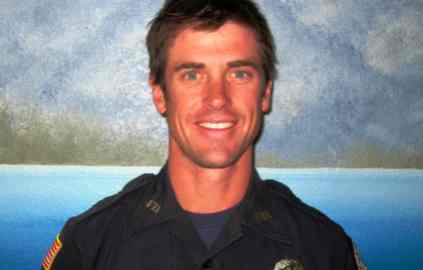
Mitch Underhill

Mitch Underhill

The Lake Valley Fire Protection District is deeply saddened to announce the unexpected death of 34-year-old firefighter paramedic Brandon “Mitch” Underhill on Sept. 29.

Mitch joined the fire district as a paid professional on Sept. 27, 2005, and served the community with dedication and devotion for just over eight years until his untimely death.

Mitch is survived by his wife and two young children, his parents, and a sister and brother.

Donations to help out the family in these toughest of times can be made at any El Dorado Savings bank branch under the name of the “Underhill Family Fund”. A website has been set up where people may post comments about Mitch.

— Lake Valley Fire Protection District


Landlords economically better off than savers

By Kathleen Madigan, Wall Street Journal

In this recovery, it’s better to be a landlord or investor than a saver.

That is the message from Friday’s report on personal income. Since the recession ended in the second quarter of 2009 to the average so far in the third quarter, the gains in income have been paced by rents collected by landlords and dividends paid to shareholders.

Since mid-2009, nominal personal income has increased 17%. Rental income has soared 85 percent, and dividends are up 44 percent. Retail income and dividends compromise less than 10 percent of all income, but have accounted for 25 percent of the increase in all earnings so far in the recovery. Following close behind is proprietors’ income, up about 42 percent.

Wages and salaries, about half of all household earnings, have grown about 14 percent, accounting for 40 percent of the entire income increase.

Some of the divergent growth rates reflect changes in the economy coming out of the Great Recession–trends that won’t last over time.

Read the whole story