Book talks about how poverty is not that rare

By Kel Munger, Sacramento Bee

If you don’t think you know any poor people, think again.

According to Sacramento journalist and author Sasha Abramsky, we all know someone who is economically insecure. “If you knock on doors in your neighborhood, you’ll find someone who has needed food assistance, someone who is underwater on their mortgage, or someone who lost their job and their savings in the recession,” he said.

Abramsky is a fellow at Demos, a progressive public policy institute. He’s also a research affiliate at the UC Davis Center for Poverty Research and a contributor to The Nation and Salon. In the course of researching his new book, “The American Way of Poverty: How the Other Half Still Lives”, he visited roughly two dozen states and interviewed more than a hundred people to report on the financial instability that affects so many in the United States.

“Everyone knows someone who is experiencing poverty,” Abramsky said. “This is the single most common shared experience in modern-day America.”

Read the whole story


Northstar may take over Martis Valley water service

By Rocklin and Roseville Today

OLYMPIC VALLEY — Water utility service in Martis Valley near Truckee would be transferred to the Northstar Community Services District under a plan discussed last week by the Placer County Water Agency Board of Directors.

The proposed transfer was reviewed as part of the PCWA board’s annual eastern Placer County meeting, which was held at the Squaw Valley Public Service District office. PCWA is a countywide water resource agency that is headquartered and normally meets in Auburn.

PCWA operates groundwater wells to serve about 1,000 water customers in the Lahontan, Martis Camp and Schaffer’s Mill communities in Martis Valley. The area is known as Zone 4 and is one of five service zones operated by PCWA. The other four are in western Placer County.

Read the whole story


‘Elevation: A Backcountry Film’ to air in Tahoe City

Alpenglow Sports in Tahoe City is hosting the Tahoe premier of “Elevation: A Backcountry Film” on Oct. 14 at 7pm.

The latest grassroots offering from well-known Salt Lake City outfit Powderwhore Productions, the film will take the audience on adventures in the Ruth Gorge of Alasaka, the Cascades, Tetons, and Powderwhore’s home terrain of the endlessly-deep Wasatch Mountains.

Join world-famous athletes Andrew McLean for steep descents in the Alaska Range, the Dorais Brothers for their speed ascent records on Mt. Rainer and the Grand Teton, Will Cardamone for Wallowa, Ore., touring, and endless other ski tales that will excite and inspire for the upcoming season.

“Elevation” documents the revolution currently taking place in backcountry skiing. With such resurgence into backcountry skiing, the Powderwhores look for real adventure beyond the tightly wound, firmly stretched orange and black ropes that “protect” skiers from realizing freedom. Putting in the perspiration and inspiration leads to elevation.

Doors open at 6:15pm and attendees are encouraged to come early for good seating. Adult beverages will be provided by Big Sky Brewery for those of age.

Call (530) 583.6917 with any questions.


Brandon Mitchell Underhill — 1979-2013

Mitch Underhill, born and raised in South Lake Tahoe, and an avid all-mountain adventurer, unexpectedly passed away. He was 34.

Family and friends will deeply miss his loving, kind, and beautiful spirit, as well as his warm smile, infectious laugh, and passion for the outdoors. Mitch had a deep connection to the mountains and said that the higher he climbed, the closer he felt to God.

From an early age, Mitch loved exploring Lake Tahoe and the surrounding Sierra Nevada — with a particular affection for Yosemite National Park and the Eastern Sierra. Mitch was a natural athlete. His preferred sports were rock climbing, skiing, surfing, and more recently paddleboarding.

Mitch Underhill

Mitch Underhill

From elementary school through middle school, he participated in the Buddy Werner ski program at Sierra-at-Tahoe. At age 17, Mitch and his best friend, Ryan Shreve, climbed the Nose of El Capitan in Yosemite for their senior high school project. Mitch’s passion for the outdoors continued on with thousands of adventures that included surfing and climbing trips to Thailand, Nicaragua, Hawaii, the Alps, and Alaska.

There is no doubt that Mitch lived his life to its fullest — every day.

His love of the outdoors ultimately led him to his beloved wife, Sarah (Felchlin) Underhill, who shared his passion for climbing, adventure, and Lake Tahoe.

Mitch and Sarah were married at the Ahwahnee Hotel in Yosemite National Park in 2007. They have two boys, Mason James (3 years) and Cedar Matthew (16 months). Mitch was a proud and exceptional father and adored his young sons. He frequently took them on backpacking, climbing, skiing, paddleboarding, and fishing excursions. Mitch was seen often the past few summers paddleboarding with his oldest son, Mason, and Springer Spaniel, Juniper, at Baldwin Beach, Rubicon Point, and Emerald Bay.

Mitch also had a profound love for music and was a beautiful guitarist, playing music for his wife and sons daily.

Mitch graduated from South Tahoe High School in 1997. He earned a bachelor’s of science in kinesiology from Westmont College in Montecito in 2002. While at college, Mitch gained a profound appreciation for surfing and the Pacific Ocean. Over the years after college, he worked as ski patrol for Sierra-at-Tahoe and as a U.S. Forest Service backcountry ranger. He graduated from paramedic school in early 2005 and later that year was hired as a firefighter-paramedic with Lake Valley Fire Protection District. Mitch was among the first brave firefighters on scene to battle the 2007 Angora wildfire, often recalling his experience driving through a wall of flames along Tahoe Mountain Road en route to save homes in the neighborhood below Angora Ridge.

Mitch is survived by his loving and devoted wife, Sarah (Felchlin) Underhill; sons Mason and Cedar Underhill; father and mother John and Jody Underhill; brother and sister-in-law Matthew and Danielle Underhill; sister and brother-in-law Corrie and Brian Aggers; father-in-law J. Chris Felchlin; mother-in-law Vera Freeman Felchlin (Benjamin R. Fletcher); brother-in-law Chris Felchlin; nieces Mattison and Marin Underhill; nephews, Drew Aggers and Jake and Alex Felchlin; godson, Lars Romsos, and cousins, Scott, Shane, Mollie and Lauren Romsos.

He was preceded in death by his grandfathers and grandmothers, Warren and Margaret Romsos and Thomas and Ruth Underhill, and uncle, Brian Romsos.

The Underhill and Felchlin families would like to express their sincere appreciation for all of the love and support provided by the community and friends from afar. A website has been established for family and friends to share pictures and memories of their treasured time with Mitch.

A memorial service will be on Oct. 20 at 2pm at St. Theresa Church, 1041 Lyons Ave., South Lake Tahoe.

In lieu of flowers, donations to help Mitch’s family may be made at any El Dorado Savings Bank branch or sent to El Dorado Savings Bank, 1036 Al Tahoe Blvd., South Lake Tahoe, CA 96150 under the “Sarah Underhill Family Fund”.


Opinion: It’s up to us to define the forest’s future

By Mark Schwartz

The Rim Fire is nearly contained and will quickly fade from public consciousness. However, the fire has left a scar on a part of the Sierra Nevada that many of us hold particularly dear. How do we move forward to restore this vital watershed, and what lessons do we learn for the future?

Mega-droughts during the past several thousands of years are associated with wildfire events far more extensive than anything we have seen over the past century. In the Sierra, the fall rains have started, and the process of healing has begun. The forests will return.

Regeneration is nature’s process. Driving through Yellowstone National Park, the consequences of the massive 1988 wildfire remain apparent on the landscape. It will take several more decades for those trees to recover. We should expect a similar slow recovery in the Rim Fire, but mostly because some of the high-intensity burn areas are very large and far from seed sources. Many of us will never see mature forests in parts of this landscape again.

As long as the ground is bare, risk of landslides on steep slopes will remain high. Forests soak up water, so stream flows will increase, escalating flood risk for the coming years. Recovery will take decades in severely burned areas. In contrast, low-severity burn areas may look much like normal within a couple of years as the small, herbaceous understory plants quickly recover.

There are species that specialize in young forests. We should look with enthusiasm for these recovering forests over the coming years with the knowledge that fire, on balance, is what maintains biological diversity in the Sierra Nevada.

Through recent forest management practices, however, we have boxed ourselves into a future of increasing frequent and hot wildfires. Nevertheless, there is much we can do to reduce that risk and assist recovery of our forests and watersheds.

Our federal agencies have formed a Burned Area Emergency Response team, and more than 50 federal resource managers and scientists are evaluating what remediation measures are needed and how to prioritize them.

A critical question is: What kind of Sierran recovery are we aiming toward? Historically, deforested areas are replanted with the same species, using local seed sources. As climate changes, this might not be a successful strategy for ecosystem restoration. Further, federal budget cuts have resulted in great difficulty financing replanting on a broad scale. The agencies will need to be strategic about what and where to plant.

In Canada, foresters are planting more heat-tolerant mixtures of plant populations and species to build forests resilient to climate change. How far should our public agencies go in modifying the forest composition to create ecosystems ready for changing climates?

If we look at projected climates, there are places ravaged by fire where forests will be naturally replaced by chaparral and grasslands. Favoring management to prioritize historical conditions and wildlife values, or to minimize future fire risk is a social choice. Our agencies are making these decisions now.

Understanding the issues and considering what we choose our Sierra Nevada ecosystems to be will increasingly be part of the public debate.

This year has witnessed U.S. Forest Service and National Park Service funds originally targeted for other critical resource management activities swept up to pay for wildfire control. CalFire, which spent less than $20 million per year in the 1980s managing wildfire, now spends upward of $150 million per year. The Rim Fire alone cost more than $120 million. More fuels and increasing ignitions will result in more large wildfires, and more cost, in the coming years.

The fire is over, but the fiery debate about what, how much and where to plant is now set to begin. The U.S. Forest Service provides an online public forum for the general debate about forest management.

Figuring out how to pay for wildfire control and ecosystem restoration along with all of the other wildlife and recreational values that we seek from our national forests should be a grave concern for us all.

No lives were lost in the Rim Fire, but $121 million was spent containing the 402 square miles that were burned, and roughly 115 square miles of forest has been devastated. The fire gained added notoriety because it threatened San Francisco’s water supply and charred thousands of acres in Yosemite National Park. And yet the Rim Fire is a blip.

The Sierra Nevada has experienced fire for thousands of years, and the ecosystem has adapted to it. The Rim Fire is but one of more than 5,600 California wildfires to date in 2013, which is turning out to be a non-exceptional year: Both 2007 and 2008 had roughly three times as many acres burned.

Our forest losses are also partly a function of our failure to reduce fire hazards on private property. The Rim Fire was sparked by a hunter, but fires get larger in wilderness because fire crews are forced into high-risk situations protecting people and buildings. The consequence is an exposed ecosystem, and a bigger fire. Those living in the watersheds burned will face increased landslide and flood risk as a consequence of this fire. Those who depend on water in the Hetch Hetchy now bear an elevated risk to water supply. Human safety comes first, but we need to consider the cost of firefighting and how to share that cost among those who benefit from it.

Mark Schwartz is director of the John Muir Institute of the Environment at UC Davis.
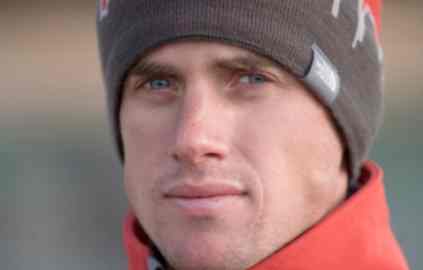


S.F. man accused of robbing 2 Tahoe banks

A Bay Area man wanted in connection with two Lake Tahoe bank robberies was apprehended in Reno on Oct. 7.

James Patrick Harnett

James Patrick Harnett

James Patrick Harnett, 49, of San Francisco was arrested at 5pm Tuesday at the Reno Transit Center on East 4th Street. Harnett was considered armed and dangerous, as well as a flight risk.

Harnett is suspected of robbing the Bank of the West in Kings Beach on Aug. 23, as well as the El Dorado Savings Bank two days earlier in South Lake Tahoe.

Placer County sheriff’s detectives received information that the suspected bank robber was in the downtown Reno area and a warrant for his arrest had been issued. A Washoe County sheriff’s detective initially contacted the suspect while he was attempting to make a call from a payphone inside the transit center. The suspect was taken into custody without incident.

Harnett was in custody in Reno awaiting extradition to Placer County on a $100,000 arrest warrant.

— Lake Tahoe News staff report


Man impersonating cop accosts woman

A man posing as a police officer attacked a woman Sunday in Alpine County.

The woman was driving west on Highway 88 near Woodfords about 9pm Oct. 8 when she noticed a truck following her. The single red light made her believe it was a law enforcement vehicle pulling her over.

The man was wearing dark clothing and a badge. He asked for her ID and then told her to get out of her vehicle.

According to Alpine County sheriff’s deputies, the suspect then threw the woman to the ground. She was able to fight back and escape to her vehicle.

The white male is described as 40 to 50 years old, 6-feet-2, 225 pounds, dark hair, and bushy mustache. It’s possible he sustained injuries in the fight.

He was driving a newer full size white diesel pickup, with possible custom rims.

Anyone with information should call Alpine County Sheriff’s Office at (530) 694.2231.

— Lake Tahoe News staff report


Learn about Al Tahoe area via walking tour

The season’s final walking tour of the historic Al Tahoe neighborhood in South Lake Tahoe is Oct. 26.

Walkers will leave the Lake Tahoe Museum at 1pm. The tour is about two hours.

The tour is limited to 10 people and reservations must be made to Lee.Vestal.LTHS@outlook.com.

Bring water, wear comfy shoes and a suggested donation of $10 to the Lake Tahoe Historical Society is appreciated.


McConkey’s legacy lives on through movie

By Julie Brown, Powder

On Saturday afternoon at Squaw Valley, a couple bartenders tapped a few kegs, pulled out the bar stools, and opened the renowned Chamois for business. Cars started to pull up one after the other and soon the parking lot was as full as if it were a sunny powder day. Groups of friends, many wearing trucker hats with the ubiquitous Shane McConkey Foundation logo, sat around picnic tables, talking about hopes for a deep winter.

But the conversation kept coming back to one name in particular—Shane McConkey. He was, after all, the reason why we were all there.

“There’s just going to be love oozing out of this place,” Scott Gaffney said at the Chamois before the festivities ramped up.

More than 4,500 people showed up to see the highly anticipated Squaw Valley premiere of “McConkey”. The afternoon of après felt like any other, except there wasn’t any snow and people like Mike Douglas, Bobby Brown, and Travis Rice along with two dozen other Red Bull athletes walked through the village among the locals.

People came from near and far, some taking long flights while others like Squaw locals Cody Townsend, Elyse Saugstad, and Michelle Parker just had to walk across the street. J.T. Holmes, Timy Dutton, and Miles Daisher jumped down to the crowd—literally—sky diving from above and landing at the base of Squaw’s KT-22 lift, which had been transformed into an outdoor amphitheater for the show.

Underneath a cold and starry night, we watched McConkey’s life unfold on the screen. We laughed more than we cried. We learned things we never knew about McConkey. Like how he lived in a closet, won a pro mogul tour comp without even trying, including his legendary naked bump contest run at Vail.

Read the whole story


NIAA creating policy for transgender athletes

By Catherine Van, KOLO-TV

Should transgender high school athletes be able to decide for themselves whether to play on the boys team or girls team? Nevada Interscholastic Activities Association is considering granting transgender students the ability to choose.

High school sports can be gender exclusive but for those athletes who identify with the opposite sex, those eligibility lines can be blurry. More than half a dozen states including Washington and California have adopted the policies to allow transgender students to compete on teams of their choosing and Nevada could be next.

“Issues with respect to high school athletics has become somewhat of a larger and open issue on a national basis,” Paul Anderson, NIAA legal counsel said.

Transgender students are a small but growing group across the nation and Nevada plans to stay ahead of the curve.

The NIAA includes high schools in the Lake Tahoe Basin that are in California as well as Truckee.

Read the whole story