Home sales, prices increase in Lake Tahoe

While third quarter home sales in the Lake Tahoe Basin surged, the federal government shutdown could bring those numbers down this quarter.

Ninety percent of the Federal Housing Administration has been furloughed. FHA-approved loans account for about one-third of the loans. The IRS doesn’t have the staff to verify income. Cash sales won’t be impacted.

Most experts are saying the housing market will weather the shutdown as long as it doesn’t last long. The nation is now in week two of the shutdown.

For the quarter ending Sept. 30, the number of home sales in the Tahoe basin with a price tag of less than $1 million was up 293 percent. Overall the volume was up 60 percent from a year ago.

“The luxury market seems to be adding to our market rebound,” Sue Lowe, corporate vice president for Chase International Real Estate, said in a statement. “Sales across the board are increasing, but luxury is making a substantial comeback.”

The median price of a home in Lake Tahoe is up 33 percent from 2012 to $440,000.

According to the National Association of Realtors, sales across the nation are at the highest pace since February 2007, and have remained above year-ago levels for the past 26 months.

California is second to Florida for the most attractive state for foreign buyers of U.S. property, according to an Asia Society report. More than half the homes sold to foreign buyers in California go to Chinese nationals, estimates CNN Money.

Representatives from Sierra Sotheby’s International Realty recently attended an event in Hong Kong in an effort to form relationships with Asian homebuyers in the market to purchase property on the California side of Lake Tahoe.

The median home prices are up on the South Shore 36 percent to $325,000 for the third quarter compared to 2012.

In the same time period, Tahoe City is up 18 percent to $499,900; Incline Village is up 26 percent to $885,000; Truckee is up 13 percent to $499,90; Carson Valley is up 28 percent to $250,000; and Reno-Sparks area is up 31 percent to $210,000.

— Lake Tahoe News staff report


Lecture on water rights at Pyramid Lake

UC Davis Tahoe Environmental Research Center’s monthly lecture series continues with a presentation on water rights at Pyramid Lake on Nov. 14.

Kate Berry, professor of geography at UNR, will discuss her research at the Tahoe Center for Environmental Sciences.

Water is significant in shaping the social dynamics of communities, most especially in arid lands. Yet communities within the same watershed often have different interests, aesthetics, geographies and histories, many of which may connect back to the role of water. This is true along the Truckee River, whose 100-plus mile course connects Lake Tahoe with Pyramid Lake. This presentation will provide insight into the roles that water has for the Pyramid Lake Paiute Reservation, considering how it has shaped the tribe’s water culture and water governance.

The Tahoe Center for Environmental Sciences is located at 291 Country Club Drive in Incline Village on the campus of Sierra Nevada College.

The talk begins at 6pm. A $5 donation is suggested.

For more information or directions call, (775) 881.7566.


South Tahoe proceeds with tourist core plan

Stormwater and height issues prevented South Lake Tahoe Councilwoman JoAnn Conner from voting for two items related to the tourist core area plan.

“My biggest concern is they have not addressed stormwater,” Conner told Lake Tahoe News after the item was discussed last week. “And people don’t want three-, four-, five-story buildings down the highway.”

Others voiced similar concerns. Laurel Ames, a long-time city resident, does not believe the plan addresses the threat of floods. Jennifer Quashnick, representing the local Sierra Club chapter, wants a visualization of what the height rules could look like.

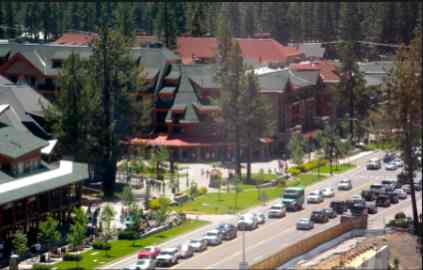
The tourist core plan goes from the state line to Ski Run Boulevard. Photo/LTN file

The tourist core plan goes from the state line to Ski Run Boulevard. Photo/LTN file

The other person expressing concern about the plan was Shannon Eckmeyer with the League to Save Lake Tahoe. She said the League wants a connection between the area plan and the total maximum daily load requirements.

The city’s Hilary Roverud told the council the flood component is the same as what South Tahoe has been using with past plans that are mandated by the Tahoe Regional Planning Agency.

Maximum height of buildings in the plan area fluctuates between 36 and 95 feet, with the higher number being in the main tourist area. And while those are maximums, staff and council do not have to approve that amount – it could be lower.

The six other speakers from the public spoke in favor of the plan.

The council voted 4-1 for the plan as well as for the environmental negative declaration. Conner was the dissenting voice both times.

South Lake Tahoe and Douglas County staff worked in unison so the respective plans will complement one another. The goal is that locals and tourists will not see the state line when it comes to aesthetics, walkability and other basics.

The TRPA Governing Board has approved Douglas’ plan and will discuss South Lake Tahoe’s on Nov. 20.

— Lake Tahoe News staff report


Scary pancakes on IHOP menu

As Halloween approaches, be very afraid — and also a little hungry — because participating IHOP restaurants are bringing back the “Scary Face” pancake and pumpkin pancakes this month.

On Oct. 31, participating IHOP restaurants — including South Lake Tahoe — will offer kids 12 and under a “Scary Face” pancake free.

Order a “Scary Face” pancake and make it into as scary or funny face. The Scary Face is one buttermilk pancake, comes with a whipped topping mouth, a glazed strawberry nose, two mini-Oreo cookies to create eyes and eight pieces of candy corn to add teeth or fangs.


Matthew Shepard’s legacy lives on 15 years later

Publisher’s note: A documentary film about the life of Matthew Shepard will be shown at Lake Tahoe Community College on Oct. 12 at 7:30pm in the Duke Theatre. Tickets are $5 at the door. The LTCC Theater Arts Department will present the play “The Laramie Project: 10 Years Later” in November.

By John M. Glionna, Los Angeles Times

LARAMIE, Wyo. — Every year, the day sneaks on up Judy Shepard to deliver its sucker punch from the past: The 12th of October. The day Matthew died.

“It hits you and you say to yourself: Oh, this is the day,” she says. “This is why I feel so terrible.”

Fifteen years ago this week, gay college student Matthew Shepard was pistol-whipped and left for dead: unconscious, barely alive, lashed to a jagged wooden fence outside this small prairie city by two men disgusted by his homosexuality. A passerby mistook the diminutive, 105-pound Shepard for a scarecrow — a forlorn and unthinkable image that still haunts a generation of Americans.

Judy Shepard refuses to associate her son with that image or with the date that he died, six days after the attack. Instead, she summons memories of her eldest boy on Dec. 1, his birthday, celebrating his love for politics, languages and the spectacle of the musical “The Phantom of the Opera.”

On the anniversary of her son’s death, Shepard thinks not of the past, but of the future. As co-founder of the Matthew Shepard Foundation and a tireless advocate for gay rights, she’s hosting the annual mid-October fundraiser at the group’s Denver headquarters to support its work promoting tolerance. That’s when she tries to gauge just how far Wyoming and the nation have come in their acceptance of others in the years since Matthew’s murder.

Often the answer isn’t comforting.

Read the whole story


Shutdown reaches beyond government workers

By Marc Fisher and Holly Yeager, Washington Post

The reality of the government shutdown is finally hitting Americans who don’t get their paychecks from Uncle Sam.

In Pittsburgh, Tim Russell was on the cusp of living his dream: After two years of work, after lining up federal and state licenses and buying equipment to make rum, he started making his first batch last week. Then the federal Alcohol and Tobacco Tax and Trade Bureau closed shop. With no one to approve the “Maggie’s Farm Rum” labels, Russell can’t sell a drop.

On Alaska’s Upper Kenai River, the silver salmon and rainbow trout are huge and plentiful, but Fred Telleen’s fly fishing guide service this week has been reduced to processing cancellations and refunds, because the Kenai National Wildlife Refuge is closed. Telleen lost $1,100 on Monday alone.

In Bridgeport, Conn., Renate Seymour, an office manager at a factory, suddenly had to make alternative arrangements for her 4-year-old grandson, Jeremiah, who can no longer attend Head Start because classes shut down when the government closed up.

But wait: The pain of a shutdown is also eluding many millions of Americans.

Orange cones still dot plenty of federally funded highway projects, keeping an estimated 783,000 construction workers on the job. That’s because the way road financing works, states usually pay the up-front costs, then bill Washington for reimbursement. And the Highway Trust Fund, funded by the federal gas tax, has money to make these payments.

Thousands of federal meat and poultry inspectors are still monitoring slaughterhouses and packing plants, which can’t sell meat without the government’s stamp of approval. The Agriculture Department told field inspectors to stay on the job “to ensure the safety of human life for the duration of a government shutdown.”

In Mesquite, Nev., Police Chief Troy Tanner has seen no blip in crime, no signs of strain, no sense of a nation in distress. True, he has found himself pumping out more emails and phone calls than usual to figure out which of his federal counterparts are working — no answer at the nearest Bureau of Alcohol, Tobacco, Firearms and Explosives office, but the FBI guy is there, he says.

But in his town of 16,000 near the borders with Utah and Arizona, the only frustration Tanner senses has come from one of his captains, who had just arrived in Virginia for a 10-week FBI National Academy course on the day before the government closed, only to be told that he had to turn right back around because the shutdown forced the cancellation of classes.

“What a waste of time,” the chief said. “He’s disappointed.” There is one silver lining, though: When the airline charged the captain an exorbitant last-minute airfare to get back home, the feds picked up the tab, Tanner said. Thank you, Uncle Sam.

The federal government has become the behemoth that cried wolf. For more than two decades, budget brinksmanship has been such a mainstay of Washington politics that many Americans long ago grew skeptical of claims that if one deal or another weren’t made, the Statue of Liberty would close or the nation’s highways would seize up in the mother of all gridlocks.

Read the whole story


Lecture to focus on chemicals in everyday products

A variety of chemicals are used in everything from textiles to cosmetics and personal care products to food packaging. Many of these exhibit unintended harmful consequences to humans and wildlife.

Three researchers from the UC Davis Superfund Research Program will discuss how these chemicals interact within our bodies to disrupt normal functions and the development of new tools, such as cell lines to measure toxicity and antibodies to measure these harmful chemicals.

The talk is Oct. 24 at 6pm at the Tahoe Environmental Research Center on the campus of Sierra Nevada College in Incline Village.

Cost is $5.


Your body may be saying you are stressed

By Mandy Kendall

Are you sick and tired of being sick and tired? More and more studies are showing that stress is one of the major causes of physical illness today. Recent government statistics show that 75 to 90 percent of doctor’s visits are stress related.

Some stresses are short lived (traffic jams or a deadline at work) and when they are over the stress is released. However, there are many stresses that stay with us for long periods of time, sometimes for a lifetime. These chronic stressful situations (a high pressured job, family or financial situations, for example) can have a tremendously negative impact on our health.

Mandy Kendall

Mandy Kendall

Who can get stressed?

Pretty much everyone experiences stress in one way or another. Kids especially can be put under huge amounts of pressure by peers, parents, teachers and themselves to conform to social expectations. Generally anything that makes you feel unhappy, out of control or under pressure is probably a sign of stress.

What are stressors?

Stressors (things that cause us stress) come in many different guises. Work, finances, family pressures are in the list of top stress inducers. Self imposed pressure is also a big contributor to stress. We can expect far too much of ourselves in today’s world and, when you couple that with all the external factors in our lives, it’s not surprising that it can all get so overwhelming.

So, how do we know if we’re stressed?

Frequent illness — If you find that you catch everything going, getting one cold after another, and when you do get sick it takes ages for you to get better, this may be a strong indicator that your immune system is compromised and stress can be one of the biggest factors. If you’ve ruled out any underlying condition that could be undermining your defenses, chances are the stress in your life is making you sick.

Our bodies are great at telling us we are being stressed, often it starts with small indicators like losing a little sleep, having an upset stomach, getting a headache or having heart palpitations. If we don’t address the issues (i.e. the stuff that is causing us to be stressed) our bodies will just continue to send us signals, i.e. waking a few times a night can then turn into insomnia, an upset stomach turns into irritable bowel syndrome, a slight headache turns into a migraine and a rapid heartbeat turns into a panic attack, and the list goes on. Some other common signs of stress include: high blood pressure, frequent illness, weight gain or loss and back pain.

Can my stress affect people around me?

Stress is not contagious like a disease, but those close to you can be affected by the stress in your life. Researchers at the Children’s Hospital of Philadelphia published a report in Pediatrics in October 2012 explaining that a number of stressors from parents can increase the risk of obesity in their children. The report states, “Stress in parents may be an important risk factor for child obesity and related behaviors. The severity and number of stressors are important.” Your ability to have normal healthy relationships with your family and friends can be greatly reduced when you are under stress. Not only might you be physically unwell enough to spend time with them, but your reduced mood and ability to cope with day-to-day things might not make you much fun to be around.

How to deal with it

Come up with a strategy — Whatever works to calm your world and your body do it as often as you can. Whether it’s time with family or friends (or just time alone), exercise, meditation, or perhaps a massage. Everyone has different de-stressors that work for them.

Give yourself time and permission, this is not pampering yourself. You’re not being selfish. This is a “put on your oxygen mask before helping others” strategy. You will be no good to anyone if stress gets the better of you. Be selfish for the sake of everyone you care about.

Focus on the things you can control — There is much that can be learnt from the serenity prayer: “Grant me the serenity to accept the things I cannot change, the courage to change the things I can, and wisdom to know the difference.” For a long time now my husband and I have purposefully not watched the news and we feel so much better for it. We choose how we find out about local, national and international events that don’t come with all the hype and graphic images you see on TV.

Be honest with yourself — Sometimes just putting all your worries and concerns on a piece of paper can be very revealing, especially if you list them under headings of “the things I can control” and “the things I can’t control”.

What would you say to someone else experiencing your issues — This one can take some practice but can be incredibly effective. Think about something that is causing you stress and then imagine someone you love and care about telling you they have this issue. Then think about what you would say to help them. We are often our own harshest critics, and our advice is often very different when it comes from a place of love and caring.

Don’t be afraid to ask for help — A problem shared really can be a problem halved. Often our perception of a situation can get grossly over-exaggerated in our heads and just getting some feedback from an objective standpoint can put things into perspective. Whether it is professional therapeutic advice or a trusted friend to talk to.

Until next time.

Mandy Kendall operates Health Connective in South Lake Tahoe, which aligns wellness seekers with their ideal wellness provider. If you have questions, would like some advice, or would like to request some Qwik-e tips on any health and well-being topic, drop her an email at connect@healthconnective.com or keep an eye out on Lake Tahoe News for regular Qwik-e tips on how to make healthy changes one Quick and Easy step at a time.


Tahoe Verde residents upset with new owners

By Kathryn Reed

Tahoe Verde mobile home park residents must feel like they are living in a bit of a time warp. The topic of rental control is back.

In 2007 and 2008 occupants of the more than 200 units were in a dispute with the owners at the time that escalated to the South Lake Tahoe City Council. The council said no to mandating rent control. Rent control would have to apply to all such dwellings in the city limits and would be overseen by city staff.

The mobile home park has new owners, rents are going up, new leases are being circulated and rent control is back on the table. The five-year leases were distributed in September, but not everyone is signing them. Residents are talking privately to council members and anticipate bringing the issue of rent control to a vote of the council.

“As far as what my rent pays for, I would expect it to pay for any maintenance of the park. But this lease would make it otherwise,” Kim Love told Lake Tahoe News.

Love and Mike Gwin have been talking to fellow Tahoe Verde residents to inform them of their rights and to create a united front. Attorney Ted Long, who helped with the rent control measure the first time, is again working on behalf of the tenants.

“We are not asking for special treatment. What we want is a level playing field,” Long told Lake Tahoe News.

He and the residents also want to talk to the owners about their concerns, but that has yet to happen.

Owners of the mobile homes occupy most of the 268 spaces. But mobile is a bit of a misnomer. The structures are for the most part permanent and not able to be hitched to a vehicle and carted out of the park. The land is what these people are renting.

One of the issues is that they can’t just leave like an apartment or house renter could because of owning the structure. And residents don’t believe they could sell based on what many see as a one-sided lease agreement.

HCA Management Company out of Novato is managing the property.

“We try to be above board in our leases. They are sometimes maybe difficult for someone to read,” Phil Taylor, regional manager with HCA, told Lake Tahoe News. “I believe the concern of residents boils down to this – we have made almost $1 million worth of improvements since we purchased it last December. I think residents are apprehensive they are going to have to pay for that now and they are not. If they read the lease, we could not ask for them to pay for improvements unless they voted for it.”

The lease actually says capital replacement and capital mandates can be done without consent of residents. Capital improvements of more than $10,000 must be agreed to by at least 51 percent (each space gets one vote) of residents. Then any improvement costs above $10,000 would be divvied up among the residents.

Rent increases are loosely tied to the consumer price index, though the management company can up the fee 3 percent each year no matter what the CPI is and won’t hike it more 6 percent as long as the CPI is not above 10 percent.

And if all the spaces are not occupied, any fees beyond rent will be divvied up among the occupied spaces. This, residents say, gives the owners zero incentive to keep the park full.

Water is included in the price of rent as is landscaping of the common area.

Previous leases with prior owners did not require residents to pay for capital improvements.

“What are they doing with their money?” Gwin wonders of the current owners.

His base rent is now $654 month. In 2000 it was $480. He has put $40,000 into improving his home.

Many who live at Tahoe Verde are on fixed incomes. Even those who aren’t, like Gwin, aren’t seeing their paychecks increase. He hasn’t had a raise in three years.

“People are scared,” Gwin said.


Opinion: Help available to find health insurance

By John Williams

The Affordable Care Act, commonly known as Obamacare, is in full swing. Effective Oct. 1, Americans are able to enroll for the state insurance programs for coverage starting Jan. 1.

Two state insurance exchanges exist for South Shore residents; Covered California for California residents and Nevada Health Link for Nevada residents. Both exchanges allow for you and your family to compare health coverage options and choose the one that best fits your needs and budget. Through these exchanges some residents may even be eligible to receive financial assistance to make health care more affordable. This marketplace will help community members to shop online, over the phone and in person to find the right health insurance option for them. Individuals and small businesses can compare different health insurance plans and learn whether they qualify for federal subsidies and tax credits.

John Williams

John Williams

Additionally, residents will be able to determine if they are eligible for low-cost or no-cost health coverage through Medi-Cal and Medicaid, as these government programs have been expanded to cover more people than in the past.

Barton Health has been proactively working towards being able to assist our residents with getting health care coverage and access to health services. Over the past several months, we have worked to:

1) Contract with insurance companies working with the exchange in California. Barton Health is continuing to connect with insurers in Nevada working with Nevada Health Link to determine coverage options at Barton facilities for Nevada residents.

2) Expand and remodel the Community Health Center (formerly the Community Clinic) to address the anticipated increase in community members seeking preventative and treatment-based health care.

3) Become a Covered California official Community Outreach Partner and Certified Enrollment Entity. By the end of October, Barton will have 19 Covered California certified enrollment counselors on staff to assist community members with in-person support for insurance exchange sign-ups. Appointments with these counselors can be scheduled through our Heath Care Reform hotline at (530) 600.1984.

Americans who do not sign up for health coverage for 2014 will face federal penalties. These penalties equate to $95 or 1 percent of income, whichever is greater. A family will be charged a penalty of $95 per uncovered adult and $47.50 per uncovered child (up to $285 for a family) or 1 percent of the family’s income, whichever is greater. These penalties increase each year for those who are not covered.

Many have asked if care can be given across the state line for exchange coverage. Out-of-state coverage is subject to each individual health plan’s specific policies and network coverage as detailed within the health insurance policy. Each health insurance policy has a specific list of providers that are in the network for covered services. It is important for community members to check with each individual plan offered to confirm that your provider’s services are covered under that plan.

We are proud to be of assistance to our community members, as determining the best health care option for you can be overwhelming. To find out more about the state exchanges, California residents may go online and Nevada residents may go to this website. For your convenience, Barton has created a website with useful information on the reform changes including helpful links, videos and frequently asked questions.

John Williams is president and CEO of Barton Health.