Placer creating facility to help inmates transition

Placer County’s Probation Department is moving closer to setting up a one-stop center where individuals on probation or those about to be released from incarceration can get services and assistance while they transition back into society.

The Board of Supervisors last week agreed to build a 2,000-square-foot Community Transition Center in the County’s Santucci Justice Center near Roseville.

The center will be used by the Probation Department to implement individualized case plans for each inmate and former inmate. The plans will be based on risk and needs assessments.

Issues that will be addressed include housing, employment, education, restitution, substance abuse and other treatments and re-establishing family and community connections that improve the likelihood of success.

The Placer County Justice System Master Plan consultant conducted a survey of 200 inmates to help identify what helps them after release and what services are needed. Combining this data with research from programs used by other jurisdictions, the Center, when operational, will provide a combination of existing services and new ones that will be identified and shaped through the research.

The array of services and classes offered through the program will provide participants with a structured return to the community after incarceration.

The center is expected to open next summer.

 — Lake Tahoe News staff report


Political veteran wants to be Douglas sheriff

By Kathryn Reed

Dave Brady believes there are plenty of ways to change the Douglas County Sheriff’s Department. He would start with the budget.

Brady is challenging longtime incumbent Ron Pierini for the job of sheriff. The primary is in June, with a runoff in November 2014 if necessary. They are the first two to declare their candidacy.

“I served as a reserve (deputy) initially in 1986. The (department’s) budget was $3.1 million and there were 24,000 residents. Now the population has about doubled, the budget is $16 million and they are still running with five cars. I see that as an issue that needs to be addressed,” Brady said.
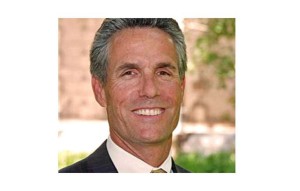
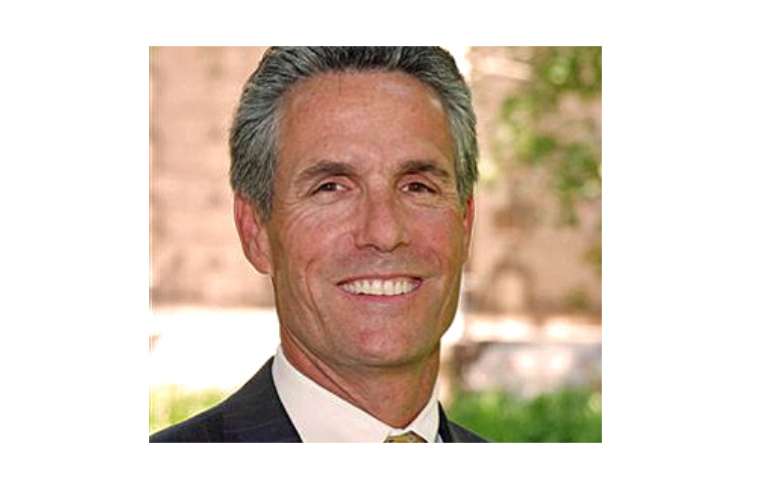
Dave Brady

Dave Brady

He doesn’t understand why the budget has grown and services have not.

Brady resigned as a reserve deputy when he declared his candidacy this month. This is a volunteer position.

He wants to take his experience in law enforcement and the financial world to do something so the sheriff’s office budget no longer represents 40 percent of Douglas County’s general fund. He believes the department is in need of leadership change.

“I think we can safely reallocate resources. I would want to add a car to the lake at peak hours,” Brady said.

Most times of day there are two Douglas sheriff’s vehicles covering the Lake Tahoe portion of the county.

“I don’t see the lake as being an afterthought. I see it as being a vital and critical element to Douglas County both in the short term and long term,” Brady told Lake Tahoe News. “I see the lake in transition. There are a lot of things being done to reinvent that area. I want to make sure the sheriff’s office is onboard and willing to provide support.”

As a reserve, Brady was on the patrol boat this summer at Tahoe. He works Fourth of July and New Year’s Eve, so he knows all about the influx of tourists to the South Shore.

Brady and his wife moved to the Carson Valley in 1985 after their daughter was born. (They have five adult children.) They had been living in Southern California where he was a police officer in Redondo Beach for eight years. He worked patrol and was primarily a K9 officer.

When the president of the police association said they needed someone to manage the money Brady realized he didn’t have the skills to do so. This led him back to the classroom where he became a certified financial planner.

He also has an associate of arts degree in criminal justice, a bachelor’s in public affairs from USC, as well as a master’s in public administration from USC.

Today he blends law enforcement with finance by managing several police associations in Nevada and California. He is president of Brady & Associates, a financial services firm in the Carson Valley.

When he first moved to Nevada he worked for the state Gaming Control Board.

“When I began my career in law enforcement I did so with the expectation I would lead a law enforcement agency,” Brady said. “Along the way I took on careers that distracted from the typical way up the ranks that people would pursue.”

Brady was appointed to the Douglas County school board in 1995 and resigned in 2004 when he moved out of the district. He was a Douglas County commissioner from 2005-10.

When he isn’t working, Brady likes to compete in ocean sailing races in Southern California – in 2011 he sailed to Hawaii, and once a week he likes to ride his bike up Kingsbury Grade.

Opinion: U.S. focusing on wrong fiscal issue

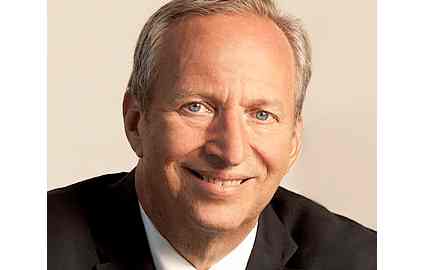
By Larry Summers

Washington is consumed by the impasse over reopening the government and raising the debt limit. It seems likely that this episode, like the 1995-96 government shutdowns and the 2011 debt-limit scare, will be remembered mainly by the people directly involved. But future historians may well see today’s crisis as the turning point at which American democracy was shown to be dysfunctional — an example to be avoided rather than emulated.

This tragedy is compounded by the fact that most of the substance being debated in the current crisis is only tangentially relevant to the major challenges and opportunities facing the United States. This is the case with respect to the endless discussions about the precise timing of continuing resolutions and debt-limit extensions, or the proposals to change congressional staff health-care packages or cut a medical-device tax that represents only about 0.015 percent of gross domestic product.

Larry Summers

Larry Summers

More fundamental is this: Current and future budget deficits are now a second-order problem relative to other, more pressing issues facing the U.S. economy. Projections that there is a major deficit problem are highly uncertain. And policies that indirectly address deficit issues by focusing on growth are sounder in economic terms and more plausible in political terms than the long-term budget deals much of the policy community is obsessed with.

The latest Congressional Budget Office projection is that the federal deficit will fall to 2 percent of GDP by 2015 and that a decade from now the debt-to-GDP ratio will be below its current level of 75 percent. While the CBO projects that under current law the debt-to-GDP ratio will rise over the longer term, the rise is not large relative to the scale of the U.S. economy. It would be offset by an increase in revenue or a decrease in spending of 0.8 percent of GDP for the next 25 years and 1.7 percent of GDP for the next 75 years.

These figures lie well within any reasonable confidence interval for deficit forecasts. The most recent comprehensive CBO evaluation found that, leaving aside any errors due to policy changes, the expected error in projections out only five years is 3.5 percent of GDP. Put another way, given the magnitude of forecast uncertainties, there is a chance of close to 40 percent that with no new policy actions, the ratio of debt-to-GDP will decline over 25 or 75 years.

Of course, debt problems could also be much worse than is now forecast.

But in most areas, policymakers avoid strong actions without statistically compelling evidence. Few would favor action to curb greenhouse gas emissions without evidence establishing that substantial climate climate change is overwhelmingly likely. Yet it is conventional wisdom that urgent action must be taken to cut the deficit, even as prevailing short-run deficit forecasts suggest no problems and long-run forecasts are within margins of error.

To be sure, some steps that matter profoundly for the long run should be priorities today. Data from the CBO imply that an increase of just 0.2 percent in annual growth would entirely eliminate the projected long-term budget gap. Increasing growth, in addition to solving debt problems, would also raise household incomes, increase U.S. economic strength relative to other nations, help state and local governments meet their obligations and prompt investments in research and development.

Beyond the fact that spurring growth has a multiplicity of benefits, of which reduced federal debt is only one, growth-enhancing policies have more widely felt benefits than measures that raise taxes or cut spending.

Spurring growth is an area where neither side of the political spectrum has a monopoly on good ideas. We need more public infrastructure investment, but we also need to reduce regulatory barriers that hold back private infrastructure. We need more investment in education but also increases in accountability for those who provide it. We need more investment in the basic science behind renewable energy technologies, but in the medium term we need to take advantage of the remarkable natural gas resources that have recently become available to the United States. We need to ensure that government has the tools to work effectively in the information age but also to ensure that public policy promotes entrepreneurship.

If even half the energy that has been devoted over the past five years to “budget deals” were devoted instead to “growth strategies,” we could enjoy sounder government finances and a restoration of the power of the American example. At a time when the majority of the United States thinks that it is moving in the wrong direction, and family incomes have been stagnant, a reduction in political fighting is not enough. We have to start focusing on the issues that actually are most important.

Larry Summers is a professor and past president at Harvard. He was Treasury secretary from 1999 to 2001 and economic adviser to President Obama from 2009 through 2010.


Truckee bears entering vehicles

Truckee police officers have been busy chasing bears out of vehicles.

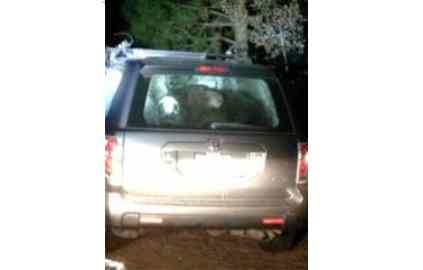
Officers responded to Stuart Staithe in Glenshire late Sunday night for a bear trapped in a car. The bear had locked himself inside and caused significant damage to the interior of the vehicle.

Bears are entering vehicles in Truckee. Photo/Provided

Bears are entering vehicles in Truckee. Photo/Provided

The car’s owner could not be located, so officers broke a window to release the bear.

This was the third such incident in the last two weeks in Truckee.

A bear got stuck in a car in Prosser Lakeview on Oct. 8 and was let out by the car’s owner.

In the early morning hours of Sept. 30 a bear got stuck in a car on Alder Drrive near Alder Creek Middle School. The bear broke a window to escape.

There was major damage to all three of these vehicles. Bears can get stressed and angry when confined to a small space.

The Bear League recommends rolling car windows and locking the doors. Bears can open unlocked car doors. And never leave food or anything smelly in a vehicle.

— Lake Tahoe News staff report


Calif. pilots 2-tiered tuition law at community colleges

By Lydia O’Connor, Huffington Post

A controversial new law will allow some California community colleges to charge more for their most popular classes, outraging some students and public education advocates who fear this lays the foundation for a new standard of rewarding wealth over academic standing.

Signed into law on Thursday by California Governor Jerry Brown, the two-tiered tuition law allows for up to six of the state’s community colleges to participate in a pilot program wherein schools can charge a premium price for the most in-demand classes. The option will only apply to summer and winter term extension classes, and the experiment will expire in 2018.

The six eligible schools are College of the Canyons, Crafton Hills College, Long Beach City College, Oxnard College, Pasadena City College and Solano Community College.

A popular three-unit class would jump from $138 to roughly $600, the San Francisco Bay Guardian reports.

Read the whole story


Between Horses and Humans benefit

Leadership and communication skills, trust, courage, and generosity of heart are a few of the things that happen with children who are paired with equine teachers in the Between Horses and Humans program.

Fear turns to confidence, aggression to patience, timidity to self-esteem, and selfishness to kindness.

Learn more about this program on Oct. 19 from noon-3:30pm at Maddi’s Friesian Ranch, 1351 Old Foothill Road, Gardnerville. Cost is $65. RSVP to Barbara Slade at (775) 265.0901 or betweenhorsesandhumans@gmail.com.


Odds gamblers will win — 30%

By Mark Maremont and Alexandra Berzon, Wall Street Journal

The casino billboards lining America’s roadways tantalize with the lure of riches. “Easy Street. It’s Only a Play Away,” screams one in Arizona. “$7.1 Million Every Day. We’re a Payout Machine,” reads another.

But how often do gamblers really win? What are the chances that a gambler will win on a single day or over a longer period? Don’t bother to ask the casinos. Although they gather vast quantities of data about their customers for marketing purposes, including win and loss tallies for many regulars, casinos keep such information a closely-guarded secret.

Now, thanks to an unprecedented trove of public data detailing the behavior of thousands of Internet gamblers over a two-year period, the Wall Street Journal can provide some answers.

On any given day, the chances of emerging a winner aren’t too bad — the gamblers won money on 30 percent of the days they wagered. But continuing to gamble is a bad bet. Just 11 percent of players ended up in the black over the full period, and most of those pocketed less than $150.

Read the whole story


Mixed reactions to Brown’s stance on gun bills

By David Siders, Sacramento Bee

Gov. Jerry Brown signed legislation Friday banning the use of lead ammunition in hunting in California, but he vetoed the most controversial gun control bill the Legislature sent to him this year, a proposal to ban the sale of certain semi-automatic rifles.

In mixed action on a high-profile package of gun control bills, the Democratic governor signed legislation requiring buyers of long guns to obtain firearm safety certificates, but he vetoed measures to limit the transfer of unsafe handguns and to let Oakland enact its own, more restrictive, gun control regulations.

While environmentalists claimed a victory on the lead ammunition ban and the National Rifle Association took heart in Brown’s veto of the semi-automatic rifle bill, gun control activists were crestfallen.

Read the whole story


Snippets about Lake Tahoe

Reno Aces jumbotron• The Reno Aces need a coach. Brett Butler is going to be the Florida Marlins third base and outfield coach.

• The Lettermen perform Oct. 22-23 in the Valley Ballroom at the Carson Valley Inn. Doors open at 7pm and the show starts 7:30 both nights. Tickets are $29.99 – call (775) 783.6606.

• Lake Tahoe South Shore Chamber of Commerce is having a mixer Oct. 17 at 5:30pm at the Lakeview Loft located above Dart Beverage Center in Stateline. Cost is $10 for chamber members and $20 for prospective members.

• The National Ski Areas Association annual Sustainable Slopes report is out.

• Here is the Sierra roadwork schedule for the week from Caltrans.


Drag show at LTCC

Live Violence Free’s and Friends of Ally’s inaugural Drag for Love Show is Oct. 26 from 7-9pm.

Presale tickets are $7; or $10 at the door. Purchase tickets at the Live Violence Free office or at Lake Tahoe Community College’s student services office.

The show will take place at the Duke Theatre at Lake Tahoe Community College.

Performers will be from the Tahoe-Reno area.