Time to plant sugar pines in Tahoe

The Sugar Pine Foundation has a series of community plantings and student plantings planted for the fall.

Volunteers are needed to help plant. The group provides seedlings, tools and gloves for all plantings.

Here are the dates:

  • Oct. 19, 10am-noon, Tahoe City: Community planting at Beverly Drive and Clayton Way. Tahoe City Rotarians are sponsoring the planting.
  • Oct. 20, 10:30am-1pm, Truckee: Truckee River Day planting at Waddle Ranch. Meet at the airport parking lot and carpool. This is sponsored by the Truckee Tahoe Airport and Northstar Properties.
  • Oct. 21, 1-3:30pm, South Lake Tahoe: Environmental science and ecology students will plant at the Lake Tahoe Community College campus. Sponsored by photographers Josh Marianelli and Corey Rich.
  • Oct. 22, 9am-1pm, North Tahoe Middle School. One hundred sixth-graders will participate in a field day of planting, and learning about seed dispersal and erosion control.
  • Oct. 22, 1:30-4pm, Incline Village: Sierra Nevada College environmental science class planting.
  • Oct. 24, 10am-2pm, Incline Village: Lake Tahoe School Planting at Sand Harbor. Thirty fourth- and fifth-graders will be planting and learning junior botany.
  • Oct. 26, 10am-noon, Stateline: South Shore community planting near the old Kingsbury Middle School. Plant alongside Starbucks employees. Sponsored by Plant Trees 4 Life.
  • Oct. 27, 9:30am-noon, South Lake Tahoe: Join city volunteers in planting trees near Lake Tahoe Airport. A shuttle bus will take volunteers from the airport to the planting site.
  • Oct. 28, 10am-noon, Zephyr Cove: Thirty-five Whittell High science students will take part in a planting at Zephyr Cove Park.
  • Oct. 31, 10am-1pm, El Dorado County: Fifty South Lake Tahoe sixth-graders will plant and learn junior botany near Golden Bear Drive.
  • Nov. 1, 10am-1pm, El Dorado County: Fifty more South Lake Tahoe sixth-graders will plant and learn junior botany near Golden Bear Drive.


Calif. water managers urging conservation

By Bettina Boxall, Los Angeles Times

Water managers Monday urged Californians to step up their conservation efforts, warning that many parts of the state could face water shortages next year if this winter proves to be another dry one.

Lake Oroville in April 2010. Photo/LTN file

Lake Oroville in April 2010. Photo/LTN file

Officials are not ready to declare a statewide drought. And managers of the Metropolitan Water District of Southern California, the region’s wholesaler of imported water, said they have sufficient supplies in regional storage to avoid mandatory cutbacks for at least another year.

But two dry years in a row have pushed water levels in the state’s biggest reservoirs to below normal. Lake Shasta is at 66 percent of the average for this time of year and Lake Oroville is at 73 percent of average.

Read the whole story


North Shore film series begins with climb in Canada

Alpenglow Sports’ first installment of the 2013-14 Winter Film Series is Nov. 14.

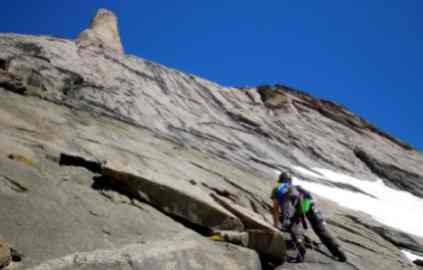
Opening pitches on Asgard with headwall above. Photo/Provided

Opening pitches on Asgard with headwall above. Photo/Provided

Local Dave Nettle will kickoff the eighth year of the event at Squaw Valley’s Olympic Village Lodge. He will entertain the audience with a fast-paced and humorous account of his most recent climbing expedition to Baffin Island, which is in the remote northeast corner of Canada.

“Baffin Island: Free Climbing in the Far North” will serve as a visual road trip to an area that most climbers only dream about.

The Tahoe City shop puts on the shows for free. This one starts at 7pm.

For more info, call (530) 583.6917.


Controlled burn planned for Incline

Weather conditions permitting, the North Lake Tahoe Fire Protection District is planning on conducting a prescribed burn in the 1st Creek drainage above Knotty Pine Drive and Dale Drive and west of Bronco Court and Matchless Court on Oct. 17-18.

The project is approximately 15 acres on IVGID property.

Smoke resulting from the understory burn will affect the surrounding areas for approximately 24 hours. People that are smoke sensitive are advised to please stay inside and close their windows and doors as much as possible until the smoke dissipates.

For further information, or to be added to the district’s smoke sensitive notification list, call (775) 831.0351, ext. 0.


Head of Tahoe Area Sierra Club dies on safari

By Charles S. Johnson, Billings (Montana) Gazette 

Bob Anderson, chair of the Tahoe Area Sierra Club, died in a rollover accident Friday in Serengeti National Park in Tanzania, Africa.

His wife, Grace, was injured in the accident but survived. They were among the passengers in a Land Rover that rolled over.

Bob Anderson

Bob Anderson

Anderson was a leading Montana conservationist and a former state public service commissioner. He had lived in Helena for many years, but more recently resided in Meyers.

He and his wife were celebrating his 70th birthday in Africa and had completed a successful ascent of Mount Kilimanjaro, reaching the 19,400-foot summit.

“Bob Anderson was a great citizen of the wilderness,” said one of his friends, Bob Decker, of Helena. “He wasn’t just a lifelong recreationist in the backcountry, but a dedicated conservationist who always returned to town to organize and lead efforts to win community support and political protection for wild public lands.”

Read the whole story


Government leaders reach shutdown, debt deal

By Lisa Mascaro and Michael A. Memoli, Los Angeles Times

WASHINGTON – The top Senate leaders jointly announced an agreement Wednesday on a bipartisan proposal to raise the nation’s debt limit and re-open government that Congress is expected to approve to prevent an economically dangerous default.

Senate Majority Leader Harry Reid, D-Nev., and Senate Minority Leader Mitch McConnell, R-Ky., revealed the agreement shortly after the Senate session began.

“The eyes of the world have been in Washington all this week,” Reid said. “Today, they will also see Congress reaching a historic bipartisan agreement to reopen the government and avert a default on the nation’s bills. The compromise we reached will provide our economy with the stability it desperately needs.”

McConnell said he was “confident” both those goals would be reached Wednesday.

Read the whole story


Sugar substitute replacing tobacco crops

By Duane Stanford, Bloomberg

The once-idled leaf-processing machines at a former tobacco trading house in Alma, Ga., are coming back to life. Except now the warehouse, which still smells of tobacco leaves and cigarette smoke, is becoming a hub for a sweeter crop: stevia.

Approved for commercial use in the U.S. five years ago, stevia extracts are fast becoming the sugar substitute of choice for a population trying to slim down and avoid artificial options. The no-calorie, natural sweetener, derived from plants grown mostly in China and South America, is creating an opportunity for U.S. farmers and processors looking to make up for dwindling tobacco demand and sell to the likes of Cargill and Coca-Cola.

Stevia may one day command about a third of the $58 billion global sweetener market, according to Stevia First, a grower in Yuba City.

U.S. tobacco output, meanwhile, has slid by half over the past 20 years. Since the two leaves can be handled using the same planting equipment, harvesters, drying barns, and loaders, processors are urging farmers to switch to stevia.

“I can remember 25 years ago when there were 300 tobacco farmers here,” says Julian Rigby, 62, a farmer who’s traded his tobacco fields near the Alma facility for stevia plots. “Today there’s one.”

Stevia, named after the 16th century botanist Petrus Jacobus Stevus, and tobacco have a lot in common. They can grow in similar soil and climates. Both leaves are picked, separated from their stems, and dried. But unlike cigarettes and other tobacco products, extracts from the stevia herb are “generally recognized as safe,” says the U.S. Food and Drug Administration.

That’s been a godsend for food manufacturers who have fought a backlash against sugar, fat, and salt as obesity rates ballooned in recent decades.

Read the whole story


Exercise may be the best relief for achy knees

By Patti Neighmond, NPR

If you’re among the estimated 27 million Americans who suffer from osteoarthritis of the knee or hip, then perhaps you’ve tried the nutritional supplements glucosamine and chondroitin. They’ve been marketed for joint health for about 20 years, and sales are still brisk. But do they help?

Some horses might say yes. The supplements were first tried in horses, and there’s some evidence that the supplements might improve joint function for them.

Glucosamine and chondroitin are also marketed to dog owners. But what about us humans? Unfortunately, researchers say that for us the results just don’t match the glowing testimonials.

It would seem to make sense that glucosamine and chondroitin could help. They’re both natural substances found in cartilage, that hard connective tissue that pads joints.

Glucosamine is an amino sugar that may help renew cartilage, and chondroitin sulfate is a complex carbohydrate that is thought to help cartilage retain water. Arthritis causes pain, swelling and stiffness in joints and damages cartilage over time. So the thought was maybe extra glucosamine and chondroitin could help maintain and even repair the damage.

Read the whole story


S. Tahoe reaffirms decision to ban plastic bags

By Kathryn Reed

Advocates for banning plastic bags in South Lake Tahoe got a partial win Tuesday.

While the ordinance for the ban was on the consent agenda as a second reading, it got pulled for discussion.

Tim James, manager of the California Grocers Association, wanted time to explain how without putting a fee for paper bags in the ordinance, the council would hurt businesses.

“When you only ban plastic, there is a move to paper,” James told the council on Oct. 15. “In South Lake Tahoe, if you go without a fee, it will be about a $60,000 increase in bag costs to have free paper and no plastic available.”

James represents the two Raleys and one Safeway in town.

Ryan Schouten, whose family owns the Grocery Outlet, agreed with most of what James had to say.

“We don’t offer paper bags because of the cost. They are 9 to 10 cents for us,” Schouten said. He expects his store alone will take a $50,000 hit each year to provide paper bags.

Plastic grocery bags on average cost 3 cents each.

The ordinance takes effect Jan. 15 for all grocery stores in South Lake Tahoe and on Oct. 15, 2014, for all other retail establishments.

Resident Norm Strobel told the council he and his wife would shop outside the city if the ban were approved.

Eleven of the 13 people who spoke at the meeting favored the ban. One of those advocates was B Gorman, CEO of Lake Tahoe South Shore Chamber of Commerce. She said not putting the fee in for paper was a vote against business.

Many of the 80-plus jurisdictions in California that have implemented plastic bag ordinances also impose a fee for paper. This is designed to be an incentive for people to switch to reusable bags that they would bring to the store.

Councilmember Hal Cole believes charging a fee for a bag is a tax that shoppers should not have to endure. He was the deciding vote Tuesday as well as earlier this month.

Councilmembers Tom Davis and JoAnn Conner have been adamantly against the ban. He believes there is not a plastic bag issue. She believes there are health concerns with reusing canvas bags or the like. He would support the state taking the lead. She doesn’t believe stores have been part of the discussion.

The bag ban has been discussed for four years in South Lake Tahoe. And stores like Safeway, T.J. Maxx, Kmart and Big 5 operate stores in jurisdictions that have banned plastic bags and have managed to survive.

Councilmembers Angela Swanson and Brooke Laine wanted the fee for paper. But what they wanted more was for plastic to be banned, so they voted for the ordinance without the fee.

It was the same 3-2 vote as two weeks ago to ban plastic bags, with Davis and Conner in the minority.

It was agreed that a few months after the plastic ban has been in effect the council would revisit the ordinance to see how it is working.

In other action:

• The second reading of the tourist core area plan was voted on. This time Conner voted for it. It passed unanimously, where it was a 4-1 vote at the first reading earlier this month.


Opinion: Bullies don’t belong on City Council

By Kathryn Reed

Politicians are elected to SERVE the public.

Many seem to have forgotten that. They have their own agendas. They want to represent a few instead of the majority. They forget about doing what’s right for the greater good and refuse to put aside personal opinions. And it’s not just happening in Washington, D.C.

The Oct. 15 South Lake Tahoe City Council meeting was embarrassing to sit through.

Once again the topic of banning plastic bags was before the council. It’s been talked about for four years, but by the way some councilmembers act it’s like the ban is a new idea.

What was so horrendous is how Councilwoman JoAnn Conner treated the people who spoke in favor of the ban. And then how Mayor Tom Davis allowed her to get away with it. The mayor is supposed to run the meeting and have control. Clearly, that was not the case on Tuesday.

They are also the only two who for the second meeting in a row voted the same way – against the ban.

Eleven of the 13 members of the public who spoke Tuesday favor banning single-use plastic bags.

Conner was combative after nearly every single pro bag banner spoke. She bantered with them, questioning in a harsh tone as though her only intent was to belittle them.

The point of public comment is for the council to listen. Questions should be to clarify something, not to degrade the person for their opinion. The public is not there for an inquisition. No one should be vilified for his or her opinion.

There are ways to disagree and still be respectful. But Conner should not have even been engaging these people in conversation in the first place.

If that is the new norm for how the public will be treated, I would think the number of people coming forward at future council meetings would diminish.

When it came time for the councilmembers to give their comments Conner went on a rant. This is supposed to be the time when the council members state their opinions and try to convince their colleagues to vote with them.

Not so with Conner.

At no time did she even have eye contact with the other four electeds. Instead, she stared at the audience – the ones who had just spoken and the few others in attendance. She chastised them, practically ridiculed them, and scolded them as though their opinion were irrelevant.

Wake up Conner. You were elected to represent all 20,000-plus residents, not just your opinion or the ones who call you. Have you ever thought that those who disagree with you are afraid to call because of the way you treat people in public? One can only imagine the venom that might spew from you in private.

One has to wonder why the mayor didn’t take control of the meeting. Was it because Conner was his only ally on this topic?

Davis said he would rather support a statewide plastic ban. It’s likely another such bill will circulate through the Legislature after the first of the year. Normally Davis is one for local control and doesn’t like to abdicate his authority to others.

But by getting the council to write a letter in support of the statewide ban with his signature on it while he is still mayor, he comes out looking good even if it never goes anywhere in Sacramento.

He constantly says there is no plastic bag problem in Tahoe, then cites Clean Tahoe and South Tahoe Refuse. Maybe you don’t see the problem because they do such a good job. The problem, though, Mr. Mayor, goes beyond whether you see a bag on the street or in the lake. The problem is in the landfills as well as with wildlife.

And Mr. Mayor, since you are a board member of Lake Tahoe Wildlife Care, one would think you would have insider info about the hazards of plastic and wild animals.

I’m not saying we should have 5-0 votes on the council. Disagreement is fine – even good at times. But decorum should be mandatory.

—-

And for the record: I am against the plastic bag ban because I don’t want government telling me what to do. However, I think it’s good for the city to set a standard of environmental stewardship. If I were on the council, I would have voted for the ban because it’s for the greater good.