Squaw chef produces explosion of flavors

By Kathryn Reed

OLYMPIC VALLEY – Heirloom tomatoes, corn bisque and black trumpet mushrooms = heaven, even for a carnivore.

Chef Chad Shrewsbury had guests of this month’s Study of the Seasons: Farm to Tahoe dinner at the Resort at Squaw Creek’s Six Peaks Grille raving about his ability to transform ordinary ingredients into extraordinary culinary delights.

Heirloom tomatoes, above, and the corn bisque soup were highlights of the July 5 Farm to Table dinner at Resort at Squaw Creek. Photos/Kathryn Reed

Heirloom tomatoes, above, and the corn bisque soup, below, were highlights of the July 5 Farm to Table dinner at Resort at Squaw Creek. Photos/Kathryn Reed

The sea salt on the tomatoes reminded Sue of growing up in Vermont when her mom would pick tomatoes out back and serve them sliced with a dash of salt.

Shrewsbury’s dish elevated this classic first course with the addition of Burrata cheese (a mix of mozzarella and cream), purple basil (which is sweeter than regular basil), sherry vinegar and a pine nut relish. While finely chopped, that relish provided an unexpected crunchiness because visually it was not obvious nuts were part of the dish.

Using more than just red tomatoes from Greg’s Organics in Grass Valley also made the dish wonderful to just look at.

These dinners are all about using ingredients sourced from regional farms in the foothills near Lake Tahoe. Each course is then paired with a wine. The July 5 dinner featured Clos LaChance winery in San Martin.

Winemaker Bill Murphy chose a 2013 Sauvignon Blanc to pair with the heirloom tomatoes. Sue liked squaw dinner-4-soupthe fig she noted in the wine, saying it complemented the pine nut relish. While many Sauvignon Blancs are fine without food, this one in particular had its fruitiness enhanced by the tomatoes.

For most people, the next course was pork belly with Blue Lake beans, jalapeno polenta, citrus salad and mole rapido. I had the corn bisque, which Sue (the carnivore) said was her favorite dish of the night.

The pork was served with a 2010 Reserve Pinot Noir. Murphy noted it was darker in color than most Pinots, which is what the Santa Cruz Mountains tend to produce.

Standing in front of the picture windows with a backdrop of the towering granite peaks that make up Squaw Valley Ski Resort, Murphy answered questions about his wines and the industry in general. He explained how he started in the wine business as a hobby. Now he and his wife have 150 acres of estate grown grapes.

Murphy believes the climate has more to do with the end product of a wine than the terroir. He points to the hot sunny days and cool nights of Santa Cruz for adding so much to the grapes he grows.

He is extremely familiar with the North Shore, having had a house at Squaw Valley for the last 20 years and at Tahoe Donner before that.
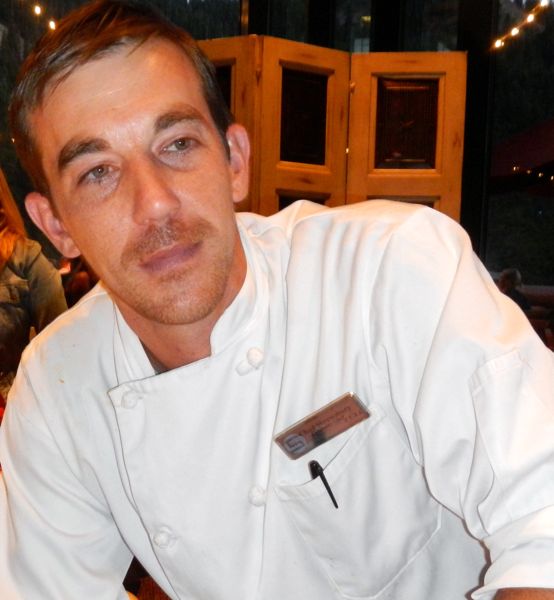
Chef Chad Shrewsbury has been with the Resort at Squaw Creek for seven years.

Chef Chad Shrewsbury has been with the Resort at Squaw Creek for seven years.

Sue liked that the Pinot had a long finish, meaning it stayed on her taste buds longer. It paired nicely with the pork, but was not a good choice for the bisque.

Pork belly is traditionally a fatter cut of meat. Sue noticed it was a bit salty, but a sip of wine took it away. The polenta was not spicy, despite having jalapenos in it.

A unique twist with the corn bisque was the pieces of gnocchi in it. It was the texture more than anything that complemented the silkiness of the soup. This bisque was so refined. While the corn flavor was obvious, it wasn’t overwhelming. It could have been a meal unto itself.

That is one of the things about this four-course dinner — the portions are extremely generous. None of this take two bites and call it a serving like so many places. But at the same time, come hungry or you won’t be able to eat everything. Plus, the wine pours are ample.

I was not able to finish my next course because I was already getting full. But it is something I would love to have again. The pasta came with fava beans, spinach, cherry tomatoes, artichoke hearts and black trumpet mushrooms.

Those same mushrooms accompanied the Chilean sea bass that also had sweet corn and parsley tomato jus.

Sue said the earthiness of the mushrooms is so distinct that it was like they had been growing deep in the soil. I have such a thing for mushrooms that I made sure not a nibble was left on the plate.

Shrewsbury’s skills as a vegetarian chef have been honed through the years because his wife doesn’t eat meat. He’s been at Six Peaks Grille for seven years.

“I like earthy food, stuff that you get fresh from the farmer,” Shrewsbury told Lake Tahoe News. “I keep it basic, but I keep the flavor profile. If you explode the subtle flavors of food, people love it.”

The next Farm to Table dinner is Aug. 20

The next Farm to Table dinner is Aug. 30.

Based on the empty plates returning to the kitchen, Shrewsbury nailed it.

This third course was served with a crisp 2010 Reserve Chardonnay.

The only disappointment of the evening, though, was dessert. Fortunately we were so full it’s not like we really needed more. The chocolate crème brulee was not a traditional crème brulee. It came with stone fruit, mint marmalade and powder raspberry. None of it seemed to go together.

Dessert came with a 2010 Estate Zinfandel. It was wonderful not to have a traditional dessert wine. Zins pair so well with chocolate, that this was perfect for the last course – even for those who didn’t eat their dessert.

—-

Notes:

• The next dinner is Aug. 30. For more info, go online or call 530.583.6300.



Opinion: Growing the economy is a necessity

By Nancy Kerry

On June 17, 2014, the City Council held a workshop regarding the city’s five-year financial forecast and the overall economic forecast for the local community. While the forecast has improved, we need to attract substantial capital investment over the next 10 years to grow the economy, meet the community’s needs and fund projects protecting the natural environment.

Like most state and local government agencies, the city’s revenues are dependent upon a thriving local economy and upon the housing market (property taxes) to fund essential public services. Additional services and capital investment require additional revenues. As a result of the Great Recession the city’s revenues dropped sharply in 2008. By 2010, the city’s five-year forecast projected $3 million deficit annually, which would have drained the city’s reserves within a few years and could have driven the city into bankruptcy.

Nancy Kerry

Nancy Kerry

It is July 2014 and that did not happen. The city is solvent, midway through its first balanced budget in more than five years and closed out last year with positive cash flow.

How did such a transformation in the city’s finances occur in a few short years? In 2010, the City Council changed its course and set sail to establish a local government living within its means. To reduce the majority of expenses, the city eliminated 30 percent of its workforce and focused on delivering quality core services to the community. Since 2011, the city has held the line on expenses to the best of its ability, with the exception of skyrocketing pension and health care costs. City employees agreed to changes in health care benefits and reductions in pay ranging from 7 to 9 percent.

Simultaneously, the City Council began heavily investing in streets, roads and infrastructure such as the Harrison Avenue project, local street improvements, Bijou stormwater project, Linear Park and more.

Although these capital investments create a strain on the city’s limited financial resources, the community investment is worth the risk. Locals and visitors alike expect the built environment to more closely mirror Tahoe’s world-class natural environment. Yet much of the built environment lags far behind the pristine natural beauty of Lake Tahoe.

The City Council’s decision in 2010 to change course by significantly reducing expenses while concurrently investing in capital was a risk worth taking. If those difficult decisions during very tough economic times had not been made, Harrison Avenue and other projects would not be under way today.

Capital investment makes a difference. We need $15 million in public and private capital investment for the next 10 to 15 years to construct the improvements necessary to grow the economy and protect the environment. At first thought, setting a goal of $150 million may seem unattainable. However, we are already 20 percent toward that goal in this year alone: Over $32 million in public and private capital is being invested in the community through the Harrison Avenue, the Bijou Project, and Chateau project. Another $5 million to $10 million in private projects are also under construction in the city.

Clearly, we can attract capital investment. What we need is to more adequately welcome and assist those who want to invest their capital in the community. Government must remove regulations impeding redevelopment of antiquated buildings to encourage modernization, which will benefit the environment and the economy. Growing the economy and protecting the environment are not exclusive goals, but there is a delicate balance. We cannot pursue economic development at the expense of the environment and we cannot protect the environment at the cost of suffocating the economy. When one fails, both fail. Government agencies are the primary funding source of environmental projects. In order to fund those projects, the economy must be thriving beyond the revenues needed for essential public services.

Working together we can develop solutions to welcome capital investment, which will raise the top line across all sectors. As revenues increase, investment in the community will provide long-term sustainability for the next generation. Lakeview Commons was originally just an idea advanced through strategic and visionary leadership. When combined with community engagement and capital investment, we now have a wonderful public facility enjoyed by all.

What’s next? How can we attract community investment and retain and support local businesses? Your voice is important to the discussion, as are the ideas of your friends, neighbors, and those from a generation behind you because it’s their future we are planning for and what we invest in, they will inherit.

Nancy Kerry is the city manager of South Lake Tahoe.


WCSO trying to curtail trailhead thefts

Washoe County sheriff’s deputies are intensifying efforts to keep vehicles and valuables safe at county parks and trailheads.

Data from previous years shows a definite increase in vehicle burglaries at parks and trailheads during the busy summer months. In order to reduce those burglaries, the department has launched a proactive, summerlong action plan.

Investigators identified 54 vehicle burglaries directly related to county parks and trailheads during the summers of 2011, 2012 and 2013.

In an effort to increase public awareness, 30 signs have been installed at two dozen designated parks and trailheads.

The key messages of Take ConTRoL are:

C – Clean it Out: remove valuables from your vehicle.

T – Take your keys with you. Never leave your car running.

R – Report suspicious activity or crimes to the proper authorities as soon as possible.

L – Lock your doors every time. Sheriff’s office statistics show that 75 percent of this year’s vehicle burglaries involved vehicles that were left unlocked

Anyone who see suspicious activity in any County park or trailhead is encouraged to call 775.785.9276.


Rummage sale all about dogs

Dawgs on the Run will host the inaugural Buried Bones Rummage Sale on July 26 from 9 am-2pm.

The rummage sale will be full of things for pets and owners, including new and used dog toys, bedding, accessories, clothing and more.

The event will be on the corner of Ski Run Boulevard and Forest Avenue in South Lake Tahoe.

All proceeds will go back into the Lake Tahoe community to help with education about responsible pet care. I

To donate items for the rummage sale, contact Kim Aynedter at girlpower43g@aol.com.

Dawgs On The Run is a nonprofit organization based in South Lake Tahoe with the purpose to expose people to educational information and resources for responsible pet care and to help pet owners gain a better understanding about their impact on the community.


Rural Nevadans opt out of medical pot

By Whip Villarreal, Las Vegas Review-Journal

CARSON CITY — Much of urban Nevada is quickly moving forward to license medical marijuana dispensaries, but patients in some rural areas might find it difficult to obtain the drug because local governments are opting out.

Another barrier to getting the drug is the apparent lack of interest by entrepreneurs to operate in the sparsely populated areas. Nevada’s rural counties reported little to no interest from applicants wishing to establish dispensaries, according to the Nevada Association of Counties.

The City Council in Fernley, which in 2010 had a population of 19,368, voted 3-1 last week to prohibit the dispensing, growing and manufacturing of marijuana for medical purposes within the city limits, according to Mayor LeRoy Goodman. The action taken was to direct staff to draft an ordinance to officially ban a dispensary in the Northern Nevada city.

Elsewhere in Lyon County, Yerington Mayor George Dini said a medical marijuana dispensary is “not a good fit for our city.” The town in 2010 had a population of 3,048.

With decisions by Lyon and Storey counties not to allow dispensaries, residents of this western Nevada region will be forced to drive elsewhere to purchase medical marijuana. A patient from Yerington would need to travel 120 miles round trip to get to the nearest dispensary in Carson City.

Read the whole story


Survey: Tahoe a cheap place for hotel rooms

The Lake Tahoe-Reno area is one of the cheapest places for hotel rooms, according to a survey by travel site Hotwire.com.

Orlando topped the list, with an average Hotwire price of $56 a night. This was followed by Tahoe-Reno at $69 a night, then Salt Lake City ($70), Atlanta ($75) and Dallas-Fort Worth ($78).

Hotwire says people in the U.S. spend nearly $185 billion each year on “obli-cations,” or trips they have to take. The category includes things such as weddings or other family obligations. Hotwire estimates that about $32 billion is spent on birthday trips, $20 billion traveling for weddings/family and $11 billion on reunions.


Certain foods can affect stress levels

By Allison Aubrey, NPR

Eat more when you’re stressed? You’re not alone. More than a third of the participants in a national survey conducted by NPR, the Robert Wood Johnson Foundation and the Harvard School of Public Health said they change their diets during stressful times.

And many of us are quick to turn to either sugary foods or highly refined carbohydrates such as bagels or white pasta when the stress hits.

“There can be a bit of a vicious cycle,” says David Ludwig, a professor of pediatrics and nutrition at Harvard University and a researcher at Boston Children’s Hospital. “When we feel stressed we seek foods that are going to comfort us immediately, but often times those foods lead to surges and crashes in hormones and blood sugar that increase our susceptibility to new stresses.”

Now, of course, we can’t control lots of the events and circumstances that lead to stress. But, Ludwig says, “our body chemistry can very much affect how that stress gets to us.”

Read the whole story


Mountain lion leaves behind deer carcass

A deer carcass found July 14 in South Lake Tahoe. Photo/Toogee Sielsch

A deer carcass found July 14 in South Lake Tahoe. Photo/Toogee Sielsch

While mountain lions are not often seen in the Lake Tahoe Basin, they do live here.

El Dorado County Vector Control employees were reminded of this today when they found a deer carcass that was the work of a mountain lion.

The skeletal remains were found July 14 near Trout Creek right below Pioneer Trail in South Lake Tahoe.

Deer are a primary food source for mountain lions, though they will also eat coyotes and raccoons.

The last reported sighting of a mountain lion in the basin was summer 2013 in the meadow between Lake Tahoe Community College and South Tahoe Public Utility District. In 2008, a mountain lion was caught in the Tahoe Keys.

— Lake Tahoe News staff report


Higher wages buys loyalty from fast food workers

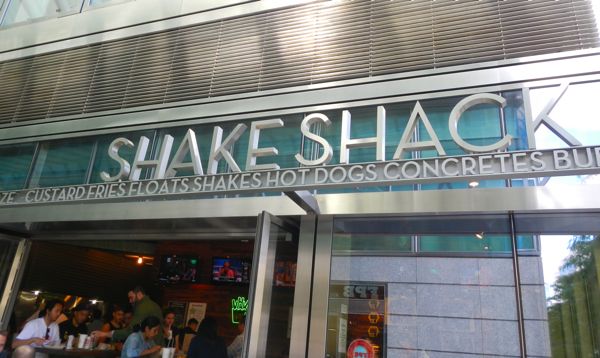
Shake Shack pays employees well above minimum wage. Photo/LTN

Shake Shack pays employees well above minimum wage. Photo/LTN

By Steven Greenhouse and Stephanie Strom, New York Times

CONCORD, N.H. — Ben Nawn, a sophomore at the University of New Hampshire, says his friends who work at McDonald’s are envious of what he earns working for the Boloco burrito restaurant here.

While they make $7.25 an hour, the federal minimum wage, Nawn receives $9 an hour, which Boloco sets as the floor at its chain of 22 restaurants, most of them in New England.

Nawn works at one of the handful of restaurant chains that deliberately pay well above the federal minimum wage. In-N-Out Burger-based in California pays all its employees at least $10.50 an hour, while Shake Shack, the trendy, lines-out-the-door burger emporium, has minimum pay of $9.50. Moo Cluck Moo, a fledgling company with two hamburger joints in Michigan, starts everyone at $15.

These companies’ founders were intent on paying their workers more than the going rate partly because they wanted to do the right thing, they said, and partly because they thought this would help their companies thrive long term.

“The No. 1 reason we pay our team well above the minimum wage is because we believe that if we take care of the team, they will take care of our customers,” said Randy Garutti, the chief executive of Shake Shack.

The nation’s fast-food restaurants, which employ many of the country’s low-wage workers, are at the center of the debate over low pay and raising the federal minimum wage — fueled by protests demanding that fast-food chains establish a $15 wage floor. McDonald’s was pilloried last year for a hotline that advised employees how to seek food stamps and public assistance for heating and medical expenses.

Read the whole story


Rotary hands out scholarships to area students

Tahoe Douglas Rotary Club awarded nearly $10,000 in scholarships to Whittell and South Tahoe high school students.

Whittell students who won are Elizabeth Anderson, Tori Jimenez, Spencer Buchholz, Serena Libert, Kendal Ferris and Danica Bunnett for academics and Mark Waite and Margaret Ellis for vocational.

South Tahoe High students awarded vocational scholarships this year were: Gabriella Torres, Rebecca Wesson and Brandon Singleton.

Tahoe Douglas Rotary is able to fund community projects and scholarships because of funds they raise during the year with the annual St. Patrick’s Day Celebration  and other events such as the Red Hut Burger Night.

Rotary International is a worldwide service organization whose stated purpose is to bring together business and professional leaders in order to provide humanitarian services, encourage high ethical standards in all vocations, and help build goodwill and peace in the world. There are 34,682 clubs in over 200 countries with 1.2 members.


The Tahoe Douglas Rotary Club meets every Friday at MontBleu Resort Casino and Spa located at 55 Highway 50, Stateline, NV at 12:15 pm. Guests are invited. Their website is www.tdrotary.com.