South Tahoe PUD doesn’t have enough in revenues to meet infrastructure needs

By Kathryn Reed

South Tahoe Public Utility District is spending only half of the money it should on infrastructure in order to keep up with an aging system, according to officials.

The board is trying to figure out how to allocate the money it has.

Earlier this month the five electeds had a workshop about the capital improvement program. The board directed staff to do a rate study in order to have more information on which to base a decision. A significant number of water meters have been installed since the 2011 study, which plays a role in water use and money collected.

After the first of the year the district plans to have more workshops to seek the public’s input regarding their priorities.

On average for the last 10 years the district has spent $4,020,022 on sewer and $6,462,312 on water projects each year.

Installing water meters is an unfunded mandate by California. Photo/LTN file

Installing water meters is an unfunded mandate by California. Photo/LTN file

In the district’s 10-year plan nearly $60 million in upgrades to the water system are needed and more than $70 million for the sewer side. Even then, not all of the nearly 8,000 customers who still need a water meter would have one.

To achieve those dollar amounts, the district would need to raise sewer rates 4 percent each year. The needed water rate increase will be determined after the study is completed. Each year that rates are not raised the district falls behind on its master capital improvement plan.

For the current budget, which started July 1, the board voted not to raise sewer or water rates.

Historically, board members Jim Jones and Eric Schafer favor rate increases for infrastructure needs, members Chris Cefalu and Randy Vogelgesang are against increases, and Kelly Sheehan is the swing vote. The last increases were in 2012 on a 3-2 vote to raise sewer rates 5 percent and water rates 2 percent.

Rates in the last 10 years have gone up on average 2 percent a year for water and 2.3 percent for sewer.

Needs of the district

Water meters is the biggest issue board members hear about from constituents. About one-third of STPUD customers are on meters. This creates an inequity between users when it comes to who is paying what.

“It will be unfair until everyone is metered,” Richard Solbrig, STPUD general manager, told Lake Tahoe News.

The state is mandating California water districts install meters by 2025. While the district lobbied to be exempt because it is not in the California watershed, lawmakers said too bad.

The district is looking into zero interest loans from the state to cover the $27 million expense to complete the meter installation. To pay that money back would require a rate increase either just for the 20-year repayment of the loan or an ongoing adjustment. That is another issue for the board to decide.

If STPUD were to ignore the mandate, money from the state would dry up and penalties are likely.

The district also has the need to replace more than 100,000 feet of undersized water line.

“With Angora we had enough water. How much worse would it have been if we didn’t?” Solbrig said of the 2007 Angora Fire that destroyed 254 houses and burned more than 3,000 acres on the South Shore.

An area like Sierra Tract in South Lake Tahoe doesn’t have the minimum 8-inch water lines to fight a fire like Angora. There aren’t hydrants every 500 feet like firefighters want.

Every time the district installs water lines it also puts in meters at residences and hydrants in the neighborhood. Some of the “state streets” were done this fall, with the rest of the area, including Tahoe Keys Boulevard, to get upgraded water lines next year.

Going forward

“The board is looking at the affordability to ratepayers,” Solbrig said in regards to if and when to raise rates.

Earlier this year the majority of the board believed ratepayers could not sustain an increase because of the economic downturn.

Chief Financial Officer Paul Hughes explained that the industry standard is to replace 1 percent of underground facilities annually and above ground at 2 percent. The district isn’t doing that. STPUD’s infrastructure is worth about $1.3 billion.

Besides meters and water lines, the district also has a couple storage tanks and booster stations that need replacing.

“All of our lift stations are approaching 50 years in age and need significant refurbishments,” Solbrig said.

When it comes to prioritizing projects, the district looks at what lines have sustained leaks, the probability of failure, if there are backup units and the risk involved if nothing is done.

The booster station at Luther Pass is inadequate. It pumps the treated wastewater into Alpine County.

“There is not a full backup for utilities there. Every year we get a little more nervous,” Solbrig said.

If something significant fails on the wastewater side, it would likely have a more immediate impact on the environment. But a fire that cannot be extinguished because of inadequate water supply would undoubtedly be detrimental to the land and water as well.

Those are the concerns the board must weigh when deciding how to spend money and where the money will come from.

There was a time in the late 1970s and early 1980s when South Tahoe PUD was banned from adding customers because of issues with the export lines – as in spills and leaks involving sewage and treated wastewater.

Staff wants to ensure the district does not create a scenario with the existing infrastructure where that could happen again.

The bottom line is there is not enough money being generated to do all that needs to be done.

Seventy percent of revenues come from ratepayers. The remaining 30 percent is a combination of grants, loans, connection fees, investment revenue, delinquent penalties and property tax.

With water and sewer mandatory for those who are connected to STPUD, it means 70 percent of the residential ratepayers don’t live in the district. The cost to locals would be much greater without the second homeowner subsidy.


Letter: Camp Rich helps at Bread & Broth

To the community,

Hosting their first Adopt A day of Nourishment, Camp Richardson Resort sent an energetic sponsor crew to volunteer at Bread & Broth’s Oct. 21 dinner.

The crew, consisting of Travis Lauinger, retail manager; Vanessa Santora, sales manager; Christy Catts, general store manager; Mai Dalton, lodging operations director; and Charlie Gaspar, front desk manager, were involved in all aspects of helping the B&B volunteers throughout the evening. They enthusiastically bagged giveaways, greeted guests, served dinner, drinks and desserts, dried dishes and packed up chairs and tables.

“We’re so grateful to have been a part of the Adopt A Day program. Everyone was so welcoming to us. It is important for us to give back to the community we love being a part of.Thank you to the crew. We will be back,” said Vanessa Santora at the end of the evening. As a nonprofit, all volunteer organization, Bread & Broth appreciates and is thrilled to have Camp Richardson Resort’s support in feeding the less fortunate.

For over 24 years, B&B has been serving nutritious meals to families, seniors on fixed incomes, the homeless and people dealing with difficult situations. B&B salutes Camp Richardson Resort for their generous monetary donation and concern for struggling members of our community. Bread & Broth is looking forward to working with Camp Richardson Resort and their employees when they sponsor their second AAD on April 7.

To help B&B as a donor or sponsor, please contact me at (530) 542-2876 or carolsgerard@aol.com.

Carol Gerard, Bread & Broth


30-acre controlled burn in Slaughterhouse Canyon

U.S. Forest Service fuels management crews will begin prescribed fire operations in Slaughterhouse Canyon, north of Spooner Summit, on Oct. 30.

The total unit size is 30 acres. Fuels management crews may burn as much of the unit as possible, weather and conditions permitting. Operations are likely to continue through the end of the week.

Because of the project size, a significant amount of smoke may be seen rising from the area. Smoke will be visible on Highway 28 and may be visible on Highway 50.

The Forest Service strives to minimize the impacts of smoke on local communities. Smoke-sensitive residents should consider staying indoors and keeping doors, windows and outside vents closed.

Forest Service staff will post road signs around the areas affected by the prescribed fire, send email notifications, and update the local fire information line at (530) 543.2600, No. 6.


El Dorado County hires probation chief

El Dorado County Probation Department will finally have a leader on Dec. 2.

Brian Richart has been appointed chief probation officer.

Greg Sly left the top spot in June on medical leave. He officially retired Sept. 13. Days before his last official day Sly sent a document to each member of the Board of Supervisors. The contents of which have not been disclosed by anyone. Sly told Lake Tahoe News he does not want to talk at this time about any further dealings he may have with the county.

Richart was hired away from Alameda County. He was hired in 2011 as chief of staff overseeing the administrative function of Human Resources, Fiscal, Information Technology Unit, Training, Information Services and Research, and Quality Assurance. Since July, he has been acting director of Adult Field Services.

Prior to that he was president of Assessments.com, a software developer. From 2006-10 he was chief probation officer for Shasta County. He spent 13 years with the Shasta department.

— Lake Tahoe News staff report


Caesars 3Q loss worse than expected

By AP

LAS VEGAS — Caesars Entertainment Corp. said Tuesday that its third-quarter loss expanded by more than 50 percent due to weakness in the U.S. gambling market and stiffer competition.

Casino revenue fell 7 percent because of fewer visitors to its properties in Atlantic City and other U.S. markets outside of Nevada. Caesars also lost revenue from selling part of its stake in a casino in Uruguay.

Caesars is the parent company of Harrah’s Lake Tahoe and Harveys in Stateline.

The company lost $761.4 million, or $6.03 per share, for the quarter that ended Sept. 30. A year earlier its loss was $505.5 million, or $4.03 per share.

The loss from continuing operations came to $6.12 per share, far short of Wall Street’s prediction of $1.28 per share. The company absorbed an accounting charge of $930.9 million for writing down the value of assets in Atlantic City and other U.S. markets outside of Las Vegas. That compared with a similar charge a year ago of $419 million.

Revenue fell less than 1 percent, to $2.18 billion from $2.2 billion. Analysts surveyed by FactSet expected $2.24 billion.

In Las Vegas, however, revenue rose about 5 percent to $773.5 million, as Caesars brought in more money from gambling, hotel rooms and food.

The casino business was among the industries hardest hit by the economic downturn, and has been slow to recover. Visitor numbers are only now returning to 2007 levels in Las Vegas.

Also Tuesday, Caesars said that private equity firms Apollo Global Management and TPG Global are adding to their investment in a company called Caesars Acquisition Co., which has applied to trade on the Nasdaq. Their total investment now comes to about $600 million, Caesars said.

Caesars Entertainment and Caesars Acquisition plan a joint venture called Caesars Growth Partners, which will acquire assets for online gambling.

Caesars shares had fallen 16 cents to close at $18.40 before the results were released. They fell another 50 cents, or 2.7 percent, to $17.90 in after-market trading.


3 bears released near Spooner, Incline bear killed

Three black bears caught in west Reno were released into the mountains above Spooner Lake on Tuesday, while a bear in Incline Village on Monday was euthanized by the Nevada Department of Wildlife.

A 2-year-old male black bear was positively identified as the bear that broke into the same house on Friday and Sunday nights. Authorities said it was preparing to break into that same house when tranquilized by a NDOW game warden.

“The bear was euthanized on scene because it was a danger to human beings,” Chris Healy, NDOW public information officer, said in a statement.

On Oct. 28, the bear was observed attempting to break into a locked truck. Initial attempts to scare the bear away were unsuccessful.

“The bear was described as ‘fearless’ by the NDOW game warden at the scene,” Healy added.

At the same time another bear in the area was trapped. The yearling female was released Tuesday afternoon in an area southeast of Gardnerville.

The euthanized bear had been handled once before near Dayton in early October. Three days later it was seen in the Incline Village area.

In October, NDOW has released 14 of the 15 bears it has caught.

The three that were released Oct. 29 were a mama and her two cubs that were caught Sunday night-Monday morning in the Juniper Ridge area off of Mayberry Drive in Reno. Mom weighed about 200 pounds and each cub about 50 pounds.

— Lake Tahoe News staff report


Creating a will should be on the to-do list

By Jeff Gorton

Of the trendy terms to come around in the past decade, “bucket list” remains among the most useful.

As a neologism, I hope it endures because it reminds us of how precious our time is – and that it’s important to plan wisely.

Unfortunately, after some have listed their items and even checked a few things off, they forget about one important item that really counts after they’ve “kicked the bucket – their will.

Only about 40 percent of adults in America have a will, which is probably due to people not wanting to be reminded of their own mortality and that life will go on without them, he says.

But what’s the alternative? If you die without one, the state decides what becomes of your property, without regard to your priorities.

I also advocate people make use of a written income plan (WIP), a living document that helps organize financial priorities.

Why not enjoy the fact that a will is an instrument of power? You get to decide who gets what.

Since so many adults don’t have a will, many don’t understand how they work.

Here are the four basic parts:

• Executors — Most wills begin by naming an executor, the person responsible for carrying out the wishes outlined in the will. Duties include assessing the value of the estate, gathering the assets, paying inheritance tax and other debts if necessary, and distributing assets among beneficiaries. It is recommended that you name at least two executors in case your first choice is unable to fulfill the obligation.

• Guardians — A will allows you to designate a guardian for your minor children. Whomever you appoint, you will want to make sure beforehand that the individual is able and willing to assume the responsibility. For many people, this is the most important part of a will since, if you die without naming a guardian, the court will decide who takes care of your children.

• Gifts — This section enables you to identify people or organizations to whom you wish to give gifts of money or specific possessions, such as family heirlooms or a car. You can also specify conditional gifts, such as a sum of money to a young daughter, but only when she reaches a certain age.

• Estate — Your estate encompasses everything you own, including real property, financial investments, cash and personal possessions. Once you have identified specific gifts you would like to distribute, you can apportion the rest of your estate in equal shares among your heirs, or you can split it into percentages. For example, you may decide to give 45 percent each to two children and the remaining 10 percent to a sibling.

You’re not legally required to have a professional write a will for you, but I highly recommend you get certified help because these documents are often contested by people who are unhappy with the decisions you made. After working a lifetime for your assets, you deserve to have them go where you want after you’re gone, and your family will be grateful to you for not leaving them with the headache of trying to sort out your estate.

Jeff Gorton is a certified public accountant and a certified financial planner specializing in individual tax and retirement planning.


Snippets about Lake Tahoe

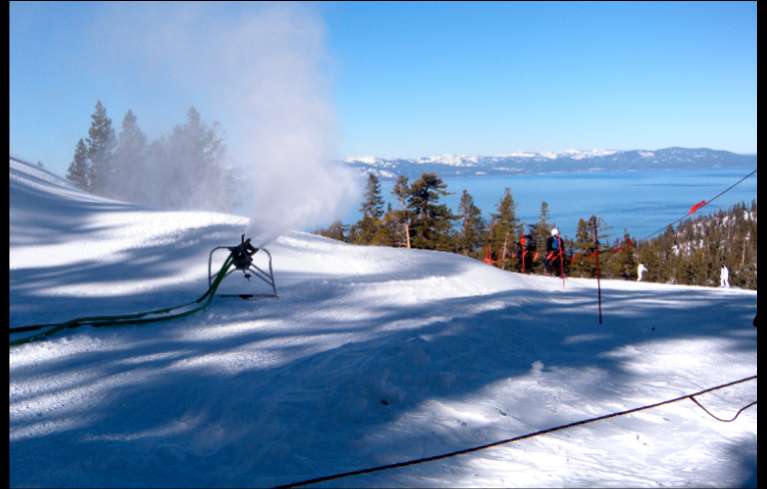
snowmaking• Heavenly Mountain Resort’s snowmaking guns have been fired up for the season. They can create 3½ feet of snow across 1 acre in an hour and can cover 73 percent of the resort’s 97 trails.

• An opening reception for Carrie Hall, who designs outerwear, is Nov. 7 from 5-7pm at Sierra Nevada College in Incline Village.

• Tahoe Adventure Film Festival is Dec. 14 from 7:30-9:30pm at MontBleu in Stateline. For ticket info, call (775) 588.3515.

• Gov. Jerry Brown has reappointed Truckee’s Eric Sandel to the Lahontan Regional Water Quality Control Board, where he has served since 1993.

• Entrance to all national parks is free Nov. 9-11 in honor of Veterans Day.


Calif. joins others to battle climate change

By Paul Rogers, San Jose Mercury News

SAN FRANCISCO — Saying that the West Coast must lead the way in battling climate change, the governors of California, Oregon and Washington, along with the premier of British Columbia, signed an agreement Monday committing the Canadian province and the three states to coordinate global-warming policies.

Each state and the Canadian province promised to take roughly a dozen actions, including streamlining permits for solar and wind projects, better integrating the electric power grid, supporting more research on ocean acidification and expanding government purchases of electric vehicles.

“You are witnessing a historic small-but-powerful first step,” Gov. Jerry Brown said during the event at Cisco’s San Francisco campus.

“It’s only the beginning. You just watch,” Brown said. “Next year and the year after and the year after that, this will spread until finally we get a real handle and grasp on what is the world’s greatest existential challenge — the stability of our climate, on which we all depend.”

Read the whole story


Halloween candy may keep you up at night

By Shelby Freedman Harris, Huffington Post

Halloween is almost here and stores are filled to the max with candy. Although Halloween candy can be a nice indulgence, the sugar high (and sugar crash) from overeating these treats makes some regret opening that bag of candy before the trick-or-treaters even arrived.

We tend to discuss the negative effects that sugar can have on our body. If you’re anything like me, you’ll gravitate towards chocolate. What we don’t realize is that chocolate, besides being a sugary treat, also contains caffeine — something that can significantly disrupt your sleep.

Simply put, caffeine is a stimulant. Most people prefer to use it after waking up in the morning to increase alertness. It enters the bloodstream through the stomach and can work in as little as 15 minutes after consumed. Caffeine takes approximately six hours for just one half of the dosage to be eliminated from the body. For most, that glass of soda with dinner at 7pm. will only be half gone by 1am. Plus, the older you get, the longer it takes for caffeine to leave your body, negatively impacting sleep even more.

Read the whole story