Veteran massage therapist calling it quits

By Kathryn Reed

In another week there are going to be a whole lot of aching bodies on the South Shore. That’s because certified massage therapist Rosemary Manning is retiring after 30 years in the business – all of which were spent tending to bodies in South Lake Tahoe.

“She has radar in her fingertips” is how longtime client Virginia Glenn describes Manning. “She knows when to dig deep and when not to. I’m going to miss her thumbs and elbows in my muscles.”

Glenn, like hundreds of others, isn’t quite sure whose hands they’ll trust next.

Manning doesn’t know how many clients she has worked on through the years, but many have been with her for decades. And it’s a local clientele. She would only work on visitors if they came via a referral from someone she knew.
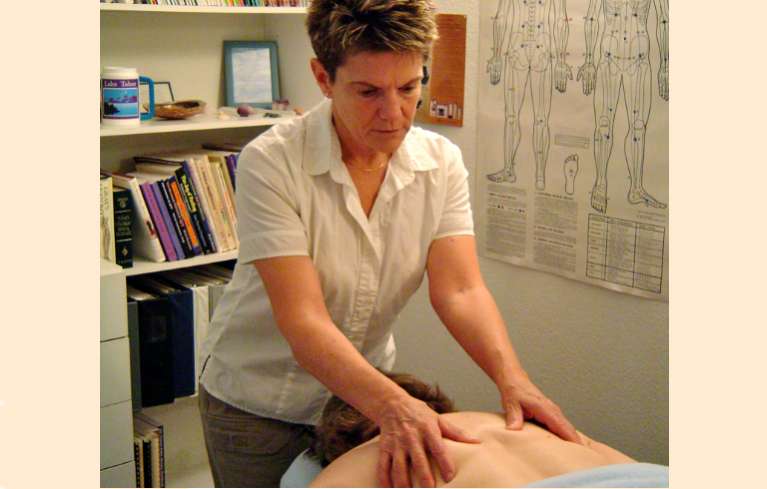
Rosemary Manning is retiring after 30 years as a massage therapist in South Lake Tahoe. Photo/Provided

Rosemary Manning is retiring after 30 years as a massage therapist in South Lake Tahoe. Photo/Provided

Manning didn’t set out to be a massage therapist. She was getting her master’s degree in clinical psychology to be a marriage counselor when she met Gil Ralston who owned a massage school in Carson City. He mentioned a workshop he was offering. She went. And soon she was on her way to being a massage therapist.

“I’ve always been interested in the mind-body connection,” Manning told Lake Tahoe News. “I believe most illnesses and injuries have an emotional component to them. This allowed me entry into hands-on work with people.”

Manning finished her master’s, and while she never became a counselor, in some ways a massage therapist does more than body work. It’s about listening to what the client says as well as what their body says.

“I think that Rosemary has that intuition. She knows what you emotionally need and what you physically need,” client Melissa Bornstein said. “Maybe it’s a gift others don’t have. They go through the motions. She has an inner sense.”

Many of her clients have become friends outside of the office. She has watched young women become moms, and has seen clients go through all the good and bad that life brings.

“You are so intimate with clients. You know so much about them. I will miss that trust,” Manning said.

“I’m not suggesting massage is medical, but so many times when you go see a medical professional they have not read our chart, they don’t know who we are. When a client walks in they are the only thing matters for that hour or 90 minutes. They are my world.”

She asks if they are still being bothered by an ailment they had at the last visit, how vacation was, inquires about family.

“I want them to feel listened to and taken care,” Manning said. It’s all part of tying the mind, body and spirit together.

“When I work I can visualize tissues in my brain. It’s like sculpting. I can see what I want to achieve. It’s like an art form,” Manning said.

She has seen quite a few changes in her three decades as a massage therapist. Twice Manning worked with a group of massage therapists to rewrite the South Lake Tahoe ordinance for practitioners.

“I’ve seen (massage) become more accepted by the general population and by the medical community,” Manning said.

Before becoming a massage therapist Manning worked for Voluntary Action Center as the executive director. She surprised quite a few people when she left that job to work in a casino as a massage therapist.

She started at what was Caesars Tahoe, then went to a chiropractor’s office before opening a practice with another therapist. For the past 16 years she has been the sole proprietor of Tahoe Health Touch on Emerald Bay Road.

There was a time when she did six or seven massages five days a week. In the past couple years she has cut back the days and hours.

“After 30 years, it’s hard on the body,” Manning said. “You are standing, you have to use body mechanics. I’m fortunate I don’t have carpal tunnel. That’s what a lot of massage therapists get. There’s a lot of pushing, heavy work … it can affect your neck and your back.”

The 61-year-old said she just knew now was the time to walk away from massage.

Manning intends to continue her emotional freedom technique work, which uses tapping on pressure points and conversation to assist with fears, grief and other issues clients may have.

She will also have time for scrapbooking, drinking wine, cross country skiing and reading.


Opinion: S. Tahoe has obligation to manage parking

By Garry Bowen

As the 15-year debate about paid parking hopefully nears an end, as yet another of the misguided subject matters that have occupied public discourse here for far too long, the presentation on the outcomes of its progress so far was illustrative, not so much as a final answer to the ongoing furor, but of thinking that might actually allow necessary change.

As we are a gambling town (with looming better success elsewhere) I’m reminded of the comment made by the legendary “Baghdad-by-the-Bay” San Francisco Chronicle columnist Herb Caen years ago, about “metered-parking” there: “They’re betting your own 25 cents against your $25 that you don’t make it back in time.” A rather provocative way of looking at it.

But in today’s world, the idea that designated places to park need to be managed is more and more a given, especially as citizens expect maintained services with a reduced workforce. In case anyone needs a reminder, South Lake Tahoe has undoubtedly taken on more responsibility in the current beautification efforts that have resulted in the increased popularity of El Dorado Beach, now known as Lakeview Commons, but also with the roadside improvements of the Caltrans projects from Trout Creek to Ski Run and beyond.

Garry Bowen

Garry Bowen

Managing the influx of traffic that goes along with that increased usage (what popularity means) without assuming the additional “charge” of properly maintaining it would quickly render the improvements as another blight subject to even more derision as to “why not?”.

Given the current paid-parking structure among our corporate citizens (and, yes, including our own parking garage in that “row”), as most charge at least $25/day (with in/out privileges), it may be useful to review previous parking scenarios, in times with way more traffic than today.

As but one example, where the former Embassy Suites now sits, Harrah’s Tahoe had a 500-car valet parking operation (governed under its California corporation, Harrah’s South Shore Corp.), as Police Chief Brian Uhler made his presentation Tuesday in terms of transactions (per metered area), I found it useful to think back on the business of the above mentioned parking “space”, as someone saw fit to replace it with a 400-room hotel, each one of which can only be rented once/day. In short, about 20,000 transactions/week were done in Harrah’s parking valet operation, given that there were about 12-15 attendants per day parking and retrieving, for free, with those unlimited in/out privileges.

“America’s All-Year Playground” was made eminently available to any or all of those not wanting to spend all their time inside a casino, as is today’s wish, simply by redeeming your car via a little plastic tag tendered with the elegant doorman, then brought, in most cases, within a minute or so.

As the traffic in town was easily enough to uphold such an operation as above, what did they do about moving around the town, exploring and visiting other places and people? It was not a concern, as that traffic was diffused among many other popular locations (restaurants, beaches that were accessible to all, trailheads, etc.) evening out with the choices that people made as to where they wanted to go. Today, we have a more limited selection with ever-more focused access, such as the emergent popularity of Thursday night Live at Lakeview events, and the ever-popular use of the myriad barbecue pits, even more so as the result of the great new look at the Commons.

The shift in perspective and focus on South Shore issues that folks have not had to think about before, understandably set their heels in the way it was, thinking that they are somehow being put-upon in the inevitable shift, curious when some of those same people have joined in the call for the obvious need for change. But they have not fully understood the difference between what it was and what it will need to be, especially when they don’t acknowledge the vast shortage of a high-level of traffic, and the coming need to replace that with particular places of interest that have not existed before – and to facilitate doing it without the nightmare of choked-up demand, when the newly-realized supply comes into question.

There was one number in the chief’s presentation that caught my eye, under the category “Residential Permit Zone”: it went from zero in one year to 199 in the next, presumably reflecting the simultaneous introduction of Lakeview Commons popularity with the management of the newly-needed and introduced parking management scheme, as that might also presumably be the major source of soreness, given that that popularity has caused change along with any presumed heartburn.

In that case, it is probably not parking management that is the culprit, although I myself have issues with early overzealousness and need to refine training: it is the interruption of the cozy relationship associated with the laid-back days when not as many wanted to enjoy a particular facility.

No mention was made, for example, of the extraordinary bike valet service rotated among various volunteer groups in the city; had several hundred people not chosen to ride their bikes to the large and fully-occupied events, I believe the same Al Tahoe people would be stepping up to demand better management of the neighborhoods due to the immense number of cars occupying areas in Al Tahoe way beyond a several-block peripheral, had everyone there brought a vehicle instead.

That would be the nature of the coming emphasis on walkable/bikeable communities: offering other choices that can be made, if offered, toward more balanced traffic flow for access by all.

It is those other offerings that constitute well-managed transportation, as in today’s world those options are increasingly important, especially in places which are notoriously car-centric. As those other offerings are patronized more, a certain stability can also be offered – but absent the stick of some being OK with paying, as they’re used to, then the carrot of maintaining newly-realized attractions will become a serious burden, but rather just part of doing business in offering better and attractive amenities.

When Bill Harrah entertained the big-boat hydroplane races in his short-lived operation of Zephyr Cove, this writer was charged partially with organizing the traffic-flow and parking for that event – as then, and to too much of a degree even now, everyone wanted to bring their car along, particularly since there were more in the audience than transit could bear.

Déjà vu?

Garry Bowen has a 50-year connection to the South Shore, with an immediate past devoted to global sustainability, on most of its current fronts: green building, energy and water efficiencies, and public health. He may be reached at tahoefuture@gmail.com or (775) 690.6900.


Douglas County wants input on roads

Douglas County created a Road Funding Task Force to help provide solutions to the county’s road funding challenges.

The goal is to identify the most viable and appropriate sources of funding, and to gain public support for any proposed solutions.

The task force is hosting public workshops on Nov. 18 and Nov. 20 to share information about the funding issues and to collect public feedback. The presentation will be followed by a question and answer forum.

The first workshop is Nov. 18 at 6pm at Topaz Ranch Estates Volunteer Fire Station, 1476 Albite Drive, Topaz.

The next one is Nov. 20 at 6pm at CVIC Hall, 1602 Esmeralda Ave., Minden.


TOCCATA sets dates for Handel’s Messiah

Tahoe Symphony Orchestra and Chorus is putting on the seventh annual production of Handel’s Messiah with performances in five locations including a special opening concert in the St. Gall Catholic Church in Gardnerville.

Messiah was first performed in Dublin, Ireland, on March 23, 1742, and was conducted by its composer. It continues to be a masterpiece that has left audiences in awe for 273 years.

The TOCCATA production is a celebration of the holidays and includes not only favorite selections from Messiah Parts One and Three, but also seasonal carols that the audience will be most welcome to join in singing.

The first performance is Dec. 6 at 7pm at St. Gall Church in Gardnerville (1343 Centerville Lane/ 775.782.2852), where TOCCATA will be joined by the local community singers.

The next two performances are Dec. 11 a 7pm at St. Patrick’s Episcopal Church in Incline Village and the first classical concert to be performed in the new Grace Church Sanctuary on Dec. 13 at 7pm (1220 Robb Drive, Reno/775.747.9000).

The final two presentations will be Dec. 15 at 3pm at St. Theresa Catholic Church, (1041 Lyons Ave., South Lake Tahoe/530.544.3533)and Dec. 18 at 7pm in Good Shepherd Lutheran Church (501 California Ave., Reno/775. 329.0696).

The Messiah series marks the completion of TOCCATA’s eighth season.

Joining the TOCCATA Orchestra and Chorus for this production are soloists Joy Strotz, Anna Helwing and Jennifir Tibben, sopranos; Stephanie Dixon and Maryanne Ashley, mezzo soprano, Chris Nelson and Albert Lee, tenors, and Stuart Duke and Ryan Ashley, baritones. The TOCCATA Children’s Chorus from South Lake Tahoe, directed by Bonnie Turnball, will perform at three of the concerts. The TOCCATA Chamber Orchestra features Louis Steptoe as concertmaster; David Brock, Tracy Beaver and Nick Haines as continuo; and Mark Lord, William van Meter and Dawyne Hollenbach on Baroque trumpets.

All performances will be conducted by maestro James Rawie.

Tickets are available at the door or online. General admission to all concerts is $25 adults, $20 seniors, $5 students aged 19 to 23 with valid ID. Preferred seating is $35 and $15 for youth/students. A grant from the two local foundations, allows all youth under 19 years of age to be admitted free to all regular season concerts in 2013.


High-end pens drying up with technology

By Erin Toner, NPR

We tweet. We text. We email. But how often do we really write anymore? Not much, if you look at the business of selling pens — or “fine writing instruments,” as shop owners call them. With their writing tools becoming obsolete, pen stores have folded, including a century-old shop in New York.

But despite the tech-heavy trends, a few old fashioned pen stores are still holding on.

Walking into Daly’s Pen Shop in Milwaukee, Wis., is like leaping back in time. Ninety-year-old, custom-made wood storage cabinets line the walls, antique ink bottles lurk on the shelves, and Sinatra songs serenade customers as they walk in.

The pens range from the Japanese Pilot Namiki pens — retractable fountain pens that range from $150 to $300 — to the Waterford pens, as in Waterford Crystal.

Daly’s owner, Brad Bodart, points out classic Cross Rollerball pens for $40, and fancy Montblanc fountain pens that sell for $1,000. He says that whatever the price point, a good pen completes the package.

Daly’s Pen Shop in Milwaukee, Wis., opened in 1924. While other pen stores have closed across the nation, this place has kept its doors open.

“You have a nice pair of shoes, you have a nice belt, you have a nice handbag and you have a nice pen,” Bodart says. “Nothing bothers us more than seeing a business person pull a Bic out of their pocket.”

Read the whole story


Rethinking who provides medical care

By Bloomberg

One obvious way to address the shortage of primary medical care in the U.S. is to train more people who can provide it. Even if this could somehow happen overnight, though, it wouldn’t necessarily solve the problem: Only 1 in 4 medical-school graduates goes into primary care (the least lucrative area of medicine), and no more than half of nurses and physician assistants do.

Just as important, those who do practice general medicine are rarely drawn to work in the rural and inner-city areas where people most lack access to medical treatment.

What’s needed is a strategy to lure people who already live in underserved communities to practice health care there. One clever way of doing that, just proposed by a group of authors writing in the November issue of Health Affairs, is inspired by the successful model of emergency medicine — that is, give people the level of training that emergency medical technicians and paramedics receive, but aimed at primary rather than emergency care.

After all, what do EMTs and paramedics do but bring medical skills and equipment to places where doctors and nurses aren’t readily available? In their case, the places are wherever car crashes, heart attacks or other sudden medical catastrophes happen. EMTs and paramedics are also trained relatively quickly and paid relatively modestly, with a mean annual salary of less than $35,000.

Read the whole story


138 lbs. pot found during Truckee traffic stop

A traffic stop led to the confiscation of 138 pounds of marijuana and one person going to jail.

A California Highway Patrol officer pulled Brandon T. Cook, 46, of Sacramento over after he reportedly passed several vehicles on the shoulder of Interstate 80 near Donner Summit.

With the smell of pot coming from the suspect’s vehicle, the officer searched the vehicle. The marijuana was in large duffel bags. Also found in the Nov. 4 search was $2,600 cash.

— Lake Tahoe News staff report


Tahoe Backcountry Women launching winter season

Tahoe Backcountry Women’s mission is mission to bring women together to ski, share stories, experiences, and education about backcountry skiing. All ages and abilities welcome

A slide show and season kick off party is Nov. 13 from 6:30-8:30pm at Alpenglow Sports in Tahoe City.

This slide show is a look into women’s backcountry adventures from multiple perspectives and locales. There will be food, drinks, and raffle prizes as well. Future events and organization updates will be announced at this gathering.

For more info, email whitney@alpenglowsports.com.


Destruction of gaming chips a regulated process

By Ed Komenda, Las Vegas Sun

All poker chips expire.

But unlike with sour milk in a fridge, casino bosses choose when chips go bad. It can be months, years or decades after they are issued.

“It’s a personal choice,” said Mark Lipparelli, a gaming consultant and former chairman of the Gaming Control Board.

Caesars Entertainment and MGM Resorts International recently ran newspaper ads warning people that the chips used in several of their casinos will be discontinued in six months. After that, anyone holding onto them will be out of luck.

Expired chips lose their face value. Gaming regulators made the law in the late ’80s to try to cut down on fraud and counterfeiting.

Before 1987, the state didn’t care much about what casinos did with their chips. Today, the process is very different.

Read the whole story


Snippets about Lake Tahoe

slt-big• South Lake Tahoe is closing its administrative offices from Dec. 23-Jan. 2 to remove some of the vacation time on the books. Minimal staff will be on hand.

• A familiar face is no longer at the Raley’s at the Y. Tammy Goldenberg retired last month.

• There will be a Veterans Day ceremony at the American Legion in South Lake Tahoe on Monday at 11am.

•At the Nov. 12 7:30pm Economic Development Workshop in Truckee there will be a discussion about how to incorporate the river into redevelopment.

• The penalty phase for convicted murderer Joseph Nissensohn has been pushed back to Dec. 2.