Snippets about Lake Tahoe

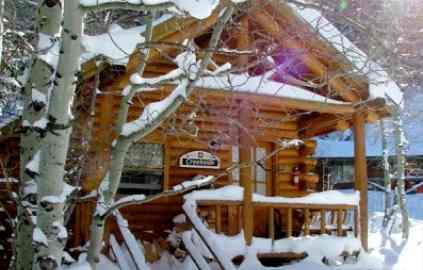
sorensens• Sorensen’s Resort in Hope Valley is mentioned in the November issue of Sunset magazine that features cabins that are worth staying in.

• The Cancer League of South Lake Tahoe will begin its See’s Candy sales the week before Thanksgiving. The storefront is near Starbucks at the Y in the Raley’s center.

• Richard J. Burton is retiring from Placer County after 30 years of public service. He has been the public health officer for the last 17 years and has also served as director of the Health and Human Services Department for the past 10 years.

• Lake Tahoe Community College and Lake Tahoe Unified School District boards of trustees are planning a joint meeting Feb. 11 to review and discuss progress, relevant research, and future programs.


International student numbers grow at U.S. colleges

By Karen Farkas, Plain Dealer

CLEVELAND, Ohio – The number of international students attending U.S. colleges continues to grow, and about a third are from China, according to a report issued this week.

In the 2012-13 school year, 235,597 of the 819,644 international students on U.S. campuses, or 28.7 percent, arrived from China, according to the annual Open Doors Report on International Educational Exchange published by the Institute of International Education.

The number of students from China increased 21.4 percent from the previous year.

Following China, the top “places of origin” are India, South Korea, Saudi Arabia and Canada, the report said. That order has not changed for years. Those five account for about 60 percent of all international students.

However, Brazil and Iran are moving up in the standings, and each saw a more than 20 percent increase in students attending U.S. colleges.

There are now 40 percent more international students studying at U.S. colleges than a decade ago, and the rate of increase has risen steadily for the past three years, the report said.

Read the whole story


Official: Resorts need to offer more than skiing

By Kathryn Reed

TRUCKEE – If ski resorts don’t become year-round playgrounds, they are going to be out of business. In large part, this is because climate change is bringing less snow to the slopes.

This was the message delivered Nov. 12 by Bob Roberts, president of the California Ski Industry Association. The Truckee-Donner Chamber of Commerce breakfast meeting was filled with industry representatives.

Winters are warming and that means less snow falling in the Sierra. While snowmaking will help save the industry, it won’t be enough. And this is especially true when the drive-up market heads to the slopes when Mother Nature dumps, not when the man-made stuff is blown.

Roberts points to how dramatically things have changed in his lifetime. Five significant glaciers were on Mount Shasta when he worked at that resort. Now, he said, they are slivers.

“We need to stop thinking of them as ski resorts and see them as mountain resorts,” Roberts said. “We’re seeing it here in Tahoe.”

Resorts in Tahoe have been trying to stay ahead of the game as they invest in the on-mountain product. Rope courses, ziplines and other play structures are for the most part year-round activities and not limited to just when there is no snow.

Bob Roberts, president of the California Ski Industry Association, talks Nov. 12 in Truckee. Photo/Kathryn Reed

Bob Roberts, president of the California Ski Industry Association, talks Nov. 12 in Truckee. Photo/Kathryn Reed

Roberts pointed out how this summer $100 million was invested in Tahoe area resorts. He noted even a small resort like Sierra-at-Tahoe spent $4.5 million. Then there are the bigger players like KSL (owner of Alpine and Squaw Valley) and Vail Resorts (parent company of Heavenly, Kirkwood and Northstar) that are spending even more. In the last three years KSL will have spent $46 million on its two resorts.

A four-season resort is what ski resorts need to evolve into, Roberts said.

The Tahoe area is responsible for 53 percent of the California skier visits, though 57 percent of the spending occurs here. This equates to $58 million a year in local taxes, Roberts said. Resorts account for 1,700 full-time employees and 7,200 seasonal.

Another concern for ski resorts is fewer people are skiing and snowboarding. Roberts said K2 snowboard sales are down 50 percent. The average number of newbies to skiing-snowboarding across the country has been 1 million. That figure dropped to 850,000 last season.

“We have to get this thing jacked back up. We need to make sure they are hooked and want to continue on,” Roberts said of new skiers and riders.

Between 8.5 million and 10.5 million people from the U.S. ski or snowboard each year. Weather is usually the factor that makes the number fluctuate. The British market is still strong, while the Chinese sector is increasing.

The Asian and family markets are growing in California, while seniors has leveled off.

The demographic that is changing is singles and those younger than 18. They aren’t hitting the slopes. That, Roberts said, is something the industry needs to keep its eye on.


Letter: Bringing awareness to pancreatic cancer

To the community,

It is another November and for the last couple of years, that means I join other advocates across the county in declaring November is Pancreatic Cancer Awareness Month.

I attend local city council meetings where proclamations are presented, distribute pancreatic cancer awareness posters and fliers, join others from the Pancreatic Cancer Action Network in continuing to encourage our legislators to pass bills for cancer funding and being connecting with volunteers and survivors promoting pancreatic cancer awareness and action.

My involvement started when my mother, Jeanette Criner, has diagnosed with this dreaded disease over five years ago. Unfortunately, she lost her battle with pancreatic cancer seven months after her diagnosis.

I have stayed involved with the cause to honor her memory and knowing that if she was still here she would be a dedicated advocate with others fighting this deadly cancer.

Pancreatic cancer is one of the deadliest forms of cancer, the fourth leading cause of cancer deaths in the U.S. with only a five year relative survival rate of 6 percent and within the first year of diagnosis, 73 percent die. My mother was one of those statistics so I chose every year for the last three years to share her story so these statistics have a face, a person behind the numbers.

I have written about her story before, her active life here in Lake Tahoe, enjoying her gardening, hiking and family time, still working but looking forward to “semi retirement” and continuing her extensive travels to her other favorite place, Australia. Then the devastating news, I remember that late summer day like it was yesterday, she told me she might have pancreatic cancer and the biopsy was scheduled the next week.

Once we knew, suddenly everything changed. I, along with my dad and husband, we became her main caregivers. Overnight, the roles reversed, for she was the rock, the center of our family and now she had to adjust to a different role, in the fight for her life. Despite her tenacious demeanor, her determination to survive this disease, her treatments and the support of her medical team, family and friends she lost the battle far too soon.

My mother’s death, like all the others who have lost their lives to cancer, creates a void that can not be filled. This is never more painfully obvious than when it’s a birthday, the holidays or other special events. She never got the chance to attend her grandchildren’s college graduations. She never heard the news that her oldest granddaughter became engaged to her college sweetheart, a young man she knew before I, her mother, ever did. We have lost her wisdom and guidance in dealing with the difficulties that life throws our way. She is remembered and missed everyday by those who loved her and I know that if she was here today she would be a volunteer and advocate for others as she always was in life. She was always encouraging and supportive, giving of her money and her time and believed that was her obligation in this world. Her example encourages me continue to join others in promoting awareness and fighting for research funding, finding early defection methods, expanding and improving treatments options and, maybe, one day, a cure for pancreatic cancer.

Thank you,

Denise Rury, South Lake Tahoe


Christmas Cheer looking for food, cash

Each Christmas, Christmas Cheer provide between 1,200 and 1,500 people with food for a holiday dinner and toys for each child.

Recipients are South Shore low-income families referred by social service agencies. Because of an increase in the numbers of those in need combined with a depressed local economy the need for donations is great.

Food needs:

Turkeys (1,000), stuffing, produce (carrots, potatoes, celery, nuts, peas, yams), dairy (butter or oleo, milk, eggs, cheeses), canned vegetables and fruits, breads and rolls, canned tuna, desserts (jello, pudding mixes, pies, cakes), peanut butter, spaghetti sauce, oatmeal or cereal, soups, dry foods (noodles, rice, beans, spaghetti or pasta), crackers and snacks, and toys. The greatest need is for teen presents.

Christmas Cheer accepts cash and/or gift card donations. A family of three or four can be fed on $25. A 20-pound turkey, which can feed nine, costs about $20.

Ten dollars can buy a gift for a child.

Bags will be given out Dec. 21 and Dec. 22 from 10am-4pm at South Tahoe Middle School multipurpose room.

For more info, contact Joann Shope at (530) 542.4934.


Tahoe plates come with free lift tickets

The Tahoe Fund is again launching the Plates for Powder promotion to drive sales of Lake Tahoe license plates.

From now until April 1, individuals who purchase a new Lake Tahoe license plate in either California or Nevada may receive two free lift tickets to one of the 11 Tahoe resorts participating in the program.

More than 96 percent of the funds raised through the plate sales go directly to the California Tahoe Conservancy and Nevada Division of State Lands to fund hiking and biking trails and watershed restoration projects.

The Tahoe Fund, a bi-state nonprofit dedicated to raising money for environmental improvement projects that support lake clarity, recreation and stewardship in the Lake Tahoe Basin, is organizing the program on behalf of the public agencies.

Information on how to purchase a plate and redeem free tickets is available online.


Social media a growing concern when applying to college

By Natasha Singer, New York Times

At Bowdoin College in Brunswick, Maine, admissions officers are still talking about the high school senior who attended a campus information session last year for prospective students. Throughout the presentation, she apparently posted disparaging comments on Twitter about her fellow attendees, repeatedly using a common expletive.

Perhaps she hadn’t realized that colleges keep track of their social media mentions.

“It was incredibly unusual and foolish of her to do that,” Scott A. Meiklejohn, Bowdoin’s dean of admissions and financial aid, told me last week. The college ultimately denied the student admission, he said, because her academic record wasn’t competitive. But had her credentials been better, those indiscreet posts could have scuttled her chances.

“We would have wondered about the judgment of someone who spends their time on their mobile phone and makes such awful remarks,” Meiklejohn said.

As certain high school seniors work meticulously this month to finish their early applications to colleges, some may not realize that comments they casually make online could negatively affect their prospects. In fact, new research from Kaplan Test Prep, the service owned by the Washington Post Company, suggests that online scrutiny of college hopefuls is growing.

Of 381 college admissions officers who answered a Kaplan telephone questionnaire this year, 31 percent said they had visited an applicant’s Facebook or other personal social media page to learn more about them — a five-percentage-point increase from last year. More crucially for those trying to get into college, 30 percent of the admissions officers said they had discovered information online that had negatively affected an applicant’s prospects.

Read the whole story


USFS to sell Christmas tree permits

The U.S. Forest Service Lake Tahoe Basin Management Unit will begin selling Christmas tree permits Nov. 18.

Permits cost $10 each (cash or check only) with a limit of two permits per family. Permit holders may choose from a variety of pine, fir or cedar in designated cutting areas.

This year, the LTBMU will issue 2,500 permits available on a first-come, first-served basis. Provided permits are not sold out, the last day to purchase a permit is Dec. 20.

The last day to cut a tree is Dec. 24.

Permits will be at:

· Forest Supervisor’s office, 35 College Drive, South Lake Tahoe, beginning Nov. 18. This office is open Monday through Friday from 8am-4:30pm.

· Incline Village Forest Service office, 855 Alder Ave., Incline Village, beginning Nov. 20. This office is open Wednesday through Friday from 8am-4:30pm.

Maps to designated cutting areas are provided at the time of purchase.


Intrawest files for $100 mil. IPO

In a desire to raise money, financially unstable ski resort operator Intrawest Resorts Holdings Inc. on Tuesday filed an initial public offering with the New York Stock Exchange.

The Denver-based company built the Village at Squaw Valley and owned it until January 2010. That was the year Intrawest started unloading property to remain solvent. (KSL, which owns Squaw Valley ski resort, bought the village.)

Intrawest built the Village at Squaw Valley. Photo/LTN file

Intrawest built the Village at Squaw Valley. Photo/LTN file

In its filing with the New York Stock Exchange, Intrawest said it hopes to raise $100 million. Intrawest’s parent company is private equity firm Fortress Investment Group LLC.

“The North American ski industry is highly fragmented, with approximately 753 ski areas in North America, of which fewer than 10 percent are owned by multi-resort operators who operate four or more ski resorts. The adventure travel industry is similarly fragmented,” Intrawest said in its filing. “We intend to evaluate acquisition opportunities where the opportunity would provide a strategic fit within our existing portfolio of businesses. We believe that opportunistically acquiring additional mountain resorts that are proximate to our existing resorts will enable us to enhance product and operational synergies.”

Intrawest owns Winter Park and Steamboat in Colorado, Mont Tremblant in Quebec, Stratton in Vermont and Snowshoe in West Virginia, as well as half of Blue Mountain in Ontario.

At one time it owned Whistler-Blackcomb in Canada, where the 2010 Olympics were staged. The company’s precarious financial stability at the time nearly put the Games in jeopardy. Intrawest sold its last shares of Whistler in 2012.

— Lake Tahoe News staff report


Ski industry news

Bob Roberts, president of the California Ski Industry Association, speaks Nov. 12 in Truckee about what is going on in the industry, particularly in the greater Lake Tahoe area.