Study: Diabetes kills 1 person every 6 seconds

By Albertina Torsoli, Bloomberg

Diabetes kills one person every six seconds and afflicts 382 million people worldwide, according to the International Diabetes Federation, which has been canvassing the help of people ranging from celebrity chef Jamie Oliver to Bob Marley’s nephew to raise awareness about the problem.

The number of diabetes cases has climbed 4.4 percent over the past two years, according to new figures the Brussels-based federation released today. The number of people affected by the disease is expected to climb 55 percent to 592 million by 2035 as factors including poor diet, a more sedentary lifestyle, increases in obesity and life expectancy fuel an epidemic, it said. There were only 285 million sufferers worldwide in 2009.

“We haven’t seen any kind of stabilizing, any kind of reversal,” Leonor Guariguata, an epidemiologist and project coordinator for IDF’s Diabetes Atlas, published every two years, said in a phone interview. “Diabetes continues to be a very big problem and is increasing even beyond previous projections.”

Read the whole story


Chamber bestows awards on its members

The Lake Tahoe South Shore Chamber of Commerce’s 2013 Blue Ribbon Award winners were announced Nov. 14.

More than 175 nominations were received for the eight categories.

The winners are:

Experience Award – Lake Tahoe Yoga

Honorable Mention: Ciera Steak & Chophouse

Tourism – Bike the West

Honorable Mention: Edgewood Tahoe

Geotourism – Tahoe Area Mountain Bike Association

Honorable Mention: Lake of the Sky Outfitters

Entrepreneur – Tahoe Sports Entertainment

Honorable Mention: The Divided Sky

Customer Service – Luke Bronken, Lakeside Inn

Honorable Mention: Elfie Klementi, Harrah’s & Harveys

Public Agency Service – Leah Brown, Child Protective Services

Honorable Mention: Debbie Beam, Douglas County

Large Green Business – Sierra-at-Tahoe Resort

Honorable Mention: Zephyr Cove Resort

The Wendell Award for a Small Green Business – Tahoe Beach & Ski Club

Honorable Mention: Clean Tahoe Program.


Scientist sues USFS to stop Echo Lake tree thinning

By George Warren, News 10

A prominent environmental scientist is suing to stop the U.S. Forest Service from cutting trees around Echo Lakes because he says it’s unnecessary and destructive.

“There is essentially no wildfire risk in the Echo Lakes Basin,” insists Dennis Murphy, a UNR research professor who helped draft the Lake Tahoe Watershed Assessment for the federal government.

In late September, the Forest Service began a multi-year project to clear mostly smaller trees and brush from roughly 100 acres around Upper Echo Lake and part of Lower Echo Lake.

A memo from the forest supervisor in South Lake Tahoe says the goal is to reduce the potential for a catastrophic wildland fire and provide defensible space around the rustic summer homes that are built on leased forest service land.

Murphy, whose family has owned a cabin on Upper Echo Lake for generations, filed a lawsuit in U.S. District Court in Sacramento Nov. 6 claiming the Forest Service did not adequately consider the environmental impacts of the project.

Read the whole story


Coffee bean glut driving down prices

By Marvin G. Perez and Luzi Ann Javier, Bloomberg

Like many coffee growers, Nils Solorzano Villareal figured it made sense to expand output as prices surged to a 14-year high in 2011. Now, the 71-year-old Costa Rican farmer is harvesting at a loss.

Record crops from Brazil to Vietnam are compounding a global surplus that drove prices down 26 percent this year, heading for a third annual decline and the longest slump in two decades. Solorzano, who added trees and fertilizer to expand his farm to 9.9 acres from 3, said he is spending $140 to produce each 132-pound bag of arabica-coffee beans that sells for about $132.

“We increased investments in the last few years because we thought prices will stay high,” Solorzano said by telephone from Montes de Oro, where he has been farming for three decades on Costa Rica’s Pacific slopes about 81 miles north of the capital, San Jose. “We’re still hopeful that prices will rebound at some point. We can’t do anything else because the land around us is very hilly.”

Global output will exceed consumption for a fourth season in 2014, the longest glut in 11 years, the U.S government estimates. The price of arabica traded in New York will drop 11 percent to 95 cents a pound by March, the lowest since July 2006, based on the median of 13 forecasts in a Bloomberg survey of traders. Lower costs improved profit margins for Green Mountain Coffee Roasters Inc., while Starbucks Corp. and Kraft Foods Group cut the retail cost of packaged beans.

Read the whole story


Report: Non-violent criminals getting life sentences

By Meredith Clark, MSNBC

Thousands of people convicted of non-violent crimes are serving life sentences, according to a report by the American Civil Liberties Union.

There are currently 3,278 people who have been sentenced to life without parole for crimes as small as selling less than $10 worth of marijuana and shoplifting. The report also found that it will cost nearly $2 billion to keep those inmates incarcerated until their deaths. At a time when state and local governments are desperately trying to reduce their populations of non-violent offenders in order to reduce strain on overcrowded facilities and cut spending, these prisoners are a reminder of the much harsher “tough on crime” era of the 1980s and 1990s.

As is the case throughout the country and within the federal prison system – the home of two-thirds of those prisoners serving life sentences without parole – black prisoners far outnumber white prisoners. A black person is about 20 times more likely than a white person to be sentenced to life without parole in the federal system, the study found. In Lousiana, 91.4 percent of those serving life without parole for nonviolent crimes are black.

Life sentences without the possibility of parole are given out for a variety of reasons, but the ACLU’s analysis points to a combination of mandatory minimums and three- and four-strike rules for crimes regardless of their severity that even judges and corrections officers involved in some of the cases highlighted found too harsh.

Read the whole story


Kennedy killing told from hospital perspective

movie reviewBy Jeremy Miller

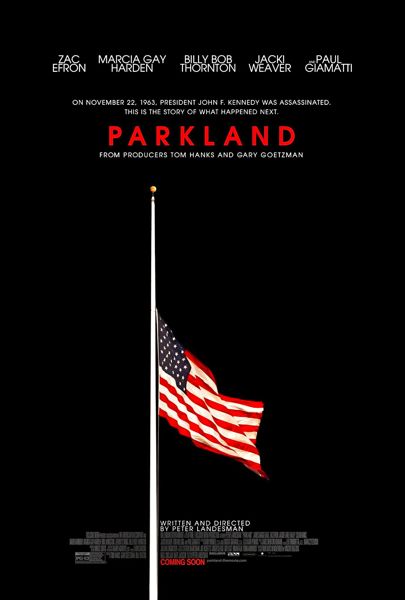
It’s always entertaining to see a period piece on major historical events. What set Peter Landesman’s vision of JFK’s assassination apart was the fact that it was from the vantage point of the doctors, secret service and bystanders from the day of the event. “Parkland”, starring Zac Efron, Billy Bob Thornton, Paul Giamatti and Marcia Gay Harden, is a sleeper cast of incredible and unpredicted power.

I’d like to open this review by saying that I am not Efron’s biggest fan, but he actually impressed me in this one.

On Nov. 22, 1963, the staff of Parkland hospital was flooded with chaos as the president of the United States was wheeled in on a stretcher after being shot while driving in a motorcade. Dr. Charles “Jim” Carrico (Efron) was given the unbearable pressure of saving his life. The film follows the action in the hospital while also following Abraham Zapruder (Giamatti) who happened to be filming the entire event closer than anyone. The film he took ended up being the most watched and examined piece of film in U.S. history.

While dealing with the pressure of the press to release the film, he’s also faced by the Secret Service and their Dallas front man Forrest Sorrels (Thornton) whose story is also followed.

As the three stories intertwine, emotions run high and tension is almost overbearing. I loved this film because it showed what happened after the event, not the events leading up to it. I knew going in that it would be momentously powerful due to the subject matter, but what I didn’t suspect was that the cast and characters would move me as much as they did. The tone of the film was perfect; it had a wonderful vintage film stock feel and captured the era exactly as I would imagine it was. The dialogue was captivating and at the same time sentimental and true to the characters. It never preached or dictated and didn’t feel artificial.

movieThe only reason this piece didn’t score five stars was the fact that its ending was abrupt and left a bad taste in my mouth. I’ll leave the details out, but for me a film’s ending is make or break and this one wasn’t a complete break, but I felt the film’s momentum came to a halt way too fast.

One thing that I did love was the fact that they included several clips from the actual shooting, while keeping it tasteful and not bluntly showing the gory details – same thing with the situation in the hospital. They did a great job giving you just enough to know what was going on, but not so much that it turned your stomach or gave it all away.

Overall, it was a great film and for me it was all about the actors’ power. Giamatti absolutely stole the show. He had me tearing up countless times, and most definitely deserves the credit for driving the piece emotionally as far as the acting goes. It was a limited theatrical release, unfortunately, so it wasn’t seen by as many as it should have. It’s just been released to DVD and I highly recommend you see it.

South Lake Tahoe resident Jeremy Miller has more movie reviews online.


Employers grapple with e-cigs indoors

By Chris Burritt, Bloomberg

When John Castellano feels like a smoke, he simply heads to the break room at Kraft Foods Group Inc.’s Garland, Texas, factory.

The 39-year-old technician has been able to indulge his habit in common areas at work since he started using electronic cigarettes, which emit vapor rather than smoke.

E-cigs are “very liberating,” said Castellano, who used to join the other nicotine addicts at the factory’s designated smoking area.

Twenty-five years after companies began banning smoking in the workplace, the increasing popularity of e-cigs is forcing them to review their policies. Many corporations still ban “vaping” as they wait to see if the U.S. Food and Drug Administration will regulate e-cigs as strictly as regular smokes. Yet Kraft and Walgreen Co. allow local managers to set the rules. Smaller firms, especially creative agencies and Web startups, have already adopted a more laissez-faire attitude.

U.S. e-cig sales will triple this year to $1.5 billion and double annually through 2018, according to Euromonitor International projections. After that, sales of e-cigs may increase 10 percent a year and reach $124.5 billion in 2028, surpassing conventional smokes for the first time, Kenneth Shea, an analyst for Bloomberg Industries in Skillman, N.J., said.

Read the whole story


Actors for ‘Robinson Crusoe’ being sought

Tahoe Arts Project will be bringing the Missoula Children’s Theater back to Tahoe the week of Nov. 18-23.

Auditions for the Missoula Children’s Theatre original adaptation of “Robinson Crusoe” are Nov. 18 at South Tahoe Middle School multipurpose room from 4-6pm. Those auditioning should arrive at 4pm and plan to stay for the full two hours. Some of the cast members will be asked to stay for a rehearsal immediately following the audition.

Among the 60 roles to be cast are Robinson Crusoe, his sole companion, a goat named Wilson, Leonard the Leopard, Friday’s Family, the Oscar Octopus Octet, a family of Goats, the very hairy Frowny-Face Tribe, and the colorful Chameleons.

All student in K-12 are encouraged to audition. No advance preparation is necessary.

Assistant directors will also be cast to assist with the technical aspects of the production.

Auditions are free and if cast there will be a fee of $50 per child to participate in this weeklong theater program. A limited number of scholarships are available.

Call Peggy Thompson at (530) 542.3632 for more info.

“Robinson Crusoe” will be presented on Nov. 23 at 2pm and 6pm at South Tahoe Middle School. Admission is $10 for adults and $5 for children and seniors.


Lahontan looking at easing forestry work rules

By Kathryn Reed

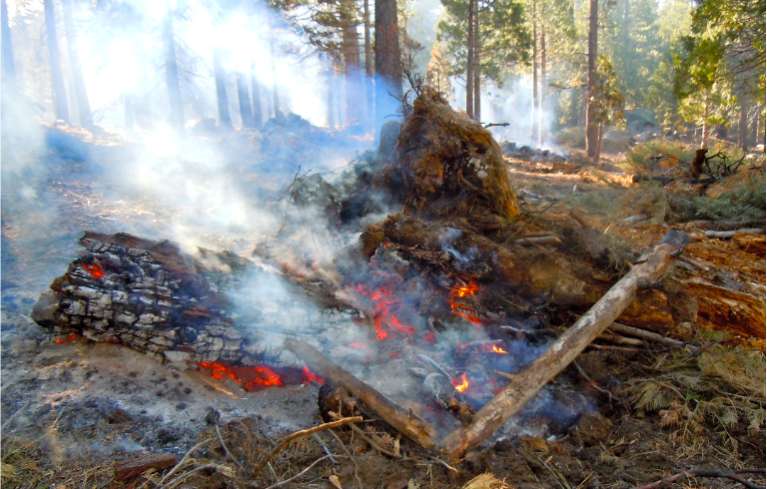
Regulating the size of a burn pile and testing the moisture content of soil are some of the rules that are proposed to go by the wayside when Lahontan Regional Water Quality Board revises the timber waiver in 2014.

The board on Nov. 14 heard an update from Doug Cushman, senior engineer, about proposed changes to the 2009 document. The waiver must be re-examined every five years.

Lahontan only has say over matters in California.

While there have been changes to the timber waiver since it was adopted, this would be the first time any changes would be made to the monitoring segment.
Proposed timber waiver changes would affect burn piles. Photo/LTN file

Proposed timber waiver changes would affect burn piles. Photo/LTN file

The forms are all online and are a bit cumbersome. They will be streamlined to make it easier for reporting agencies to comply with the rules.

In the coming months Lahontan staff will meet with entities that must comply with the timber waiver. The goal is to bring to the board a document that will not be opposed by outside agencies. The board is likely to take the matter up in April.

The timber waiver can apply to any agency removing trees or burning slash piles. Mostly it’s large projects like the U.S. Forest Service’s multi-year South Shore Fuels Reduction Project and work in stream environmental zones that are under the extra scrutiny.

Cushman admitted the process to test soil cut into the time period agencies could do work. The current policy requires digging a hole, seeing how moist the dirt is and comparing it to a detailed chart.

“We call this the squeeze test. It’s been problematic over time,” Cushman said. “There is tremendous variability.”

He also said it is staff intensive, requires soil scientists and can be subjective.

The proposed change would be a more visual analysis. If rutting occurs, the soil is too wet to do the work.

Martin Goldberg with Lake Valley Fire Protection District told the board how a stream area project his department just did had substantial cost overruns because of the current procedures that are in place.

“Pulling slash out of an SEZ is labor intensive and cost prohibitive,” Goldberg said.

Cushman said the goal of the changes is to move from prescriptive mandates – as in rigid rules before the work is done; to performance based – meaning looking at the end product to determine if what was done worked.

“Research shows size doesn’t affect soil,” Kathy Murphy, with the U.S. Forest Service, said in regards to burn piles. Current Lahontan policy is to regulate the size of piles.

What matters is if the soil is damaged. Burning seeds and sterilizing the soil are bad.

Part of the problem agencies have with Lahontan’s rules is the layer of redundancy. Water quality is already a concern of most who are doing this type of work. But Lahontan also provides a checks-and-balances so someone is looking over the shoulders of the agencies.

“If left on our own, we would protect water quality with our own practices,” Murphy told Lake Tahoe News.

Lahontan and the Forest Service have had many differences in the past, but the two leaders and now the staff are making peace. While they each have a different purpose, there is a growing respect that each has a job to do.

“The public is better served if people are getting along. Sparring takes too much energy,” Forest Supervisor Nancy Gibson told Lake Tahoe News.

She said the timber waiver has forced her agency to look at how it was doing business and in turn changes were made to be more efficient.

The Lahontan board unanimously told staff the performance approach was a better way of doing business.



Letter: Time to remember the Four Freedoms

To the community,

On Jan. 6, 1941, FDR delivered his Four Freedoms speech to Congress. Freedom of speech and expression, freedom of worship, freedom from want, freedom from fear. After his speech, FDR requested a pamphlet for publication on the Four Freedoms.

The Four Freedoms should be the national standard for America. However, today we are way off the mark. We have regressed.

In 1947, the National Security Act created, among other things, the CIA. The CIA has become a covert agency that listens in on citizens’ phone conversations and reads citizens’ emails. Of course, it gets help from its blood brother the FBI. According to Oliver Stone, “NSA intercept and stores … 1.7 billion emails, phone calls and other communications each day.” President Harry S. Truman feared that the CIA could turn into a Gestapo. Bottom line, Big Brother has big ears.

Bill Crawford

Bill Crawford

On worship. Hate crimes are alive. Many are aimed at religious groups. Seems know nothing has been reborn.

On freedom from want. It appears that the homeless numbers are growing, meaning the police must use force in many of the nation’s cities to patrol or break up homeless camps. But it’s a given that people need shelter, a roof over their head. Also, food banks, etc, are increasing in numbers to meet the needs of the millions who would go hungry. It seems that we need national programs to hopefully remedy the sad situation. President Abraham Lincoln said the government should do for the people what the people cannot do for themselves. That sounds reasonable, especially since we spend billions on the far away wars and military activities. Wars that will cause us to have a national debt for ages to come.

On freedom from fear. We do have our wars so fear of something must have hold of us. Here at home we have the beginning of a police state, i.e. the CIA and FBI. And according to the British Observer, “… more Americans have been killed by firearms over the past 45 years than in all the wars the U.S. has been involved in since its birth.” As the poet said, “Man’s heart is in his weapons.”

Amen.

Bill Crawford, South Lake Tahoe