Mega-grocers cashing in on organics

By Ari LeVaux, Outdoor

Walmart, already one of the country’s largest distributors of organic foods, will gobble up additional market share this summer, thanks to a deal it struck with Wild Oats to carry more than 100 of the natural-food chain’s house-branded products.

The agreement, coming on the heels of Target’s Simply Balanced line, which is 40 percent organic, marks a new era. One obvious benefit is that prices for organic foods should drop nationwide as production increases and competitors are forced to match big-box discounts.

But the supersizing of organic comes at a cost. When the term first gained traction, in the 1980s, it was mainly used by small farms supplying local markets. In 2000, when the Department of Agriculture created the USDA Organic label, its standards included a list of roughly 100 substances, including some synthetic chemicals, that would be allowed in the farming process. The list is picked over incessantly, but in September of last year, the USDA made it more difficult to remove pesticides and herbicides it had already approved.

All of which means that, for consumers, shopping is more complex than ever.

Read the whole story


Fire damages Incline restaurant

La Casona Restaurant in Incline Village sustained minor damage from a fire on July 16.

The blaze started about 7:50pm.

North Lake Tahoe firefighters are still investigating the cause.

Monitoring and mop up are occurring today.

— Lake Tahoe News staff report


3 cubs caught and released in Stateline

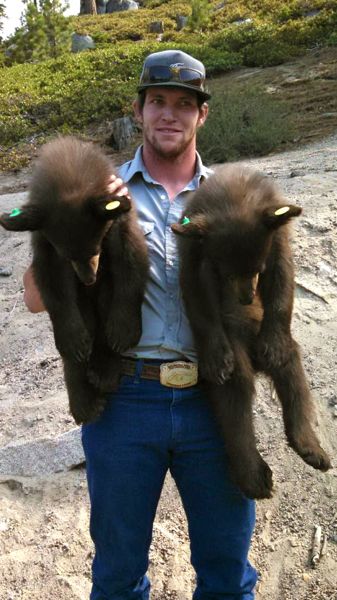
Nevada Department of Wildlife Conservation Aid Cooper Munson holds two of three black bear cubs captured and safely released on Wednesday July 16, 2014 in the Kingsbury Grade area near Stateline, Nevada on Lake Tahoe’s South Shore.  NDOW has captured and safely released nine potentially nuisance bears since July 1. Photo/NDOW

Nevada Department of Wildlife Conservation aid Cooper Munson holds two of three black bear cubs captured and released July 16 in Stateline. Photo/NDOW

Three 5-month-old black bears were captured and released July 16 on Kingsbury Grade.

Nevada Department of Wildlife personnel captured the three cubs in a trap, but their mother eluded capture.

The cubs, a female and two males, were tranquilized and processed by a NDOW biologist with the female bear never more than about 40 yards away while the cubs were being examined. The processing includes attachment of identifying ear tags, a tattoo on the bear’s inner lip, the affixing of a microchip and the taking of a sample of hair for DNA purposes. The cubs, weighing from 15 to 22 pounds, were released and reunited with their mother as soon as they awakened.

The female is estimated to be about 19 and has had at least three litters and 10 cubs since she was first captured in 2004 by NDOW.

“Besides tagging the female in 2004, we have now tagged the 10 cubs she has had since. She and her offspring have provided a lot of information to our ongoing research on Nevada’s black bear population,” NDOW black bear biologist Carl Lackey said in a statement.

Since July 1, NDOW has released nine black bears after trapping them.


Carson Valley fire at 300 acres

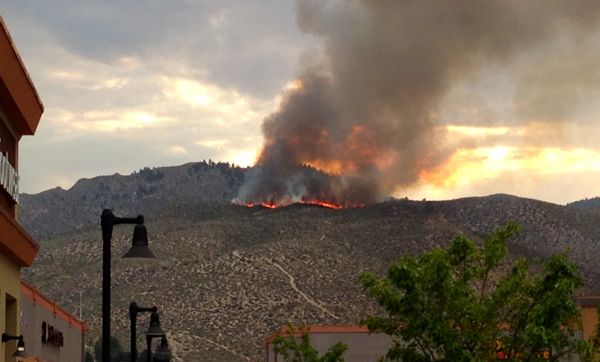
The Clear Fire started July 16 after 6pm. Photo/Valerie Smith

The Clear Fire started July 16 after 6pm. Photo/Valerie Smith

The Clear Creek Fire burning in the sagebrush above the Carson Valley grew to 300 acres overnight. It is 25 percent contained.

About 40 residences along Jacks Valley Road in the Clear Creek subdivision are on voluntary evacuation. Clear Creek Road is closed from Lower Clear Creek to Clubhouse Road to all but homeowners.

The fire started July 16 by lightning. The spread on the eastern flank is slowing, while the western edge is still active, according to officials.

The U.S. Forest Service is the lead agency. Area crews, including Tahoe Douglas firefighters, have been assisting. An air assault will resume this morning.

Officials are worried about the threat of more lightning strikes later today.

— Lake Tahoe News staff report


Drought proves challenging for Edgewood Tahoe

Edgewood Tahoe has been rethinking how it uses water. Photos/Kathryn Reed

Edgewood Tahoe has been rethinking how it uses water. Photo/Kathryn Reed

By Susan Wood

STATELINE – It’s 7am Monday and there’s as much bustling around as a New York City subway station. But this is Edgewood Tahoe – home of the 25th American Century Championship golf tournament.

Work crews are not only busy preparing the grounds for the South Shore’s premier event of the summer, but golfers are getting in their tee times before some of the biggest names in athletic sports and entertainment take over.

Dan Zelhofer, who jokes by calling himself a “golf club relocation engineer,” whizzes up to the clubhouse with a list of 200 golfers wanting to take on the course. A normal day would be 130 people.

Unbeknownst to the golfers, a crew of up to 30 people has been out for hours to get the grounds in order – trimming, mowing, troubleshooting and checking the irrigation system in one of the West’s worst drought years.

It’s a challenge to the man who’s ultimately responsible for showcasing the 30-acre golf course.

“He’s probably one of the most important people at Edgewood now,” Zelhofer said of his colleague, Superintendent Brad Wunderlich.

The drought is challenging the golf course's grounds crew.

The drought is challenging the golf course’s grounds crew. Photo/Kathryn Reed

But Wunderlich welcomes the challenge. He’s a pro himself at what he does.

“Broken pipe” could be heard on his radio as he rode the cart around the course. He is very calm and trusts his crew knows what to do while he gives their suggestion the green light.

It’s Wunderlich’s second year working the ACC golf tourney, but he’s had much practice honing his craft to be on top of his game. The 33-year-old, who started at a golf course in St. Louis at age 15, majored in landscaping and horticulture at Colorado State University. He worked the Reno-Tahoe Open at Montreux in Reno for 11 years. The difference between that tournament and the ACC lies in the skill level of the players.

“On the PGA, they’re more focused on the green areas,” he said. “These guys (here) could hit it anywhere.”

It’s all in good fun. And the fans appreciate it – no matter what they have seen over the 24 years at Edgewood from the celebrities. One year, NBA great Charles Barkley laid down on the grass. On another, 49ers wide receiver Jerry Rice threw a football to the boaters anchored at the beach. And yet in another year, actor Kevin Costner failed to “remove the mechanism” and lost his focus as his ball rolled way under the rope and almost onto the walkway.

No matter where the ball lands, Wunderlich will be ready. Not even big-event pressure or hotel construction or Mother Nature could trip him up.

“It’s definitely been an eventful summer,” Wunderlich told Lake Tahoe News.

Beyond a milestone year for the championship, the drought has made Wunderlich think outside the box to keep the grounds up and presentable while being responsible with water. The foundation of this effort started in 2010 when Edgewood completed a $2 million overhaul of its 40-year-old irrigation system. The equipment and tools are kept in a 12,000-square-foot facility tucked in the trees behind the course.

“We do everything we can not to waste any water,” he said.

Crews are doing more hand irrigation, which saves more water than time.

In addition, watering has been halted in the native grass areas and other sections considered not critical to the course.

In normal years, the Edgewood Lake fed by Edgewood Creek usually is enough of a water source to rely on for irrigation. This is not a normal year.

Brad Wunderlich is responsible for making sure Edgewood Tahoe is in pristine condition no matter what Mother Nature does. Photo/Susan Wood

Brad Wunderlich is responsible for making sure Edgewood Tahoe is in pristine condition no matter what Mother Nature does. Photo/Susan Wood

“It’s pretty scary,” Wunderlich said, as he surveyed the water level of the dam bridging the lake and the creek. The watermark shows the level a foot below normal.

The golf course is buying water from Edgewood Water Company every day in the amount of what some families live on in Tahoe per month. This is only the third time in the history of Edgewood that the golf course has been forced to do so, he added.

With the drought turning everything brown early, Edgewood was forced to turn on the irrigation system in January, months ahead of schedule.

“We don’t want to do that,” he said.

Water may stay in the line and therefore damage the pipes if they freeze.

To be on top of the situation, Edgewood installed a weather station between holes 2 and 3 that measures wind speed, humidity and calculates how much water the grass uses. The station is called E.T., which stands for evapo transpiration in landscaping talk.

“We use all the tools we can,” Wunderlich said.

Edgewood also seeded more this year – flinging 4 tons instead of its usual 3 to sustain its three types of grasses. Ironically, the Kentucky bluegrass is more tolerant of winter – a major consideration for these challenging mountain courses.

“You know, we spend all summer getting the course perfect before winter comes,” he said of the continuous cycle.

The job also requires a bit of a chemist’s flair to keep a course perfect in the mountains. Pine cones, needles and debris fall out of the sky and affect the acidity of the grass. The crews apply soil conditioners as well to balance the pH levels. Think of a swimming pool on steroids.

The work has to be completed in front of eager golfers. It gets more intense during tournament week, which started Tuesday. (The actual tournament is Friday-Sunday.) Crews have been mowing every day instead of the usual every other day. In the last few weeks, some workers like Wunderlich come in at 5am and leave at 9:30pm. They call it the dark-to-dark shift.

Native grasses surrounding the course are no longer watered. Photo/Kathryn Reed

Native grasses surrounding the course are no longer watered. Photo/Kathryn Reed

The hard work seems to pay off.

“The grounds are fantastic,” Keith Mirchan said. The New Jersey man had just finished playing with his 12-year-old son, Rohan, who plays in a PGA junior league back home.

“They’re fast,” the young Mirchan piped in.

His father came to play Edgewood Tahoe last year and prefers the grounds this year – despite hearing of the monumental drought year.

“I think they’re better this year. You would not even notice,” he said.

It’s comments such as this one that have brought pride to Wunderlich’s efforts.

And, it’s not too shabby when your work environment faces Lake Tahoe on one side and rolling green knolls on another. Wunderlich admits to having his dream job.

What’s his favorite part?

“Every day is different. You can get tunnel vision in what you’re doing. But when I look out on that beauty – I love being here,” he said.

Edgewood Tahoe management hopes visitors who want to stay over and soak up the beauty will have the same thought – especially with a 159-room hotel going in at Tahoe’s best parking lot view. Groundbreaking could start as early as August on the anticipated Edgewood Lodge. It’s due to be open in May 2016.

After the celebrity golf tournament, construction crews are coming in with the help of golf course workers to rebuild holes 8 and 9 on the far south side near Manzanita Street. A massive mound of dirt marks the prep for that effort. Wunderlich said hotel guests would use the same service road as those going to the clubhouse with a slight veering south.



Opinion: Animals don’t need handouts

By Marc Kenyon

California’s wildlife is one of its greatest treasures, and the California Department of Fish and Wildlife is committed to protecting and conserving this important resource. As the drought continues into the summer months, CDFW reminds residents to be mindful of their actions in the outdoors and to take measures to discourage wildlife from coming into contact with humans.

During times of drought, animals may have to search farther for food and water. Although these periods can be stressful for animals, they are also a natural part of ecological systems that regulates their numbers. In nature, we must realistically expect some starvation and overall increased mortality. Otherwise, nature wouldn’t be natural.

Well-intentioned residents who set out food for wild animals are actually doing them no favors, particularly for large animals. Feeding deer may cause them to congregate in small areas in unusually high numbers, which can cause the spread of disease and increase the likelihood of collisions with vehicles. Deer may also attract dangerous predators like mountain lions to residential areas.

Careless campers and residents who fail to secure their garbage can also cause problems. The scent of trash, particularly leftover food scraps, will lure bears out of the woods. They are likely to return again and again in search of an easy meal. Habituated bears can cause extensive property damage, and some ultimately have to be killed.

Both deer and bear are considered “big game” mammals and it is against state law to feed them. A citation could lead to hefty fines and jail time.

Reports of wildlife sightings have become quite common with the increased use of cellphone cameras and social media, and with increased development into largely undeveloped areas. In most cases, wildlife sightings are not a cause for alarm and are not necessarily due to the drought. Wildlife lives in the hills, fields and forests all around us, and we must do our part to help them maintain their natural ways.

Follow these “Keep Me Wild” tips to help ensure you are not attracting wildlife to your property:

  • Secure trash in bear-proof cans and don’t wheel them out until collection day morning.
  • Don’t leave trash, groceries or animal feed in your car.
  • Harvest ripe fruit off trees and promptly collect fallen fruit.
  • Do not use bird feeders.
  • Keep barbecue grills clean and stored when not in use.
  • Don’t leave any scented products outside (i.e. suntan lotion or candles).
  • Keep doors and windows closed and locked.
  • Install motion-activated alarms, sprinklers and/or electric fencing.
  • Landscape with deer-resistant plants and install high fencing around gardens.
  • Remove shrubs and debris piles that provide hiding places for mountain lions.
  • Secure livestock in sturdy enclosures.
  • Do not leave small children or pets unattended outdoors.
  • Keep pet food and water dishes indoors.

If you aware of someone feeding wildlife, please call 888.334.2258.

Marc Kenyon is a senior environmental scientist with the California Fish and Wildlife Service.


Smoke in Truckee from fire north of Reno

Smoke was drifting into Truckee on Wednesday from the Evans Fire.

It is burning near Hallelujah Junction on Highway 395, north of Reno.

It had burned more than 700 acres as of 6pm July 16.


Anderson wins ESPY award for Olympic prowess

Jamie Anderson was named Best Female U.S. Olympian, Best Female Action Sports Athlete at the 22nd annual ESPYS in Los Angeles on Wednesday.

Anderson, who rides for Sierra-at-Tahoe and lives in Meyers, scored a near-perfect 95.25 on her final run to win the inaugural women’s snowboard slopestyle at the Sochi Olympics.

Fellow Olympian and Meyers resident Maddie Bowman was also nominated, as was David Wise of Reno.

ESPN’s annual sports awards recognize the best athletes and moments in sports in the last year.

— Lake Tahoe News staff report


Lightning strikes Carson Valley hillside

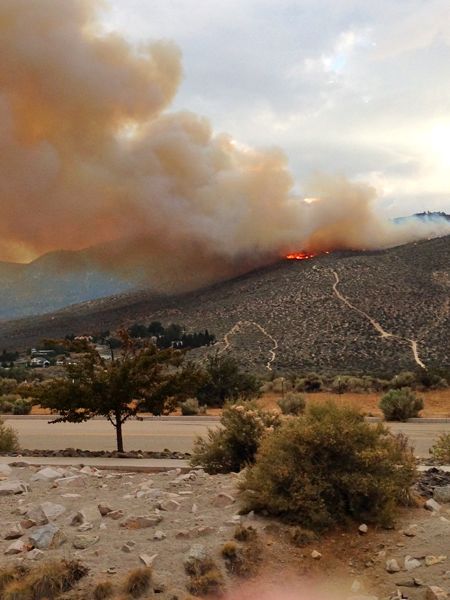
Lightning on July 16 ignited a brush fire in Jacks Valley. Photo/Valerie Smith

Lightning on July 16 ignited a brush fire in Jacks Valley. Photo/Valerie Smith

Updated 9:40pm

A fire is burning out of control in the Jacks Valley area of the Carson Valley.

As of 9 Wednesday night it had burned approximately 150 acres.

“A subdivision is threatened,” Capt. Troy Valenzuela with East Fork Fire told Lake Tahoe News. Some residents in the Clear Creek neighborhood were on voluntary evacuation.

Known at the Clear Creek Fire, it is mostly moving in a south to southwest direction. Road closures at this time are Jacks Valley Road at Highway 395 and Genoa Lakes Golf Course.

Air resources were used until dark. Hand crews will work through the night.

Several people saw the lightning strike the dry hillside just after 6pm July 16, including firefighters with East Fork. Lightning had been prevalent throughout much of the early evening. More is forecast for the next couple days.

— Lake Tahoe News staff report


Phone scammers targeting Placer County

Placer County is getting hit hard by phone scams. Savvy scammers are making money by using new tactics.

Victims have reported to the Placer County Sheriff’s Office that they were contacted by someone saying they are from PG&E or another utility service. The victim is told that their service will be shut off if there is no immediate payment made. The victim is instructed to make the payment using “Green Dot MoneyPaks.” One local victim was scammed out of $2,900.

The second scam is when a victim gets a call from someone claiming to be a family member in jail or in a medical facility. The victim is instructed to send a “Moneygram” to a specified location.

A Green Dot MoneyPak is a prepaid card usually used by people who don’t have bank accounts. The cards are available at retail stores for $4.95. They can be loaded with up to $500 at most retailers or $1,000 if used at Walmart, and then used to shop online or to add money to a PayPal account.

Victims are told to buy a Green Dot MoneyPak card, load it with a specific amount of cash, and transfer the serial number to the swindler who then transfers the money to another card.

Scammers like using Green Dot MoneyPak cards because it isn’t linked to a bank account and just like cash, it’s untraceable. Unlike cash, though, the transaction can be done over the phone, so it’s totally anonymous, making it just about impossible to catch the criminal.

Sheriff’s deputies are reminding citizens to never give personal information to a stranger and to be wary of anyone who calls on the phone trying to collect a debt.