School stress taking a toll on kids

By Patti Neighmond, NPR

When high school junior Nora Huynh got her report card, she was devastated to see that she didn’t get a perfect 4.0.

Nora “had a total meltdown, cried for hours,” her mother, Jennie Huynh of Alameda says. “I couldn’t believe her reaction.”

Nora is doing college-level work, her mother says, but many of her friends are taking enough advanced classes to boost their grade-point averages above 4.0. “It breaks my heart to see her upset when she’s doing so awesome and going above and beyond.”

And the pressure is taking a physical toll, too. At age 16, Nora is tired, is increasingly irritated with her siblings and often suffers headaches, her mother says.

Teens Talk Stress

When NPR asked on Facebook if stress is an issue for teenagers, they spoke loud and clear:

“Academic stress has been a part of my life ever since I can remember,” wrote Bretta McCall, 16, of Seattle. “This year I spend about 12 hours a day on schoolwork. I’m home right now because I was feeling so sick from stress I couldn’t be at school. So as you can tell, it’s a big part of my life!”

“At the time of writing this, my weekend assignments include two papers, a PowerPoint to go with a 10-minute presentation, studying for a test and two quizzes, and an entire chapter (approximately 40 pages) of notes in a college textbook,” wrote Connor West of New Jersey.

“It’s a problem that’s basically brushed off by most people,” wrote Kelly Farrell in Delaware. “There’s this mentality of, ‘You’re doing well, so why are you complaining?’ ” She says she started experiencing symptoms of stress in middle school, and was diagnosed with panic disorder and generalized anxiety disorder in high school.

“Parents are the worst about all of this,” writes Colin Hughes of Illinois. “All I hear is, ‘Work harder, you’re a smart kid, I know you have it in you, and if you want to go to college you need to work harder.’ It’s a pain.”

Parents are right to be worried about stress and their children’s health, says Mary Alvord, a clinical psychologist in Maryland and public education coordinator for the American Psychological Association.

“A little stress is a good thing,” Alvord says. “It can motivate students to be organized. But too much stress can backfire.”

Read the whole story


Biathlon lessons for kids at Tahoe Donner

In the spirit of this Olympic year, Tahoe Donner Cross Country Ski Center is offering a junior biathlon program led by former U.S. biathlon team member Tom McElroy.

This will be an introduction of skiing and rifle marksmanship for children in grades 2-8.

The guns are specially designed laser biathlon rifles. There will be eight classes on Tuesdays from 3:45-5pm starting Jan. 14. Participants must have basic ski handling skills. The cost is $120.

Clinics for adults are also available.

For more info, call (530) 587.9400.


Not a great shopping weekend for retailers

By Matt Townsend, Bloomberg

The first spending decline on a Black Friday weekend since 2009 reinforced projections for a lackluster holiday, increasing chances retailers will extend the deep discounts already hurting their profit margins.

Purchases at stores and websites fell 2.9 percent to $57.4 billion during the four days beginning with the Nov. 28 Thanksgiving holiday, according to a survey commissioned by the National Retail Federation. While 141 million people shopped, about 2 million more than last year, the average consumer’s spending dropped 3.9 percent to $407.02, the survey showed.

The survey results, if borne out at cash registers in American malls and on website checkout screens, herald retailers’ likely return to Black Friday-type discounts this week and suggest added stress for several chains. Wal-Mart Stores Inc. and Target Corp. already cut profit forecasts after tepid sales gains in back-to-school shopping.

“Retailers didn’t get what they wanted from Black Friday and they will need to make it up in the next three weeks,” Poonam Goyal, an analyst for Bloomberg Industries, said in an interview. “There will be some panic sales.”

Read the whole story


Bone-chilling cold to envelop Lake Tahoe

By Kathryn Reed

Record-breaking cold weather is about to descend upon the greater Lake Tahoe area.

“Today is probably the last nice day. By tomorrow we are looking at a 32-degree drop for Reno and a 25, 26 drop for South Lake. That is for the high, so the low will tank as well,” Edan Lindaman, meteorologist with the National Weather Service in Reno, told Lake Tahoe News.

Icy cold is the forecast this week in Lake Tahoe. Photo/LTN file

Icy cold is the forecast this week in Tahoe. Photo/LTN file

The record low for South Lake Tahoe on Dec. 4 is minus 2 degrees. It was set in 2001. The forecast now is for the low temp that day to be 2 degrees.

Truckee is more likely to break a record for Dec. 5, according to Lindaman. The record for that day is negative 7, which was recorded in 1972. And that is the same low temperature that is forecast for Thursday.

“It will all depend if we have snowfall on the ground. If we have 2, 3 inches of snow, it will be that much colder,” Lindaman explained.

The snow is expected to come late tonight and continue through Tuesday evening. By the time the storm blows through it’s possible a half foot will have fallen in the basin. Reno and Carson are also expected to get measurable snow.

A lake wind advisory is in effect through 1am Tuesday.

Highs through the week are not expected to reach freezing.

The good news is this means more snow for the ski resorts and the likelihood of more terrain opening.


Study: Wine, beer contain arsenic

By Bahar Gholipour, Huffington Post

White wine, beer and Brussels sprouts can be major sources of the toxic metal arsenic in people’s diets, according to a study.

Researchers analyzed the diets of 852 people in New Hampshire, and the levels of arsenic in their toenails, which show long-term exposure to the chemical.

Of the 120 foods the researchers looked at, four turned out to significantly raise people’s arsenic levels: beer, white wine (and to a lesser extent, red wine), Brussels sprouts and dark-meat fish such as salmon, tuna and sardines, according to the study, published last month in the Nutrition Journal.

The most significant source of arsenic in most people’s diets is drinking water. The new study is the first to take into account the levels of arsenic in the participants’ household water when looking at the amount of arsenic coming from foods.

The results suggest that diet can be an important source of people’s arsenic exposure over the long term, regardless of arsenic concentrations in their drinking water, the researchers said.

Read the whole story


Growing industry — hospice care for dogs

By Matt Richtel, New York Times

More and more, cats and dogs get the human treatment. There are pet spas, pet therapists, pet clothes. And as it goes in life, so it now goes in the twilight. The latest phenomenon: pet hospice.

Around the country, a growing number of veterinarians are offering hospice care, and marketing it as a way to give cats and dogs — and their owners — a less anxious, more comfortable passing.

The approach, in the spirit of the human variety, entails ceasing aggressive medical treatment and giving pain and even anti-anxiety drugs. Unlike in hospice care for humans, euthanasia is an option — and in fact, is a big part of this end-of-life turn. When it’s time, the vet performs it in the living room, bedroom or wherever the family feels comfortable.

That’s a big part of the job, the vets say, relieving pet owner guilt, giving them an emotional bridge to a pet’s death, and letting them grieve at home — rather than in a clinic or animal shelter. The intimacy carries a premium, sometimes costing 25 percent or more than euthanasia in a clinic. Vets, and their customers, say it can be worth it.

“They’re in their own environment, not only the pet but the owners,” said Dr. Mary Gardner, co-founder of Lap of Love, a Florida-based company that is one of the leaders in a small but growing market. “They’re allowed to have other animals present, other cats or dogs present, other children,” added Gardner, who refers to a pet’s owner as its “mom” or “dad,” and has since relocated her own practice to Los Angeles. “I’ve been to some homes where they had barbecues for that dog, and invited me and the neighbors, and the dog was the man of the hour.”

Lap of Love’s business has blossomed since 2010 from two providers to more than 68 vet partners in 18 states. The International Association for Animal Hospice and Palliative Care, a group started in 2009, now has 200 members, mostly vets, but also several family therapists, lawyers and an animal sanctuary in Northern California that takes in and provides holistic healing and hospice for terminally ill and elderly pets.

Read the whole story


Opinion: Anatomy and religion have a lot in common

By John Spinola

Religion is a lot like a penis.

It is OK to have one. It is OK to be proud of it. It is OK to share it with people who want it in their life.

It is not OK to take it out and wave it around or flaunt it in public. It is not OK to force it on people or children.

Like everything else there is a time and a place for it. It should not dominate every aspect of your life.

It doesn’t make you a better person for having one.

It doesn’t make you a better person for not having one.

Some people do just fine without one.

Some people are very passionate about theirs.

Some people believe theirs is the only one that matters.

Some people are really “attached” to the one they like or have chosen.

Some people don’t need one in their life to make them feel complete or fulfilled.

Different people like different ones for different reasons.

Yours is not the only one. There have been many throughout history.

John Spinola lives in South Lake Tahoe.


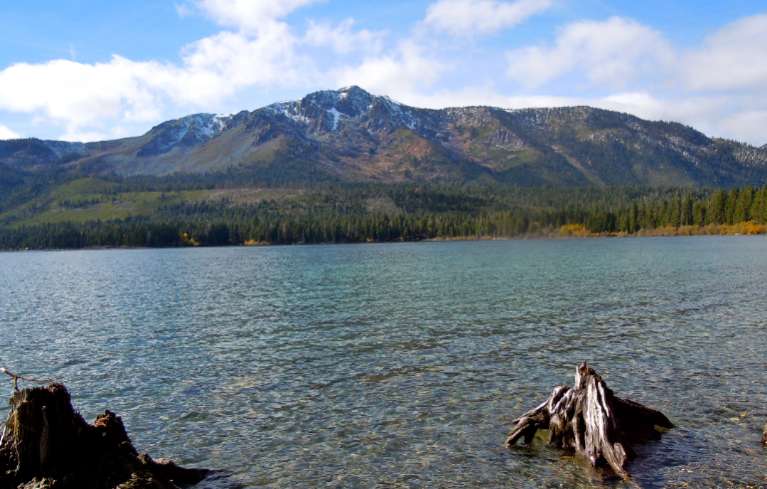
Firefighting capabilities a concern at Fallen Leaf

By Kathryn Reed

Firefighting capabilities at Fallen Leaf Lake are not great, but they might get a little better soon.

On the Dec. 7 community services district board’s agenda is a resolution supporting the El Dorado County Board of Supervisors’ proposal to fund a new pump for the fire boat.

The current pumping capacity is so minimal that it is causing some residents of the South Shore enclave to pay extremely high homeowner insurance rates, while others don’t qualify for coverage in case there were a fire.

Fallen Leaf Lake is trying to become better equipped to fight a fire. Photo/LTN file

Fallen Leaf Lake is trying to become better equipped to fight a fire. Photo/LTN file

The Insurance Service Office, better known as ISO, gives areas a rating, which then plays a role into the cost of insurance.

“Many on the west side of the lake are paying exorbitant property insurance or can’t get it,” board President Tom Bacchetti told Lake Tahoe News.

Fallen Leaf Lake is also looking at obtaining a used pumper truck from CalFire that would replace one of its four older apparatuses.

While the area has never been flush with a large operating budget, the county took away $60,000 in 2009. That was the Aid to Fire program. To make up the difference the board raised the special tax from $395 per parcel to $595 a year. Still, there is a systemic deficit.

Bacchetti said the community doesn’t want to raise that fee, so likely when it’s up for a three-year renewal next summer the fee will be the same.

“There’s always a shortfall. We have reserves,” Bacchetti said. “There are things that should be done that are not getting done.”

The dismal financial situation has also gotten the attention of the Local Area Formation Commission, which has some oversight of the community service district.

In the staff report from this fall’s LAFCO meeting it says, “The fire chief indicated that the district had made deep across-the-board cuts in its equipment and other unspecified line items. For example, the district has stopped purchasing turnouts and [personal protective equipment] and has not made any repairs to its radios, hoses and apparatuses to bring them up to compliance with [National Fire Protection Association] standards.”

Ironically, the Fallen Leaf Lake Community Services District was formed in 1982 to provide better fire suppression to the area. It was another five years before the district incorporated parks and recreation into its purview.

While the mostly volunteer department doesn’t get that many fire calls, the threat is there. There were six structure fires between 2003 and 2012. However, there were 49 non-structure fires in that 10-year period. And had firefighters not stopped the 2007 Angora Fire on the ridge, it would have swept through the Fallen Leaf Lake community.

South Lake Tahoe Fire Department has a longstanding agreement to provide aid when necessary. The city also handles Fallen Leaf Lake’s dispatch needs.

Knowing Fallen Leaf Lake is having issues, South Tahoe Chief Jeff Meston told Lake Tahoe News he plans to reach out to Chief Gary Gerren to see if the city could do more.

—-

Notes:

• The board meets Dec. 7 at noon at the El Dorado Hills Community Center.

• New officers will be named to the board. Bacchetti will remain on the board, but is stepping down as president.


Tahoe Tails — Adoptable Pets in South Lake Tahoe

Ralph

Ralph

Ralph (aka Wreckit Ralph) is a young whippet mix who’s had a rough go of it so far. He’s only about 6 months old, but he’s already been in several shelters, through no fault of his own.

He’s a nice guy who barks in the kennel and makes you think he’s not friendly, but as soon as you bring out the leash he’s all wags and wiggles.

Ralph is an energetic puppy who deserves a nice home where he’ll get lots of exercise, attention and training.

Ralph is neutered, microchipped, and vaccinated. He is at the El Dorado County Animal Services shelter in Meyers, along with many other dogs and cats who are waiting for their new homes.

Go online to see photos and descriptions of all pets at the shelter.

Call (530) 573.7925 for directions, hours, and other information on adopting a pet. For spay-neuter assistance for South Tahoe residents, go online.

Alpine Animal Hospital is having several photography sessions for people and their pets with Santa this month — and donations (suggested $5) will benefit the Animal Coalition of Tahoe. Dates: Dec. 4, 7, 11, and 12, from 4-6pm. Alpine Animal Hospital is at 921 Emerald Bay Road, South Lake Tahoe. Call (530) 541.4040 for more information.

— Karen Kuentz


Opinion: Communication would help solve Tahoe’s problems

By Natasha Eulberg

As a native Californian with fond memories of happy summers spent in close proximity to Lake Tahoe, the idea that environmental regulations protecting the region I hold so dear are in danger of falling through is troubling. And yet that situation is very much a potential outcome of the court case regarding the regional management plan update for the Tahoe Regional Planning Compact.

Sierra Club and Friends of the West Shore vs. Tahoe Regional Planning Agency threatens to lead the Tahoe region into dangerous territory regarding perceptions of environment and land management. The case largely pits concerns over the legitimacy of environmental carrying capacity thresholds against opportunities for (re)development, community revitalization, and long-term environmental benefits. The Sierra Club and Friends of the West Shore (FOWS) officially filed the suit against the Tahoe Regional Planning Agency in February in response to TRPA’s approval of an update of the 1987 management plan for the region. While the concerns of the plaintiffs regarding TRPA’s decision to turn over responsibility for establishing and maintaining environmental standards to local governments and the worries of TRPA and development interest groups over the stagnation and dating of environmental regulations are both legitimate anxieties, these claims mask a larger problem that the case presents for the Tahoe region:

If regional maintenance of environmental regulation is forfeited now, we lose our best hope for a cohesive, holistic, and – most importantly – successful management strategy for Lake Tahoe in the future.

If responsibility for environmental protections is left in the hands of local governments and interest groups, “environment” will inevitably be compared to (and potentially lose out against) “development” and “economy.” What we need, rather than this contrast, is a forum where the goals, concerns, and potential benefits of both environmental and developmental interest groups can be discussed, analyzed, and ultimately integrated into a management plan that neither attempts to banish human presence from the Tahoe basin, nor abandons the local environment to human exploitation.

I feel that this lawsuit represents a golden opportunity to create just such a forum. Rather than delaying implementation of the possible benefits that the proposed 2012 Regional Plan update has to offer by sluggishly trudging through the legal gauntlet, discussion could mold those benefits into a new plan that simultaneously addresses the concerns of environmentalists and community members, creating a vision for a Tahoe that everyone has a stake in.

Litigation isn’t the answer to this problem; it’s a divisive strategy that determines a winner.

Communication, on the other hand, seems as though it has a lot of potential.

Natasha Eulberg is a senior at Gettysburg College in Pennsylvania. She is from Sacramento.