Detroit pension ruling could reverberate to Calif.

By Mary Williams Walsh, New York Times

The ruling by Judge Steven W. Rhodes, who is presiding in Detroit’s bankruptcy case, that public pensions are not protected from cuts could alter the course of bankrupt cities like Stockton and San Bernardino, that had been operating under the assumption that pensions were untouchable.

Stockton’s bankruptcy case, for instance, is further along than Detroit’s, and until Tuesday it seemed likely to leave public pensions fully intact. Stockton sought bankruptcy protection last year and has already filed a plan of debt adjustment with the bankruptcy court in Sacramento. Its plan, which is subject to court approval, would leave city workers’ pensions unchanged: They would continue to accrue benefits at the same rate as they did before the bankruptcy. (A new state law does permit Stockton to provide smaller pensions to workers hired after Jan. 1.)

That is a better deal than workers at bankrupt companies often receive. City leaders based it on the thinking that public workers had already sacrificed enough, given that the plan of adjustment already calls for them to give up contractual pay increases and valuable retiree health benefits.

Opponents of that plan have raised concerns that it would not save enough money. They point to the city of Vallejo, which spent three years in bankruptcy, emerged in 2011 without touching its workers’ pensions, and is again having trouble balancing its budget. Many cities in California are struggling with pension costs because of a big benefit increase in 1999 that has been much more expensive than anticipated.

Read the whole story


Carbon monoxide detectors can save lives

Winter increases the risk of the silent killer known as carbon monoxide.

CO detectors are the only way to detect this poisonous gas. Common flu-like symptoms of CO poisoning include headache, nausea and vomiting.

Here are tips from Truckee:

• Install alarms on every level of the home and near each sleeping area for maximum protection. Test alarms monthly and change batteries every six months.

Exit the home and call 911 if alarm sounds.

• Run kitchen vents or exhaust fans anytime the stove is in use. The kitchen stove is among the most frequent sources of CO poisoning in the home. To help eliminate danger of overexposure, always run exhaust fans when cooking, especially during the holidays when stoves are left on for longer periods of time. Also periodically open a nearby window when cooking to allow fresh air to circulate.

• Never use generators indoors. In the case of a power outage, portable electric generators must be used outside only. Never use them inside the home, in a garage or in any confined area that can allow CO to collect, and be careful to follow operating instructions closely. Also refrain from using charcoal grills, camp stoves and other similar devices indoors.

• Have fuel-burning appliances inspected regularly. Arrange for a professional inspection of all fuel-burning appliances (such as furnaces, stoves, fireplaces, clothes dryers and water heaters) annually to detect any CO leaks.

• If you have any work done on your residence for the heating systems (furnace, wood stove), make sure that you have the proper permits from the county or town authorities and be sure that the worked being performed is by a properly licensed and bonded contractor.

Truckee Fire and the town of Truckee have carbon monoxide detectors for free while supplies last. Stop by any of the staffed stations during normal business hours or at the building department located at 10183 Truckee Airport Road during normal business hours Tuesday-Friday.


Fundraiser set for Tahoe Douglas firefighter

Kyle Van Mouwerik developed a sudden acute illness that left him paralyzed while working a wildland fire last summer for Tahoe Douglas Fire Protection District.

He has been in the hospital since he came down with Guillain Barre Syndrome.

On Dec. 6 there will be a fundraiser for him at Himmel Haus Restaurant, 3819 Saddle Road, South Lake Tahoe. Tickets are $25 in advance, $30 at the door. Dinner, beer and live music will be provided. Doors open at 5pm, dinner is at 6pm.

For more information or to buy tickets, contact Michael Bartlett at (916) 753.4225 or mcbartlett1287@yahoo.com, or Jeff White at (775) 781.7723, or Tahoe Douglas Fire at 193 Elks Point Road, Zephyr Cove.


Ferry service on Lake Tahoe getting closer

By Kathryn Reed

Twenty-five minutes to get from the South Shore to the North Shore? Yes, by ferry.

That is the goal of the Tahoe Transportation District, the lead agency trying to bring ferry service to Lake Tahoe. By summer 2016 two 120-passenger ferries could be traveling year-round between South Lake Tahoe and Tahoe City.

It is being called an environmental asset as well as a transportation tool.

“It would be equivalent to a light rail corridor for Tahoe,” Alfred Knotts, project manager, told Lake Tahoe News. “This is part of the long-term vision and how each piece creates a regional transit system.”
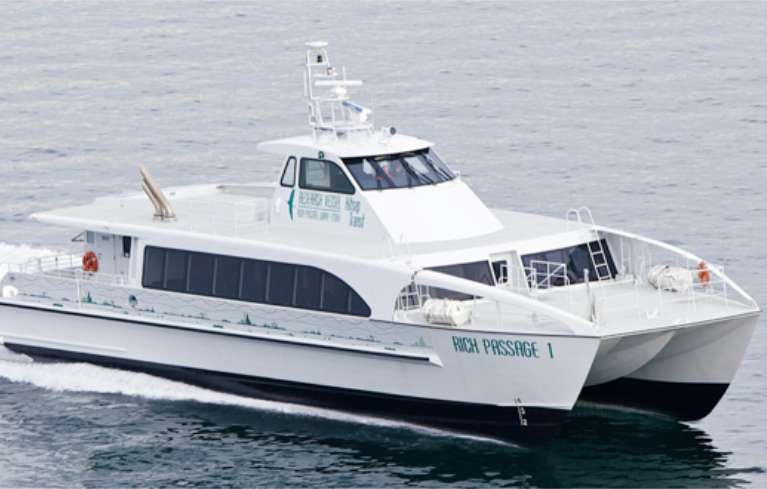
A ferry like this might one day ply the waters of Lake Tahoe. Photo/Provided

A ferry like this might one day ply the waters of Lake Tahoe. Photo/Provided

Comments are being taken until Jan. 3 on the notice of intent/notice of preparation for the project. Comments will be incorporated into the draft environmental impact report and draft environmental impact statement. Those are expected to be released in a year. The final EIR/EIS could come out in summer 2015, with permitting that fall, and upgrades to the piers and other land improvements done in the 2016 building season, and service starting when that is completed.

Knotts gave a presentation Dec. 4 to the Tahoe Regional Planning Agency’s Advisory Planning Commission. He will do the same Dec. 13 at the TTD board meeting.

Parking concerns at both ends of the lake were brought at the meeting, as were greenhouse gases, scenic impacts, dredging and fisheries.

The goal is to not have everyone drive to one of the marinas, but instead take another form of transportation – bus, bike or foot power.

“We don’t want parking spilling over to business or residential areas that could be adversely impacted,” Knotts said. It may mean increasing the bus service to make this happen.

According to TRPA, piers are a scenic concern. That is one reason the Grove Street Pier is being looked at instead of the Tahoe City Marina. It’s possible piers at both ends of the lake will need to be extended and possibly widened to accommodate the boat, people and existing services.

Marina owners have been consulted and are privy to what is being contemplated.

Ski Run Marina has a dredging permit. Dredging might be required in low water years or to cope with the seasonality of the lake level. Officials are looking into what might be required in Tahoe City.

It’s estimated that during peak summer travel the boats would make eight trips a day, carrying 120-passengers. It could be a tool for commuters, skiers, people wanting to dine at the other end of the lake, or tourists looking for something fun to do.

Preliminary plans are for 10 spots for bikes, but people who spoke Wednesday said that number should be increased. Ensuring skis and snowboards can be secure will also be worked into the design, and maybe golf clubs.

Transit officials have been looking at Washington state ferry service to come up with a vessel that could handle the needs and conditions of Lake Tahoe. Ideally, the boat will be able to weather the high seas that during storms have the lake looking like the ocean. However, the contingency plan would be to bus people back to the originating marina if need be.

TTD would hire an operator much like it has done for the South Shore bus service BlueGo.

Cost of the boats and marina upgrades are estimated to be $33 million. Annual operating costs come to $3.3 million. Federal transportation subsidies would help pay the operating costs. State and federal money are likely to pay for the capital expenses. Until the environmental documents are completed funding cannot be secured.

—-

Notes:

• More information is available online.

• TTD board meeting is Dec. 13 at 9:30am at Granlibakken in Tahoe City.

• Future workshops and meetings about the ferry will in part be determined based on the comments received so they can be addressed.


Opinion: Electric line expansion is a bad idea

By Ann Nichols

Today the forests between Kings Beach and Tahoe City are connected by the Tahoe Rim Trail, nature trails, dirt roads and a mostly paved route located at the summit of Highway 267 known as Mt. Watson Road or the “Fiberboard Freeway”.

This great North Shore recreation asset has it all: views of Lake Tahoe, access to Watson Lake, Jeep and equestrian trails, snowmobiling, cross country skiing, snowshoeing, and hiking. All are close to town, yet not marred by unsightly power lines.

That’s all about to change if Liberty Utilities and CalPeco, Liberty’s parent company, get approval for their proposed $45 million plus project. The company wants to double the existing power to serve the demands of new projects with prominent new power lines; think 1,200 units at Squaw, 1,000 more at Northstar Highlands, 760 units at the top of Highway 267 put forth by East West Partners, and the new lifts at Northstar.

The power company folks want to run the new power line between Kings Beach and Tahoe City along the Mt. Watson Road. The poles will visually dominate the pristine forest lands. They claim it will be easier to access and maintain the poles. That’s a given, but at what environmental cost?

The new thicker and taller poles will exacerbate their visual effect and degrade existing views. Here are some disturbing project highlights:

1. Trees removed: 47,000 (whole project including along Highway 267)

2. Damaging stream environment zones by removing 1,542 trees.

3. Power poles increase in diameter from an average of 16 inches to a maximum of 4.5 feet for self-supporting poles.

4. Power pole heights increases up to 12 feet or as much as a total height of 92 feet (nine stories). Most poles are now 40-feet high

5. Right-of-way increases width from 30 feet to 40 feet along the new Mt. Watson Road line.

6. Trees and vegetation within 150 feet of the power lines can be cleared producing a scar in the forest.

7. 7.5 miles of new right-of-way within the basin

Who will stand the cost of the expansion? A measly 49,000 ratepayers between North and West Shore and pay attention folks on the California side of South Shore, you are on the hook too. The power company is guaranteed an 11.8 percent return on these infrastructure improvements and it is likely we will see our power bills go up 20 to 30 percent. This huge project could easily run over $50 million. It’s a no lose situation for the power company, a boon for developers, but loaded with adverse effects for tourists, residents and wildlife.

Let’s not lose our public areas and diminish the quality of a great recreational experience with the permanent installation of unsightly power poles. Leave the power lines where they are now … they’ve served us well in that location since the ‘70s. Underground the new lines that will go through the east Kingswood neighborhood.

Do we really need five years of traffic impacts and 12,000 one-way truck trips? The basin is already 90 percent built out; is this major project absolutely necessary for Lake Tahoe? CalPeco, develop a project that won’t negatively impact our beautiful area.

Ann Nichols is president of the North Tahoe Preservation Alliance.


Tahoe residents to graduate from UNR

Twelve Lake Tahoe residents will be part of UNR’s winter commencement Dec. 7 at Lawlor Events Center.

A total of 1,075 bachelor’s degrees and 386 advanced degrees or certificates (master’s and doctoral degrees and education specialist certificates) will be awarded.

Local grads include:

• Estefania Flores Natusch of Incline Village, BA in business.

• Shelby Hooper of Incline, MBA.

• Robin Endicott-Penning of Incline, MBA.

• Austin Richwood of Incline, BS in civil engineering.

• Kristyn McDougall of Incline, BS in nursing.

• Scott Johns of Incline, BA in journalism.

• Edith Laguna of Kings Beach, BS in education.

• Yehudit Nadler of Kings Beach, master’s in education.

• Lindsay Curtis of Kings Beach, BS in nursing.

• Tyler Mitchell of Zephyr Cove, BS in business.

• Bryan Schorr of Zephyr Cove, BS in business.

• Juliana Mathias of Zephyr Cove, MBA.


Santa Paws coming to South Lake Tahoe

Pet and family photos will be taken with Santa Paws on Dec. 7 from 11am-4pm.

The Lake Tahoe Humane Society and SPCA sponsors the event to help animals in Tahoe.

The event is at the South Lake Tahoe Recreation Center, 1180 Rufus Allen Blvd.

Cost is $20. Credit cards not accepted. Multiple poses on a CD will be provided.

Donations of dry dog and cat food for the community Pet Food Bank are welcome.


Snippets about Lake Tahoe

calfire• The annual rural fire fee is automatically going up by $2.33 per property to adjust for inflation.

• South Lake Tahoe, El Dorado County and Placer County have submitted revised Storm Water Management Plans to Lahontan Regional Water Control Board. They are online. Submit comments to Bob Larsen at RLarsen@waterboards.ca.gov by 5pm Jan. 3.

• The Donner Pass Road Pedestrian Improvement Project in Truckee has been selected to receive $1.5 million in funding from the Highway Safety Improvement Program that is administered by Caltrans. This project includes sidewalks and improved pedestrian crossings along Donner Pass Road between Frates Lane and the Interstate 80 off ramp at the western end of the project.

• Melody Easton had been hired as coordinator for the South Tahoe Drug Free Coalition.

• The Bicycle Advisory Committee of the South Lake Tahoe Recreation Facilities Joint Powers Authority will meet Dec. 6 from 9-11am in the upstairs conference room at Lake Tahoe Airport.


S. Tahoe brothers vie for U.S. boardercross team

By John Gibb, Daily Mail

CHARLESTON, W.Va. — West Virginia and Lake Tahoe will be represented this week as the 2014 Sochi Olympic qualifier for boardercross gets under way in Austria.

Bobby and Jarod Minghini, formerly of Snowshoe Mountain in Pocahontas County, will be two of the 12 American hopefuls for the four-man U.S. BX team. They are the only siblings competing for a spot.

BX is where four boarders start simultaneously and ride over a series of features trying to reach the finish line first.

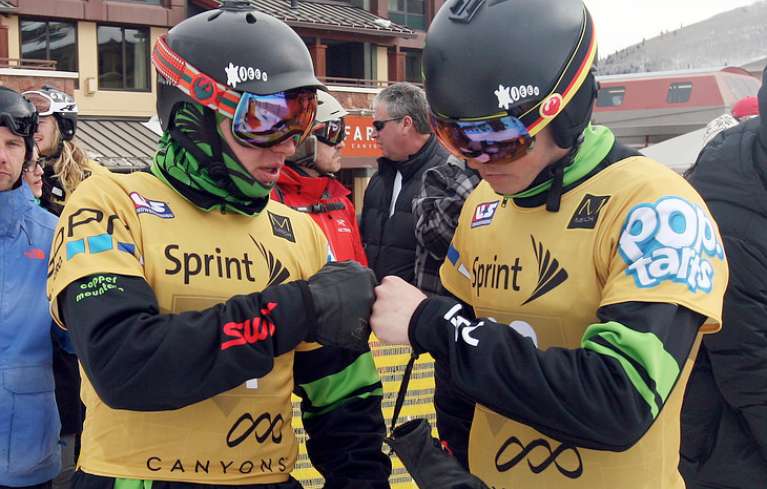
arod and Bobby Minghini fist-bump each other before the Sprint U.S. Grand Prix event earlier this year. The brothers are attempting to qualify for the 2014 Sochi Winter Olympics in February. Photo/Provided

Jarod and Bobby Minghini are attempting to qualify for the 2014 Sochi Winter Olympics. Photo/Provided

BX became an Olympic sport in 2006 and has been a sport at the Winter X Games since 1997. BX has also been referred to as snowboarder X, SBX and snowboard cross.

The brothers were born and raised in West Virginia. They lived near Snowshoe Mountain Resort, adjacent from the slopes. Bobby, 27, began snowboarding as a 5-year-old. Jarod, 25, picked up the sport shortly after Bobby. Both currently live in South Lake Tahoe.

Bobby moved to Lake Tahoe in 2004 upon graduation.

“I visited my brother in Lake Tahoe in 2005,” Jarod said. “I knew I needed to be there with him so I made the move after my junior year. I finished school at South Tahoe High and graduated from there in 2006.”

Bobby said he moved to Lake Tahoe because of the high concentration of snowboarding professionals there.

“I knew that if I were to succeed in snowboarding, I needed to be somewhere with better mountains and training opportunities,” Bobby said. “Lake Tahoe has amazing snow and insane beauty. It’s also a place many professionals congregate so it was just the ideal place.”

Since moving to Lake Tahoe, the two have qualified for multiple Junior World Championships, received first and second overall in North American Cup standings, received wins at NorAms and the Europa Cups, earned spots for World Cups, competed in multiple Winter X Games and began competing on the World Cup Tour. The brothers have received an invitation to compete in the 2014 Winter X Games in Aspen.

Read the whole story


Underhill died of accidental drug overdose

Lake Valley firefighter Brandon Underhill died from an “accidental multiple drug overdose,” according to El Dorado County sheriff’s Lt. Pete Van Arnum.

The exact drugs are not being released, but Van Arnum said, “It was all basically prescription drugs.”

Underhill had been on leave from the department at the time of his Sept. 29 death because of a back injury. He had worked for Lake Valley since 2005.

Based on the amount of drugs in his system and speaking to family and friends, it was determined the overdose was accidental. He was 34.

— Lake Tahoe News staff report