Second AZ firefighters’ death probe more revealing

By Cally Carswell, High Country News

As we reported in October, the first investigation of Arizona’s Yarnell Hill Fire, in which 19 hotshots were killed this summer, drew extremely cautious conclusions. No “direct causes” of the accident were identified, no one was blamed.

Policies and protocols, the report said, were not violated. It was almost strangely timid, leaving some to wonder: How could 19 young men have lost their lives if so few mistakes were made?

That report was commissioned by the Arizona State Forestry Division, the agency that oversaw the firefighting effort on Yarnell Hill. Now, a separate investigation, this one from the Arizona Division of Occupational Health and Safety, has been completed — and it reached much more damning conclusions. The Associated Press calls it a “stinging rebuke” of the first investigation.

Worst of all, it bluntly concluded that protection of “non-defensible structures” — houses that didn’t have adequate clearings around them to allow firefighters to safely fight encroaching flames — was prioritized above firefighter safety.

Firefighters should have been told to stand down before the storm arrived that blew the fire up, lead investigator Marshall Krotenberg told the Arizona Industrial Commission, which administers and enforces worker safety laws.

Read the whole story


Lake Tahoe part of study on Rim Fire’s smoke impacts

By Heather Segale

On Aug. 17, the largest recorded wildfire in the Sierra Nevada and the third largest in California history started in Stanislaus National Forest. This devastating fire burned more than 250,000 acres and took two months to contain.

The effects of the fire on the terrestrial ecosystem will certainly last for years. Here at TERC, the question is to what extent were Sierra lakes impacted?

Smoke was a constant in Tahoe for much of August 2013. Photo/LTN file

Smoke was a constant in Tahoe for much of August 2013. Photo/LTN file

In October TERC researchers received a National Science Foundation – Rapid Response Grant to assess the effects of the Rim Fire on lakes in Northern California. It is a one-year study to look at water quality and ecological changes in lakes affected by the wildfire.

TERC is studying two lakes, Cherry Lake and Lake Eleanor, within the heart of the burn area and several lakes to the north that were impacted by smoke during the fire event, including Lake Tahoe, Emerald Bay, and Cascade Lake. Rock Creek Lake just south of Mammoth will serve as the control lake since it was not impacted by the fire or smoke.

UC Davis is collaborating in the study with Miami University, Ohio; Stony Brook University, New York; UNR; and UC Santa Barbara.

Initial assessment of the water quality and zooplankton community was completed in late October, prior to the first snow. The science team will return following a weather event that causes dramatic runoff, or during the spring snowmelt.

The research is focused on how the lakes respond to the organic compounds contained in the smoke from wildfires. The results will have importance to the entire west, with expectations for increases in wildfires due to climate change.

Heather Segale is the education and outreach director for the UC Davis Tahoe Environmental Research Center in Incline Village.


Restaurants struggle to be gluten free

By Vanessa Wong, Bloomberg

Cooking a gluten-free meal isn’t as simple as plucking out the croutons.

Even if the ingredients are gluten-free, avoiding cross-contamination from other things in the kitchen means having separate utensils and prep areas, not to mention special training of staff—significant undertakings in restaurant environments whose employees must be reminded to wash their hands.

The problem, in other words, is the preparation.

Perhaps that’s why some chains that make most of their money from wheat-eaters have stopped short of promising that their “gluten-free” foods are actually, well, gluten-free.

As the Wall Street Journal reported, Domino’s and Noodles & Co. offer “gluten-free” options with disclaimers that they can’t guarantee a total absence of gluten.

“Even with a strict adherence toward maintaining spotless restaurants, we simply have too much wheat and other gluten-containing food products in our kitchens to be able to eliminate the cross contamination on food prep surfaces and even in the air,” warns a message on Noodles’ website.

The U.S. Food and Drug Administration defines “gluten-free” as containing less than 20 parts per million of gluten.

Read the whole story


Tahoe author to discuss Olympic history

Award-winning author David Antonucci will present an illustrated talk on the 1960 Squaw Valley Winter Olympics on Jan. 7 at 6pm.

Antonucci will feature his most recent book, “Images of Sports: The 1960 Winter Olympics”, which will be available for sale and autographing.

This book showcases the highlights of the Games through rare and previously unpublished images. The 1960 Olympic Winter Games were a long-shot effort that succeeded beyond wildest expectations.

This free presentation at the South Lake Tahoe Library, 1000 Rufus Allen Blvd., is sponsored by Friends of the Library.

For more info, call (530) 573.3185.


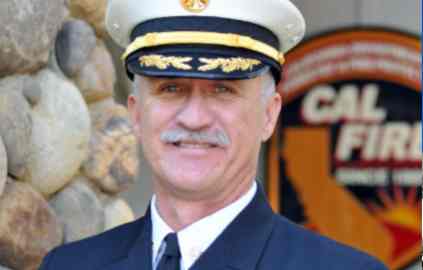
Local CalFire chief retiring

Kelly Keenan’s last day as chief of the Amador-El Dorado unit of CalFire is Dec. 22.

“I have spent most of my adult life dedicated to a career with the California Department of Forestry and Fire Protection and I wouldn’t change a thing,” Keenan said in a statement. “It has been an amazing journey taking me from traditional forestry work, to overseeing an inmate conservation camp to running a unit spanning five counties.”

Kelly Keenan

Kelly Keenan

Keenan began his career in 1982 with then CDF Coast Region Headquarters, where he worked as a seasonal forestry aide. In 1983, he went to the Jackson State Demonstration State Forest in the Mendocino Unit as a forestry aide where he worked on the Caspar Creek Experimental Watershed project and prepared timber harvest plans.

He was promoted in 1988 to the Nevada-Yuba-Placer Unit where he worked as an area forester, vegetation management program coordinator, unit forester and interim unit administrative officer.

In 2004, Keenan accepted an assistant chief position in the Amador-El Dorado Unit. In 2011, he took over the helm of the entire unit.


2012 SnowGlobe tragedy not forgotten during preparations for annual S. Tahoe music event

By Kathryn Reed

While it’s the music that draws people to SnowGlobe, it is Alyssa Byrne who is on so many people’s minds. The 19-year-old Petaluma woman died last year of hypothermia as she tried to walk from the concert venue to her Stateline hotel.

A lasting legacy of the tragedy is the Always Buddy Program that was created by her family and friends in Sonoma County. The mantra is, “I promise to never let myself or anyone I love leave in an unfamiliar place without a buddy system.”

SnowGlobe returns to South Lake Tahoe Dec. 29-31. Photo/LTN file

SnowGlobe returns to South Lake Tahoe Dec. 29-31. Photo/LTN file

Leandra and Paul Hale, who own the Butter Muffin in South Lake Tahoe, have become friends with the Byrne family. They are working on securing permits from the city to erect warming huts at Al Tahoe Boulevard and Highway 50, and Al Tahoe and Pioneer Trail.

“The most important thing is the heat up huts,” Leandra Hale told Lake Tahoe News. “Then people will realize if they hit Pioneer Trail, they are going in the wrong direction.”

The booths are likely to be 12-feet-by-12-feet, include warmers, cell phones for people to use and water. Vegan Café is donating hot beverages.

The Hales are also organizing a free ride program because if people make it to their tents, it means their intention is to walk and not take the bus. Rides will be provided all three nights.

Anyone wanting to donate water or a ride may call (530) 541.8547 or email the_buttermuffin@yahoo.com.

South Tahoe High School seniors Cassidy Jackson and Noah Palmeiri have a booth at SnowGlobe. They have been collecting hats, jackets, gloves, blankets, and hand warmers for attendees. They plan to provide coffee and water, along with charged cell phones people may use.

Another STHS student planned to create a video to air on V-TV, the school television station, that talks about the dangers of drugs, especially Molly. Molly, also known as ecstasy, causes dehydration.

“This is the reason at SnowGlobe that the water line is longer than the beer line,” South Tahoe police Officer Russell Liles told the South Lake Tahoe Drug Coalition this month.

And people who are not used to Tahoe’s elevation can easily become dehydrated without drugs, so the mix can be even more dangerous for flatlanders.

Methamphetamines and other drugs were found in Byrne’s system, according to the toxicology report.

Changes for this year

The SnowGlobe Music Festival is Dec. 29-31 on the ball field adjacent to Lake Tahoe Community College.

“The college is very much in support of a safe and responsible SnowGlobe and making sure people pay attention to the cold, make sure they ride buses, and follow the signage,” LTCC President Kindred Murillo told Lake Tahoe News.

This year’s lineup features Tiesto, Cut Copy, Kaskade, Snoop Dogg, Holy Ghost!, Zed’s Dead, Gramatik, and Beats Antique and others. More than 50 bands or DJs will fill the main stage and two tent stages.

“The artists are from a number of different genres. Snoop Dog will play a greatest hits set,” Chad Donnelly, SnowGlobe promoter, told Lake Tahoe News. Snoop Dog will be on stage Dec. 31.

Tickets are still on sale, but Donnelly expects them to sell out in the next 11 days.

Fireworks will be shot off all three nights instead of just on New Year’s Eve, as has been the case the previous two years.

SnowGlobe has expanded its affiliation with Heavenly Mountain Resort. Big Air snowboard and skiing demos will go on in between sets near the main stage.

To help with the cold, 10,000-square-feet of heated enclosed spaces will be set up. The main stage is totally exposed to the elements, while there are heaters in the two tent venues. However, those are only enclosed on three sides.

The number of buses being used has doubled, so this should eliminate the length of time people are standing around in the cold waiting to get back to their hotel room.

“We have made arrangement as a city to ensure pathways from the post office to the college are free of snow and accessible. That way we try to keep them off the road as much as possible,” Police Chief Brian Uhler said.

One of the noticeable changes will be what people are walking on. To help preserve the ball field the promoters will lay down a material called LD Panels on top of the synthetic field. It will be used along with plywood. The wood will be used to widen the spots and under anything that needs to stay in place for the entire event.

Law enforcement

Police agencies on the South Shore like that SnowGlobe has contributed to fewer people gathering in the casino core on New Year’s Eve.

New this year is the Horizon casino is having an outdoor concert Dec. 31-Jan. 2. No one at the casino returned calls so details are not available. El Dorado County sheriff’s Lt. Pete Van Arnum said that event is expected to attract 5,000 people each night. (Douglas County law enforcement had no information.)

SnowGlobe brings about 10,000 people per night.

“It will be nice if people go to that and SnowGlobe instead of hanging out in the middle of the street at Stateline,” Van Arnum told Lake Tahoe News.

Uhler said his department is not making any major changes this year in regards to SnowGlobe. Amnesty bins will be at the entrance where people can drop their drugs, no questions asked.

“Essentially it will be the same sort of presence. We have undercover officers. We are not making secret about it because we want to prevent any illegal drug use,” Uhler told Lake Tahoe News.

Officers in uniform will be out, as will a few dozen security guards provided by the event organizers.

The future

Even with precautions for the field, this is likely to be the last year SnowGlobe will be at this location.

“The reality is (city officials) just are not sure if that venue is the right venue over the long haul. We will continue to work with them to assess what makes sense,” Donnelly told Lake Tahoe News.

Murillo said the college is encouraging the city to find a venue that would be ideal for more of these types of events.

“As far as the status of SnowGlobe for future years there has been no definitive decision on whether they will return, but there has been discussion regarding the desire to relocate the event to some other venue not yet identified,” Lauren Thomaselli, South Lake Tahoe recreation manager, told Lake Tahoe News. “Each year the promoter has asked for a multi-year contract, however until another venue can be identified, it is not likely the city would commit to multiple years.”



Letter: Anti-paid parking petitions in circulation

To the community,

There are plenty of people in this town that would have you believe that South Lake Tahoe is on the road to ruin. The City Council’s vote last December to put parking meters at our beaches and on public streets just fuels that kind of thinking.

Because paid parking is opposed by the majority of the community citizens feel their leaders are not listening or worse don’t care what we think.

Most people that live here believe that this entire paid parking program along with the aggressive ticketing that came with it needs to be eliminated. The problem is: Giving up on this paid parking program would mean that somebody would have to admit that the decision should never have been made and most people would rather be tortured than admit they were wrong.

So here we are one year later, with our citizens lining up to sign petitions to qualify for a ballot initiative to repeal paid parking.

Creating a controversy of this magnitude has the consequence of having the community believe that our leaders can’t get anything right. To be honest, we probably have more things to be proud of in this city than to be ridiculed, but it is always the screw-ups that people remember.

The community’s enthusiasm for an opportunity to vote on this issue is a demonstration of how passionate they are about free access to the lake. For many, it is the reason they live here.

The grass-roots citizen’s group Tahoe 4 Tahoe was born out of this parking controversy and they remain focused on getting this initiative to the voters.

Starting today petitions for the Initiative to Repeal Paid Parking in South Lake Tahoe will be available at the following locations:

Bruce Grego’s Law Office, 2262 Barton Ave.; Gaialicious, 987 Tallac Ave.; The Design Shoppe, 3053 Harrison Ave.; Sessions Salon, 3320 Sandy Way; Sierra Ski and Cycle Works, 3430 Lake Tahoe Blvd; League to Save Lake Tahoe, 2608 Lake Tahoe Blvd.; South Tahoe Standup Paddle, 3115 Harrison Ave.; and Tahoe Keys Office, 356 Ali Wai Blvd.

The challenge will be getting the 940 registered voter signatures that will be needed by the Jan. 13 deadline. We may need our own Miracle on 34th Street this holiday season to reach that goal.

This year I’m asking Santa for peace on Earth and to never hear the words “parking kiosk” again.

Let’s do this and Keep Tahoe Tahoe.

Peggy Bourland-Madison, Tahoe 4 Tahoe committee


3D underwater movie being shot in Lake Tahoe

By Heather Segale

TERC researchers Brant Allen and Katie Webb along with 3D movie specialist Steve Andersen, script writer Sharon Wood, and the entire TERC education team, are working hard to bring the Tahoe Science Center another 3D movie.

This film will let visitors virtually dive under the water and learn about the ecology and physics of the lake using actual 3D video footage from under the surface of Lake Tahoe.

Imagine being able to see the kokanee salmon swimming under water, algae growing, and researchers diving, all in 3D.

Getting these shots is not easy. In order to get 3D footage the videographer needs two cameras set up for the “left” and “right” eye. On top of that, the cameras must be waterproof, stable, and timed to perfection. Filming in 3D takes a lot of precision and control — two things that are hard to come by diving deep under the surface in Lake Tahoe. Often shots are hard to film because of sediment and organic material being stirred up by diver’s flippers or the wind. TERC is using cameras and waterproof housing donated by GoPro to capture all the action from the boat and underwater.

Not only are Allen and Webb certified research divers and scientists, they now are amateur filmmakers. So far, they have been filming their underwater research for TERC. Since the script is not yet finalized Allen and Webb are taking shots that they think will work well and that everyone would love to see. This movie will allow visitors to see the lake from a diver’s or a fish’s point of view, a rare and beautiful way to see the lake. There is so much to see and learn under the surface of Lake Tahoe, and soon the Tahoe Science Center will be able to show visitors this unique perspective.

The tentative completion date for the film is summer 2014.

Heather Segale is education and outreach director for UC Davis Tahoe Environmental Research Center in Incline Village.


Opinion: Tahoe’s environment depends on fewer cars

By Joanne Marchetta

In a year chock-full of positive milestones for the Lake Tahoe Basin, one accomplishment that stands out is the community’s collective drive to create a walkable, bikeable Lake Tahoe. Even while a cold blanket of snow covers miles of Lake Tahoe’s bike trails and paths, significant preparations continue for expanding the bike and pedestrian network throughout the region.

With about 130 miles of the network already built, there have been major improvements to mobility. But with a need for more than 250 miles of facilities to complete the network, seeing it through will take a commitment to change, a willingness to invest resources, and belief in the substantial, across-the-board benefits that will come from it.

Joanne Marchetta

Joanne Marchetta

The terms walkability and bikeability have become part of the vernacular for environmental restoration here at Tahoe because of the clear connection between our reliance on the private automobile and the health of Lake Tahoe’s air and water. More than 50 percent of the nitrogen entering Lake Tahoe every day is coming from local sources of emissions. However, many communities are finding out that these investments more than pay for themselves economically as well as in the health and well-being of their citizens.

Tahoe has its own environmental and economic arguments to make for increased walking and biking, but nationally and globally, the facts and new research are compelling. Communities like Portland that have been investing in walkability and better urban design for decades have experienced measurable economic benefits. In the 1970s, Portland established an urban growth boundary much like Tahoe did, but it also began building “skinny” streets and over 30 years invested $60 million on bike facilities — an amount that could easily be swallowed by just one freeway improvement project.

In an age when communities are competing to attract entrepreneurs and an intelligent work force, young, college educated people are moving to Portland at a rate five times higher than the national average. Attracting this segment of the population is needed here in Tahoe because Census data over the last 30 years shows a 13 percent decrease in people ages 20-45. In tourism-dependent Lake Tahoe, bicycling can also play a much larger role in our economy. The Lake Tahoe Bicycle and Pedestrian Plan estimates that bike recreation already brings between $6 million and $23 million per year in local direct expenditures.

According to Jeff Speck, city planner and author of “Walkable City”, new research is discovering more linkages between walkability and human health than were known before. A study of San Diego neighborhoods found that the likelihood of obesity decreased 25 percent in more walkable neighborhoods. It’s also no secret that air pollution is unhealthy, but across America today, the rate of vehicle travel is being used as a predictor of the population of people with asthma and asthmatic deaths have increased three times since the 1990s. Most of that increase is coming from car exhaust.

Here in Tahoe, since much of our infrastructure and town centers were originally designed around the private automobile, a total transformation won’t happen overnight, but it is year-by-year one mile of trail at a time. Updating the design of transportation in our communities takes more than one organization or agency can deliver, it takes commitment and vision and, as always, there is a place for you to jump in and take part.

A partnership of three local governments on the South Shore have joined forces and are meeting with citizens to design a multi-jurisdiction recreation and trails master plan. Public workshops were in December and a draft of the plan and capital investment strategy are scheduled to be released next year. No matter where you live, bike and pedestrian facilities are being designed and planned. Find out about them, weigh in on them and show your support.

Early next year, the TRPA transportation team will open applications for the On Our Way Community Grant Program. We will begin inviting community members, organized groups, and local governments to use the grants to develop and evaluate localized concepts like streetscape improvements, pedestrian promenades, and simple safety upgrades for pedestrians and bicyclists. The program will be funded through the Tahoe Metropolitan Planning Organization, a special designation which TRPA received from Congress more than a decade ago. Find out more online.

Making Tahoe more walkable and bikeable is a cornerstone of the updated Regional Plan. TRPA remains committed to working collaboratively with you and other organizations to make this vision a reality.

Joanne Marchetta is the executive director of the Tahoe Regional Planning Agency.


Snippets about Lake Tahoe

ltcc• Roberta Mason is now president of Lake Tahoe Community College’s board of education.

• Former Lake Tahoe Unified School District Superintendent Rich Fischer has been appointed to fill the seat on the El Dorado County board of education that was vacated by Gene Rasmussen.

• Robert Silk is Barton Health’s newest radiologist.

• Lake Tahoe is at its lowest level in three years, but still 9 inches above the natural rim.

• California State Controller John Chiang has updated the public employee compensation website with wage and benefit data for California city and county employees that covers 2012. The site has maps, search functions and custom report-building tools.