Put writing a will on your to-do list

By Jeff Gorton

Of the trendy terms to come around in the past decade, “bucket list” remains among the most useful.

As a neologism, I hope it endures because it reminds us of how precious our time is – and that it’s important to plan wisely.

Unfortunately, after some have listed their items and even checked a few things off, they forget about one important item that really counts after they’ve “kicked the bucket” – their will.

Only about 40 percent of adults in America have a will, which is probably due to people not wanting to be reminded of their own mortality and that life will go on without them.

But what’s the alternative? If you die without one, the state decides what becomes of your property, without regard to your priorities.

I also advocate clients make use of a written income plan (WIP), a living document that helps organize financial priorities.

Why not enjoy the fact that a will is an instrument of power? You get to decide who gets what.

Since so many adults don’t have a will, many don’t understand how they work.

Here are a will’s four basic parts:

• Executors — Most wills begin by naming an executor, the person responsible for carrying out the wishes outlined in the will. Duties include assessing the value of the estate, gathering the assets, paying inheritance tax and other debts if necessary, and distributing assets among beneficiaries. It is recommended that you name at least two executors in case your first choice is unable to fulfill the obligation.

• Guardians — A will allows you to designate a guardian for your minor children. Whomever you appoint, you will want to make sure beforehand that the individual is able and willing to assume the responsibility. For many people, this is the most important part of a will since, if you die without naming a guardian, the court will decide who takes care of your children.

• Gifts — This section enables you to identify people or organizations to whom you wish to give gifts of money or specific possessions, such as family heirlooms or a car. You can also specify conditional gifts, such as a sum of money to a young daughter, but only when she reaches a certain age.

• Estate — Your estate encompasses everything you own, including real property, financial investments, cash and personal possessions. Once you have identified specific gifts you would like to distribute, you can apportion the rest of your estate in equal shares among your heirs, or you can split it into percentages. For example, you may decide to give 45 percent each to two children and the remaining 10 percent to a sibling.

You’re not legally required to have a professional write a will for you, but I highly recommend you get certified help because these documents are often contested by people who are unhappy with the decisions you made. After working a lifetime for your assets, you deserve to have them go where you want after you’re gone, and your family will be grateful to you for not leaving them with the headache of trying to sort out your estate.

Jeff Gorton is a certified public accountant and a certified financial planner specializing in individual tax and retirement planning.
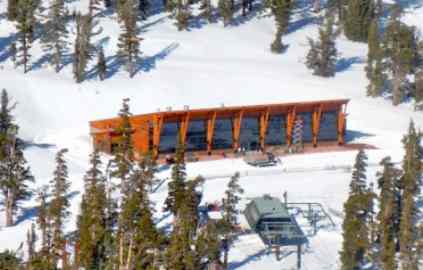



Snippets about Lake Tahoe

tamarack• Heavenly partnered with Aaron Hagar, son of Sammy Hagar and owner of Rat Runners Garage, to retrofit a retired groomer. It’s been overhauled into a state-of-the-art mobile disc jockey station. Heavenly will unveil the DJ cat Dec. 27 outside Tamarack Lodge at 1pm.

• Sierra Nevada College is putting together an athletics hall of fame. Inaugural inductees will be announced at the Janet Pahl and Warren Kocmond Ski and Snowboard Banquet during Homecoming 2014.

• BlueGo routes 50 and 53 are free until Jan. 5.

• CalFire Amador-El Dorado Unit Deputy Chief Mike Kaslin has been promoted to chief.


Study: Tomatoes may protect against breast cancer

By Huffington Post

Tomatoes could help boost levels of a hormone that plays an important role in sugar and fat metabolism, a small study suggests, potentially lowering the risk of breast cancer among women already at risk for the condition.

Research published in the Journal of Clinical Endocrinology & Metabolism shows that women who were randomly assigned to eat 10 weeks of tomato products (that contained 25 milligrams of lycopene each day) also experienced higher levels of this metabolism-regulating hormone, adiponectin.

The researchers noted that the increase in adiponectin could help to protect against breast cancer, since obesity is a known risk factor for breast cancer.

Read the whole story


Should schools teach social media skills?

By Aarti Shahani, KQED-TV

Taking selfies at funerals. Tagging pictures of teens drinking alcohol at parties. Kids (and adults for that matter) post a lot of silly stuff online — and although most of it is chatter, some of what might seem harmless leads to tragic consequences. But is it the job of schools to teach kids the dos and don’ts of social media?

At Lincoln High School in San Francisco’s Sunset district, counselor Ian Enriquez teaches students three very big words: “Disinhibition, reputation, anonymity.”

Enriquez is using a curriculum created by the non-profit Common Sense Media, a media watchdog group for parents that also offers resources for teachers.

Like many schools throughout the country, Bay Area schools hold workshops on cyberbullying, but don’t have uniform practices for teaching social media etiquette beyond that. While teachers use platforms like Facebook as a tool to engage students in learning, ongoing instruction on digital citizenship itself is the exception, not the rule.

Enriquez, who counsels students on health, racism, homophobia, and other topics that aren’t purely academic, believes the district should institute a mandatory social media curriculum.

Dennis Kelly, president of the United Educators of San Francisco, the local teachers union, says teachers are already drowning in work — especially now with Common Core. While social media is important, Kelly says, so are other things. “All students should learn to swim, but should it be school’s responsibility to teach them swimming?”

Read the whole story


Batteries may solve Calif.’s energy problems

By Richard Harris, NPR

The California Public Utilities Commission has called on utilities and private companies to install about $5 billion worth of batteries and other forms of energy storage to help the state power grid cope with the erratic power supplied by wind and solar energy.

The need to store energy has become urgent because the state is planning to get a third of its electricity from renewable sources by the end of the decade. And the shift in strategy could open up some big opportunities for small startups, including one called Stem.

Stem is housed in an abandoned showroom in Millbrae, Calif., just across the highway from San Francisco International Airport. And the company is not just aiming to help the state’s power grid.

Read the whole story


Memory of art often better without a picture

By Ellen Gamerman, Wall Street Journal

As museums swarm with visitors snapping photos in their galleries, new research suggests people who take pictures of art with their camera phones remember less about the works than those who don’t.

A study released this month found that people remember 10 percent fewer objects and roughly 12 percent fewer details about the objects they’ve seen if they’ve photographed them rather than simply looked at them.

“When you press click on that button for the camera, you’re sending a signal to your brain saying, ‘I’ve just outsourced this, the camera is going to remember this for me,'” said Linda Henkel, a psychology professor at Fairfield University in Connecticut, who led the study. “The photos are trophies. You want to show people where you were rather than saying, ‘Hey, this is important, I want to remember this.'”

Read the whole story


Opinion: Merry Christmas – or whatever

By Kathryn Reed

It’s OK to say Merry Christmas. It’s OK to say Happy Holidays.

Do we really need to fight and be offended when someone is being nice?

It’s more important to look at the intent of the words. Someone is wishing you a good day, a good season. If you are Christian or not, is it that hard to embrace “good will to all men – and women”? And one would think the Christian thing to do would be to welcome a Happy Holidays and wish the person the same instead of coming unglued they didn’t say Merry Christmas.

As I write this I’m listening to Barbra Streisand, who is Jewish, singing Christmas songs.

There was a time when I didn’t sing the songs in church because I didn’t agree with the words. Then I caught myself singing the lyrics to some inane song while I was driving. I really didn’t agree with those lyrics. And sometimes we belt them out with heartfelt emotion. Does it matter?

But if you want to be upset over the whole Christmas thing, let me add some fuel to a fire beyond Merry Christmas/Happy Holidays.

Let’s just do away with how the majority of people in the United States celebrate Christmas. Really, what is the point? A whole lot of money is spent on crap that no one wants. And what is the point of giving gifts? If there are pearly gates at the end, they aren’t going to open wider based on the gifts you gave to someone.

We heard cries from charitable groups that there weren’t enough gifts for youngsters. Why don’t we look at why we are teaching them to expect gifts from a fictional character and in the name of another? Where is the logic in that?

We’ve allowed Christmas to become more than a day. It is a season unto itself that for shoppers started before Halloween this year. And for those who really want a bargain, it will mean even better deals tomorrow compared to what you found on Black Friday.

I have no problem celebrating the holiday season starting with Halloween and lasting through New Year’s Day. I love the festiveness of it all. There’s a distinct change of seasons. Why not celebrate the Winter Solstice?

For those who can find the joy and not the stress, it’s a great time. People, for the most part, actually seem happy. I think they are the ones who have realistic expectations for the whole season.

Having that good vibe all fall, into winter … well, it’s a great way to launch a New Year.

I like seeing all the outdoor decorations, even though I have no desire to do the same. I love baking and receiving goodies. The same goes with writing cards. I don’t see them as Christmas cards per se, but a year-end wrap up to what went on in my life or theirs for the past 365 days – especially when it comes to family and friends who don’t live in Tahoe.

I suppose in the end the holidays – whichever you celebrate – are what you make of them.

If you are celebrating Christmas today, then a very Merry Christmas; Kwanzaa starts tomorrow, so Happy Kwanzaa; the winter solstice was Saturday, so let’s celebrate it and the fact that the days are getting longer.

But it shouldn’t matter what you celebrate because our differences are what make the world unique. A little more tolerance – that’s all we need.

Happy Holidays …


Opinion: Time to rethink using palm oil

By Joel Brinkley

What’s so wrong with palm oil, from the palm trees that bear fruit, not coconuts?

Well, if you listen to environmentalists and animal-rights advocates along with nutrition and health experts, they’ll tell you it’s something close to poison.

Once the United States and other Western countries began condemning and banning trans-fat oils a few years ago, palm oil became a popular substitute. You can find it in shampoo, lipstick, soap and a host of snack and other foods, including some ketchups, margarine, chewing gum, candy bars and cooking oil.

Joel Brinkley

Joel Brinkley

Oil-palm trees, as they’re called, are grown primarily in Indonesia and Malaysia, and that’s where the problems begin. To create oil-palm farms, the two states have cleared millions of acres of tropical forest. In all of the 1980s, Indonesia cleared 674,000 acres, but by 2009 the total had reached 18 million. The two states, together, have clear cut an area roughly the size of Denmark, an environmental journal reported — all to plant oil-palm plantations. And they say they plan to double that acreage in the years ahead.

Well, that alone enraged environmentalists and animal-rights activists. After all, trees are important air-quality filters. Photosynthesis absorbs carbon dioxide and emits oxygen. But when you cut down a tree, nearly all of that stored carbon dioxide is released back into the atmosphere.

When you cut down millions of trees, as Indonesia and Malaysia have in recent years for oil-palm plantations, the plantations are “projected to contribute more than 558 million metric tons of carbon dioxide to the atmosphere” by 2020 — exacerbating the world’s climate-change conundrum, a Stanford University study reported.

But what about the animals and indigenous people who lived in these former forests? Animal-rights advocates are publicizing strident declarations about the possible pending extinction of the orangutan, 80 percent of which live in Indonesia. Only an estimated 50,000 to 60,000 are left.

“What we see is a contest between orangutans and palm oil for home,” Sri Suci Utami Atmoko of Jakarta’s National University, said, talking to Thailand’s Nation newspaper.

To make this point, Greenpeace created a grotesque online advertisement showing an office worker sitting at his desk, opening a Kit Kat candy bar. Instead of pulling out a bar of chocolate, he finds a hairy orangutan finger.

“Nestle, maker of Kit Kat,” Greenpeace says, “uses palm oil from companies that are trashing Indonesian rain forests, threatening the lives of local people and pushing orangutans toward extinction.” (The ad notes that in the U.S., Nestle, a Swiss company, does not license or produce Kit Kat candy bars.)

All of that’s bad enough. Trans fats are dangerous food additives that lead to coronary-artery disease, numerous studies have shown. Palm oil is not a trans fat, but it is 40 percent to 50 percent saturated fat, another unhealthy substance. The U.S. Food and Drug Administration warned recently that “palm oil is not a healthy substitute for trans-fats” because a government study showed that the saturated fatty acids found in palm oil “are associated with elevated heart-disease risk factors.” The World Health Organization came to a similar conclusion.

But most products simply list their palm oil as “vegetable oil,” so customers have no idea what they’re eating. Some countries are trying to change that and require palm oil to be described as what it actually is.

Decrying the many complaints about palm oil, an organization called the Rainforest Action Network is staging loud, public campaigns against Smucker’s, Heinz, Kellogg’s, Pepsi, Campbell Soup, and Mars and Hershey candies, among other food companies. The organization says the campaign is intended to remove what it calls “conflict palm oil” from “America’s snack foods.”

Some companies are already listening. Unilever, a British company that manufactures soap, shampoo and margarine using palm oil, announced last month that it intends to trace the source for all its palm oil by the end of 2014. The company is said to be working to ensure that its oil comes from so-called “sustainable” sources. Proctor & Gamble and Nestle have made similar promises.

And Saetre, a Norwegian biscuit maker, says it has stopped using palm oil in its Digestive and Marie biscuits because of the associated environmental problems. It’s using sunflower-seed oil instead.

Trans fat was bad enough. But to replace it with a product that produces such manifold health, environmental and other problems is a crime. The industry’s largest trade group acknowledged last month that “the palm oil industry has suffered from a bad reputation” and promised to find ways to reform.

I wish you the best of luck.

Joel Brinkley will not be writing for a while because he has left Stanford University and moved to Washington, D.C., to work for the Special Inspector General for Afghan Reconstruction.


Congress may be least productive in history

By Michael A. Memoli, Los Angeles Times

WASHINGTON — By the numbers, this Congress is on track to make the infamous “do-nothing Congress” of the late 1940s look downright prolific.

Before the Senate adjourned Friday for an extended holiday break, the two bodies of the 113th Congress sent President Obama fewer than 70 bills for his signature. That compares to 395 enacted during the first year of the 80th Congress, which Harry Truman famously campaigned against for its inaction.

The showing has put the current Congress on track to become the least productive in history, likely beating the previous record-holder, the 112th Congress, during which 231 bills became law.

Read the whole story


Children’s Memorial awash in Christmas spirit

South Lake Tahoe's children's memorial is decorated for Christmas. Photo/Provided

South Lake Tahoe’s Children’s Memorial is decorated for Christmas. Photo/Provided

To the community,

Santa’s elves were busy at the South Lake Tahoe Children’s Memorial this week. The memorial, located on the corner of Highway 50 and Wildwood Avenue, got a holiday makeover.

Not only was the area decorated for the Christmas, but there was a stocking placed at the site in memory for each local child who is memorialized there.

Organizers don’t want any child to ever be forgotten nor do they want them to be without their own Christmas stocking for a little something from Santa.

Merry Christmas to all our children.

Santa’s Elves