Minimum wage hike could lift millions from poverty

By Morgan Whitaker, MSNBC

Raising the federal minimum wage to $10.10 an hour could help to lift nearly 5 million Americans out of poverty, according to a study released last week.

University of Massachusetts-Amherst economist Arindrajit Dube found that proposals to raise the minimum wage from $7.25 to $10.10 would reduce the number of non-elderly living in poverty by about 4.6 million in the short term, and that nearly 7 million would be lifted from poverty over the long term.

The study further finds that the poverty rate – which rose by 3.4 percent during the Great Recession, and has not significantly dropped – could be cut in half if Congress passed a $10.10 minimum wage law. He estimates that an average family in the bottom 10 percent

of earners in the United States would see an extra of $1,700 of income a year.

Read the whole story


Then and now: Ski Run Marina through the years

xxx

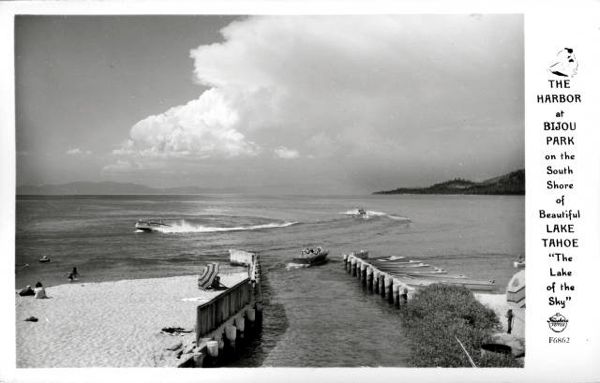
Ski Run Marina was once known as the Harbor at Bijou Park. Photo/Frasher Foto Collection, Pomona Public Library

The 1947 postcard is labeled “The Harbor at Bijou Park”, which was established in 1939.

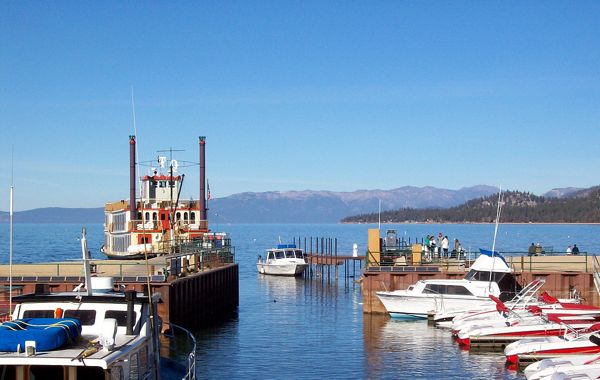
This is the marina today. Photo/Bill Kingman

This is the marina today. Photo/Bill Kingman

For comparison, to the left is the 2014 view of the marina.

For fun, below are two unidentified young ladies circa 1950s. At left, you can see the footbridge across the waterway which existed until about 1997.

The marina was well used in the 1950s. Photo/Mansoor  Alyeshmerni, owner of Ski Run Marina

The marina was well used in the 1950s. Photo/Mansoor Alyeshmerni, owner of Ski Run Marina

— Bill Kingman


Cabo beckons those in search of winter warmth

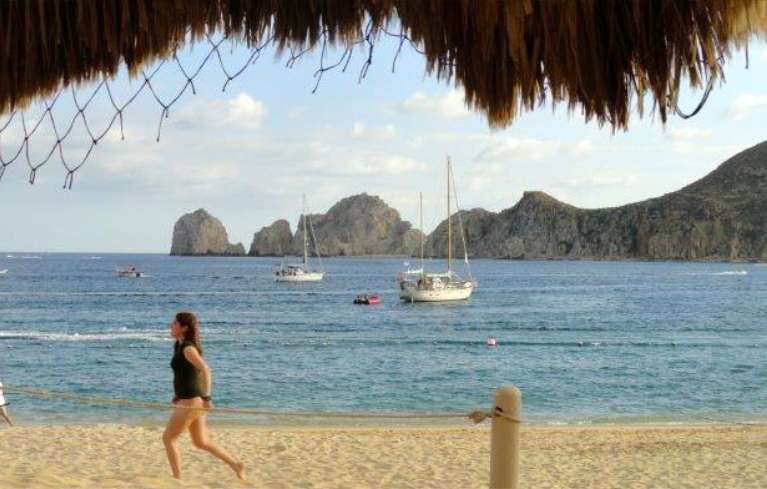
Warm waters of Cabo are perfect for swimming -- even in winter. Photos/Robert S. Wood

Warm waters of Cabo are perfect for swimming — even in winter. Photos/Robert S. Wood

By Robert S. Wood

BAJA, Mexico – A winter visit to the tip of Baja in Mexico offers the quickest, easiest access I know to warm semi-tropical ocean beaches. Deanne and I like to visit shortly after Thanksgiving, when the water is still swimming pool warm — October can be too hot — before the snowbirds and spring breakers arrive in force and room prices double for the holidays.

We’re currently just back from three December weeks, where daily temps hit the low 80s, the ocean was a balmy 75. We walked the beach barefoot at night in shorts. That’s fairly typical Cabo winter weather, with low Tropic of Capricorn humidity. Farther south in coastal Mexico. It gets warmer, but can be sticky, and the Pacific Ocean swimming isn’t half so good as at sheltered Cabo.

The 1,000-mile long rugged desert peninsula hangs like a beard off the bottom of California. At its tip are two contrasting Mexican towns, Cabo San Lucas and San Jose del Cabo. They are joined by a fancy 25-mile seaside divided highway. This trio comprises Cabo, with its sport fishing yacht harbors, glitzy hotels, golf courses, condos, gringo enclaves and white sand beaches.

One inland airport – “Cabos International” — serves both towns, first heading south to San Jose, then turning west to Cabo. It’s mostly traveled via local buses, hotel shuttles and taxis. It’s also possible to drive your car or camper, or take a Mexican bus all the way down from the border on a fascinating and still wild 1,000 miles of third-rate blacktop through the desert.

Time to relax.

Time to relax.

There’s also primitive car ferryboat service from the Mexican mainland, though not directly to the Cabo area. During the past 30 years, we’ve tried every approach. For years we used to drive our old ’56 Chevy camper van down from Tahoe, stopping at little beaches and fishing camps along the way to trade our frozen steaks for fresh catch, camping on the beach or rare campgrounds. That can still be done, and there are more campgrounds now, even at the tip.

Cruise ships also visit Cabo, but not as a final destination — unless you jump ship, which I’ve seriously considered.

The two towns are wildly different. Cabo San Lucas is an old fishing village built around a handsome yacht harbor full of gleaming white fishing yachts. It lies only yards from the big surf of the wild Pacific Ocean, just behind Lands End and the famous granite arch that shelters Medano Beach.

Medano is the best, safest place to swim in water as clear and blue as Lake Tahoe — and always much warmer. All beaches are open to the public, with white clad Mexican vendors trudging through the sand to sell jewelry, rugs, clothing and crafts. We find them authentically charming, but some think them annoying, though it is their country.

Downtown Cabo behind the marina is home to the Giggling Marlin, Cabo Wabo, Squid Roe, raucous nightclubs, nightly girlie shows, swim with dolphins concessions, billfishing tournaments, ziplines, harborside cafes, dune buggy and Wave Rider rentals, loud salsa beach cafes (The Office, Mango Deck, Billigans) that are popular with spring breakers, sunset booze and dinner cruises, snorkeling tours, and glass-bottom boat trips to famous Lovers Beach behind Lands End.

Lodging options run the gamut.

Lodging options run the gamut.

There is also Wal-Mart, McDonald’s and Costco, acres of gift shops — and the billboards are mostly in English. You can mostly drink the water and safely eat from taco stands. And your Mexican hosts are mainly friendly, cheerful and smiling, grateful to be living where they do.

In stark contrast, San Jose del Cabo at the eastern tip of the beard is a quiet, younger, charming Mexican village, with attractive outdoorsy restaurants, art galleries, museums, a new yacht harbor and nature park. It sits on rocky shores interspersed with beaches, but they are not safe for ocean swimming.

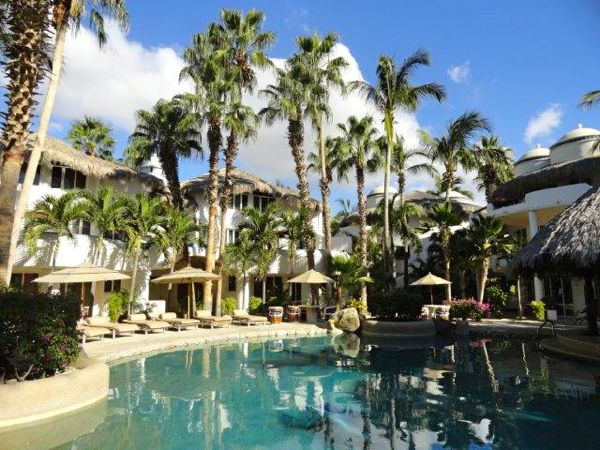
Clearly, Cabo is the happening place. We stay nearby at Club Cascadas on Medano Beach for the great swimming, only rarely walking — no car needed –into town or the harbor for dinner, where food is decidedly more expensive than at Tahoe. At Cascadas — funky architecture under waving palms — you can buy packages of as few as four beachside timeshare weeks quite reasonably — or expensive villas with third floor swimming pools or lifetime perpetual legacies.

The handsomely landscaped “corridor” that joins these two contrasting towns is locally known as “The Four Lane”. It provides access to the string of destination, side-by-side luxury hotels, most with championship golf courses and many swimming pools, with sometimes swimmable beaches. But they are comparatively isolated. You need a car (rentals are available) to get to town, or take a hotel shuttle or expensive taxi. Otherwise guests are captive to their hotel restaurants.

Condo-hotel-timeshare rooms must first be divided into standard — some with kitchenettes — and all-inclusive. The latter have proliferated in recent years, saving the casual traveler and young families the need to hunt down and travel to restaurants, deal with the language and foreign currency, thus nicely overcoming the isolation drawback in the corridor hotels.

All-inclusive allows the traveler to eat and drink all they want without ever changing dollars into pesos, usually at three or four restaurants, most of them buffets. You pay for everything before leaving home, then wear a bracelet that identifies you as pre-paid. No wallet is needed, as you can charge other costs to your room.

It’s a new freedom with few drawbacks, growing fast in popularity with those who don’t care about the local culture or are timid about foreign travel or want maximum freedom and comfort. Incidentally, street crime in Cabo is virtually unknown; police are watching out for tourists. We feel safer walking the Cabo streets at night than in any sizeable U.S. city.

Hotel rooms are next subdivided into beach-seaside and inland-town, the latter being much cheaper. They are then further categorized on the basis of location and view, using the common industry terms: Beachside, Ocean View, Poolside and Garden (meaning no water in sight).

Timeshares are aggressively offered for sale even before you get out of the airport. Attending a seductive timeshare presentation takes half a day, not the hour they promise, but if often earns a free meal and cash or perks worth up to $200. If you must buy, get a floating (flexible) week, not a fixed (rigid) one. But beware that the uncapped stiff annual maintenance fee will keep going up until it’s more than the place is worth and you’re locked in to keep paying it.

For those who fall for Cabo and want to stay longer for less there are also condos for sale, as well as inland-gated gringo communities where a new home with a view to the ocean and Lands End can be purchased for under $100,000. Incidentally the distinctive-prominent bare rocky spine leading to the arch and Lands End is made of the same light granite we know at Tahoe.

Cabo is highly popular with the more romantic expats and snowbirds, but for those who prefer what a city can offer, less glamorous, cheaper La Paz (population roughly 250,000, with a larger selection of cheaper gringo communities) lies only four hours by road to the north, with essentially the same climate and more amenities but no arch.

In between lies the artsy Pacific surfers village of Todo Santos. Cheap local buses make a circle day trip from Cabo around lovely scenic mountain ranges to see it all. So do more comfortable and expensive excursion buses and city tours leaving from Cabo hotels.

All things considered, Cabo is far from authentic old Mexico, but it’s salubrious climate, warmth, charm and easy holiday seaside beauty, combined with its quick easy air access — our fight from Phoenix gets us there in time for a swim before lunch — makes it almost irresistible for an outdoor warm winter holiday.

Robert S. Wood and his wife spend half the year in Lake Tahoe and the other half in Sedona. He is the author of a dozen books, including the original trail guide to Desolation Wilderness.


Letter: Tahoe issues need to be vetted in Tahoe

To the community,

Last week the Placer County Community Plan Team members received notification of a county-initiated board item (see below). This issue must be vetted properly by the Placer County Community Plan Team members as well as the Tahoe public at large.

Happy New Year to all of you —

The purpose of this email is to inform you of a county-initiated board item that will be presented to the Placer County Board of Supervisors on Jan. 7 in the Auburn Board Chambers. The board item is a proposal of an interim urgency ordinance prohibiting certain uses within the existing Community Plan areas of Tahoe City, Kings Beach, and North Stateline, which currently make up the TRPA Town Center areas within Placer County. The interim urgency ordinance would place a temporary prohibition on specific uses until updates to the Community Plans have been adopted. The proposed prohibited uses would include: hospitals, day care center/preschools, churches, schools – business and vocational, schools – colleges, schools – kindergarten through secondary, animal husbandry services, collection stations, single-family residences, service stations, auto repair and services, and contract construction services.

As most of you are aware, redevelopment of Town Centers has been identified as a high priority in TRPA’s updated Regional Plan. In Placer County, the Town Centers of Tahoe City, Kings Beach, and North Stateline have been targeted as receiving areas for development in a manner that concentrates densities within the Town Centers to create vibrant communities, while also fostering environmental threshold gain in the basin. Therefore, redevelopment with appropriate land uses within the Town Centers of Placer County is critical for revitalization, to foster sustainable communities, and to remove development off environmentally sensitive lands within the Basin.

Placer County appreciates and values the considerable input your Plan Teams have provided in the Community Plan Update visioning process. With the visioning efforts completed to date, the county also recognizes the importance of ensuring that the community’s vision for the Town Center areas is reflected in the Community/Area Plans in order for it be realized in the built environment. That said, with the establishment of an interim urgency ordinance, the Tahoe basin stakeholders and residents can be assured that Placer County is committed to honoring the communities’ investment in visioning, Area Plan and Community Plan Policy Framework efforts.

As the county moves forward with the Community Plan update process, county staff has determined that certain uses currently allowed within the Special Area districts of the Tahoe City Community Plan, the Kings Beach Community Plan and the North Stateline Community Plan are not in keeping with the visioning efforts of the Area Teams, conflict with the TRPA Regional Plan and the Placer County Tahoe Basin Community Plan Policy Framework. As a result, the county has concluded that certain land uses have the potential to impact the public health, safety and welfare of the residents of the North Lake Tahoe Region. Therefore, per Government Code Section 65858 (a), county staff is proposing an interim urgency ordinance prohibiting certain uses until the compatibility of such uses within the Town Centers can be appropriately addressed in the Community Plan update. The interim urgency ordinance will authorize the county to refuse to accept new applications for the term of the ordinance and to focus on finalizing its updates to the Tahoe City, Kings Beach and North Stateline Community Plans that are currently under way. Updates to said Community Plans will include review of existing allowed land uses for compatibility, and developing criteria and standards for such uses that may be appropriate in light of the character, purpose of, and Regional Plan requirements for the Town Centers within Placer County.

For your reference, I have attached the staff report and ordinance for this Jan. 7 board Item. You can also find the staff report package and Board of Supervisor’s meeting agenda online.

If you have any questions, please feel free to contact either myself or Paul Thompson, Tahoe CDRA at (530) 581.6200.

Thank you,

Crystal Jacobsen, supervising planner Placer County Community Development Resource Agency.

 I sent the following email to each Board of Supervisor member:

With all due respect, this item should be removed from BOS agenda Jan. 7 and rescheduled as a Tahoe “special” meeting. The short notice as well as the importance of the ordinance should be discussed with as many of the Area Plan Team members as possible. This is a formal request to schedule a Tahoe location meeting with enough advance notice to allow Area Plan team members as well as the Tahoe general public at large to attend.

I also sent this link to all Community Plan team members 20 pages for your review link to staff report.

Community Plan team members and public at large please join me in requesting this be heard in Lake Tahoe — the proper venue for this issue to be vetted. Send email to bos@placer.ca.gov as soon as possible, but no later than Jan. 6 at 5pm.

Thank you in advance for your support.

Ellie Waller, North Tahoe West Plan Team member and concerned citizen


Everyday athletes may be able to train brains to perform like a pro

By Alex Hutchinson, Outside

It goes without saying that Olympic athletes need to be strong, fit, and tough. But none of that matters if they aren’t capable of adapting quickly to unexpected circumstances. Take former Slovenian swimmer Sara Isakovic. During the 2008 Beijing Olympics, with one length remaining in the 200-meter freestyle final, disaster struck. Isakovic misjudged her final flip turn, and as she uncoiled her legs to explode off the wall, she could feel her toes just barely graze it.

“I remember thinking, This is not happening! Why now?” Isakovic, 25, recalls. “Then, in a split second, I was able to refocus.” Riding on a surge of adrenaline, she tore down the last length to nab a silver medal, breaking the previous world record and missing gold by just 0.15 seconds.

Isakovic is now a research assistant in psychiatry at UC San Diego, where she works with Martin Paulus, a leading player in the search for brain — training techniques that will enable the rest of us to develop elite-level mental agility. Says Isakovic, “What we’re interested in is how you build resilience, how you train your brain to be as tough as your body.”

Read the whole story


Kashima 5th in moguls in Calgary

By USSA

CALGARY, Alberta -– World Cup Champion Hannah Kearney (Norwich, Vt.) earned a second-place finish on a steep and icy Calgary moguls course Saturday, while Patrick Deneen (Cle Elum, WA) took third, his first FIS World Cup podium of the Olympic season.

On Saturday Kearney also became the first U.S. athlete to achieve two top-three finishes required for Olympic qualification.

Athletes will be gunning for podium spots harder than ever at the Visa Freestyle International at Deer Valley Jan. 9-11.

Sho Kashima (Stateilne) earned a fifth-place finish, proving his mental strength after he injured his knee last season on the same run, while Heather McPhie (Bozeman, Mont.) placed sixth.

Canadians Mikael Kingsbury and Justine Dufour-Lapointe won the men’s and women’s events. Kearney and Dufour-Lapointe are tied in FIS points and will both wear the yellow bib at the Visa Freestyle International at Deer Valley.

Single-digit temperatures and course conditions were a factor for all the athletes, preventing most from skiing confidently on the slick, icy snow.


Anderson’s mom taking on new life as farmer

By Katy Savage, Vermont Standard

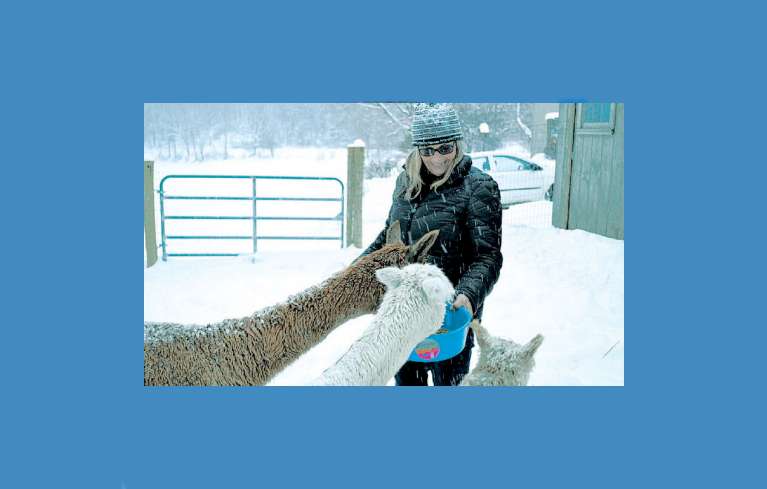
HARTLAND, Vt. — Inside Lauren Anderson’s home, there is a picture of eight grown children hanging underneath the stairwell. Two of the children in the photograph made it to a national snowboarding championship, another was a top slopestyle competitor, another won gold in snowboard cross at the Winter X Games two years ago. Another — Jamie Anderson — is the top woman slopestyle competitor in the world and is set on competing for the Olympic team in Russia this winter.

auren Anderson feeds grain to her three alpacas during a snowstorm. Soon she plans to open a store, selling hats and sweaters made with alpaca fiber. Katy Savage Photo

Lauren Anderson went from Tahoe ski mom to Vermont alpaca farmer. Photo/ Katy Savage/Vermont Standard

Anderson’s Hartland home is a long way from the Sierra-at-Tahoe Resort where she devoted her life to raising a team of professional skiers and snowboarders. Now, Anderson’s devoted to the three alpacas in her farmhouse garage.

“My mom has always loved Vermont and she’s been talking about it my whole life,” Jamie said. “When she had the motivation to pick up and move and make the journey all the way across the country … I was surprised, but I also 100 percent supported her to follow her heart and do what makes her happy.”

In September, Anderson drove across the country in her Mini Cooper that Jamie won in the U.S. Open the year before. She moved into a small farmhouse off Rice Road in Hartland to follow a new passion: alpaca farmer.

Read the whole story


Author to read at Sierra Nevada College

Award-winning author Colum McCann will give a reading Jan. 9 at 5pm at Sierra Nevada College in Incline Village.

McCann is the author of six novels and two collections of short stories. His most recent novel, “Transatlantic”, was long-listed for the 2013 Man Booker Prize.

There will be reception at 4:30pm, with the talk from 5-6:30pm.


Expect food costs to be higher in 2014

By Jenn Harris, Los Angeles Times

Eating well in 2014 could get more expensive. Items such as chocolate, beef, bread and cereal are expected to experience price hikes in the new year.

According to a U.S. Department of Agriculture report, all food prices are expected to increase by 1.25 percent to 1.75 percent and food-at-home prices are predicted to increase by 0.75 percent to 1.25 percent.

A rise in wheat and wheat flour prices will lead to increases in prices on your favorite morning cereal or sliced bread. Beef prices will continue to stay high for the next couple of years due to the amount of time it takes to prepare cattle for sale, and the need for pasture recovery.

Read the whole story


Nobel Peace prize winner to speak in Stateline

William Collins, an internationally recognized climate change scientist and a lead author of the Intergovernmental Panel on Climate Change that was awarded the 2007 Nobel Peace prize, will be the keynote speaker at Operation Sierra Storm Meteorologist’s Conference Jan. 8-10.

Other speakers during the three-day event include:

  • Duane Waliser, chief scientist of the Earth Science and Technology Directorate at the Jet Propulsion Laboratory in Pasadena.
  • Virgil Welch, special counsel California Air Resources Board.
  • Julie Regan, Tahoe Regional Planning Agency external affairs chief.
  • Jeff Piotrowski, Emmy Award-winning storm chaser who has filmed more than 800 tornadoes in his 30 years

Collins and Welch’s presentations are open to the public Jan. 10 at Harveys Lake Tahoe. Welch will speak from 7:45-8:45am and Collins from 9–10am, with Q&A to follow.