Snippets about Lake Tahoe

libertyLiberty Utilities website provides answers to frequently asked questions about its proposed project on the North Shore. There is a link to the project FAQs on the front page under “In The News.”

Check out this story to see how San Francisco is dealing with parking ticket citations.

• Literary Art and Wine Reading series is a monthly event at Uncorked in Truckee. The next one is Feb. 20 from 5:30-7:30pm. Wine and cheese specials are offered while local published authors read their work.

• Lake Tahoe Concourse d’Elegance classic wooden boat show in Carnelian Bay has been canceled this year because a contract could not be agreed upon.

• Dog classes at the Humane Society Truckee-Tahoe start Feb. 19. For more information, call (530) 587.5948 or (530) 448.9808.


Calif. drought has long-term implications

By Gloria Goodale, Christian Science Monitor

As California faces the worst drought in its 163-year history with no hint of relief in sight, some scientists are calling the event a red flag for the future of the nation.

Gov. Jerry Brown raised the issue in his State of the State address Wednesday, saying “we do not know how much our current problem derives from the build-up of heat-trapping gasses, but we can take this drought as a stark warning of things to come.”

Water shortages have widespread impacts. Agriculture and energy generation account for 80 percent of the nation’s clean water use, says David Dzombak, head of Carnegie Mellon University’s Civil and Environmental Engineering Department. And even when cities meet their water demands during a drought, the costs can leave them “exposed to significant risk of financial failures,” says Patrick Reed, a professor of civil and environmental engineering at Cornell University, in an email.

In that way, crises can led to new policies and new attitudes, and some say the California drought could be just such a catalyst.

“At the state, regional, and federal level, and across the country, people are just starting to come to grips with the fact that our climate is not stationary,” says Dzombak. “We are in a dynamic, changing climate situation that will affect all parts of the country in different ways,” he says, led by the West and Southwest so impacted by drought.

Read the whole story


Drug Free Coalition looking for members

South Tahoe Drug Free Coalition is looking for people who are concerned about the area’s party and drug culture and want to help decide how a grant can be used to create lasting change.

In September, Tahoe Youth & Family Services was awarded a Federal Drug Free Communities grant on behalf of the South Tahoe Drug Free Coalition. The coalition was awarded $125,000 per year for the next five years to prevent and reduce youth substance use and change the culture in South Lake Tahoe to reduce adult use as well.

The Coalition meets monthly at the Al Tahoe/Boys and Girls Club, 1100 Lyons Ave., South Lake Tahoe on the second Monday of the month at 3:30pm. The next meeting will be Feb. 10th.

For more contact Melody Easton at Melody@tahoeyouth.org or (530) 541.2445.


Lawsuit takes on California teachers’ job protections

By Stephen Ceasar, Los Angeles Times

Local school districts, state legislators and even a California governor have tried to limit teachers’ job protections, among the most generous in the country. Efforts have all failed to rid public schools of ineffective teachers by making it easier to fire them and tougher for them to gain tenure and by stripping them of seniority rights.

Now proponents are taking their fight to another venue: the courtroom. A Los Angeles County Superior Court judge will hear arguments this week over the constitutionality of laws that govern California’s teacher tenure rules, seniority policies and the dismissal process — an overhaul of which could upend controversial job security for instructors.

The lawsuit, filed by the nonprofit, advocacy group Students Matter, contends that these education laws are a violation of the Constitution’s equal protection guarantee because they do not ensure that all students have access to an adequate education.

Read the whole story


Cook leads U.S. women in super G

By USSA

CORTINA D’AMPEZZO, Italy — Two-time Olympian Stacey Cook (Mammoth Mountain) led the U.S. Ski Team with 13th in super G Sunday, the last of four races held over four days in Cortina to close the Olympic qualification period.

The U.S. Alpine Ski Team nominations to the 2014 U.S. Olympic Team will be announced later today.

Swiss Lara Gut won for her fifth victory of the season.

Julia Mancuso (Squaw Valley) was 16th as swirling wind, tough visibility and a tricky course set forced 19 athletes, including Julia Ford (Holderness, N.H.) off course.

World Cup rookie Jackie Wiles (Aurora, Ore.) was 29th for her third consecutive day of scoring World Cup points.

Tina Weirather of Liechtenstein and Maria Hoefl-Riesch of Germany placed second and third, respectively.


Then and now: Stateline casino ownership

Photo/CardCow.com

No. 1 — Photo/CardCow.com

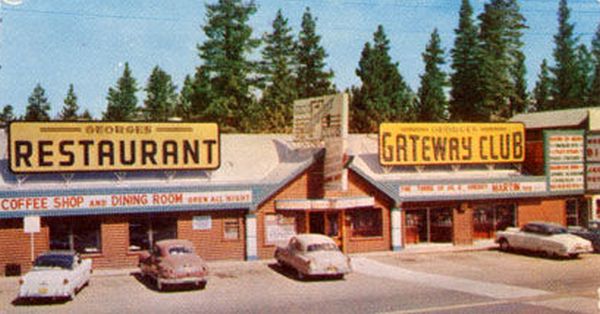
In the 1930s, Bill Harrah operated a poker parlor in Venice, Calif., prior to moving his business to Reno. In January 1955, he purchased George’s Gateway Club on the Lake Tahoe border of Stateline Avenue and Highway 50 (photo No. 1) which he opened as Harrah’s Club (No. 2) that summer.

Photo/CardCow.com

No. 2 –Photo/CardCow.com

Photo/Lake Tahoe Historical Museum

No. 3 — Photo/Lake Tahoe Historical Museum

Until about 1960, Carson Valley landowners were still using the green meadows of summertime Tahoe for grazing cattle (No. 3).

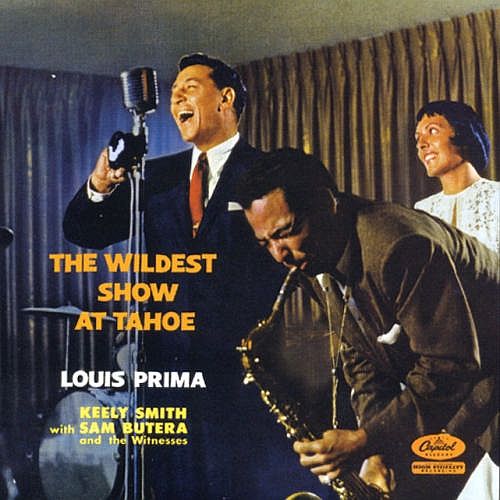
“The Wildest Show at Tahoe” album (Capitol Records No. T-908, regarded as a classic) was recorded there in 1957 (No. 4) with Louis Prima, Keely Smith, and Sam Butera and The Witnesses in the original small South Shore Room.

Photo/Capitol Records

No. 4 — Photo/Capitol Records

A decade and more later, Bill Cosby would record several of his comedy albums live in the new 750-seat South Shore Room across the street.

No. 5 -- Photo/Lake Tahoe Historical Museum

No. 5 — Photo/Lake Tahoe Historical Museum

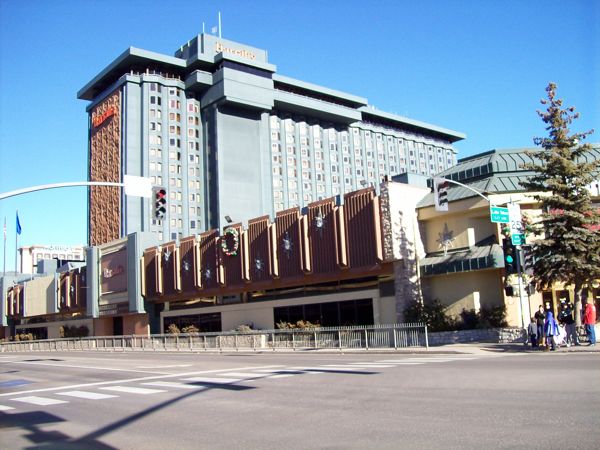
In the late 1950s, Harrah’s expanded across the street with the purchase of Sahati’s Stateline Country Club and the Nevada Club (No. 5) which became Tahoe Harrah’s. A hotel was built in 1977 and today the name is Harrah’s Lake Tahoe (No. 6).

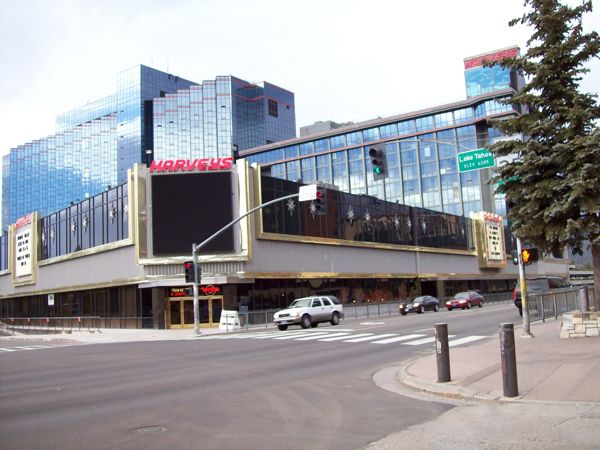
About mid-1960s, the original Harrah’s Club on the corner next to Harveys was rebranded as Harrah’s Thrifty Gambler. Harrah’s ultimately sold that corner property to Harveys.

No. 6 -- Photo/Bill Kingman

No. 6 — Photo/Bill Kingman

No. 7 -- Photo/Bill Kingman

No. 7 — Photo/Bill Kingman

As destiny has determined, it was Harrah’s in 2001 that purchased all of Harveys which includes the original 1955 Harrah’s Club corner location (No. 7).

— Bill Kingman


El Dorado Trail captures route of old railroad

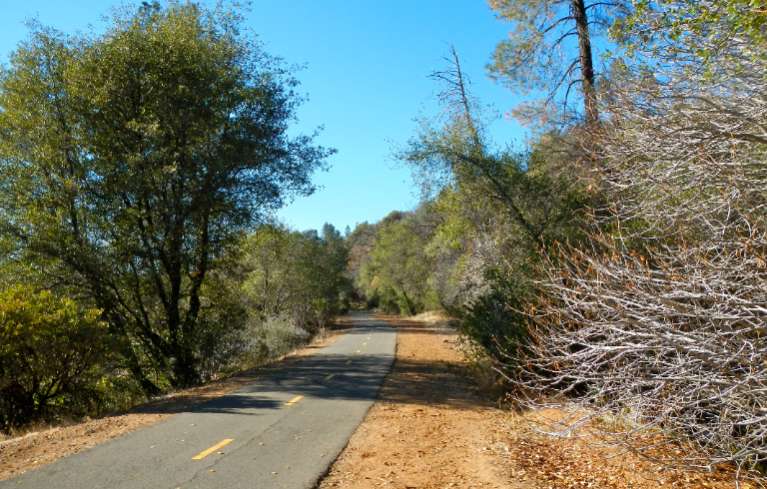
El Dorado Trail goes from Camino to Folsom. Photos/Kathryn Reed

El Dorado Trail goes from Camino to Folsom. Photos/Kathryn Reed

By Kathryn Reed

PLACERVILLE – Spring in January. It’s not something I want to get used to. But it is something I’m going to enjoy for hopefully what is just a brief interruption of winter.

Not wanting to endure ice on the trails, we opted to head off the hill last weekend in search of exploring new terrain at a lower elevation. We had seen a sign for the El Dorado Trail on one of our wine excursions and knew we would be back to explore.

What we didn’t know is where it went, how long it was or anything about it.

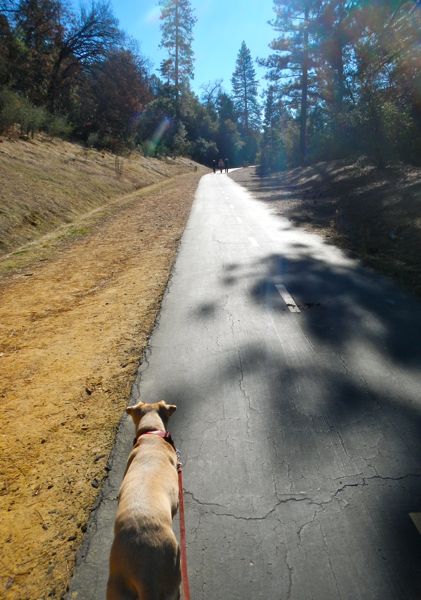
AJ leads the way.

AJ leads the way.

It’s a trail in progress. But the completed section we were on is great. It’s a paved multi-use trail – and is well used based on the walkers, cyclists and horse doo-doo.

Going out it is all uphill as we make our way toward Camino. An overpass crosses Highway 50 so then we are on the south side of the road. AJ didn’t know what to make of the cars below her and got a little skittish. Dogs are allowed on the trail on leash.

What’s interesting is how many times we have driven this stretch of highway and never knew there was a trail below us. We looked for it on our way home but could not see it.

The distinctive Apple Café sign on the hill is one of the few identifying markers for us to know where we are.

Benches along the way provide an opportunity to rest or just take in the scenery. The foothills, with the mix of pine and oak, stretch for miles. Several residences are above and below the wide path. More things not noticeable from the highway.

It’s disconcerting, though, how dry everything is. What should be green is brown. And it’s so warm – 68 degrees on Jan. 18. I could easily have been in shorts, as some people were.

At times the trail is shady, other times it is in full sun. I can imagine it would not be a great place to be in mid-summer because of the heat.

A man out with his dog told us when we hit the dirt trail we could keep going, but we opted to turn around at that point. Above us, though it’s not visible, is where the Valero gas station in Camino is. We think round-trip it was a little less than 5 miles.

But there is much more to the El Dorado Trail than what we did. The paved portion continues on the other side of the road from where we started. According to websites I read, it is paved from Camino to just south of Folsom – 35 miles in total.

Views between Placerville and Camino.

Views between Placerville and Camino.

The trail follows old railroad lines – Southern Pacific and Michigan-California railroads.

Work on the route started after the July 1991 purchase of the line from the Southern Pacific Railway Corporation by the Sacramento-Placerville Transportation Corridor Joint Powers Authority. The former rail line is a part of the Designated Cross State Bicycle Route that goes from San Francisco to South Lake Tahoe.

Friends of El Dorado Trails is working to extend the trail east. Their website says discussions are under way for the route to go to Pacific House east of Pollock Pines, then follow the former Pony Express trail into South Lake Tahoe.

—-

Getting there:

From South Lake Tahoe, take Highway 50 west. Take the Smith Flat Road exit near Placerville. Turn right on Smith Flat School Road. Take the first left on Smith Flat Road. Turn right on Jacquier Road. Parking lot is on right. There is a big sign that says El Dorado Trail.


Opinion: We are the poor

By Robert Reich

Fifty years ago, when Lyndon Johnson declared war on poverty, the poor were different – “other,” as in Michael Harrington’s seminal book of 1962, “The Other America.”

That’s no longer the case.

After the War on Poverty ended, Republicans told working-class whites that their hard-earned tax dollars were being siphoned off to pay for “welfare queens” (as Ronald Reagan decorously dubbed a black single woman on welfare) and other nefarious loafers. The poor were “them” – lazy, dependent on government handouts and overwhelmingly black – in sharp contrast to “us,” working ever harder, proudly independent (even sending wives and mothers to work in order to prop up family incomes dragged down by shrinking male paychecks) and white.

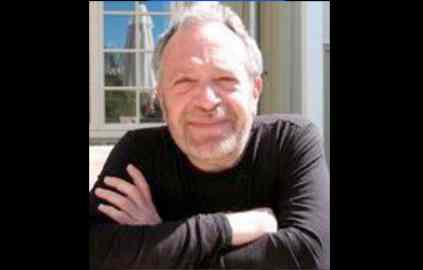
Robert Reich

Robert Reich

It was a cunning strategy designed to split the broad coalition that had supported the New Deal and Great Society by using the cleavers of racial prejudice and economic anxiety. It also conveniently fueled resentment of government taxes and spending.

The strategy also served to distract attention from why the paychecks of the working class began shrinking in the 1980s – because of corporations that were busily busting unions, outsourcing abroad and replacing jobs with automated equipment and, subsequently, computers and robotics.

But that divide-and-conquer strategy is no longer convincing because the dividing line between poor and middle class has all but disappeared. “They” are fast becoming “us.”

Poverty is now a condition that almost anyone can fall into. In the first two years of this recovery, according to a report from the Census Bureau, about 1 in 3 Americans dropped into poverty for at least two to six months.

Three decades of flattening wages and declining economic security have taken a broader toll. Nearly 55 percent of Americans between the ages of 25 and 60 have experienced at least a year in poverty or near poverty (the latter defined as below 150 percent of the poverty line), according to author and Washington University Professor Mark R. Rank. Half of all American children have at some point during their childhoods relied on food stamps.

When LBJ declared war on poverty, most of the nation’s chronically poor had little or no connection to the labor force, while most working-class Americans had full-time jobs.

This distinction has broken down, too. Now, a significant percentage of the poor are working but not earning enough to get themselves and their families out of poverty. And a growing portion of the middle class finds itself in the same place – often in part-time or temporary positions or in contract work.

Economic insecurity is endemic. Working-class whites who used to be cushioned against the vagaries of the market are now fully exposed to them. Trade unions that once bargained on behalf of employees and protected their contractual rights have withered. Informal expectations of lifelong employment with a single company are gone. Company loyalty has become a bad joke.

Financial markets are now calling the shots – forcing companies to suddenly uproot, sell out to other companies, transfer whole divisions abroad, liquidate unprofitable units or adopt new software that suddenly renders old skills obsolete.

Because money moves at the speed of an electronic impulse while human beings move at the speed of human beings, the humans – most of them hourly workers but many white collar as well – have been getting shafted.

This means sudden and unexpected poverty has become a real possibility for almost everyone these days. And there’s little margin of safety. With the real median household income continuing to drop, 65 percent of working families are living from paycheck to paycheck.

Race is no longer a dividing line, either. According to Census Bureau numbers, two-thirds of those below the poverty line at any given point identify themselves as white.

This new face of poverty – a face that’s both poor, near-poor and precarious working middle class and simultaneously black, Latino and white – renders the divide-and-conquer strategy obsolete. Most people are now on the same losing side of the divide. Since the start of the recovery, 95 percent of the economy’s gains have gone to the top 1 percent.

This means Republican opposition to extended unemployment insurance, food stamps, jobs programs, expanded Medicaid and a higher minimum wage could potentially backfire on the GOP.

Just look at North Carolina, a bellwether state, where Democratic Sen. Kay Hagan, up for re-election, is doing well by attacking Republicans back home as “irresponsible and cold-hearted” for slashing unemployment benefits and social services. The state Democratic Party is highlighting her Republican opponent’s “long record of demeaning statements against those struggling to make ends meet.” (Tom Tillis, the speaker of the state House, had spoken of the need “to divide and conquer” those receiving public assistance, and he called criticisms of the cuts “whining coming from losers.”)

The new economy has been especially harsh for the bottom two-thirds of Americans. It’s not hard to imagine a new political coalition of America’s poor and working middle class, bent not only on repairing the nation’s frayed safety nets but also on getting a fair share of the economy’s gains.

Robert Reich, former U.S. secretary of labor, is professor of public policy at UC Berkeley.



Whooping cough cases surge in Placer County

By Cynthia H. Craft, Sacramento Bee

Once thought to be nearly eradicated, pertussis, the highly contagious respiratory disease also known as whooping cough, surged last year in many areas of California, with hundreds more cases reported in 2013 than in the previous year, state figures show.

In the greater Sacramento region, the largest bump in pertussis cases occurred in Placer County, which reported 79 cases in 2013, up from 11 cases in 2012. Sacramento County reported 65 cases, almost double the number in 2012. Yolo County was the only county in the region to see fewer pertussis cases in 2013: four, down from six the year before.

California health officials cite a variety of reasons for the uptick. A major contributor, according to the state, was declining immunity among children who had been vaccinated years earlier and had yet to get the booster shot recommended at ages 11 or 12.

Read the whole story


Anderson takes silver in slopestyle at X Games

By USSA

ASPEN -– Olympian Jamie Anderson (South Lake Tahoe) earned silver Saturday at the X Games slopestyle snowboarding final after Norway’s Silje Norendal stomped a smooth run and pushed her out of the top spot.

Anderson and Norendal will meet again when slopestyle snowboarding makes its historic Olympic debut at the 2014 Olympic Winter Games in Sochi, Russia, on Feb. 6. Anderson was the only U.S. woman to advance to Saturday’s final.

Olympian Chas Guldemond (Reno) finished fourth.

Canadian Max Parrot won gold for the men while his teammate Mark McMorris followed with silver and Norway’s Ståle Sandbech earned bronze.