Cooking methods may be causing cancer

By Brian Palmer, Slate

Grilling meats is an American tradition, but it’s not the healthiest thing to do. A growing body of research suggests that cooking meats over a flame is linked to cancer. Combusting wood, gas, or charcoal emits chemicals known as polycyclic aromatic hydrocarbons. Exposure to these so-called PAHs is known to cause skin, liver, stomach, and several other types of cancer in lab animals. Epidemiological studies link occupational exposure to PAHs to cancer in humans. When PAHs from a flame mingle with nitrogen, say from a slab of meat, they can form nitrated PAHs, or NPAHs. NPAHs are even more carcinogenic than PAHs in laboratory experiments. The reasonable conclusion is that grilling meat may be hazardous to your health.

The evidence linking cancer to cooking meat over a combustion source has been accumulating for decades. Epidemiologists first noticed a connection between the consumption of smoked foods and stomach cancer in the 1960s. Japan, Russia, and Eastern Europe, where smoking is a popular way to preserve meat and fish, became laboratories for gastric cancer research. Newer studies suggest that eating smoked meats may lead to cancer even outside the gastrointestinal tract. A 2012 study, for example, linked smoked meat consumption with breast cancer.

In subsequent decades, it has become clear that smoking isn’t the only problematic cooking method. Frying bacon, for example, produces significant levels of PAHs, probably due to volatilization of carbon in the bacon itself. An Iranian study published last year found that people who develop certain kinds of gastrointestinal cancers are more likely to have a diet high in fried rather than boiled foods. (The researchers linked level of browning to cancer incidence, thus reducing the likelihood that oil consumption was the culprit.) The FDA and WHO also remain concerned about the presence in food of acrylamides, a known carcinogen that forms from sugar and amino acids when cooked at high temperatures. Long-term studies are currently under way. The worrying implication is that cooking foods at high heat, even without active combustion, may be dangerous.
Read the whole story


Tahoe Tails — Adoptable Pets in South Lake Tahoe

Jasper

Jasper

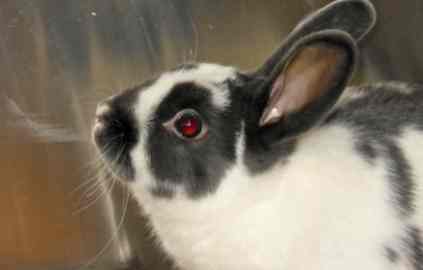
Jasper is a sweet little dwarf bunny with beautiful markings who is probably less than 1 year old.

He was brought to the shelter as a stray, but he is not a wild bunny. He will make a very nice pet for just about any family who has the time to pay him some attention every day. Jasper will need his own cage, and he will be available for adoption Wednesday afternoon.

Jasper is neutered and vaccinated. He is at the El Dorado County Animal Services shelter in Meyers, along with many dogs and cats who are waiting for their new homes.

Go online or go to the Tahoe animal shelter’s Facebook page to see photos and descriptions of all pets at the shelter.

Call (530) 573.7925 for directions, hours, and other information on adopting a pet.

For spay-neuter assistance for South Tahoe residents, go online.

— Karen Kuentz


Opinion: Crises have political consequences

By Dan Walters, Sacramento Bee

America’s political executives – presidents, governors and big city mayors – are often judged by how they respond to unanticipated crises.

Dan Walters

Dan Walters

Jerry Brown knows the syndrome well. He had two major crises during his first stint as governor 30-plus years ago, a severe drought early in his governorship and an invasion of Mediterranean fruit flies near the end.

Brown’s Medfly debacle contributed heavily to the failure of his U.S. Senate campaign a year later. That experience may explain why Brown was clearly reluctant to declare an official emergency over the current drought, which he finally did two weeks ago after saying earlier, “Governors can’t make it rain.”

Read the whole story


Animals use various strategies to survive winter

By Kathryn Reed

Animals have a way of knowing when to prepare for winter, but if winter doesn’t come, it can be a problem.

Those that use camouflage as a tactic from hiding from their predators are having a hard time of it in the Sierra this year because their white coat is standing out against the brown landscape instead of blending in with the snow.

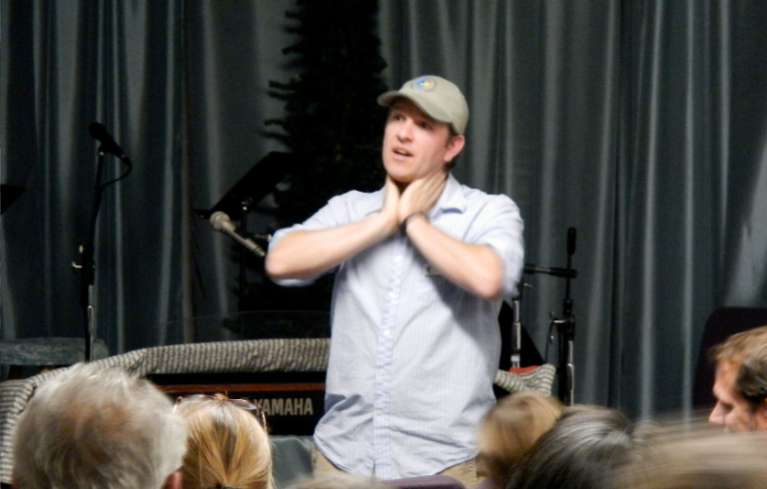
Will Richardson, co-founder and co-executive director of the Tahoe Institute for Natural Science, spoke at the Tahoe Area Sierra Club meeting Jan. 22 about winter wildlife survival strategies.

Will Richardson talks Jan. 22 about how wildlife survive winter. Photo/LTN

Will Richardson talks Jan. 22 about how wildlife survive winter. Photo/LTN

In Lake Tahoe he said five species turn white in winter – two types of rabbits, long and short tail weasel, and the white-tailed ptarmigan.

“Winter presents a lot of challenges for any organism,” Richardson told the crowd of more than 60 people.

Key problems are shelter and food. Animals can choose to leave for the winter, tough it out or lower their metabolism so they can sleep through most of the winter.

Migration is common for birds. But insects and some mammals choose this option, too. Many birds head for the tropics. Millions land in Central and South America.

“What happens when you lose an acre of rain forest? What happens here?” Richardson asked rhetorically.

Facultative migration is a shorter migration; maybe just to the Carson Valley or Central Valley.

A sure sign that animals are confused by the weather this year is a barn swallow was spotted in Tahoe City this month. Richardson said he doesn’t know of any time when any species of swallow has been seen in the basin in January.

Mountain quail walk out of the basin every year. The same goes for deer.

Waterfowl tend to stay in Tahoe through the winter. And they attract eagles. Richardson said this is a big year for eagles; with 15 spotted during the Christmas bird count.

Snakes do what’s called hibernaculum. This means they all are huddled together in the quest to have a consistent temperature.

Frogs have one of the more unusual winter rituals. The Sierra chorus frogs are what Tahoe has the most of. When they touch an ice crystal their body starts to shutdown and their organs freeze.

“They are able to freeze solid. They have no heart, no brain function,” Richardson said.

He showed a video of a similar species of frog to what is in the basin that depicted the freezing process as well as the thaw-warming in the spring. Scientists still aren’t sure how this is possible.

Putting on a winter coat as well as extra weight are other ways animals survive winter. Feathers are a great insulator.

Richardson said no matter what strategy animals employ, preparation is critical – especially to have enough food stored.


Truckee’s Davis wins X Games halfpipe

By USSA

ASPEN -– U.S. Olympic team member Danny Davis (Truckee) earned a gold medal in his first halfpipe snowboarding final at X Games Aspen Sunday, just two weeks before the 2014 Olympic Winter Games in Sochi, Russia.

Davis led a U.S. sweep with Louie Vito (Sandy, Utah) taking silver and fellow Olympic team member Greg Bretz (Mammoth Lakes) bronze.

The strong American showing came without defending Olympic gold medalist Shaun White, who took a break from X Games to focus on Sochi.


Talks to focus on cholesterol

David Young, a doctor with Barton cardiology, will give two lectures in February about cholesterol health.

The first is Feb. 5 from 6-7pm at Lake Tahoe Community College in the board room. The other is Feb. 12 from 6-7pm at Sierra Nevada College, Tahoe Center for Environmental Sciences, Room 139, Incline Village. Both are free.

Attendees will learn about cholesterol metabolism and how to understand cholesterol results, discover natural ways to manage cholesterol, and the risks and benefits of cholesterol therapy using statins.


Precautions help when it comes to identity theft

By Scott A. Merritt

At least 110 million consumers were affected by the hack involving Target and Neiman Marcus retailers. Whether or not millions more will have their identities manipulated and finances ruined within the coming months due to more breaches of security at other stores is anyone’s guess.

By necessity, I became an expert on identity theft. My information was stolen in 2006, and in repairing the damage, I learned some not-so-obvious ways we can all protect against identity theft in the first place.

My problems began quickly. While disputing financial charges and dealing with resulting business problems, in 2007 I was stopped for a traffic violation and arrested on a false outstanding felony warrant. I immediately knew why.

I had to enlist my U.S. congressman and convince the state police, NCIC, FBI and Secret Service that I didn’t commit the felonies. For a few years, I had to prove that the prints did not match the false record in question. After legal action, however, I was able to have this corrected.

Unfortunately, the millions affected by the recent hacks may be dealing with similar repercussions in the years ahead.

Before you become a victim of identity theft, here are seven ways to guard against it.

• Understand how and where it happens. Identity theft is like being robbed when you are away from home; most thefts occur in places where you do business every day. Either a place of business is robbed, a bad employee acts improperly or a hacker breaches the office through the computer.

• Secure your wallet’s information. Photocopy everything in your wallet: photos, credit cards (front and back), membership cards – everything. Put the copies in the order the cards are arranged in your wallet, staple the pictures and place them in a strong box or safe.

• Make sure your information is consistent. For all of your identity and financial documents, make absolutely sure, to the smallest detail, that all of your personal information is accurate and consistent. Discrepancies such as using your middle initial on some documents, and not others, or having different addresses, can wreck havoc in proving your identity, and can compromise your credit score.

• Secure your digital habits and data. Change your passwords at least twice a year on a non-scheduled basis – don’t be predictable. Have a strong firewall if you shop online, and only access sites that are protected by a strong firewall and high industry standards. Access accounts of a financial nature only from your personal computer.

• Protect your banking information. While in the bank, keep account numbers and other data out of sight, and avoid stating account numbers, Social Security numbers and similar information out loud. When planning a bank visit, have items such as deposits and withdrawal slips prepared in advance.

• Account for your interactions with vendors. Every time you speak to someone with whom you do business, write down the time, date, name and the purpose or outcome of the call. If an identity theft occurs on the vendor’s end, you will be able to reference these prior conversations effectively. Be sure to note any animosity or reluctance from the vendor.

• Don’t carry around your birth certificate or Social Security card. Unless it’s necessary, keep those vital items in a safe, or at least a firebox. If you know someone is going to need a copy of your tax returns or your driver’s license, for example, make the copies ahead of time. This avoids the need for a firm’s employee to leave the room with such information.

Of course, you can greatly reduce being a victim of such recent hacks that occurred at the major retailers by using cash more often. But if you’re going to use credit, use a card from a national bank or a national credit union and never a debit card, no exceptions.

Scott A. Merritt is the CEO of Merritt Ventures Inc. and author of “Identity Theft Do’s and Don’ts.”


2013 one of the hottest years on record

By Deborah Netburn, Los Angeles Times

Never mind the current cold snap in the East or the polar vortex that swept through much of the U.S. in early 2014 — scientists from NASA and NOAA report that 2013 was one of the 10 hottest years on record, and there is a good chance 2014 will be even warmer.

According to the National Aeronautics and Space Administration’s calculations, 2013 is tied with 2009 and 2006 as the seventh hottest year since global temperature record keeping began in 1880. The National Oceanic and Atmospheric Administration’s slightly different calculations say 2013 tied with 2003 as the fourth hottest year on record.

According to NASA, the average surface temperature of our planet in 2013 was 58.6 degrees Fahrenheit, which is 1.1 degrees warmer than the mid-20th century base line. That makes 2013 the 37th consecutive year that the annual global temperature was above average.

Read the whole story


K’s Kitchen: Pasta with butternut squash

By Kathryn Reed

One reason I sometimes hesitate to cook butternut squash is the time involved. The recipe below made me a believer in fast cooking squash.

However, it did take longer than what the recipe said it would.

k's kitchenIt’s not one of those “wow!” recipes that you want to make when people are coming over, but is a good quick, tasty meal.

I didn’t used pappardelle pasta because I have so much spaghetti in the house. But the photo in Rachael Ray magazine (November 2013) where this came from looks great with the wider noodles. It’s not going to change the flavor, though.

The photo also shows what looks like pepper on top of the plate. I added some from flavor.

And while the recipe says to add the sage and cheese to each individual serving, I mixed it all in. For one, this will give a more consistent flavor. The other reason is that when it comes to leftovers, it’s easier not to be adding things.

Butternut and Sage Pappardelle (Serves 4)

8 ounces fresh or dried pappardelle

1/3 C butter

1 lb. butternut squash-peeled, seeded and shaved into ribbons with a peeler

2/3 C shaved Parmesan

1/3 C thinly sliced fresh sage

Cook pasta; drain, reserving 2/3 cup cooking water. In skillet, stir butter over medium until it browns, 3 minutes. Add squash and cook, stirring, until just tender, 5 minutes. Gently stir in pasta, adding pasta water as needed to moisten; season. Divide among plates and top with cheese and sage.


No snow: Bike trails being built

Publisher’s note: This is one of a series of blurbs about how the lack of winter is impacting businesses in the Lake Tahoe Basin. If you have an idea, please email it to info@LakeTahoeNews.net.

Lack of snow means the ability to do trail work.

In honor of Martin Luther King Jr.’s birthday 36 people showed up to a joint TAMBA and Poedunks trail day at Peavine Mountain in Reno.

One of the three projects that got done included manually moving more than 4 tons of rock. This was for erosion control.

“Gravity also helped quite a bit since a good quarry location was found right above the trail,” TAMBA officials said.

— Lake Tahoe News staff report