Snippets from Lake Tahoe

green968 Park Hotel in South Tahoe has received California’s highest green rating for a hotel.

Slow Food Lake Tahoe, a group based in Truckee, is partnering with other organizations to bring the educational program Harvest of the Month to schools. Students will munch on tomatoes, bell peppers, Satsuma mandarins, beets, dried fruits and salad greens.

Lake Tahoe was the focus of Evanne Schmarder’s Labor Day show. A host of rvcookingshow.com, Schmarder talked about the Tallac Site and Taylor Creek Visitors Center, Emerald Bay and Tahoe City.

Major League Soccer’s Real Salt Lake signed South Lake Tahoe’s Leon Abravanel.

Zephyr Cove Elementary School has been recognized as a high achieving school.

Bonnie Dreeke, a South Tahoe High School graduate, has published Upon the Land under the pen name Ivy Lee Ellas. The book about elves and unicorns is available at Amazon.com, Barnes and Noble and www.xlibris.com.

Tahoe Arts Project is selling VIP cards for $20, with $10 of it going right to TAP. Visit www.getyourvip.com for a list of El Dorado County vendors. To get a card, call (530) 542.3632 or email tahoearts@aol.com.


Hotel fees may increase in South Tahoe

If hotel owners have their way, it will cost a little more to spend the night in South Lake Tahoe.

The Tourism Improvement District is rallying its membership to raise the special hotel tax by $1 for hotels and motels to $3 a night, and for property management-time shares by $1.50 to $4.50.

These charges are on top of what the city collects for the tourism occupancy tax.

To proceed, the TID needs to get 50 percent of its members to agree to the hike. It was reported at this month’s South Lake Tahoe Lodging Association that 43 percent are on board.

“I think the only hesitation is because of the economy,” said Jerry Bindel, TID leader and general manager of Lakeland Village.

His belief is a down economy is the time to raise funds for marketing — which is what the tax goes toward.

To increase the fee, the City Council will have to give its approval. The subject is slated to be discussed by the council Oct. 6.


SLT General Plan a 20-year road map

More parking — that is the main issue South Lake Tahoe City Council members wanted to make sure was added to the multi-page draft General Plan that was approved 5-0 this month.

“We have places where parking doesn’t meet the demands,” Councilman Hal Cole said. Cole said it’s ridiculous in a drive-up tourist market without a good public transit system to expect people not to drive to their destination.

He took issue with the word “adequate” to describe the amount of parking needed. He added that the success of proposed growth depends on people being to park at the project.

The city’s Sustainability Commission focused its concerns on green building incentives, creating a sense of place and continuing with the sustainability plan.

A series of meetings were conducted this year to gather public input for the General Plan.

The 20-year blueprint being developed for the city is now under environmental review. A draft environmental impact report should be ready for public comment in a few months.

The council and Tahoe Regional Planning Agency will have to sign-off on the final document.

More info is at www.sltgpu.com.


Lutz claims Blazing Pans title at annual food-wine fest

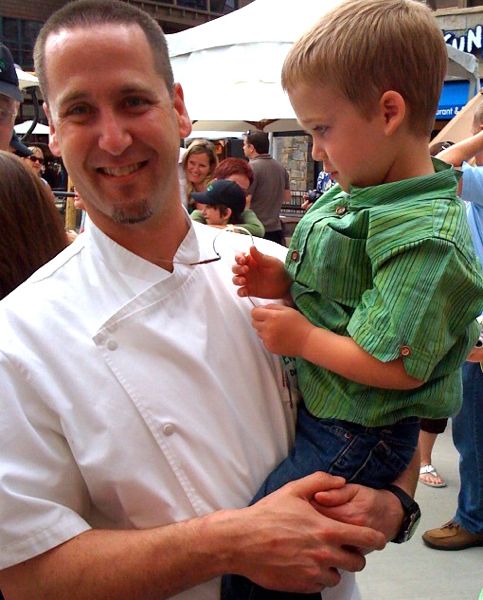
David Lutz and son Jacob after the big win.

David Lutz and son Jacob after the big win.

More than 2,000 food and wine lovers came out for the 24th Lake Tahoe Autumn Food and Wine Festival last weekend, where they were treated to gourmet demonstrations, fine libations and dozens of delectable creations from some of Sierra Nevada’s finest restaurants.

The festival, which took place at the Village at Northstar in Truckee, featured a special luncheon prepared by James Beard award-winning chef Traci Des Jardins, who is opening Manzanita inside The Ritz-Carlton Highlands, Lake Tahoe Dec. 9; a competitive grape stomp, wine tasting and luncheon cooked by Chef and Owner Mark Estee of Baxter’s Bistro & Lounge; and the Blazing Pans Mountain Chef Cook-Off. This year’s Chef David Lutz of Tahoe City’s Evergreen Restaurant beat out his friend and colleague Mike Trombetta of Farm to Belly Personal Chef Services to take home the title of Blazing Pans Champion, after the judges favored Lutz’s quail-themed dishes (this year’s secret ingredient).

This year’s Grand Tasting featured the food and wine pairings of approximately 30 of the region’s restaurants, caterers and premium wineries. Food and wine industry professionals, in a double blind judging, tasted and rated each pairing. Guests also had the opportunity to cast ballots for their favorite pairings in the coveted People’s Choice Award. This year’s winners are

Best Marriage of Food & Wine

Gold — Mamasake (Hamachi Sushi Cilantro, Yuzu, Hosho Ponzu, Cold Cucumber Soup), 2008 Evergreen Vineyard Columbia Valley Kung Fu Girl Riesling

Silver — Pianeta (Lamb Lollipops, Moroccan Spice Red Currant & Plum Sauce), 2006 Pride Mountain Vineyards Napa/Sonoma Merlot

Bronze — D’Lish Catering (Smoked Duck Corndog w Blackberry Maple Dijon Reduction), 2007 Silkwood Red Duet (Cab Sauv/Syrah) Lodi

Best White Wine

Gold — 2008 Evergreen Vineyard Columbia Valley Kung Fu Girl Riesling

Silver — 50/50 Brewing Rye IPA

Bronze — Kikisui Sake

Best Red Wine

Gold — 2005 Twomey Napa Valley Merlot

Silver — Silver Oak Alexander Valley Cabernet Sauvignon

Bronze (Tie) — 2006 Truckee River Winery Sta Lucia Highlands Pinot Noir Garys Vineyard and 2006 Inman Family Winery Russian River Valley OGV Pinot Noir

Best Food

Gold — Manzanita/ The Ritz-Carlton Highlands, Lake Tahoe (Pork Belly Sliders, Summer Pepper Preserve)

Silver — Mamasake (Hamachi Sushi Cilantro, Yuzu, Hosho Ponzu, Cold Cucumber Soup)

Bronze — D’Lish Catering (Smoked Duck Corndog w Blackberry Maple Dijon Reduction)

Best Dessert

Gold — Big Wave Catering (White Chocolate Bread pudding with Mission Figs)

Silver — Longboards Bar & Grill (Sticky Toffee Pudding Caramel & Chocolate Sauces Italian Marinated Cherries)

Bronze — D’Lish Catering (Pink Champagne Cake)

People’s Choice Awards

Best Marriage of Food & Wine

Big Wave Catering (White Chocolate Bread pudding with Mission Figs), 2005 Deerfield Ranch Late Harvest Botrytis Sauv. Blanc

Best White Wine

2008 Rombauer Carneros Chardonnay

Best Red Wine

2006 Pride Mountain Vineyards Napa/Sonoma Merlot

Best Food

Six Peaks Grille/Resort at Squaw Creek (Short Rib Patty Melt, Truffle Cheese, Huckleberry Jam)

Best Table Presentation

D’Lish Catering (Pink Champagne Cake)

Gruet New Mexico Sparkling Rose

The Lake Tahoe Autumn Food and Wine Festival is a fundraiser for the Community Fund of North Lake Tahoe through the 501c(3) Truckee Tahoe Community Foundation. The 24th annual festival is produced by the North Lake Tahoe Resort Association in partnership with Northstar-at-Tahoe; the Northstar Foundation; The Ritz-Carlton Destination Club; Audi of North America; Standards of Excellence Appliance Showrooms; Sunset magazine; Nothing to It Culinary Center in Reno; Charbay Winery and Distillery; and Tahoe Quarterly.


Millham to lead largest Kiwanis district

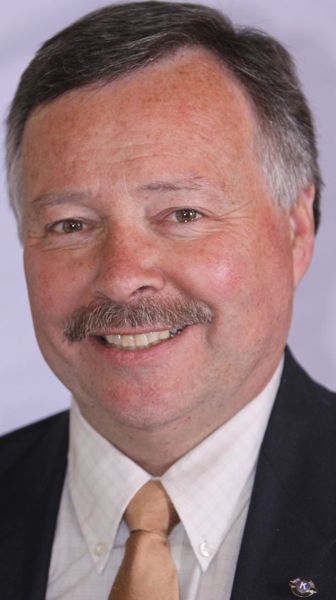
Governor – it’s a title Tom Millham is looking forward to getting used to.

Millham, 59, is governor-elect of the California-Nevada-Hawaii district of Kiwanis. With more than 16,000 members, it is the largest district of Kiwanis International.

The South Lake Tahoe man has been a member of the Kiwanis Club of Tahoe Sierra since 1976. In those 30-plus years Millham has served in a number of leadership roles.

His goals at the higher level are to help the various clubs in the district, provide more service for the communities they serve, and ensure members are having fun. He said it’s about getting back to basics.

Millham becomes governor in October 2010 at the installation festivities in Las Vegas.

Tom Millham Photo/Dan Thrift

Tom Millham           Photo/Dan Thrift


Sustainable food initiatives gaining traction in Tahoe

bowenBy Garry Bowen

In the past year, the city of South Lake Tahoe has launched initiatives geared to taking the community in sustainable directions. First, they created a Sustainability Action Plan, followed by the creation of a Sustainability Commission, currently engaged in discussions about SLT’s coming-of-age. There are 10 items in the sustainability action plan, and the Commission has deemed four of the 10 as worthy of prioritization as their first focus, and item No. 9 is my subject.

Nationally, September is Organic Harvest Month, which affords a good time to look at No. 9 – Healthy Food Systems, as it can and will positively affect the overall health for most of South Shore’s citizenry. Food and sustenance are subjects important to all residents, and anyone else who ventures into town as our guest, as our reputation for hospitality and vitality are at stake, whether dining at home or at one of our many restaurants, either outside or within casinos.

The Organic Trade Association, which introduced and has sponsored Organic Harvest Month since 1992, notes that “organic” stands for a commitment to an agricultural system that strives for a balance with nature, using methods and materials of low impact to the environment. Organic production systems are designed to replenish and maintain soil fertility, eliminate the use of toxic and persistent chemical pesticides and fertilizers, and build a biologically diverse agriculture. Sounds like the issues we deal with all the time here, under agency domains.

Sustenance and sustainability are intricately tied together, as the current health care quagmire – now almost 100 years old – doesn’t make very clear. Lost in the Washington stakes of high financial and political conversation are the simplest family values of taste, nourishment, and health. South Lake Tahoe can now regain what’s lost by contributing to each other in neighborly ways, something which will play an important role as an emerging sustainable community. If we can think of sustenance as an essential building block of living sustainably, then the connection of healthy, fresh food to a vibrant community becomes more and more obvious – especially here.

Just last week, in a New York Times op-ed piece, renowned food writer Michael Pollan (“Omnivore’s Dilemma”; “In Defense of Food: An Eater’s Manifesto”) made significant connection between the current health care debate and the need to change our way of feeding ourselves.

In a piece titled “Big Food vs. Big Insurance”, he says “that even the most efficient health care system that the administration could hope to devise would still confront a rising tide of chronic disease linked to diet.” These comments make SLT’s sustainability action plan item No. 9 a potent crystal ball in recognizing that determining a local future needs consideration right now.

“Working toward a vibrant and regional food system that connects fresh, healthy food” to “residents, grocers’, casinos, and restaurants” can now realistically be an objective with tangible, long-term benefits, as a sustainable economic development tool “to build health and wealth.”

Looking at a couple of other points within No. 9, one of them says, “Design a permanent year-round public market in the city to serve as a community gathering place”. Others encourage “gardening in good soils, with access to water and sunlight”, “organic food supply”, and “locally-owned and ecologically-sound storage and distribution infrastructure” while yet another calls for “providing assistance connecting food establishments with consumers and producers”. This writer, with the help of some key people in the region, will soon propose a comprehensive idea to cover all of the above points, and do it in a way that will be fun and engaging for the entire South Shore community. For example, the “community gathering place” can and will also foster youth educational programs, so that our youth will be equipped to comprehend our world’s natural offerings – by engaging our next generations with what a community can actually do for itself.

Why are these directions not only smart, but very important to our community’s fate? As Pollan notes further, we currently spend nationally $147 billion treating obesity, another $116 billion to treat diabetes, and several hundred billion more treating cardiovascular disease, all of which are diet-related. Putting it another way, our government is “now putting itself in the uncomfortable position of subsidizing both the costs of treating Type 2 diabetes and the consumption of high-fructose corn syrup”. A system that will clearly be unsustainable for years to come – reducing the above categories of cost are better done preventively, town-by-town. Add them all up, and they begin to total at least three-quarters of the estimated $900 billion cost of reform, but without more nourishment. Lowered costs do not necessarily translate into better health, or an engaged community.

The opening statement of Healthy Food Systems states that “climate and elevation make local food production a challenge”, which of course meant that that was the first consideration in taking on the challenge of convening the right elements (beyond “soil and access to water and sunlight”). We are very fortunate to already have extensive expertise in these areas, including minimal transport issues, and ongoing deposition of both our forest waste and our food wastes into compost amenable to high-elevation growing, in providing copious amounts of our own food.

Although it will take a while to accurately quantify actual benefits, it nevertheless resonates that better nutrition, less transport (or import), better taste and color, and lower overhead will all translate into a community shift of resources that will revive and enhance community spirit in many ways. Many citizens can contribute and participate in ways vital to their own health and well-being, and that of their neighbors, to the betterment of all who want the most livable place.

Finally, to better understand the local issues of either the “locavore” or slow-food movements, it is important to underline the importance of unnecessary transport. It is estimated that, for a number of vegetables and fruits, natural sugars (i.e., the nutritional energy) are reduced every 24 hours by a factor of as much as 50 percent. This is the issue with color, taste and nutrition – we don’t always get full value from the money we spend for produce. Or the nutritional value we need to lead healthy, productive lives – this is the promise of Healthy Food Systems that the City has afforded us, which offers the following meaning: “Real community wealth is achieved when people combine energy and effort to manifest a sustainable future” . . . for themselves and others.

Garry Bowen has lived on the South Shore of Lake Tahoe most of his life. He has an extensive background in global sustainability issues. To contact, comment, or find out more, email tahoefuture@gmail.com or call (775) 690.6900.


Harrah’s buying Planet Hollywood’s debt

By ARNOLD M. KNIGHTLY, LAS VEGAS REVIEW-JOURNAL

Harrah’s Entertainment is buying up the Planet Hollywood Resort’s debt in what an analyst said could be a bid to take over the financially troubled Strip resort.

Sources confirmed this weekend that Harrah’s has purchased a portion of the resort’s $860 million debt that is leveraged against the property.

Officials from Harrah’s and Planet Hollywood Resort declined to comment (Sept. 14).

The Planet Hollywood restaurant at what was Caesars Tahoe , and is now MontBleu, closed years ago.

Brian Gordon, a principal at Applied Analysis, said Harrah’s could be following the recent trend of acquiring casino properties through debt instead of a buyout.

“With covenant and debt defaults looming around for some of these properties, it’s a potential way to gain eventual ownership of a property,” Gordon said.

Read the rest of the story


California vehicle owners may be asked to pay for state parks

By Paul Rogers, San Jose Mercury News

With the Schwarzenegger administration preparing to announce Sept. 18 the closure of up to 100 state parks, California’s top environmental groups are quietly putting together a ballot campaign they hope will turn the bad news into a renaissance for the state’s long-struggling park system.

The Nature Conservancy, National Audubon Society, Trust for Public Land, Save-the-Redwoods League and others have raised nearly $1 million and conducted months of polling toward a November 2010 ballot measure that would increase vehicle license fees by $15 a year to fund parks.

If voters approve the measure — which needs a simple majority to pass — it would raise roughly $400 million a year, doubling the parks’ budget and making it no longer dependent on the state’s fluctuating general fund.

In exchange, all California motorists would get free admission to all state parks, which now charge up to $14 for entrance fees.

Read the whole story


St. Theresa spaghetti dinner fundraiser

St. Theresa School all you can eat spaghetti dinner raises funds for the eighth-grade class to go to Washington, D.C., $10 for adults, $5 for 10 and younger, beer and wine are additional, silent auction, raffle.  Tickets available from any eighth-grader or at the front office at Saint Theresa School at 1081 Lyons Ave., South Tahoe. (530) 544.8944


Country Faire, South Tahoe

St. Theresa School Country Faire, South Tahoe. (530) 573.1455