Tahoe’s talk of Vancouver, Jan. 24 am edition

Publisher’s note: LTN is uncovering tidbits about the Winter Olympics while on assignment.

By Kathryn Reed

WHISTLER, British Columbia — It seems odd that the Inuksuit is the mascot of the Vancouver Winter Olympics when it’s the Indians who are protesting these Games.

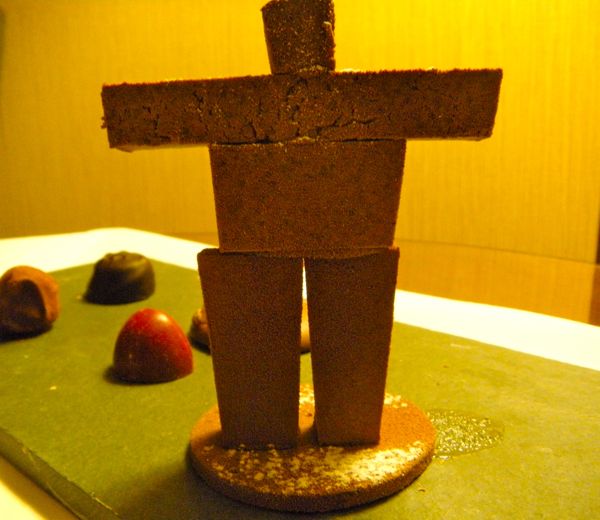
Fairmont Chateau Whistler even makes Inuksuit out of delicious chocolate. Photos/Kathryn Reed

Fairmont Chateau Whistler even makes Inuksuit out of delicious chocolate. Photos/Kathryn Reed

Talk on the street and slopes of Whistler is how the Indians who owned this land until the white Europeans came along are not happy the Olympics will be here in less than three weeks.

The Indian tribes claim they have never been compensated appropriately for their land that was taken from them.

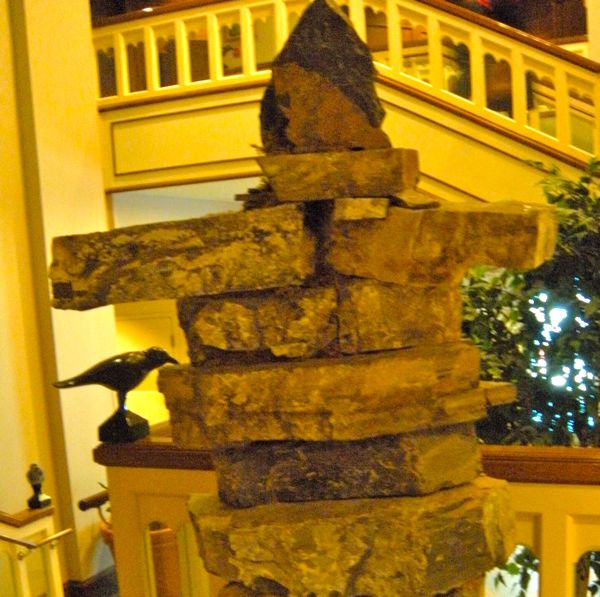
The Inuksuit is a stone figure from the Arctic that the Inuit Indians created. It is said to be one of the oldest objects created by humans. It looks a bit like a person with outstretched arms. In some ways it’s even cairn like.

Even though the tribes of British Columbia have protested and plan to continue to, this is the first Olympics to partner with indigenous people to create an official licensed merchandise program.

A stone Inuksuit at the Fairmont Whistler.

A stone Inuksuit at the Fairmont Whistler.

“This will bring global attention to Aboriginal artists and businesses, and an investment in Canadian Aboriginal youth,” according to the official Vancouver Olympic website.

There is an Aboriginal cultural center-museum on Blackcomb Way in Whistler that is open daily.


Author captures authentic history of 1960 Games

bookBy Nancy Oliver Hayden

The idea of having the 1960 Olympic Winter Games at Squaw Valley and Lake Tahoe began as a marketing ploy with no chance to succeed. It culminated with record performances and many firsts and put the Lake Tahoe region on the international map of world-class skiing.

In 1954 Alexander Cushing read a report in his morning paper about the Reno bid to secure the 1960 Winter Olympic Games. Cushing thought that a superior Squaw Valley could submit a credible bid and in the process gain wider public attention, even if the gambit ultimately failed.

However, rather than fail, the VIII Winter Games were an unqualified success and far exceeded the expectations of even the most jaded critics. For the winter sports industry, this was their catapult to stardom and the kick-start that alpine skiing received was immense.

In the Lake Tahoe region, a handful of struggling mom and pop ski parks exploded into a dozen major ski areas that gave the region the largest concentration of ski areas in North America.

The release of “Snowball’s Chance” by David Antonucci coincides with the 50th anniversary of the VIII Winter Olympic Games, which took place Feb. 18-28, 1960. Thoroughly researched and carefully organized, the book covers the history of the effort to win the Olympic bid, building the Olympic Village, designing and construction of the competition venues, and you-are-there accounts of all competition events.

The author’s interest in the 1960 Winter Olympic Games started with his research on the source of what appeared to be abandoned trails near his home on the West Shore of Lake Tahoe. He determined that the trails were the remnants of the cross country ski courses of the 1960 Winter Olympics. Although most of the competitions were at Squaw Valley, the venue for the cross country events was 16 miles from Squaw at McKinney Creek on the West Shore, thus the trails near his home.

The 188-page paperback is full of interesting and little known facts. For example: when it became apparent that the Winter Games would require intense, but short-term demand for personnel and equipment, the Organizing Committee requested military assistance. With a mobilized force of 750, military personnel constructed drainage works for the temporary parking lot, laid communication wiring, constructed cross country courses and conducted snow removal operations. The most unusual use of the military workforce was the alpine course preparation crew. Officers marched 10 Marine platoons of 30 troops each in a V-formation down the alpine ski courses to boot-pack the snow. Skiing troops followed them to smooth the surface. This process occurred over 30 days in advance of the events to ensure the best possible conditions for high-level competition.

“Snowball’s Chance” provides anyone who was fortunate enough to attend or be involved in the VIII Winter Olympic Games an opportunity to relive the spirit and excitement of the event. The rest of us have a ringside seat as we vicariously participate in the pageantry created by Walt Disney and thrill to the heat of competition.

Of the 85 photos and illustrations that appear throughout the book, most are by official Olympic photographer Bill Briner and many appear here for the first time. At the end of each chapter, under the heading Epilogue, Antonucci includes interesting facts about what has happened to many of the planners, officials and athletes mentioned in that chapter.

Among the athletic highlights at the VIII Olympic Winter Games are: the American ice hockey team won its first gold medal, Americans Carol Heiss and David Jenkins swept the individual figure skating gold medals, and Norwegian speed skater Knut Johannesen set a world record for the 10,000-meter with a time of 15/46.6. Four other skaters broke the world record the same day.

The Olympic firsts included mechanized equipment used to compact and groom the snow surface, artificial ice created by mechanical refrigeration and Zamboni machines used to resurface ice rinks, athletes housed in a centralized facility, fully automated electric timing, a mainframe computer used to analyze and report results, extensive live TV coverage, and instant replay by videotape.

Antonucci has been a resident of the Lake Tahoe area for more than 35 years. He holds bachelor and master degrees in civil and environmental engineering and is a licensed professional civil engineer in California.

He founded the Olympic Trails Restoration Committee and worked closely with California State Parks and others to reopen the surviving trail system for public use. He also serves on the board of the Squaw Valley Olympic Museum Foundation and is a member of the 50th Anniversary Olympic Heritage Celebration Committee. An outdoor enthusiast, he enjoys skiing, snowshoeing, biking, skin diving, kayaking, golf, hiking and camping. He resides in Tahoma with wife Jenny and son Dominic.

“Snowball’s Chance” is available for purchase at several local bookstores and retailers. For a complete list, visit www.tahoefacts.com.

Nancy Oliver Hayden has been a journalist covering the South Shore of Lake Tahoe for more 20 years.

Publisher’s note: Terry Orr, Olympic team doctor from Lake Tahoe, will be featured Jan. 25.


Tahoe — the place to be during the Olympics

Where are you going to be during the Vancouver Olympics?

Lake Tahoe is likely to have the most athletes of any region going to Games and Sierra-at-Tahoe should be well represented. Why not live like an Olympian for two weeks?

Inn by the Lake in South Lake Tahoe and Sierra are offering a Go for the Gold package Feb. 12-28 — standard queen room, two adult lift tickets to Sierra, a welcome basket with an autographed photo of Sierra Resort and U.S. Snowboarding team member Hannah Teter, a bottle of Hannah’s maple syrup, and a bottle of Champagne to celebrate the success of the U.S. Olympic athletes.

To book the Go for the Gold package, log onto www.innbythelake.com or call (530) 542.0330.


Massive solar field planned for north of Reno

solarSusan Voyles, Reno Gazette-Journal

Vidler Water Co. is proposing to build a 100-megawatt solar farm, one of the largest in the country, at its Fish Springs Ranch about 40 miles from Reno in northern Washoe County.

If approved by Washoe County and regional officials, construction is planned to start in 2011 and be phased in over 10 to 15 years.

Several larger solar projects, including two near San Luis Obispo also are being planned, said Richard Ferguson, coordinator for California’s renewable energy transmission initiative.

Read the whole story


Duet fundraiser at LTCC

Mark Williams, Lake Tahoe Community College music instructor, will be singing duets with some of the area’s best divas to raise money for a concert grand piano for the college’s music department. “It Takes Two: A Broadway Valentine” will be Feb. 6 at 8pm in the Duke Theatre.

Tickets will be a $20 donation.

“In trying to think of an idea for a fundraiser, I thought it might be fun to do an evening of duets with lots of my female friends with whom I have performed over the years,” Williams said. “I contacted 16 ladies from South Lake Tahoe, Gardnerville, Minden, Carson City, Reno, and Incline Village, the majority of whom have been my leading ladies in a show, or have performed leading roles in shows for which I have done the musical direction.”

Susan Boulanger “It Takes Two” (Into the Woods)

Sharon Kerrigan “As Long as You’re Mine” (Wicked)

Michelle Sennings “Come What May” (Moulin Rouge)

Joanie San Agustin “The Last Night of the World” (Miss Saigon) Dan Lancaster, alto saxophone

Cindy Sabatini “All I Ask of You” (Phantom of the Opera)

Moe Leonard Accompanist

Diana Evans “Baby, It’s Cold Outside” (For the Boys)

Stephanie Grigsby “It Couldn’t Please Me More” (Cabaret)

Catherine Cook “Sue Me” (Guys and Dolls)

Liz Niven “How Could I Ever Know” (The Secret Garden)

Ania Helwing “Tonight” (West Side Story)

Salli Parker Accompanist

Olivia Hakel “Make Believe” (Show Boat)

Carolyn Lancaster “If I Loved You” (Carousel)

Suzie Tagayev “We Kiss in a Shadow” (The King and I)

Saundra Whitt “You and I” (Chess)

Sarah Pennebaker “You are my Home” (The Scarlet Pimpernel)

Stephanie Williams “Take Me as I Am” (Jekyll and Hyde)

Cindy Sabatini Accompanist

Finale (Company): There’s No Business Like Show Business (Annie Get Your Gun)


Tahoe’s talk of Vancouver, Jan. 23 pm edition

Publisher’s note: Lake Tahoe News takes to the slopes where the Olympics will be in 20 days.

By Kathryn Reed

WHISTLER, British Columbia — Six hours of skiing. It’s been a long time since I’ve done that in one day.

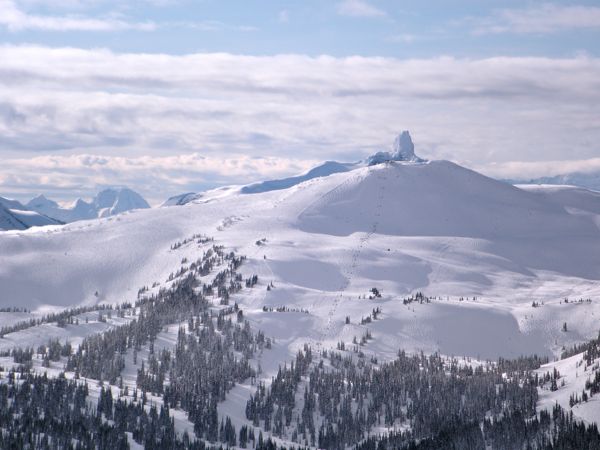
Black Tusk from Blackcomb ski area. Photos/Kathryn Reed

Black Tusk from Blackcomb ski area. Photos/Kathryn Reed

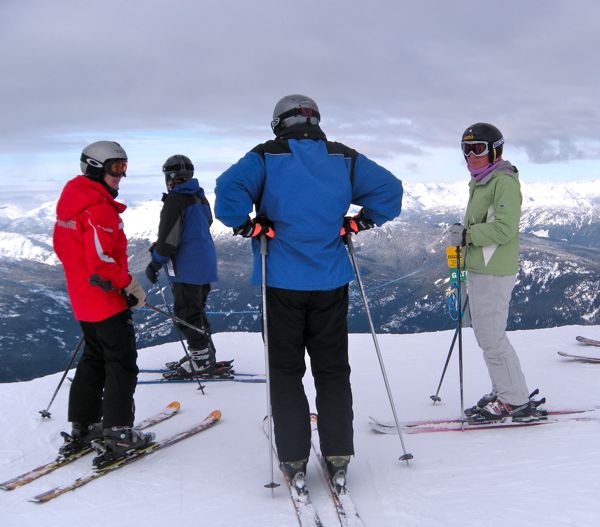
It was made that much easier because of Susan Sommer. She took the five us all over Blackcomb Mountain today – for free. She couldn’t even

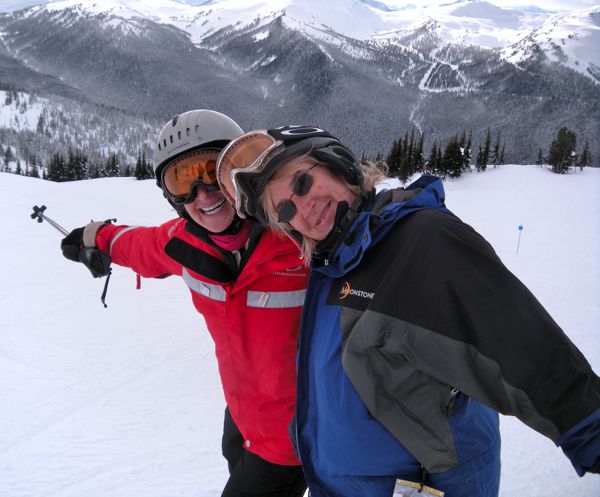
Guide Susan Sommer and LTN writer Susan Wood.

Guide Susan Sommer and LTN writer Susan Wood.

pocket the tip I slipped her. (It will go to the avalanche dogs.)

Blackcomb and Whistler mountains offer free tours of the respective mountains each day. Good thing because both are huge and I didn’t want to go down any double diamonds. (I did that unintentionally at Vail four years ago with my sister, Pam.)

But we did go out to Proposal Point – launching pad to some of the super expert terrain. No thanks. But the views are spectacular.

Too many runs to choose from for one day.

Too many runs to choose from for one day.

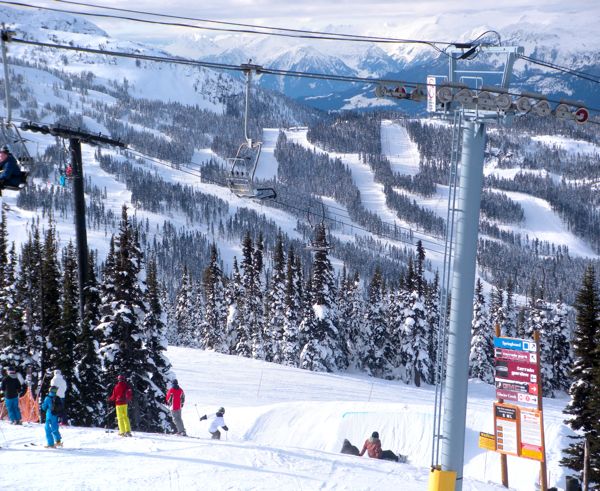
Whistler-Blackcomb had eye candy in every direction. I ran my camera battery down with all the pictures I was taking.

Looking out from Proposal Point.

Looking out from Proposal Point.

Snowcapped mountains are everywhere. It is breathtaking.

At one point we were on a glacier. Other times we were on incredibly soft snow. Other times it was ice. Sometimes the sun was out, other times it was cloudy. Flurries were dancing in the air at the top of the mountain as we headed down. Sun greeted us as we took our skis off for the day.

One of the things that strikes me about Whistler is how everyone is so dang friendly – the workers, the people on the lifts who have come from near and far to ski these wonderous mountains.

Locals from Vancouver thanked us for coming here to enjoy their alpine oasis. I wanted to thank them for letting me be here.


Curling clinic at SLT ice rink

South Lake Tahoe Ice Arena is hosting a curling clinic on Jan. 31 from 2:30-3:45pm.

Curling is an Olympic sport similar to shuffleboard played on ice.

Instruction will include discussion on safety, equipment, preparation, technique and rules of the game.

The fee is $8, and space is limited. Spectators are welcome at no charge. For more information, come by the arena at 1176 Rufus Allen Blvd., South Lake Tahoe, or call (530) 542.6262.


Lake Tahoe ski report, Jan. 23

curtisCount on clouds, light winds, and scattered snow showers in the Lake Tahoe Basin. Curtis Fong, the Guy from Tahoe, delivers his ski report for the day.


Teter has one chance left to make Olympic team

By USSA

PARK CITY — Two weeks after locking down their Olympic spots, Shaun White (Carlsbad, CA) perfected his double McTwist 12 and Kelly Clark (Mt. Snow, VT) bested the women’s field Friday night during the Sprint U.S. Snowboarding Grand Prix victory at Park City Mountain Resort

“It was just the run of my life, I don’t know how to say it,” White said. “I’ve basically been practicing this trick for as long as I can remember, and I don’t think I’ve crashed as much (as I have) in the last couple years I’ve been learning it.”

White stole the show with a historic second run where he dropped double cork, double cork, 540 into double McTwist 12.

His reward for going so big on the 22-foot megapipe? An astronomical score of 49.

“I’m just going to keep dialing it in and keep practicing,” White said. “You know there’s always room for improvement. The judges are looking for big air and style tricks, that’s why I keep the 540 in there as a break in the spin madness.”

But the new tricks are what distinguish White from the rest of the world’s best, and painful memories didn’t stop him from pushing himself to his limits.

“The wild part about that trick is, the way I’m spinning the double cork hasn’t really been done before by anyone except myself,” White said. “Kevin Pearce (Norwich, VT) was the only one trying something similar in a way, he was doing a double front flip – which is like a 900 but just spinning that way is really difficult.”

Pearce is still in a Salt Lake City hospital recovering from a severe head injury sustained in training three weeks ago.

“I mean, it’s just tough,” White said. “You have to think about your friends, obviously, and it’s just unfortunate. He’s one of our best friends, it’s just strange not to see him here, so when you see the banners, you see the stickers and it feels like he is still around. It’s good. I’m hoping to visit after this event.”

Scotty Lago (Seabrook, NH) went huge on his second run, proving that he can continue to be consistent while throwing monster tricks as he finished second. Greg Bretz (Mammoth, CA) landed two perfect double corks on his way to third.

“Words can’t describe this,” Lago said after readying himself to challenge for an Olympic spot. “It has been a goal of mine for the last two years, and it’s been a dream of mine. I’ve got the chills all over, I’m pretty excited.”

Clark edged U.S. teammate Hannah Teter (Belmont, VT) for the win, falling in her first run before making up the ground in a solid final performance.

“I’ve always loved competing in Park City,” said Clark, who won Olympic gold in the same pipe in 2002, “They build amazing halfpipes, and it’s always fun for me to come back to get to compete and do well.

“I think I will need a tougher run than tonight in Vancouver. I’m definitely working my way up to it.”

Teter entered competition with a second and a third, putting her strong position to contend for the U.S. Team, which Gretchen Bleiler (Aspen, CO) will certainly belong to after fourth place Friday to accompany a victory and two second-place results.

“It feels really good,” Teter said. “I want to go and represent the U.S. in the biggest contest in the world.”

Not to be forgotten in the Olympic picture, Ellery Hollingsworth (Stratton, VT) was third under the lights.

“I’m really excited I landed the run I wanted to land,” Hollingsworth said. “I wanted to bring my 9s into my run, and all week I’ve been trying to do it, and I landed it in practice, then in my run. So I’m really happy.”

Saturday night’s race marks the final chance for U.S. halfpipe athletes to make the 2010 Olympic Team, starting at 6:30pm.

After the halfpipe, 30 Seconds To Mars will play a concert before three men and three women are announced as members of the 2010 Olympic Team. The full Olympic roster will be announced Jan. 25.

Park City, Jan. 22, Halfpipe

Men

1. Shaun White, Carlsbad, CA, 49.00

2. Scotty Lago, Seabrook, NH, 47.70

3. Greg Bretz, Mammoth Lakes, CA, 46.70

4. Elijah Teter, South Lake Tahoe, CA, 44.00

5. Luke Mitrani, Mammoth Lakes, CA, 44.00

6. Louie Vito, Sandy, UT, 43.30

7. JJ Thomas, Golden, CO, 43.00

8. Danny Kass, Portand, OR, 42.70

9. Steve Fisher, Breckenridge, CO, 42.00

10. Dylan Bidez, Minturn, CO, 41.30

Women

1. Kelly Clark, Mt. Snow, VT, 45.20

2. Hannah Teter, Belmont, VT, 44.80

3. Ellery Hollingsworth, Stratton, VT, 43.60

4. Gretchen Bleiler, Aspen, CO, 42.50

5. Elena Hight, South Lake Tahoe, CA, 40.00

6. Kaitlyn Farrington, Sun Valley, ID, 39.20

7. Maddy Schaffrick, Steamboat Springs, CO, 31.40

8. Kelly Marren, Hillsborough, CA, 29.40

9. Clair Bidez, Minturn, CO, 19.30

Overall Standings

Men

1. Shaun White, Carlsbad, CA, 1000

2. Louie Vito, Sandy, UT, 800

3. Scotty Lago, Seabrook, NH, 700

4. JJ Thomas, Golden, CO, 550

5. Greg Bretz, Mammoth Lakes, CA, 525

6. Zack Black, Breckenridge, CO, 525

7. Elijah Teter, South Lake Tahoe, CA, 475

8. Luke Mitrani, Mammoth Lakes, CA, 475

9. Steve Fisher, Breckenridge, CO, 400

10. Jack Mitrani, Mammoth Lakes, CA, 340

Women

1. Kelly Clark, Mt. Snow, VT, 1000

2. Gretchen Bleiler, Aspen, CO, 900

3. Hannah Teter, Belmont, VT, 800

4. Elena Hight, South Lake Tahoe, CA, 650

5. Ellery Hollingsworth, Stratton, VT, 600

6. Maddy Schaffrick, Steamboat Springs, CO, 475

7. Clair Bidez, Minturn, CO, 425

8. Kaitlyn Farrington, Sun Valley, ID, 400

9. Kelly Marren, Hillsborough, CA, 305


Sullivan showing signs of Olympic caliber skiing

By USSA

KITZBUEHEL, Austria — Bode Miller (Franconia, NH) was ninth in the 70th year of the legendary Hahnenkamm Audi FIS Alpine World Cup downhill, the final chance for American speed skiers to earn their U.S. Olympic Team start. Switzerland’s Didier Cuche won for the second day in a row as five Americans landed in the top 26.

“From top to bottom, it was a challenging race,” said U.S. Men’s Head Coach Sasha Rearick.

“Everybody was coming out to win today. The slope was perfect, bluebird sun, and every single one of the guys in the top 30 was out there with one mission: to win this race.”

Miller, who had been the fastest in training Thursday, took an early lead but lost it about a third of the way down the hill in the only major World Cup downhill the two-time overall champion is yet to win.

“Bode skied very aggressively up top, but he lost some time in the middle,” Rearick said. “On the bottom he didn’t quite ski as aggressively on a fine line as he normally can do.”

Making a final statement for the coaches before Vancouver picks, Erik Fisher (Middleton, ID) tied Marco Sullivan (Squaw Valley, CA) for 18th.

“It’s fun to be here, but I feel like it’s time that I start doing some things,” Fisher said. “I had a big mistake and was able to make up a lot of time at the bottom. I know the speed’s there, I’ve just gotta put a full run together.

“I usually make a mistake after I have one, because I’m trying to go to hard,” Fisher said. “I was able to pull it together and have a clean bottom half.”

For his part, Sullivan also finished 11th in the super G, and is showing signs he’s rounding into top form.

“It was really fun,” he said of the downhill. “Not the best result I was looking for, but even coming through the finish, I had a big smile on my face. It’s such a pleasure to run this course.”

More than 40,000 fans were on hand for Scott Macartney’s (Crystal Mountain, WA) first downhill start in Kitzbuehel since his famous crash two years ago. Macartney recovered last year only to tear his ACL in Wengen, one week before his return.

“It’s good to be back,” Macartney said. “It was tough the first day, tough to really wrap it up on this hill, but I kept getting better, and every day I was faster. I had a couple of mistakes today and was out of the points, but it was nice to get back to Kitzbuehel and charge down the hill again.

“You’re always nervous at Kitzbuehel. The very first day, I was probably as nervous as I’ve ever been for a World Cup. I was more relaxed today.”

Sunday’s slalom concludes competition at Kitzbuehel, where there will be a podium for the top three slalom racers and another for the fastest combined racers from Saturday’s downhill and Sunday’s slalom. It is the only traditional combined of the World Cup season and does count toward the discipline title.

Together with Saturday’s downhill, Miller, with his top 10, will have a shot in the combined. The slalom skiers then head to Schladming for Tuesday’s night race.

The Olympic Team is expected to be announced Monday.

Kitzbuehel, Austria – Jan. 23, Men’s Downhill

1. Didier Cuche, Switzerland, 1:53.74

2. Andrej Sporn, Slovenia, 1:54.02

3. Werner Heel, Italy, 1:54.13

4. Mario Scheiber, Austria, 1:54.25

5. Aksel Lund Svindal, Norway, 1:54.42

9. Bode Miller, Franconia, NH, 154.90

T-18. Marco Sullivan, Squaw Valley, CA; and Erik Fisher (Middleton, ID), 1:55.49

24. Steven Nyman, Sundance, UT, 1:55.70

26. Andrew Weibrecht, Lake Placid, NY, 1:55.83

41. Ted Ligety, Park City, UT, 1:57.16

44. Scott Macartney, Crystal Mountain, WA, 1:57.52