U.S. Olympic ski team in TV movie

vanolyOn Saturday, the U.S. Alpine Ski Team will appear from a vantage never shown on television, let alone prime time television, as NBC premiers “Truth in Motion: The U.S. Ski Team’s Road to Vancouver” at 8pm.

With just two weeks remaining until the Vancouver Olympics, the Audi-funded documentary covers the gritty lives of these skiers in their quest for Olympic gold.

“Truth in Motion” stars 2010 U.S. Olympic Alpine Ski Team athletes Ted Ligety (Park City, UT), Sarah Schleper (Vail, CO), Jake Zamansky (Aspen, CO) and Tommy Ford (Bend, OR). There are also cameo appearances by Bode Miller (Franconia, NH), Lindsey Vonn (Vail, CO) and Scott Macartney (Crystal Mountain, WA) along with numerous coaches and ski technicians who support this Team.

Directed by Academy Award nominee Brett Morgen, the film takes you inside the locker room in every aspect of the being an elite ski racer, only their locker room is Portillo, Chile; Saas Fee, Switzerland; Soelden, Austria, on airplanes, long car rides and hotel rooms across the globe.

There is a noted lack of glamour as the film takes you through pre-dawn wakeup calls to check lactate levels and stretch before riding a frozen chairlift to work. The athletes are candid, raw and provide an insight to their sport that cannot be seen in a two-minute race.


January snowfall at Alpine one of 10 best in history

alpineJanuary 2010 will enter the record books at Alpine Meadows Ski Resort as the ninth best January in 40 years for snow accumulation.

At the 6,835-foot base area, 118 inches of snow fell; at the resort’s mid-mountain snow stake (elevation 7,500 feet) topped out at 165 inches.

Winter to date, Alpine Meadows has received a total of 20 feet of snow at its base area; and 28 feet of snow at the mid-mountain level.


N. Nevada spigot dries up for Vegas water users

By Ashley Powers, Los Angeles Times

The Nevada Supreme Court dealt a huge blow Thursday to Las Vegas officials’ controversial plan to siphon water from the state’s rural north, saying that a faulty application process invalidates the south’s claim to tens of thousands of acre-feet of water.

Starting in 1989, Las Vegas-area water officials – anticipating a massive population boom in thirsty southern Nevada – asked the state water engineer for groundwater rights in a number of rural valleys. Critics panned the proposal to channel water, via a 300-mile pipeline, from ranching to casino country as an Owens Valley-like grab. A number of people filed formal objections.

Read the whole story


Mancuso speed picking up in super combined

By USSA

ST. MORITZ, Switzerland -– Lindsey Vonn (Vail, CO) reached her 11th Audi FIS Alpine World Cup podium of the season on Friday, taking third in a super combined won by Sweden’s Anja Paerson. Julia Mancuso (Olympic Valley, CA) was 14th after the American pair went 2-3, respectively, in the first-run super G.

“It was important to make it down not only for the points, but for my mind going into the Olympics, because super combined is the first event,” Vonn said. “Now I have that confidence, and I’m definitely going to risk more in the Olympics.”

The 60 points give Vonn a 116-point lead in the overall standings heading into Saturday’s downhill and Sunday’s super G – the final World Cup races before the Olympics.

Vonn also holds a 10-point lead in the super combined standings with just one more race after the Olympics for the discipline title.

“It’s a two-run event, and there’s just three events for the [combined] globe,” Women’s Speed Coach Alex Hoedlmoser said, explaining why Vonn might have been slightly cautious on the Corviglia course. “If you pull out in one of those races, there’s no chance for it.”

“I was more concentrated on just making it down to the bottom and not really risking anything,” Vonn said. “It’s so easy in slalom to go out and a lot of girls had problems, especially at the top. It wasn’t my best run, but it was solid, and that’s all I was hoping for.”

Mancuso had the second-fastest time in downhill training Wednesday and carried that speed into Friday.

“In speed she’s getting more and more confident now and doing some good things,” Hoedlmoser said of the 2006 giant slalom gold medalist. “She’s definitely pointed in the right direction.”

After tweaking her back in downhill training Thursday, Leanne Smith (Conway, NH) was 19th after the super G, but coaches opted to sit her for the slalom.

Vonn will go for her first-ever win at St. Moritz in the downhill, where Hoedlmoser said “anything can happen.” She is undefeated in downhill this season with a six-race winning streak going back to last year.

St. Moritz, Switzerland, Jan. 29, Women’s Super Combined

1. Anja Paerson, Sweden, 2:00.54

2. Michaela Kirchgasser, Austria, 2:00.97

3. Lindsey Vonn, Vail, CO, 2:01.46

4. Elisabeth Goergl, Austria, 2:01.51

5. Fabienne Suter, Switzerland, 2:02.13

14. Julia Mancuso, Olympic Valley, CA, 2:02.75

34. Chelsea Marshall, Pittsfield, VT, 2:04.83

37. Stacey Cook, Mammoth Mountain, CA, 2:05.17

39. Megan McJames, Park City, UT, 2:06.08

DNS 2 – Leanne Smith, Conway, NH

DNF 2 – Kaylin Richardson, Edina, MN


Snowshoe Thompson talk

Nina MacLeod will talk about Snowshoe Thompson and the history of long boards at the Lake Tahoe Historical Society’s quarterly meeting on Feb. 9 at 7pm in the Lodge of Camp Richardson.

MacLeod, a native of Oslo, Norway, and Lake Tahoe resident, is a ski instructor and an expert in cross country.

The talk is free.


Snowpack 15 percent above normal in Sierra

By Don Strickland

Manual and electronic readings today indicate that water content in California’s mountain snowpack is 115 percent of normal for the date statewide. This time last year, snow water content was 61 percent of normal statewide.

“Today’s snow survey offers us some cautious optimism as we continue to play catch-up with our statewide water supplies,” said DWR Chief Deputy Director Sue Sims. “We are still looking at the real possibility of a fourth dry year. Even if California is blessed with a healthy snowpack, we must learn to always conserve this finite resource so that we have enough water for homes, farms, and businesses in 2010 and in the future.”

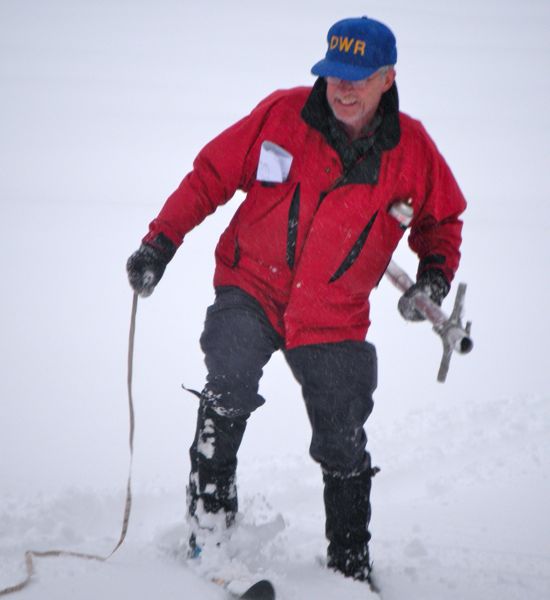
Frank Gehrke with DWR at the early January snow survey at Phillips Station. Photo/Kathryn Reed

Frank Gehrke with DWR at the Dec. 30 snow survey at Phillips Station. Photo/Kathryn Reed

Lake Oroville, the principal storage reservoir for the State Water Project (SWP) is at 33 percent of capacity, and 50 percent of average storage for this time of year. Lake Shasta, the principal storage reservoir for the federal Central Valley Project, is at 56 percent of capacity, and 82 percent of average for the date.

DWR’s early allocation estimate was that the agency would only be able to deliver 5 percent of requested SWP water this year, reflecting low storage levels, ongoing drought conditions, and environmental restrictions on water deliveries to protect fish species. The agency will recalculate the allocation after current snow survey results and other conditions are evaluated.

Results of today’s manual survey by the Department of Water Resources (DWR) off Highway 50 near Echo Summit are as follows:

Location

Elevation

Snow Depth

Water Content

% of Long Term Average

Alpha

7,600 feet

69.3 inches

20.3 inches

96

Phillips Station

6,800 feet

62.6 inches

20.3 inches

106

Lyons Creek

6,700 feet

78.2 inches

22.9 inches

117

Tamarack Flat

6,500 feet

67.8 inches

20.2 inches

106

Electronic sensor readings show northern Sierra snow water equivalents at 129 percent of normal for this date, central Sierra at 101 percent, and southern Sierra at 119 percent. The sensor readings are posted here.

DWR estimates that fishery agency restrictions on Delta pumping adopted in the past year to protect Delta smelt, salmon, and other species could reduce annual deliveries of State Water Project water by 30 percent.

Gov. Arnold Schwarzenegger has championed a comprehensive water plan that he recently signed into law. The package would safeguard the state’s water supply through conservation, more surface and groundwater storage, new investments in the state’s aging water infrastructure, and improved water conveyance to protect the environment and provide a reliable water supply.

Snow water content is important in determining the coming year’s water supply. The measurements help hydrologists prepare water supply forecasts as well as provide others, such as hydroelectric power companies and the recreation industry, with needed data.

Monitoring is coordinated by the Department of Water Resources as part of the multi-agency California Cooperative Snow Surveys Program. Surveyors from more than 50 agencies and utilities visit hundreds of snow measurement courses in California’s mountains to gauge the amount of water in the snowpack.

Don Strickland works for the Department of Water Resources.


Jitloff scores points in Slovenia World Cup

By USSA

KRANJSKA GORA, Slovenia -– With just two weeks remaining until Opening Ceremonies in Vancouver, 2006 combined gold medalist Ted Ligety (Park City, UT) rocketed to the top of the Audi FIS Alpine World Cup podium Friday with his third consecutive giant slalom victory at Kranjska Gora.

After finishing second on the first run, Ligety edged Austria’s Marcel Hirscher by 0.34 seconds in the finale before early leader Aksel Lund Svindal fell to fourth. The race was a reschedule from the fog scratched event originally set for Adelboden, Switzerland in early January.

“First run, I skied really well at the top,” Ligety said. “I was pretty psyched I was in second place, one hundredth back. It’s a lot better than being in first place one hundredth ahead.

“I knew I had to go hard to beat Hirscher, and Aksel is such a great competitor so I knew I had to go hard. I didn’t hold back at all.”

It is the third podium of the season for Ligety, who won the World Cup GS title in 2008 and regains the discipline lead, 292-259 over Austria’s Benjamin Raich, who is tied for second in the points with Italian Masimilliano Blardone. Ligety also moved up to sixth in the overall standings with another GS on tap at Kranjska on Saturday.

“It’s nice to have this race right before the Olympics. It kind of gives me a little extra confidence boost,” said Ligety, whose Rossignol ski tech, Ales Kalamar, is from nearby and enjoys strong support in Kranjska.

“It’s an awesome GS hill with such incredible terrain, so I really like that part of it. Plus, it’s always toward the end of the year, and that’s when I feel like I’m skiing the best. It always feels good to race here. I really feel blessed to have a hill like this to compete on.”

Ligety wasn’t the only American to rip into the finals. Newly-named Olympian Tommy Ford (Bend, OR) was 21st despite small mistakes on both runs.

“It showed that he’s fast and strong,” said Men’s Slalom Head Coach Rudi Soulard, pointing to his third-fastest time on the final pitch of the second run.

Teammate Tim Jitloff (Reno. NV) also took home points, taking 27th after a mistake on his second run cost him a chance at a higher result.

“It’s nice to see him get back on track,” Soulard said.

Ligety’s win marked the 101st World Cup victory for American men. Two-time overall champion Bode Miller (Franconia, NH), who secured No. 100 with his super combined win in Wengen, Switzerland, never planned to race in Kranjska and is stateside resting his ankle.

Kranjska Gora, Slovenia, Jan. 29, Men’s Giant Slalom

1. Ted Ligety (Park City, UT), 2:22.02

2. Marcel Hirscher, Austria, 2:22.36

3. Kjetil Jansrud, Norway, 2:22.53

4. Aksel Lund Svindal, Norway, 2:22.84

5. Davide Simoncelli, Italy, 2:23.00

21. Tommy Ford, Bend, OR, 2:25.38

27. Tim Jitloff, Reno, NV, 2:26.18

DNQ 1 – Nolan Kasper, Warren, VT; Jake Zamansky, Aspen, CO

DNF 1 – Warner Nickerson, Gilford, NH


Lake Tahoe ski report, Jan. 29

curtisCurtis Fong, the Guy from Tahoe, says take yellow or bronze/rose tinted goggles today. Here is his ski report.


Habitat for Humanity lessons go beyond building houses

sncBy Michelle Filippini

Assistant Business Professor Emily Rhodenbaugh, Senior Lecturer Laura Brunel-Canale and 10 Sierra Nevada College students recently returned from a trip to El Salvador where they helped build a house with Habitat for Humanity.

According to Habitat for Humanity Country Director Patty Cordero, “The leadership of the (SNC) group was exemplary, and the group members did an excellent job working toward their objectives.”

SNC student Todd McAtavey reflected on his experiences in El Salvador. “I’m hoping that we see some real change in the social safety nets with the new FMLN administration.”

McAtavey traveled to Africa last semester and was able to make clear comparisons with what is happening in Africa and in Latin America regarding the inequalities that exist in the developing world.

SNC student Bob Hansen, under the guidance of SNC science Professor Steve Ellsworth, is pursuing research related to deforestation in El Salvador and spent his free time searching for old-growth trees while in the country.

Said Rhodenbaugh, “Bob’s research proved to be valuable to the entire group as we all learned about current environmental concerns in El Salvador, as well as programs that were helping to mitigate these issues.” She went on to say that she foresees a Spanish, international studies, and even a science component as being useful disciplines for future trips.

SNC students will be completing creative critical thinking pieces based on their El Salvador experiences that will manifest in a variety of public forms across campus next semester.

Anza Jarschke from the Fine Arts Department is looking to point out the absurdity of painting concrete cinder blocks with water-based paint in a interpretive art piece, and Renee Vock and Arielle Shipe are planning to construct photo essays to be hung around campus that will document with photos and words their experience in El Salvador.

The students look forward to sharing their creative pieces with the Sierra Nevada College community.

There will be future opportunities for faculty, students, and community members to participate with SNC’s broad-based International Service Learning trips. The college hopes to have another Habitat for Humanity trip opportunity available in December.

For more information, contact Emily Rhodenbaugh at erhodenbaugh@sierranevada.edu or (775) 831.1547, or Laura Brunel-Canale at lbrunelcanale@sierranevada.edu or (775) 831-1547.

Michelle Filippini is a senior development writer at Sierra Nevada College in Incline Village.


Gaines frustrated by lack of job creation

By Ted Gaines

Every day, families in our communities are feeling the pain of California’s economic meltdown and lack of job opportunities.

Unemployment in the Sacramento region has grown to 12.4 percent, which local economists say is a modern record. The unemployment rate has doubled in just 2 years. Nearly 83,000 people in our area have lost their jobs over the past few years as companies have been forced to cut jobs in California, relocate to other states or close their doors altogether.

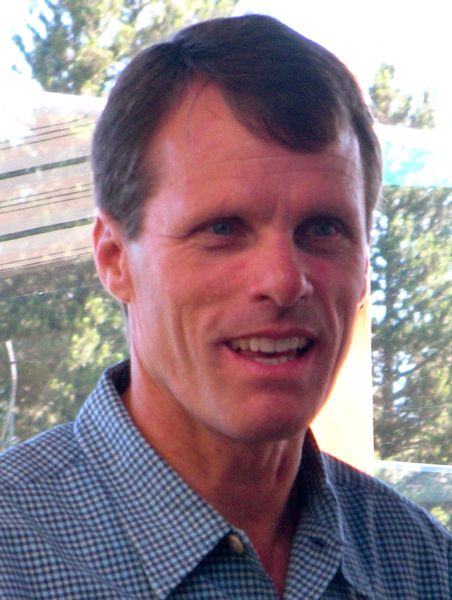
Ted Gaines

Ted Gaines

But the global recession is only one reason why so many jobs and opportunities are leaving our state. Reckless policies passed by the State Legislature in recent years have contributed to making California the state with the most expensive business costs in the nation, according to an annual Forbes magazine survey. This is unacceptable.

As a small business owner myself, I know first hand just how difficult the Legislature has made it to create jobs in California. Every day, businesses like mine have to pay high taxes and fees and comply with dozens and dozens of mandates and regulations just to stay in business in our state and keep jobs here.

It is irresponsible that the Legislature has created a jobs climate in California that discourages job creation, rather than embraces it. The more than 2.2 million Californians out of work today deserve better than a state government that seemingly goes out of its way to chase jobs away.

That’s why there is no more important priority for the Legislature than putting California jobs first. The only way to help our economy recover in California is through job creation.

We cannot sit back and allow jobs and opportunities for hard-working Californians to disappear to other states – and even other countries – because the Legislature has put in place so many barriers to opportunity and prosperity in our state.

To make California more competitive with other states and bring back jobs, lawmakers must go through all of the rules and regulations currently on the books. Those that are hurting the economy, threatening job creation and putting people out of work must be set aside. Then we must take steps to make California more competitive with other states.

One way we can do this is by offering incentives to companies to create jobs, which has already proven successful in the auto industry. As the chairman of the Legislative Automotive Study Group, I have been very concerned about the competitiveness of California’s auto industry and the disappearance of auto manufacturing jobs from our state.

This was most recently exemplified by the announcement that Toyota would close the Fremont-based NUMMI auto manufacturing plant, the only one of its kind in California.

By taking steps to lower the cost of doing business here and offering incentives to create jobs for those out of work, we can make a difference in luring businesses and jobs back to our state.

Assemblyman Ted Gaines, R-Roseville, represents the 4th Assembly District in the California Legislature.