Snippets about Lake Tahoe

krlt• Steve Harness, who has been with KRLT and KOWL radio stations on the South Shore for almost seven years as a disc jockey, program director and operations manager, is now general manager of the stations.

• In response to the state’s severe drought, Caltrans is launching a statewide educational campaign on the state’s highways urging all Californians to conserve water. California’s more than 700 electronic highway signs will display a water conservation message.

• While the investigation is still open, El Dorado County sheriff’s officials say there are no leads in the January bomb threat at Sierra-at-Tahoe.

• South Lake Tahoe Wedding & Honeymoon Association is putting on the Something Blue Wedding Expo on March 16 from noon-3pm at MontBleu in Stateline. Tickets are $15 in advance or $18 at the door.

• Members of the iconic 1980s rock band Dire Straits have launched a 25-city tour as the Straits with a March 28 stop at MontBleu in Stateline. The show begins at 9 p.m. Tickets are $35 through Ticketmaster or by calling the MontBleu Box Office at 888.829.7630.


S. Tahoe man admits to bilking golf course investors

By AP

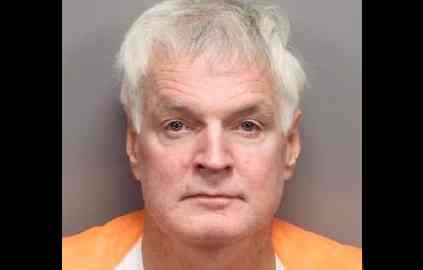
A South Lake Tahoe man accused of bilking 11 investors out of $3.6 million in a fraudulent scheme to buy a Douglas County golf course has pleaded guilty to 24 federal charges, including wire fraud and money laundering.

Scott Summerhays

Scott Summerhays

U.S. Attorney Dan Bogden says 55-year-old Scott Summerhays pleaded guilty Wednesday in federal court in Reno.

From 2008-10, prosecutors say Summerhays told potential investors he was purchasing Genoa Lakes Golf Club near Gardnerville for $17 million.

They say he faked documents suggesting he was a partner with Las Vegas Sands owner Sheldon Adelson and owned $30 million in stock in the Sands, MGM and Berkshire Hathaway. He faces up to 30 years in prison and $5.7 million in fines at his May 29 sentencing before Judge Larry Hicks.


Fire officials rethinking wildland urban interface protection

By Christie Turner, High Country News

Wildfire in the West is getting more severe all the time – burning longer, hotter and more frequently, destroying more homes, stretching federal funds to the limit, endangering more firefighters. Rising temperatures are driving the trend, and there’s no indication things will change course.

Faced with these dire circumstances, 20 of the West’s most influential wildfire experts gathered in Jackson Hole, Wyo., at a closed-door Wildfire Solutions Forum last month in an effort to generate radical ideas on how to lessen future fire danger in Western communities. The theme of the event centered on one question: How can we control the pace, scale and pattern of future development of the wildland urban interface, or WUI? Across the West, 84 percent of this interface – where federal public land abuts private land within a one-third-mile radius – remains undeveloped.

This “84 percent” was a rallying cry for the two-day forum, and symbolized a need to shift wildfire conversation away from the portion of WUI that is already developed. This is breakthrough thinking in the world of wildfire policy, where the priority has been to protect existing communities rather than venturing into the realm of future development.

Read the whole story


Legal workshop for business owners

On Feb. 19 there will be a California legal update workshop for business owners.

Topics will include new employment laws and how they will impact business this year.

Lake Tahoe South Shore Chamber of Commerce is putting the even on with HG Business Law of South Lake Tahoe.

The workshop will be at the chambers conference room at 169 Highway 50, Stateline from 5-6:30pm.

Cost is $20 for members, $30 for non-members.

For more info, contact (775) 588.1728, ext. 312 or searley@tahoechamber.org.


Transit agency may use taxis on S. Shore

By Kathryn Reed

It’s possible that by late spring a taxi could be picking people up instead of an on-demand BlueGo bus.

The Tahoe Transportation District board of directors will discuss altering the service at its Friday meeting.

“We are looking essentially at an additional provider for demand response services,” Curtis Garner, TTD transit manager, told Lake Tahoe News. “We would be looking for private taxi companies using their own vehicles.”

The on-demand drivers make about 1,200 trips a month. To use the service a rider must prequalify. Seniors and those with physical limitations are whom the service is designed for. People who would temporarily need a ride, for instance someone with a broken leg, may apply for service. Each ride costs $3.

While ridership is steady, there are stretches when need is limited. It is during these times that TTD is looking to use the taxi service.

The taxi service would likely cover the entire South Shore.

If the board approves the taxi idea, a request for proposal will likely be sent out Feb. 18 to attract bids. Garner said it is possible TTD could save $14,000 a year.

Notes:

• The TTD board meets Feb. 14 at 9:30 am at Sierra Nevada College, 291 Country Club Drive, Room 141, Incline Village.


Italian wines more popular in U.S. than Italy

By Leslie Gevirtz, Reuters

NEW YORK — Americans are drinking more Italian wines than Italians themselves, owing to the popularity of sparkling wines from the southern European country and millennials.

Italian varieties are the top imported wine in the United States, which is the world’s largest consumer market, according the Italian Wine and Food Institute.

Winemakers attending the Vinitaly trade show in New York said despite such classic Italian wines as Barolo, Brunello and Babaresco, the sparkler Prosecco is the favorite.

Read the whole story


LTCC, LTUSD paving smooth path for students

By Kathryn Reed

One day it may be possible for students at South Tahoe High School to graduate with a diploma and the first two years of Lake Tahoe Community College work completed.

Tom Greene, vice president of academic affairs and student services at LTCC, said there is a national movement to create such a curriculum. It’s for students who learn in nontraditional environments. It would also be a highly structured environment of integrated learning.

The two South Shore education systems are in the early stages of looking into this idea.

This is one example of how LTCC and LTUSD are collaborating. The two boards met together for the first time in more than a decade on Feb. 11. Together the boards, staff and administrators are creating what’s called Pathway-20, or P-20 for short. The goal is to create a seamless transition from K-12, through community college and to higher levels of collegiate study.

“We are probably at the first level. We are able to use facilities on both sides. It saves the taxpayers money,” LTUSD Superintendent Jim Tarwater said.

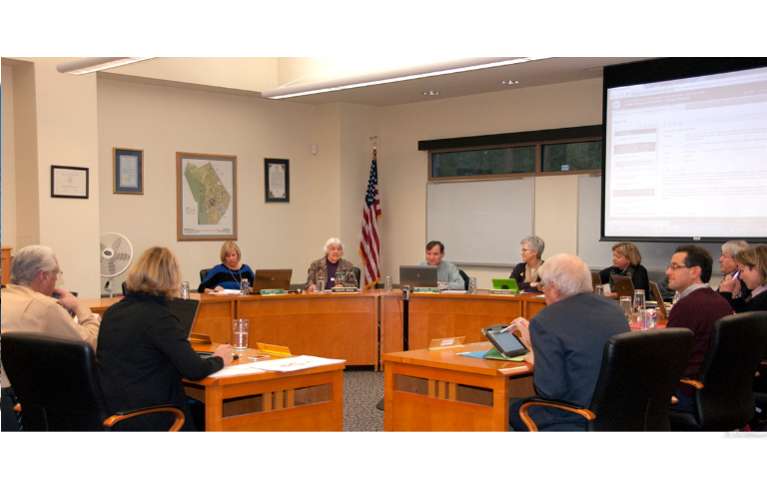
Lake Tahoe Community College and Lake Tahoe Unified School District boards of education meet Feb. 11. Photo/Pat Leonard-Heffner

Lake Tahoe Community College and Lake Tahoe Unified School District boards of education meet Feb. 11. Photo/Pat Leonard-Heffner

Instead of having duplicate infrastructure, the entities share resources. A good example is the state-of-the-art digital arts building at STHS that was put in as part of the $64.5 million facilities bond that was approved a few years ago. The college can use it for classes.

The three areas of study that are linked today are dental assisting, digital media arts-new media, and culinary arts.

Students are the overriding reason to do any of this, according to the educators. It will reduce redundancy in education plans, create a more efficient education system and provide them a road map for life as a student.

Taxpayers benefit by the consolidation of resources. This could also provide more opportunities for students.

With LTCC contemplating a general obligation bond for facilities, it is looking at the possibly of putting lights in at the South Tahoe Middle School field which would benefit LTCC as it grows its sports programs. It has the added benefit of helping LTUSD and the greater community.

The P-20 vision is, “A seamless, efficient educational system that leverages our education, business and community relationships to ensure all students, particularly those underserved historically, achieve their educational goals and enhance their social mobility.”

Already STMS and STHS share a path with digital media. Within LTUSD, the transition will be introduced between the elementary and middle school levels.

Together the education entities are going to apply for a career pathways grant that would provide seed money to help with planning P-20.

Already in hand is a $100,000 grant for the next three years for career technical education pathways that will be used on course articulation and faculty collaboration.

Another $165,000 grant is geared toward adult education. Adult ed fills the needs of those who may have left high school early and need to get their GED, or others who need some help to get into college. The money can be spent on streamlining and leveraging social services, GED-ACT-SAT and other testing services, improved citizenship, English skills, and the creation of short-term CTE training and apprenticeship programs. These are not courses taken for high school or college credit.

The next steps include a formal articulation of career technical education courses, gathering data on students, looking at the cost for high school students to attend LTCC, textbooks, and making the two systems be more aligned.

The expense of textbooks is one of the barriers to college. In college students pay for books, in K-12 they are provided.

In LTUSD almost every student has a netbook. LTCC is not as technologically robust as the K-12. That is a problem that is being addressed.

The idea of selling students the netbook upon graduation has been broached. The ideal scenario is netbooks would be a relevant device when going to LTCC instead of becoming a dust magnet.

Technology is another area where the two institutions have been working. Talks are under way to develop a regional data center that would host equipment for computer servers. Having staffs work together is already taking place.



Opinion: White is a champion with special fans

By Mike Wise, Washington Post

KRASNAYA POLYANA, Russia — What happens when the story you came to write doesn’t become the story anymore? What happens when that story does a 180-degree turn in mid-air, then a 540 and finally a dizzying 1260, spinning your perception completely around?

I had heard Shaun White had become too big for his snowboard bindings. He didn’t hang with other members of the close-knit Team USA community. His “people” shut down halfpipes at ski resorts so White could ride by himself. He wasn’t the cool kid we once called the Flying Tomato anymore, a thatch of reddish-orange hair rising 22 feet off a wall of ice.

No, he was now the Descending Diva — S.W.E., Shaun White Enterprises, the $15-mil-per-year action sports icon — the world’s richest, most famous and now most isolated extreme star.

He needed to be put back in place, I thought. He needed to remember the, well, dudeliness that got him here.

Then the story forked. Maybe I should explain.

About an hour before White competed, I met a freckle-faced, St. Louis kid with a stars-and-stripes beanie and a little miniature flag named Ben Hughes, his mother Liz, and their friend, Kaitlyn Lyles. Turns out Ben and Kaitlyn are here because of the Make-A-Wish Foundation.

Ben got a diagnosis of acute lymphoblastic leukemia at 6 years old. He underwent 2.5 years of radiation and chemotherapy. Before he finished his treatments at the end of 2012, he had found two new inspirations in life: snowboarding and Shaun White. He loved both.

Kaitlyn learned of White while watching the 2010 Vancouver Games on television from her hospital bed at Sacred Heart Children’s Hospital in Pensacola, Fla., where she underwent chemotherapy for osteosarcoma, a rare form of blood cancer.

“I was literally in that hospital room for all of February,” she said. “Shaun White is what really got me through. I loved that even after he clinched the gold medal, he still went for it, trying tricks and refusing to coast when he won.”

Kaitlyn playfully vowed not to leave Sochi before she was Mrs. Shaun White.

Read the whole story


Reconnecting to society can restore happiness

By Christian E. Megrelis

Emotional isolation is a growing problem, with more than one out of three adults aged 45 and older describing themselves as chronically lonely, up from one out of five a decade earlier.

The contributing factors are easy to identify: high unemployment; marriage rate at a historic low; increased reliance on technology over face-to-face communication.

The main problem of tomorrow is that people are becoming inwardly focused and cut off from their neighbors.

The global crisis is not only economical but individual. Especially in the industrialized nations, we are pulling farther away from our human connections to our own detriment.

Emotional isolation, which is on the rise according to a 2010 AARP study, has been found to cause or exacerbate a number of diseases, from Alzheimer’s to cancer, and is as high a risk factor for mortality as smoking.

There’s quality of life to consider as well. Lonely people are not happy people, hence the increased stress that causes physical illness. But we can change, individually and collectively, if we heed the wisdom that has endured for 2,000 years.

Here are five time-tested steps anyone can take to reconnect and restore happiness:

· Work on loving everyone – from the stranger on the bus to your worst enemy. This is difficult, I admit, but you don’t need to do it perfectly to see the benefits. How does one take this from intellectual concept to practice? With humanitarian acts. Stop and help the person who has fallen down. Smile and say something kind to the harried store clerk. And give – not just what’s easy to give, like the old clothes you no longer wear. Share your money, your time, and your resources.

· Don’t judge. Another that’s deceptively simple but gets easier with practice. Passing judgment on others is actually a very selfish act; we do it in order to feel better about ourselves, but it really isn’t effective in that regard,” he says. When you catch yourself commenting negatively about someone else, whether loud or in your mind, stop yourself and consider your own flaws. Honesty demands you focus on and correct those before your neighbor’s.

· Forgive. Holding a grudge or seeking revenge for perceived wrongs is a primitive impulse response. Forgiveness is a cerebral sentiment that comes from the cortex of the brain – the source of reason. Reason is what allows us to resist dangerous primitive impulses in able to achieve more far-sighted objectives, such as social life, which is impossible without forgiveness.

· Do good that makes a difference. Feeling we have no purpose in life or being unsure what our purpose is can lead to despair or indifference often resulting in sterile ambition, delusion or conceit, all of which serve to isolate us from others. We all have a purpose, whether or not it’s easily discernible. Whatever place is yours in society, bring your brick every day to the never-ending construction of a happier world and you will quickly recognize your purpose.

· Have faith. You don’t have to subscribe to a particular religion or follow dogmatic rules to have faith. It’s actually harder than that. Faith is the belief that there is something greater than us, the creator of the world in which we live, guiding all with an order and a purpose. Faith may be – and often is – marked by periods of doubt, but it should be the compass to which you return. Faith brings with it a connection to all other living things.

Achieve, or at least work toward, these five steps and the result will be hope.

Hope is happiness – a state of mind that transcends ordinary happiness.

Christian E. Megrelis holds master’s degrees in engineering, business and political studies. He is the founder of Exa International, a multinational engineering company, and vice chairman of the International Union of Economists. He is also the former vice chair of the United Bible Societies, a major world publisher of the Bible.


Animal Rescue Team looking for members

Washoe County Regional Animal Services is looking for volunteers to join the Animal Rescue Team.

Animal Rescue Team members are a group of volunteers who assist Animal Services staff during times of disaster, help out during special events and participate in day-to-day operations.

When animals are threatened as part of a natural disaster or other emergency, Animal Rescue Team members work side-by-side with Animal Control Officers to help with the evacuation and care of animals that are in the path of danger. Members are also required to work eight shifts per year at the shelter and eight shifts per year on patrol with Animal Control Officers.

Applications are available online. The application deadline is Feb. 25.

Volunteers are required to attend a series of four Saturday training classes. Classes are scheduled from 8am-noon on March 1, March 15, March 29 and April 12.