Miller 3rd in downhill; Squaw’s Sullivan falls

vanolyBy USOC

Bode Miller (Franconia, N.H.) won the bronze medal in men’s downhill skiing at Whistler Creekside Monday afternoon. He got down the hill in a time of 1:54.40, a mere 0.09 behind gold medalist Didier Defago of Switzerland, who posted a 1:54.31. Miller was just 0.02 seconds away from the silver medal, which went to Aksel Lund Svindal of Norway.

Miller’s medal is the first for the US in the event since Tommy Moe’s gold medal at the 1994 Lillehammer Olympic Winter Games and only the third overall. Bill Johnson’s gold at the 1984 Sarajevo Olympic Winter Games was the first time an American medaled in the event.

The time margin between gold and bronze is the smallest in the event’s history, surpassing the 0.11-second interval between Austrian Patrick Ortlieb’s gold and countryman’s Gunther Mader bronze at the 1992 Albertville Olympic Winter Games.

Steven Nyman (Sundance, Utah) was 20th with a time of 1:55.71. Right behind him was teammate Andrew Weibrecht (Lake Placid, N.Y.), who was 21st with a 1:55.74. Marco Sullivan (Squaw Valley, Calif.) took a tumble in the bottom portion of the course but was able to complete his run, finishing 60th with a time of 2:07.76.


Lake Tahoe ski report, Feb. 15

curtisThe men’s downhill will finally be raced today at the Olympics — so get some runs in before finding the nearest TV. Oh, and it’s Presidents’ Day. Here is the ski report from Curtis Fong, the Guy from Tahoe.


Lousy construction and recycling markets hit refuse company

By Kathryn Reed

Garbage companies are not recession-proof.

Empty buildings mean no garbage is being produced. An 11-acre site that used to be bustling with business is now an idle eyesore of concrete and rebar that produces no trash. Construction, other than at South Tahoe High School, is pretty much non-existent on the South Shore. This means no construction waste to dispose of. People aren’t eating out as much. This equates to less waste at restaurants to pick up. People aren’t buying as much, which produces fewer recyclable, especially cardboard.

“It’s a pretty big hit,” Jeanne Lear of South Tahoe Refuse said of not having the convention center or the previous businesses.

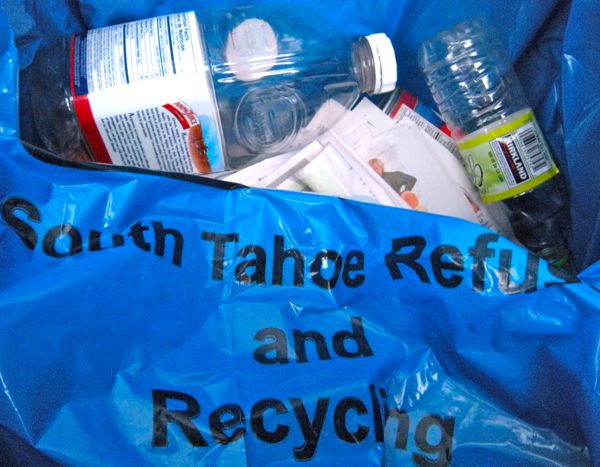
STR calls the blue bag recycling program a success. Photo/Kathryn Reed

STR calls the blue bag recycling program a success. Photo/Kathryn Reed

Building in Tahoe usually means tearing something down. That waste would usually go to STR.

Lear said roofing material would come in on daily basis.

“It came to a standstill last year,” Lear said, saying she could probably count the number of trucks on two hands.

To combat the decline in trash, which in turn is a decline in revenue, the company has cut its contribution to the employee pension fund from 10 percent to 3 percent for the 110 workers. Positions are not being filled.

“We are working on routes to make them more efficient, to have fewer people on trucks and a longer day,” Lear said. “We are encouraging them all to get a commercial license so they call can drive.”

Another hit to the bottom line has been the fluctuating commodities market of recyclables. Plus, California this year reduced what it will pay for recyclables.

In July 2008, paper was worth $187 ton, it dropped to $46 a ton in January 2009 and was at $116 a ton in December 2009. Aluminum, in those same time periods, was at $1,908 at ton, $679 and $1,200.

“The value of recyclables doesn’t cover the cost,” John Marchini of STR said.

With trash pickup mandatory in the city limits and the lake portion of El Dorado County, STR can count on a certain amount of income each month.

But in Douglas County it is facing an issue that many jurisdictions are grappling with – fewer or smaller cans to pick but the same amount of waste because it’s been separated out as recycling.

“Trucks still have to go out, but there is less revenue from the waste,” Marchini said.

But STR is happy with the blue bag program, calling it a success. The material is cleaner than separating it on the conveyor belt with all of the trash, though that is still done.

Most of the materials recycled in South Lake Tahoe end up filling otherwise empty cargo container ships headed for China. There it is turned into a slew of goods that is exported back to the United States and elsewhere.


Whistler-Blackcomb defines big-mountain skiing

By Susan Wood

WHISTLER, British Columbia –The stiffest competition for Lake Tahoe athletes and others showing their stuff at the 2010 Winter Games may not be with each other. It may be sharing the spotlight with the mountain, or mountains.

As the largest ski area in North America, Whistler Blackcomb located in Canada’s Coastal Mountain Range is hosting the Olympics in a grand way — much like the beauty of its scenery and magnitude of its terrain. It’s steep, deep, vast, inviting, gorgeous and involves a level of concentration few ski mountains in the United States command.
wh-4

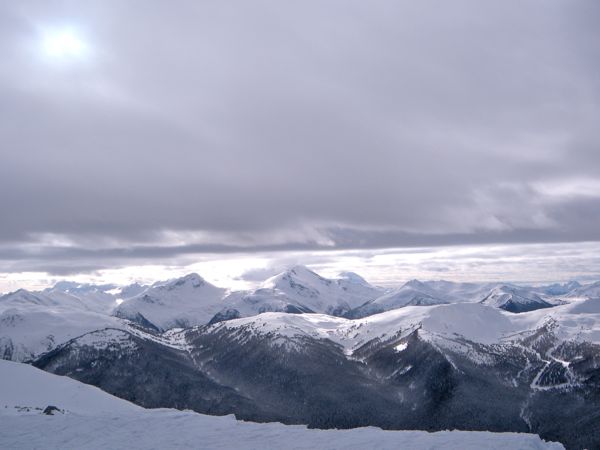
Views from Whistler-Blackcomb are stunning in all directions. Photos/Kathryn Reed

Nearly double Heavenly Mountain Resort’s 4,800 acres of terrain, and you have Whistler-Blackcomb mountains, which are linked by the $52 million Peak-2-Peak Gondola that can whisk 28 skiers and boarders — 4,100 per hour — from the high elevation of one to the other in 11 minutes.

The views, including those provided from the nearly 3-mile gondola that opened in December 2008, offer something out of the most dramatic scenery in Europe — Zermatt, for example. The Switzerland ski area boasts the world’s longest run, 8 miles into Italy. Whistler is a close second with a 7-mile connection of runs from Sidewinder to Upper and Lower Olympic runs. The mountain’s summit to base adds up to a 5,000-foot vertical drop from 7,494 feet to the 2,140-foot bottom.

Traversing to other trails is refreshing compared to some Tahoe resorts. The terrain heads where it’s supposed to — down. For skiers and boarders wanting to get down and dirty on the slopes, the angles — at times 45-plus degrees — along with the degree of difficulty, make it challenging.

Skiing Whistler is like being in the center of a magical vista of rugged, jagged peaks that seem to envelop the resort.

And the beauty of this Winter Games venue goes beyond the stunning scenery of white-capped mountains. Ninety percent of this massive ski resort will be open while competition is going on. The men’s and women’s downhill runs, along with the super G and giant slalom courses, lay near to one another or overlap above the Whistler Creekside area. (See Lake Tahoe News archives for a firsthand look of the downhill courses.) This leaves the Whistler Village base and all of Blackcomb Mountain to ski during the Olympics.

Even the Whistler Sliding Centre — which features the bobsled, luge and skeleton runs — was built in the lower elevation above the tubing park outside the ski area boundary. The Nordic events, including the ski jumping, are set for Callaghan Valley just south of Whistler.

And the freestyle and snowboarding events such as skiercross and halfpipe competitions will be staged at Cypress Mountain just north of Vancouver. Organizing committee officials were feverishly trucking in loads of snow placed over hay bales and wood to support the terrain parks for the event, as Cypress Mountain’s lack of snow and pounding rain became an issue in mid-January. (Lake Tahoe News recently witnessed the construction effort.)

But the British Columbia resort of Whistler, 90 miles north of Vancouver, is having a banner year of snow. Shortly before hosting the world’s premier sporting event, more than 32 feet had collected. That’s about the seasonal average in most years.

And although the ski resort was experiencing a bit of a pre-Olympic lull like many host cities do, the Martin Luther King holiday weekend brought out record crowds to enjoy the windfall of soft snow. Whistler logged three times its usual number of customers with more than 21,000 riders hitting the slopes. The holiday turned out to be busier than Christmas.

The snow in mass quantities has covered much of the trees and most every bowl and glacier. Blackcomb has two glaciers, a namesake and Horstman. There, mountain host tour guide Susan Sommer reminded her group they were standing on 200 feet of glacial ice situated between the Jersey Cream Express and Glacier Express chairlifts.

No need for “express” in the chairlift names. All the lifts are fast, faster than what many U.S. resorts tout as high-speed.

Lighted boards placed in convenient areas tell a visitor what’s open and closed. They also indicate the length of wait in lift lines.

Little things like having the lift lines taper into a single shoot by strategically placing barriers to force skiers to merge makes for a more pleasant experience than the pushing-shoving herd mentality in Tahoe, or dealing with less than efficient lifties who can’t seem to get people to fill a chairlift.

Friendliness is another component of Whistler that seems to be as big as the mountain. The employees, the locals, the tourists — everyone is friendly.

And the skiers — who dominate in number over snowboarders — are predominately at a high skill level. That’s not to say all are. But even the little tykes in ski school were taken in and out of the trees and through the multiple, massive terrain parks.

And if you’re lucky enough to catch a powder day, Whistler-Blackcomb can make every run a giddy experience.

It’s easy to fall in love with Whistler’s sweeping views and challenging terrain. Blue runs would be considered black throughout much of the United States. One that goes off the charts in expert terrain is off the 7th Heaven Express chairlift. A ridgetop peninsula stops at a sheer drop in both directions and is fondly referred to as Proposal Point. A little folklore says men were thought to have proposed marriage at the cliff. If the prospective mate said “no” to the suitor, she’s pushed off.

John from England, who was on the free tour, told Sommer he thought she called it “disposal point.”

“I don’t think I like the sound of that,” he joked.

From the Hughes Heaven and Crystal Traverse trails to the Ridge Runner and Cruiser runs, Blackcomb offers spectacular views and many options for terrain that extend to Whistler mountain’s four bowls and cute names for runs like Doom and Gloom and Grande Finale.

“You can come up here the rest of your life and never get tired of it,” Sommer said, glancing off to the distant mountains from Blackcomb. The tour guide, who has lived in the Whistler area for 34 years, pointed out the Black Tusk — a volcanic cone of molten ice.

It’s recommended a visitor make time on vacation to grasp all there is to offer at Whistler because even three days on a well-worth-it $93 adult lift ticket does not cover it — especially if electing to go in for lunch in the resort’s 17 restaurants. Both mountains have two large-scale mountain restaurant-retail complexes — the Rendezvous on Blackcomb and Roundhouse on Whistler. Others are smaller like the Crystal Hut at Blackcomb’s mid-mountain, which touts the waffle zone for its infamous breakfast meal.

The food choices are phenomenal, their prices are less than in the States and no smoking signs make it clear what the priority is. A variety of accents can be heard on the slopes and lodges.

Scott Wright, who originally hails from the Fresno area, brought his family of six to the slopes from New Zealand.

“We usually go to Colorado, but this is a better value,” he said, while exiting a chairlift. Wright was able to get a direct flight from Auckland to Vancouver. He also commented on the lodging and food being less expensive at Whistler than Aspen.

Tahoe roots exist

Whistler-Blackcomb ski area was inspired by a trip to the 1960 Squaw Valley Olympics by Franz Wilhelmsen, whose name graces the women’s downhill run. He formed Garibaldi Lift Limited with the intention of creating a ski area on what was called London Mountain in Whistler.

It was renamed Whistler Mountain in August 1965 in honor of the local alpine marmot who whistles when it communicates. Whistler opened for skiing in 1966, and its neighbor Blackcomb Mountain threw open its gates 14 years later.

Now the mountain has 38 lifts, including two T-bars and the latest Peak-2-Peak Gondola. The latter is the showcase lift for skiing and sightseeing.

Below the gondola, the Fitzsimmons Creek meanders through a deep valley where a renewable energy project plans to offset the total annual energy consumption of the resort — 33 gigawatts of power. Sustainable practices are a part of the plan here, with recycling programs that include using ceramic mugs for hot chocolate. With that, the resort was able to reduce its single-use cups by 833,100 cups in one year during the season beginning 2008.

Kathryn Reed contributed to this story.

ngg_shortcode_0_placeholder


Benefit concert for Haiti at Horizon

James Crawford & Friends presents Hands and Hearts for Haiti a benefit concert for disaster relief in Haiti.

Date: Feb. 27

Time: 11am-6pm

Where: Horizon Convention Center, Stateline

What: More than a half dozen bands will play all day

Cost: $10, tickets at the door or contact James Crawford at (530) 543.3342 or Paige Rice at (530) 543.1903

All proceeds go to The Salvation Army — Haiti Earthquake Fund.


Snippets about Lake Tahoe

Julia Mancuso

Julia Mancuso

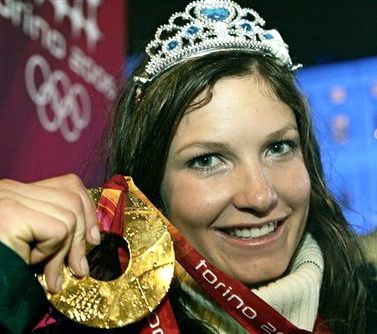
  • Squaw’s Julia Mancuso, who is in Vancouver to compete in the Winter Olympics, has launched Kiss My Tiara underwear line. It evolved from the lucky underwear she wore in the 2002 Salt Lake City Games and from wearing a tiara at the 2006 Turin Games.
  • Assemblyman Ted Gaines, R-Roseville, who represents Lake Tahoe in the California Legislature, is accepting nominations until Feb. 17 for a woman in his district to be California Woman of the Year. Email suggestions to: assemblymember.gaines@assembly.ca.gov.
  • South Tahoe High School senior David Butler came in first in the El Dorado County Poetry Out Loud contest. He will compete in the state finals in Sacramento on March 15.
  • Canoe and Kayak magazine named Jason Craig of Reno the Best Paddler of Tomorrow. Last fall, the 16-year-old won his first world title.
  • Nevada Lt. Gov. Brian Krolicki stated last week he is not seeking Sen. Harry Reid’s seat.
  • Errol Kerr of Truckee carried the Jamaican flag in the Opening Ceremony of the Winter Games on Feb. 12 — the country he is skiing for.


Incline crab feed nearly hits goal of zero waste

By Madonna Dunbar

Can you imagine throwing a big party, providing a bar, feeding 400 people a three-course dinner – and ending the night with only fourbags of trash from the whole event?

Though it sounds impossible, this is exactly what happened at the Incline High School Booster’s 26th Annual Crab and Pasta Feed on Feb. 6.

It is a Zero Waste Event success story.

So how was this done?

First, the planning committee for the Crab Feed decided that “going green” was an important consideration that needed to be expanded from the previous year’s initial green initiatives.

The committee members then worked closely with Incline Village General Improvement District’s (IVGID) Waste Not Programs to plan the evening’s ‘Zero Waste’ efforts. Since this event historically relied heavily on the use of disposable serviceware, a commitment was made to purchase compostable serviceware – which could be collected with the food waste (including all the crab shells) for compost processing. This meant that the cups, plates, utensils, napkins and even the crab bibs that were purchased – were made from plant-based sources. Compostable serviceware is made from renewable sources such as potato, corn and bamboo; all are non-petroleum and non-styrofoam items.

These compostable items are readily available online and can now be found at local grocery stores.

Figuring out the recycling system was a little easier. The Lake Tahoe region now entirely uses a single stream, blue bag collection method, so all the cardboard, paperboard, glass, aluminum, hard plastics and non-compostable cups from the evening festivities could be collected for recycling.

The night of the event – the Waste Not staff, plus two enthusiastic AmeriCorps volunteers, set up waste sorting stations. These stations had one collection can each for: compostables, recyclables and trash. The student servers and event volunteers were shown how the to sort the materials.It got pretty hectic as the night progressed and the dinner courses were served and cleared, but everyone participated and learned it was an easy system to follow.

Through the careful planning of the dinner service itself, and the use of this three-part collection system (compostable/recyclables/trash) – this large scale event; which would have easily filled an 8 yard dumpster full of trash – became a low impact event.

The event’s 36 bags of compostables were stored in four 96 gallon BearSaver carts and delivered to Full Circle Compost’s industrial composting facility in the Carson Valley to become rich, vibrant soil.

The 16 bags of collected recyclables were diverted for re-processing instead of being dumped in a landfill. So the same amount of materials that would have been waste, instead became a source of renewed resources.

So what was in the trash anyway? There were some non-compostable cups used by mistake for the appetizers, plastic wrap, plastic food bags, the foil wrappers off the butter pats and the hand wipe packets, latex gloves, wine bottle collars, plastic wine corks, and the gunk from the dishwashing food trap.

The night’s results:

  • 36 bags of compostable material averaging 40 lbs/bag = 1440 lbs. of compostables
  • 16 bags of mixed recyclables: (5 bags w/glass averaging 40 lbs/bag + 11 bags at 20 lbs./bag) = 420 lbs. of recyclables
  • 4 bags of trash averaging 25 lbs./bag = 100 lbs. of trash
  • 1,860 pounds of diverted material; only 100 pounds of trash sent to the landfill
  • Greater than 95 percent reclamation/diversion
  • That’s less than 5 ounces of trash per attendee, not fully zero waste, but darn close.

For more information about the Lake Tahoe Zero Waste Project, please contact IVGID Waste Not at (775) 832.1284 or email wastenot@ivgid.org.

Madonna Dunbar works for the IVGID Waste Not program.


USFS may keep gates to recreation areas open longer

Updated Feb. 15 7:35am with link to USFS site.

The U.S. Forest Service is seeking public comments on a proposal to modify road gate opening and closure dates to 20 recreation areas within the Lake Tahoe Basin Management Unit.

The open and close dates are displayed within the Motor Vehicle Use Map (MVUM) that the Forest Service uses to inform the public of roads that are available for public access primarily during the spring, summer and fall.

Proposed changes of the dates listed in the MVUM will allow the Forest Service more flexibility in opening gates earlier in the spring and closing them later in the fall, depending on weather and other environmental factors. Click here for details.

Areas affected by the proposed changes are primarily recreation areas such as beaches, campgrounds and some recreation residences and organization camps. Other areas include the Valhalla Historic Site, and the Taylor Creek Visitor Center and the Camp Richardson Corral.

The full list of proposed changes to the MVUM are available at the Forest Service Supervisors Office at 35 College Drive, South Lake Tahoe.

Provide comments to Garrett Villanueva at (530) 543.2762 or gvillanueva@fs.fed.us before March 3.


Lake Tahoe ski report, Feb. 14

curtisHappy Valentine’s Day! Go find some love on those slopes at Lake Tahoe. Here is the ski report from Curtis Fong, the Guy from Tahoe.


South Tahoe CrossFit overcomes issues with city

By Kathryn Reed

Having a cashed check in hand for a business license in the city of South Lake Tahoe does not mean a business will get the license.

Owners of CrossFit gym learned that the hard way.

The gym opened last summer on Shop Street. They filled out the paperwork, paid the city its fees. About two months later a letter arrives from the Finance Department saying a gymnasium is a non-conforming use in the industrial area.

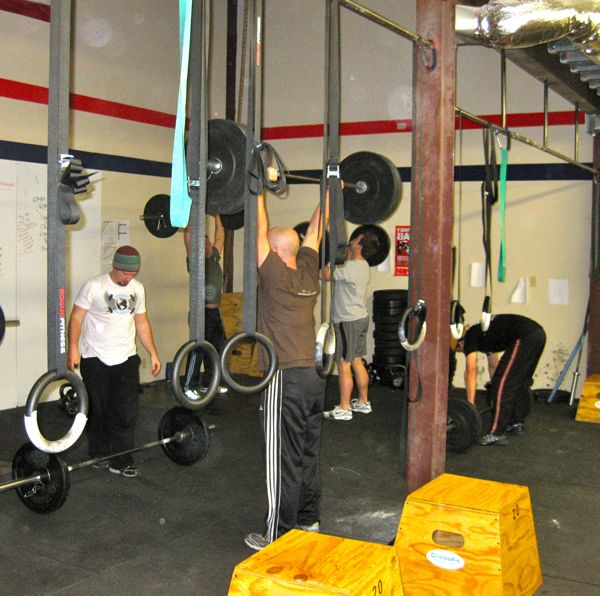
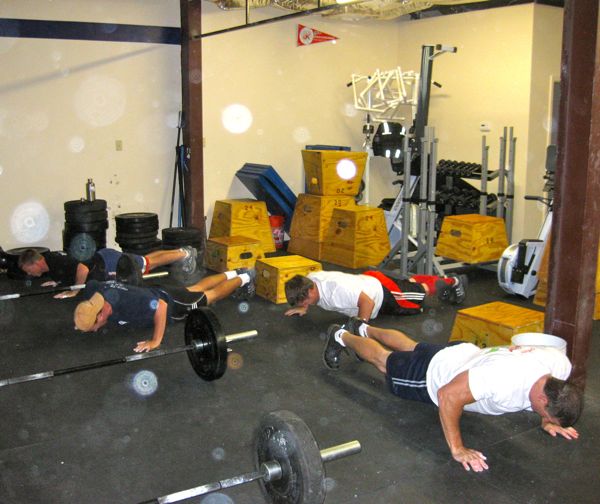
CrossFit does not have traditional weight machines. Photos/Provided

CrossFit does not have traditional weight machines. Photos/Provided

Back to the city offices went the owners.

“They came to the front counter and we showed them the Industrial Area Community Plan. We showed them other areas where they could go,” explained Hilary Hodges, planning manager for South Lake Tahoe.

The owners — Tim Anderson, Matt Johnson, Tom Modenhauer and Weldon Wulstein — were in the process of appealing the planning staff’s denial of a business license just as the business was growing.

In December, South Tahoe CrossFit moved to Dunlap Street at the corner of James Street — where city code allows it to be. Anderson says the current location is about five times as big as the old site.

A city Finance Department employee said the business license application for CrossFit is under review.

“We are tax paying and law abiding,” Anderson said. “You would think economic success should be applauded. We are doing something that is good for people.”

It is the city’s policy to cash checks before the Planning Department has reviewed the paperwork. That is where the confusion is. Business owners have a receipt for money paid, are not told by the city not to operate, and have most likely signed a lease. A physical address for the business is necessary for the city to issue the license.

“Usually if people are on top of it they will come in and ask (about zoning and other issues) before they sign a lease and open a business,” Hodges said.

Anderson et al decided to open South Tahoe CrossFit because they believe in the philosophy of the workout.

Pushups are routine at South Tahoe CrossFit.

Push-ups are routine at South Tahoe CrossFit.

“Instead of a big gym crammed full of equipment, we don’t have machines except for one rower,” Anderson explained. “The rest is bar bells, kettle bells, a big pull up bar. We do things with rings. Our workout is inherently different.”

People workout in small groups with a trainer, often doing the “workout of the day.” Different ability levels may workout together, but one person may be doing box jumps 12-inches high while another is at 30 inches.

“It is intense. That’s why you can get done in 20 minutes,” Anderson said. “We’re all about working across multiple joints and muscle groups. I defy anyone to say your heart rate isn’t up.”

For more information about South Tahoe CrossFit, click here or call (530) 541.2341.

CrossFit is based in Washington, with gyms in Round Hill and Tahoe Vista, too.