Natalie Cole to perform at LT Music Festival

The 28th season of the Lake Tahoe Music Festival gears up for its concert series with the first artist announcement, Natalie Cole performing Aug. 5 at Northstar-At-Tahoe.

Combining R&B, jazz and pop sounds, the nine-time Grammy Award-winner joins the summer festival’s six-concert season taking place July 22–Aug. 7 at venues throughout north Lake Tahoe and Truckee.

Tickets are $37.50 for general seating and $63 preferred. They go on sale March 15 here, by phone at (530) 583.3101 or at the Music Festival office, located at 10775 Pioneer Trail, Suite 210 in Truckee.


El Dorado County seeks grant to upgrade Rubicon Trail

The El Dorado County Department of Transportation and El Dorado County Sheriff’s Department are applying to the California Department of Parks and Recreation, Off-Highway Motor Vehicle Recreation Division for the 2009-10 grants program for funding of projects on the Rubicon Trail.

The 30-day public review and comment period for the 2009-10 Grants and Cooperative Agreement Program begins March 2 and ends April 5. This period provides an opportunity for the public to review the preliminary applications submitted to the OHMVR Division for consideration during the current grant cycle.

The public may provide comment to the applicant and the OHMVR Division by emailing Vickie Sanders at vickie.sanders@edcgov.us and copying the OHVMR Division at OHVinfo@parks.ca.gov.


Fast run by Mancuso not good enough for podium

vanolyBy Dale Robertson, Houston Chronicle

WHISTLER, British Columbia — Saddened by events far beyond these slopes, Julia Mancuso won the battle but lost the war today. Although she posted the fastest time of the weather-postponed second giant slalom run among all the leading contenders, she had started from too deep of a hole to ultimately salvage a medal in the event she won four years ago in Italy.

Mancuso went down Whistler Mountain with a 1.3-second deficit to Austria’s Elisabeth Goergl and, in the end, finished 0.55 seconds slower than Viktoria Rebensburg, who came from sixth place to win Germany’s second gold medal in Alpine skiing.

Read the whole story


Mancuso to show off Olympic hardware at Northstar

North Lake Tahoe native Julia Mancuso, with two silver medals and a possible third, will be at Northstar-at-Tahoe Feb. 28 at 4pm to celebrate her success at the 2010 Winter Games in Vancouver.

To honor Mancuso’s success and celebrate the domination of U.S. athletes at the 2010 Winter Games, Northstar Resort will host Jo Mama on the village stage in the early afternoon and then Colorshow, a Tahoe band with deep ties to Mancuso, in the early evening.

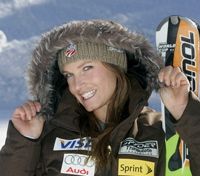
Julia Mancuso

Julia Mancuso

Mancuso will offer a greeting in the Village at Northstar in between the two shows and will then relax and enjoy the music with the crowd.

There will also be a raffle with all proceeds benefiting Mancuso’s Snow We Livin Foundation, a nonprofit whose mission is Fun, Focus, Fitness and Well-Being for Life. Mancuso branded merchandise will also be for sale.


Lake Tahoe ski report, Feb. 25

curtisPlenty of snow and blue sky today, with more white stuff on the way Friday afternoon into Saturday. Here is the ski report from Curtis Fong, the Guy from Tahoe.


Full moon snowshoe on West Shore

Full moon snowshoe with California State Parks rangers at the Hellman-Ehrman estate and along Lake Tahoe’s West Shore.

A beginner’s clinic is at 6:30pm Saturday and March 27, followed by hikes at 7pm both nights.

Cost is $12, free for children 12 and younger.

For reservations, call (530) 525.9920.


KTHO — Ask the TRPA

kthoCall in to KTHO FM 96.1/AM-590 (530.544.8255) this morning starting at 10:15 when Lake Tahoe News Publisher Kathryn Reed moderates the Ask the TRPA radio show. Or listen online at www.kthoradio.com.


Chancellor paints dim picture of state community colleges

By Kathryn Reed

Community college enrollment is declining, but it has nothing to with demand decreasing.

California Community Colleges Chancellor Jack Scott spoke with the media Wednesday, outlining his predictions for the future of the 112 two-year schools – which is the largest system of higher education in the country.

After a peak enrollment of 2.89 million students in 2008-09 and three consecutive years of increases, the system is on track to post a 1 percent decline for the 2009-10 school year. It’s expected to go down even more in the 2010-11 school year.

Jack Scott

Jack Scott

This comes at a time when California high school graduates are at record levels, with the class of 2010 predicted to be larger than last year’s.

“Really, we have the perfect storm in terms of enrollment,” Scott said.

The problem is the 8 percent cut by the state this fiscal year, or $520 million, means colleges have to cut courses. This comes at a time when workers want to be retrained and more high school students need community colleges because the University of California and California State University systems have placed caps on the number of students they will take.

“Right now we are estimating we will educate 200,000 student for which we will receive no re-numeration from the state. This is not something we can continue to do,” Scott said.

He said some colleges have reported 50 percent of their students unable to enroll in the classes they need because not enough sections are offered to meet the demand.

Lake Tahoe Community College budgeted 65 unfunded students for this year. The local board was told Tuesday that number so far is really 236. LTCC’s enrollment is bucking the state trend, with it up 7.3 percent to 4,673 students.

LTCC cut 48 classes from this winter quarter compared to the previous year and will eliminate 64 in spring quarter.

“We need to plan for a small amount of unfunded growth,” Susan Middleton, LTCC dean of student services, told the board.

The chancellor’s office and others in Sacramento want to make sure the two-year schools focus on their mission – preparing students to transfer to a four-year college, basic skills and career technology.

When Lake Tahoe News asked Scott if this decree means taking the “community” out of community college in places like Lake Tahoe that have a robust student population that likes to take recreation oriented classes, the chancellor said, “it’s a matter of priorities.”

Scott said English and history need to come before aerobics.

LTCC is one of many colleges planning to tweak summer school offerings as a way to cut expenses. It’s likely multiple sections of a subject will not be offered and class sizes will increase.

“I would imagine during the summer months some colleges will close buildings that are not used in the summer months,” Scott said.

Scott is in a unique position of leading this education system because he is a former college president as well as past member of the state Assembly and Senate.

Still, he is less than optimistic about what will happen if the state continues to cut higher education.

“This divestiture from higher education in California won’t meet future work force needs,” Scott said. “I read a report by the Public Polity Institute that estimated by 2025 we will have 1 million fewer college graduates then what the economy needs.”

Gov. Arnold Schwarzenegger has proposed an increase in funding for community colleges that would add $126 million to the bottom line, which equates to 60,000 students. But what the May budget revise will look like remains to be seen.


Millions of dollars at stake to improve Lake Tahoe

By Kathryn Reed

“This was really an important day for Lake Tahoe,” Joanne Marchetta said after Wednesday;s Senate committee hearing regarding the reauthorization of the Lake Tahoe Restoration Act.

As executive director of the Tahoe Regional Planning Agency, Marchetta was one of three people from Lake Tahoe at the hearing in Washington. The others were Julie Regan with TRPA and Patrick Wright, executive director of the California Tahoe Conservancy.

Wright, with input from the TRPA folks, addressed the Senate Committee on Environment and Public Works, which is chaired by Sen. Barbara Boxer, D-Calif.
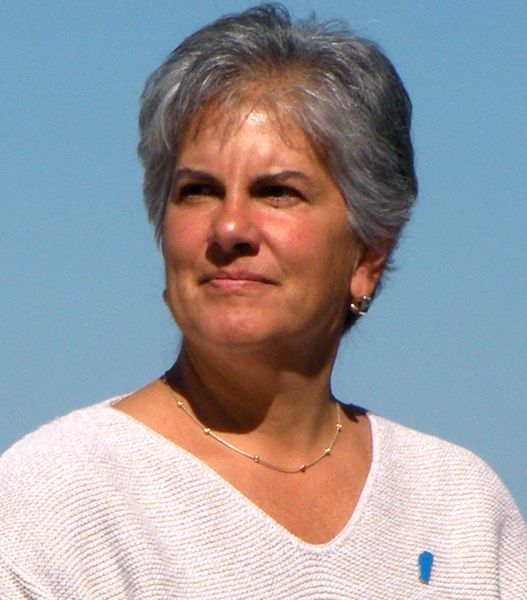
Joanne Marchetta

Joanne Marchetta

Click here to read his testimony.

“What we are trying to do is raise the profile of Tahoe to stand up there among all other watershed restoration projects,” Marchetta told Lake Tahoe News in a phone interview from Washington. “It’s all based on building state, federal, local and private partnerships. We made that point. We have strong partnerships in Tahoe and we are going to build on that. We can show results.”

The lake’s other senators — Dianne Feinstein, D-Calif., Harry Reid, D-Nev., and John Ensign, R-Nev. — all spoke in favor of the bill that would bring $415 million to the lake over eight years for invasive species, lake clarity, fuels reduction and erosion control projects.

“Another way to think about this is it is in fact a jobs bill,” Marchetta said. “Our community in Tahoe is suffering from the recession like the rest of the nation. This money means we can infuse dollars back into the local economy, to put people back to work. These are jobs for the construction and restoration folks, people who want to work on road projects, engineers and designers.”

Lake Tahoe was one of five watersheds in the country asking the committee for its blessing during the nearly three-hour hearing.

None of the other regions had the show of force that Lake Tahoe did on Wednesday.

“All of the questions were about accountability. We are already out ahead of the pack on accountability and we will only strengthen those programs,” Marchetta said. “We hope to leverage more monitoring money out of this authorization.”

Having 10 years worth of science to show the senators seemed to go a long way. The first Lake Tahoe Restoration Act was passed in 2000 after then-President Bill Clinton in 1997 launched what is now the annual Lake Tahoe Environmental Summit.

Feinstein told her colleagues how in 1997 the clarity of Lake Tahoe was to a depth of 64 feet, and it’s at nearly 70 feet now. In 1968, it was 102 feet.

She rattled off numbers like the 300 projects that were completed in the last decade with the $1.4 billion public-private partnership at the lake, the 739 acres of wetlands that have been restored, the acres of fuel reduction and habitat restoration, and the efforts to reduce fine sediment from reaching the lake.
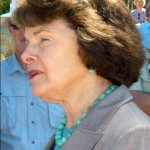
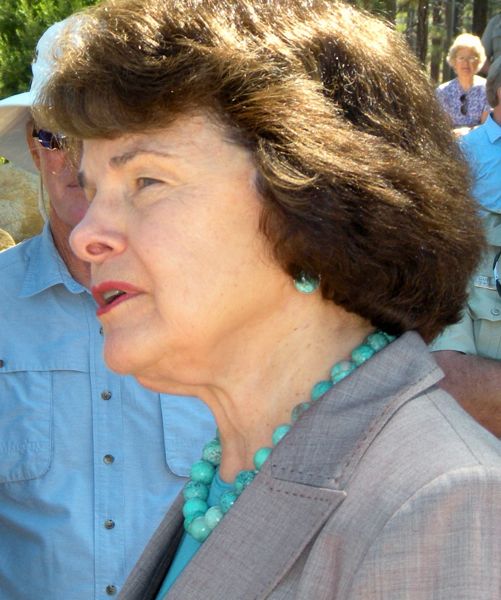
Dianne Feinstein

Dianne Feinstein

“Much work has been done, but much work lies ahead,” Feinstein told the panel.

Just like when she spoke at last summer’s summit, Feinstein reiterated the need to continue thinning the forest to avoid another catastrophic fire like the 2007 Angora Fire, and putting money toward the potentially devastating quagga muscles and other invasive species.

“We have 10 years of science that tells us exactly where our highest priority projects are. That bodes well for convincing people Tahoe is the right place to spend money,” Marchetta said.

Ensign expressed satisfaction that projects have not been based on personal wish lists, but instead on the science.

“Lake Tahoe is a national treasure and it needs national attention,” he said.

Other people testifying on Wednesday were Peter Silva, assistant administrator for water with the EPA; Harris Sherman, undersecretary for Natural Resource and Environment; David Dicks, with Puget Sound Partnership; Pete Grannis with New York Department of Environmental Conservation; Debrah Marriott with Lower Columbia River Estuary Partnership; David Naftzger with the Council of Great Lakes Governors; John Tauzel with New York Farm Bureau; and David Ullrich of Great Lakes and St. Lawrence Cities Initiatives.

Invasive species is a threat to all of the bodies of water. The threat of wildfire, especially in relation to water quality, set Lake Tahoe apart. The other entities also don’t have the extensive private-public partnership like Tahoe does.

The committee will vote on the bill. Assuming it passes, it goes to the full House. The House authorizes expenditures, so it may mean more lobbying in Washington by Lake Tahoe officials to convince lawmakers to spend the money. Funds aren’t likely to be allocated until fiscal year 2012.

“We think we have a really good shot to get this bill passed,” Regan said. “We have strong bipartisan support. Our clarity is showing a more stabilizing trend. That is a really good story to tell.”


Incline woman pleads not guilty in husband’s fatal stabbing

By Reno Gazette-Journal

A 72-year-old Incline Village woman accused of fatally stabbing her elderly husband last year was scheduled a Valentine’s Day 2011 trial.

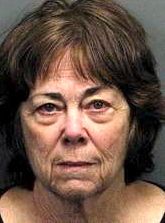
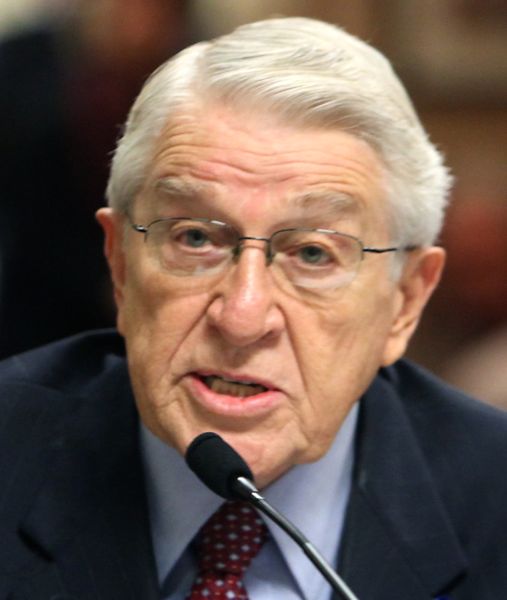
Mary Arlayne Baymiller pleaded not guilty of murder Wednesday during her arraignment in Washoe District Court. She is accused of stabbing her husband, Charles Baymiller, 73, up to 200 times in a rage possibly motivated by her mental anguish over his dementia, and

Mary Baymiller

Mary Baymiller

financial worries, according to court records.

Read the whole story