Box lunch fund raiser benefits CASA

Child advocates of El Dorado County is having its annual box lunch fundraiser April 10.

Volunteers will deliver 3,000 lunches from Pollock Pines to Rancho Cordova by noon that day.

Funds raised will help pay for recruiting, training and supporting new advocates to help more abused and neglected kids in El Dorado County get into safe, permanent homes.

CASA is a nonprofit organization providing court mandated advocate services to approximately 350 children annually removed from their homes by the juvenile court system due to abuse or neglect.

For more information, go online.


Community vision, determination brought college to South Lake Tahoe 40 years ago

By Kathryn Reed

No was not a word people who wanted a community college in South Lake Tahoe were willing to embrace. Their tenacity paid off and this year Lake Tahoe Community College District is celebrating its 40th year.

As Los Rios Community College District was forming in the 1950s there was a push to have all of El Dorado County be part of it. But Nels Nelson convinced the powers that be that it didn’t make sense for Tahoe to be included.

Besides the legacy of a hardware store in town that bears his name, Nelson has a bench in his honor near the college’s Demonstration Garden that was donated by his daughter Anne Johnson.

Had he not been so persuasive, South Lake Tahoe might be like Placerville, a city without a college and part of a district that doesn’t make sense.

It was in the 1960s that serious discussions began about having a community college in town. Ann and Bill Harriman had two children in high school and didn’t want to have to send them out of town. They approached Lake Tahoe Unified School District officials about starting a community college.

Superintendent Tony Magliari and Business Manager Bill Hauck were completely supportive of the idea. A committee was put together to figure out how to do this, what was needed and gather support of the community.

Magliari went before the state board of education on Dec. 15, 1967, with the proposal and was told “no”.

Not giving up

The idea cooled off for a bit until legislation was passed saying every area in the state must belong to a community college district. The state thought Tahoe, Alpine County and Mono County should be a district. Alpine County residents weren’t thrilled with this idea.

The El Dorado County Committee on School District Organization spent about three years studying what would be best for the area. Roberta Mason, LTCC board member, and Gene Bellisario were the Supervisor 5 committee members. Each of the five supervisorial districts had two members on the committee, plus there was one at-large member.
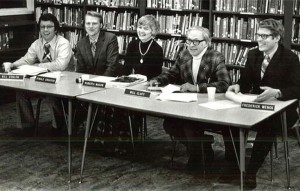
“First Board” is the very first Board of Trustees, voted in on March 5, 1974. Caption should read: from left to right, William Conlon, Rev. Donald Swanson, President Roberta Mason, Dr. Will Cluff, and Dr. Fritz Wenck. So Roberta was our very first Board president, and she was sworn in as Board president once again for this year. Photos/LTCC

LTCC’s first elected board: William Conlon, Donald Swanson, President Roberta Mason, Will Cluff and Fritz Wenck.Photos/LTCC

Mason said the reason the state wanted areas to be part of a district was to collect more taxes. Those outside a district paid 10 cents per $100,000 of assessed property per year, while in districts the tax could be 90 cents.

The state said “no” again to Tahoe when advocates lobbied for a solo district.

Then state Sen. Claire Berryhill arranged for a special election where Tahoe and Alpine County would vote on the district. But it was up to the Alpine County superintendent to call the election because the Legislature had said the county with the largest geographic area was in charge. Alpine stalled; ranchers didn’t want higher taxes.

Hazel Hoak, assistant superintendent of schools for El Dorado County, got involved.

“She and I went to court to force Alpine County to call an election,” Mason told Lake Tahoe News. It worked.

A radio campaign was launched to convince voters. Brooke Laine, who was 9, and David Foster’s kids did some of the spots, saying how they wanted to one day go to a local college. Dick Shehadi was the main outspoken opponent to the college district.

A college in South Lake Tahoe

On March 5, 1974, voters in the Tahoe area of El Dorado County and all of Alpine County were asked if Lake Tahoe Community College District should come to fruition. Tahoe said “yes” and Alpine “no”.
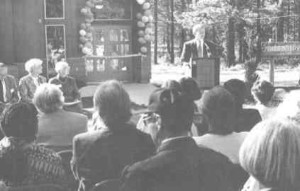
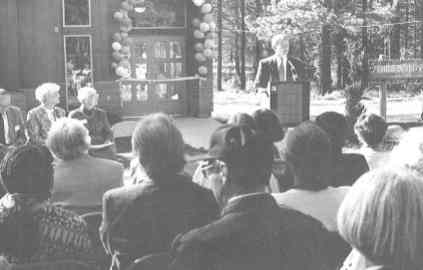
“CDC opens” is the Child Development Center’s grand opening, w/then-President Guy Lease doing the honors. September 1993

Then-President Guy Lease opens the Child Development Center in September 1993.

They also voted for the first board, with one seat for an Alpine County rep. Since that county said no to the district, the board started with four members. They were Mason, Donald Swanson, Will Cluff and Fritz Wenck. Wenck is also still on the board. In a special election for a fifth member, Bill Conlon was elected.

Mason was the first board president. She is also the current president. Her plan is to not run again when her term expires at the end of the year.

With the creation of the college district, it meant property owners would be paying 72 cents for every $100,000 of assessed value.

Hoak, who lives in Shingle Springs, filled in as interim college president until the board hired someone.

Mason said that was the board’s biggest decision – who to hire. A consultant was brought in to help find a president and figure out a salary.

“Jim Duke came to the top because he had quite a bit of experience with starting community colleges and four-year colleges,” Mason said. “Fritz and I were selected to make an offer to Jim.”

Duke’s response was that he was already making more than what was being offered. A second offer was made and Duke left Canada College in the Bay Area. He started with LTCC in September 1974. The county advanced the district the money to pay him and for some other start up costs.

“We had nothing but a post office box,” Mason said. “Jim said I’ll have a campus in eight years.” He missed the mark by a few years, but stayed long enough to be part of the permanent facility.
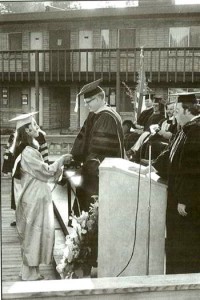
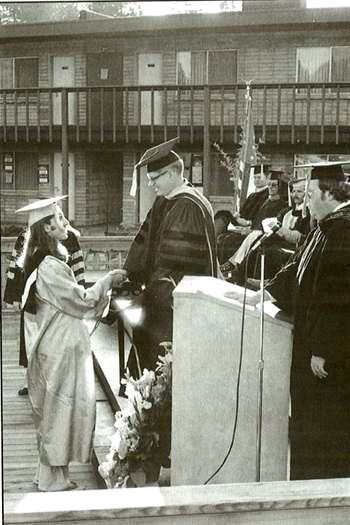
“First graduation” is from June 1976, with just 11 grads, back at the old motel. That’s Dr. Fritz Wenck handing out the diploma…still a Board member today.

Board member Fritz Wenck hands out diplomas at LTCC’s first graduation in June 1976.

Duke’s initial task was to hire a secretary. Angie Burns still lives in Tahoe. The two first worked out of a basement in a building on Ski Run Boulevard that is now owned by Wenck. Real estate agents came up with tons of ideas for where the first classes could be conducted.

Ultimately the board decided on the old Gerkin motel on Highway 50, which is now the Econo Lodge. The pool was covered and the ice rink turned into science labs. Walls were taken out of some rooms to make them bigger. Classes started in September 1975.

The first year the college opened there were 119 classes and 1,407 students. Eleven people graduated in 1976. Tuition was free at California community colleges at that time.

“The biggest argument was do we buy electric or manual typewriters,” Mason said. They went with IBM Selectrics.

To start with, a general education curriculum and business courses were offered. Through the years more programs have been added, some eliminated.

The building where the former mattress outlet was housed the first library. The building behind it had a computer lab.

At the same time Duke was busy looking for land to build what is today’s LTCC campus. The 164 acres were bought from Shell Oil Company for just less than $900,000. Money was being set aside every year to buy the land.

It was state money that built all the buildings that are on the campus today. The oldest building is the administration/commons area, and the newest is the library.

But the college is not done growing – in terms of curriculum or facilities. It has plans to be around for another 40 years.

—-

Significant dates:

• March 5, 1974, 66 percent of the voters say yes to the formation of Lake Tahoe Community College District. The initial board was elected.

• The board was sworn in on March 25, 1974.

• September 1974, the board hires Jim Duke as the first president.

• Sept. 18, 1975, classes begin in a converted motel on Highway 50.

• Dec. 27, 1979, the district buys 164 acres from Shell Oil Company.

• July 8, 1986, construction begins on the first phase of the permanent campus.

• October 1988, the college moves to its current location.

• June 30, 1990, Duke retires and Guy Lease takes over as president.

• September 1993, the Child Development Center opens.

• 1994, the college has men’s and women’s cross country teams.

• 1995, a women’s volleyball team is formed.

• 1996, the technology wing and theater open; portables are brought in for the garden classrooms.

• 1999, a Nordic ski team is formed.

• 2002, the physical education building opens.

• 2006, the library and Haldan Art Gallery open.

• June 2007, Lease retires.

• July 2008, Paul Killpatrick becomes president.

• July 2011, Kindred Murillo is hired as the fourth president.

• March 5, 2014, at 11am the college and public are returning to the old hotel, now the Econo Lodge on Highway 50, to celebrate the election 40 years ago.

• June 7, 2014, the college celebrates its 40th anniversary with a sit-down dinner from 6-8pm, plus the unveiling of the David Allan Barkley Memorial created by former Art Department Chair David Foster. For more info, email Julie Booth at Booth@ltcc.edu or call (530) 541.4660, ext. 245.

• Fall 2014, men’s and women’s intercollegiate soccer begins.


Opinion: Barton meeting community’s health needs

By John Williams

It takes collaboration and action to meet a community’s health needs. In March 2012, Barton Health engaged with the community to complete a comprehensive Community Health Needs Assessment (CHNA) of South Lake Tahoe’s health needs.

Part of the Affordable Care Act, all nonprofit hospitals must identify health needs for vulnerable, often under-served, populations within their community and create an action plan to address these needs. Using community input, local data, and a team of dedicated community stakeholders, three top health gaps specific to our area were identified: substance abuse, access to healthcare, and mental health. In two years, since the initial CHNA took place, Barton has taken action to address pressing health issues and better serve our local residents.

John Williams

John Williams

Substance abuse is prevalent in South Lake Tahoe; the area has four times the national average of illicit drug use, a high percentage of chronic drinkers, and a higher rate of drug-induced deaths. By 11th grade, 74 percent of South Tahoe High School students admitted using alcohol and 56 percent had tried marijuana.

To help reduce substance abuse, some of Barton’s efforts include: Participating in and financially sponsoring Every 15 Minutes and the Drug Store Project – discouraging alcohol and drug use by local youth. Joining and now chairing monthly South Tahoe Drug Free Coalition meetings. Donating $7,500 toward local nonprofits with the goal of reducing substance abuse. Hosting a physician seminar to discuss drug addiction and pain management. Facilitating a six-session training on best pain management practices for healthcare providers in the county.

There are many barriers that cause a lack of access to healthcare, including lack of insurance coverage and financial barriers. To improve access, Barton has: Expanded the Community Health Center by 3,000 feet and added seven exam rooms to help under and uninsured. Services expanded to include Saturdays and same-day appointments. Increased our Telehealth services to include eight different specialties, allowing patients to speak to specialists locally, saving time and travel. Launched BWell, with discounted cash pay CT, EKG, and lab services and free wellness lectures. Donated over 700 hours of staff time to help over 125 uninsured families navigate CoveredCA.com and enroll in a healthcare plan. Implemented “Transitions in Care” that provides free at-home visits for patients with certain chronic medical conditions after being released from the hospital.

The third issue prioritized was mental health. Barton has: Hired a full-time child psychiatrist who provides services at Barton Psychiatry and Barton Community Health Center, and expanded tele-psychiatry services with four contracted psychiatrists. Provided $28,000 in grants for local nonprofits that service people with mental health needs. Hosted a community health forum on mental health needs. Published five mental health articles and conducted two community lectures on mental health needs. Ongoing grief support for the community and an annual children’s bereavement camp.

In an on-going effort to serve our community, Barton Health will be collecting input from residents for the next assessment in 2015. The public will participate in phone surveys, public health data will be gathered, and focus groups will provide a clinical and social service perspective.

To view a complete report of Barton’s results to address the CHNA, go online.

John Williams is CEO of Barton Health.


Winter to make rare appearance in Tahoe

Wet weather is on its way to the Lake Tahoe Basin. Photo/LTN file

Wet weather is on its way to the Lake Tahoe Basin. Photo/LTN file

Don’t be fooled by the 60-degree temps in Lake Tahoe on Tuesday because winter is just hours away.

The National Weather Service in Reno has issued a winter weather advisory from 4pm Wednesday to 10am Thursday.

Rain is expected to arrive in the afternoon and change to snow in the evening. The heaviest snow is likely after 10pm Feb. 26. Three to 6 inches are expected at lake level, with 10 to 18 inches above 7,000 feet. Snow could drop to 5,000 feet.

Snow is forecast into the weekend, even though highs will hover near 40 degrees. Overnight lows will be in the 20s.

Expect roads to be slick and chain controls to be in effect. For current road conditions, click on the road icons on the home page of Lake Tahoe News.

— Lake Tahoe News staff report


LTCC celebrating 40th year

Roberta Mason, an original and current member of the Lake Tahoe Community College board, speaks about what it took to create the South Lake Tahoe institution that is celebrating its 40th anniversary.


El Dorado County may change mental health commission

It’s possible the South Lake Tahoe Mental Health Commission will be abolished.

On Feb. 26 at 5pm the county commission may vote on consolidating the commission into one entity. This could mean the South Shore would have less of a say.

There is a movement to make the appointment an at-large countywide group of mental health commissioners. It was this way years ago, but was changed so Tahoe could have a say in what goes on with its patients.

Email addresses for the Board of Supervisors may be found online.


Nev., Del. sign online gaming agreement

By Steve Tetreault and Howard Stutz, Las Vegas Review Journal

WILMINGTON, Del. – The governors of Nevada and Delaware signed an agreement Tuesday morning that join their states in a partnership for online poker.

Documents signed by Gov. Brian Sandoval of Nevada and Gov. Jack Markell of Delaware established a legal framework for the first interstate Internet gambling relationship, officials said. The governors spent the weekend in Washington at a conference of the National Governors Association.

The deal aims to expand the marketplace for online poker in the small states that by themselves are not seen as having significant populations for Internet gambling to flourish. Nevada has legalized poker-only online for players logging on within the state, while Delaware has green-lit online slots, blackjack, roulette and poker.

Read the whole story


Letter: Meyers Area Plan is a worthy document

To the community,

It’s been sad for me to see all of the misinformation and confusion about the Meyers Area Plan lately. As someone who is a from a third generation small mountain community family (my kids being the fourth) and someone who has lived in Meyers since 2001 and raised my kids here, I want to see some improvements in our town like I have seen in many other progressive, environmentally responsible small mountain communities in this country. That is why I volunteered to be on the Meyers Community Advisory Council to help update out 20-year-old community plan.

What stood out to me since the beginning of the process two years ago is that it is all about the community. A lot of times we see a county write a plan and just go through the motions with whatever public input is required. But that’s not what happened in Meyers. It was Meyers residents who started this process, and it has been Meyers residents who have led this community plan update and will see it through to approval.

Rene Brejc

Rene Brejc

It is my perception that council members wanted to focus on the implementation part of the plan with the goal of positioning ourselves on getting things done by adding an implementation strategy section to the plan. The advisory council has been meeting ongoing with public workshops and community meetings along the way at key points in the process. In fact, the League to Save Lake Tahoe, which works with communities around the lake, complimented the team on the Meyers Community Plan process compared to others around the lake. Perhaps other council members see things differently, but this is how I saw things work.

There will always be a handful of people that want nothing to ever change and there will always be a few people with over the top ideas about changing our town. But this plan is for the majority of us that are somewhere in the middle. It’s for people who want to see some improvements in our town like getting some crosswalks, a stoplight at Apache Avenue, a welcome to Meyers sign, upgraded streetscape for our main street, making it easier for property owners to do basic improvements, and doing something with the eyesore properties such as the old gas station.

Recreation ands sports are on the minds of many community members now with three Olympians from Meyers; two of who won gold medals in Sochi. Three Olympians for 3,060 in population makes us perhaps one of the highest per capita of Olympians in the entire country and perhaps the world.

We also have many other high profile athletes and recreations athletes that live, work and play here whether they be primary residents, second homeowners or tourists. We have new companies incubating in town including ski and snowboard manufacturers, video-related manufacturers, book publishing companies and many other creative brain-based companies here. We all love Meyers for what it is and want to be here – to live, work and play. This growth and progress is happening organically – here and now. The vision is thriving local-based economy.

I’ve heard a lot about how this area plan calls for big parking garages and skyscrapers, but that’s just not true. Yes, a company did come up with some proposals about an Olympic-high altitude training center and transit center. The size and scale of what they proposed were too big for Meyers and just about everyone agrees with that. The Meyers Community Advisory Council didn’t endorse this concept, it couldn’t be approved under the draft area plan, and it’s not in the area plan. Also, as one Meyers business and landowner mentioned to me, if a big developer was coming to Meyers, it would have been between 2000 and 2006 when money was cheap.

But, the reality is that some things will change in Meyers over the long term, whether we like it or not. So the question is, do we want to just sit back, do nothing, and have a bunch of fast food places and dollar stores built in Meyers; or do we want to look at the possibilities and try to promote something like a recreation-sports center, place for people to catch ski shuttles, a community gathering spot – in a nut shell — an amazing place to live, work and play?

The updated Meyers Area Plan keeps the maximum height and density pretty close to where they’ve been for years. But now instead of about 25 pages of TRPA regulations to tell us how high a building can be, we can just have a number. It helps small local businesses by getting rid of overlapping TRPA and county rules to just have one set of rules about what can be done in Meyers. This isn’t something for big developers; they can pay a consultant to navigate the different regulations. But small local businesses in Meyers need this if we don’t want to go broke trying to remodel or build something. Most important, this draft area plan makes sure that Meyers residents have a say in what gets built in the future. Right now projects can get approved in Placerville without anyone in Meyers even realizing. The area plan would require that each project be reviewed by a council of Meyers residents at a public meeting in Meyers.

I know most people don’t have the time to sift through documents and separate fact from fiction. But this plan is for Meyers residents, so please do what you can to read the plan, get the facts, make your own decision, and get involved. The draft Meyers Area Plan is available online. www.edcgov.us/Meyers/. You can also submit comments, questions, and suggested revisions to the draft to MeyersAreaPlan@edcgov.us. Lastly, if you can, please attend the meeting on Feb. 26 from 6-8pm at the CCC building in Meyers at 1949 Apache Avenue.

I love Meyers,

Rene Brejc, Meyers Community Advisory Council member


#TruckeeMoments gives prizes for hashtags

Truckee Donner Chamber of Commerce is playing a hashtag game through March 15.

The #TruckeeMoments campaign encourages locals and visitors to tag their photos taken in Truckee and the surrounding mountains with #TruckeeMoments on Twitter, Facebook, and/or Instagram. Each photo that is tagged counts as one entry.

Weekly sweepstake winners will receive gift certificates donated by local Truckee businesses.


Drought’s impact on agriculture varies

By Alex Park and Julia Lurie, Mother Jones

California, supplier of nearly half of all U.S. fruits, veggies, and nuts, is on track to experience the driest year in the past half millennium.

Farms use about 80 percent of the state’s “developed water,” or water that’s moved from its natural source to other areas via pipes and aqueducts.

Much of California’s agriculture is concentrated in the parts of the state that the drought has hit the hardest. For example: Monterey County, which is currently enduring an “exceptional drought,” according to the U.S. Drought Monitor, grew nearly half of America’s lettuce and broccoli in 2012.

When it comes to water use, not all plants are created equal.

Read the whole story