Pruning keeps lilacs blooming each year

By Cortney Moore

After a long, cool spring a sure sign that warmer weather is on its way has appeared. The lilacs are blooming.

Plump buds pop open in clusters of purple blossoms and unleash a fragrance that is heavenly. Lilacs are a classic landscape shrub.

As settlers made their way west, they often planted lilacs to symbolize hope when the showy spectacle of flowers emerged in the spring.
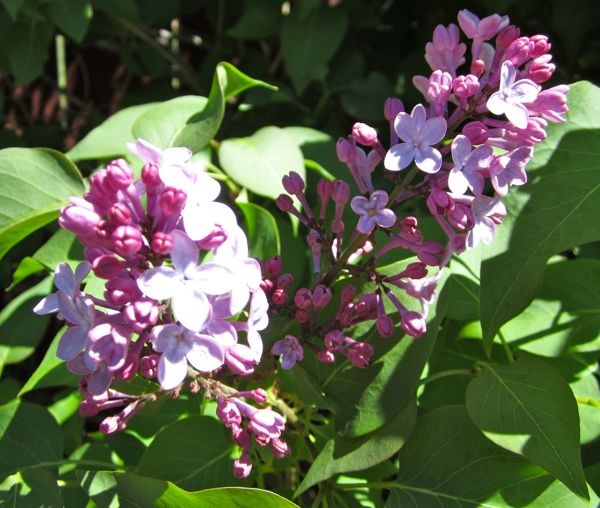
Lilacs do well in the Lake Tahoe Basin. Photo/Cortney

Lilacs do well in the Tahoe basin. Photo/Cortney Moore

Lilacs still thrive on some of these abandoned homesteads without any care, making them some of the oldest and one of the toughest bushes in the flora world.

Lilacs have numerous applications from a natural looking bush, to a trimmed hedge or even a manicured, sheared shrub. There is room for a lilac or two in every yard.

Full sun is necessary for healthy plants and optimal bloom. Shaded areas will lead to reduced bloom, weak growth and increase the chance of powdery mildew.

Lilacs are tolerant of most soil, but will not tolerate standing water. Moist, well-drained soil is preferred. Lilacs need adequate water while they are establishing their root system, and require more water when buds are forming during the summer months.

Fertilizer is not a necessity with lilacs and heavy application of nitrogen may reduce bloom. Adding organic matter to your soil or fertilizing with a product low in nitrogen and higher in phosphorous is better for lilacs.

Lilacs bloom on old wood which means they will set buds on the current season’s growth and these buds will bloom next season. Prune immediately after the current season’s flowers are spent so new buds form and are not removed by late pruning.

If your lilac is not blooming you may want to pay attention to when you are pruning.

Once the lilac bush is well established, pruning old growth may be necessary to rejuvenate the shrub and promote optimal bloom. This type of pruning is different from pruning the spent flowers. Look at the shrub and determine which canes are the oldest, remove one-third of the oldest canes cutting out at the base of the plant. New growth will fill in and keep the plant fresh and healthy.

Lilacs also add beauty to your home as cut flowers. Clip a few stems and place in a vase of water to fill your home with a sweet summery perfume.

After blooms fade, lilacs add a soft quality to the landscape with their heart shaped matte green leaves. Lilacs are considered a medium to large landscape shrub. Plant them where they have room to grow and enjoy watching them mature into bushes loaded with blooms year after year.

The hardy nature and versatility of lilacs makes them a great choice for planting in the Tahoe Basin. Planting lilacs this season will give you something to look forward to after a cold, snowy winter or a long, cool spring that decides to hang around until summer shows up.

Cortney Moore is nursery manager for Tahoe Outdoor Living in South Lake Tahoe.


DUI checkpoint, increased patrols Independence weekend

The Avoid the 6 El Dorado County DUI Task Force will be out in full force during the 4th of July holiday weekend, cracking down on impaired drivers with an aggressive DUI enforcement blitz.

“Driving while drunk isn’t worth the tremendous risk. No matter your age, if you’ve had too much holiday spirit, you’d better find a safe and sober ride home or your chances of arrest are high,” acting Police Chief Martin Hewlett of the South Lake Tahoe Police Department said in a statement.

Police, sheriff and the CHP will be putting additional officers on the streets and highways over the holiday weekend staffing one DUI/driver’s license checkpoint and four local DUI Roving Saturation Patrols.

CHP will also deploy all available officers during their maximum enforcement period patrolling freeways, state highways and county roads in their jurisdiction.

South Lake Tahoe police cite state statistics to underscore the importance of the crackdown. In 2009 during the July 4th holiday period of July 3-6 there were 373 alcohol involved deaths and injuries on California roadways.

California’s three-year Independence Day holiday alcohol involved collision data:

2009 – 30 killed 363 injured

2008 – 50 killed 498 injured

2007 – 30 killed 262 injured

“Too many people still fail to understand that alcohol and driving don’t mix. Impaired driving is no accident, nor is it a victimless crime. With 1,233 people killed during the past three July 4th holidays, it’s vitally important to stop this destruction of lives and futures,” Christopher Murphy, director of the California Office of Traffic Safety, said in a press release.


Bond committee meeting includes tour at STHS

The next meeting of the Citizens’ Bond Oversight Committee will be at South Tahoe High School, CAT Academy, Room 202 on June 30 at 6pm.

This is a public meeting, which will include a tour of the Stadium View building that is slated for completion by Aug. 1.


TRTA looking for volunteers

On July 8 from 5:30-6:30pm at the Tahoe Rim Trail Association’s office, 948 Incline Way, Incline Village learn how to become a volunteer for the TRTA.

As a volunteer for the Tahoe Rim Trail Association, you will have the opportunity to meet people, learn skills, get outdoors and make a difference.

If you are interested in getting involved as a volunteer, contact Janice Barbour at janiceb@tahoerimtrail.org or call (775) 298.0012 for more details.


Scarce money taking toll on California State Parks

By Sacramento Bee

The images won’t appear in any California State Parks brochure.

MacKerricher State Park: Fifty elementary-school kids arrive for their annual end-of-year camping trip, only to find the drinking water contaminated.

Mount Tamalpais: A trail near the visitors center greets disabled visitors and families with a 12- to 50-foot sheer drop-off – and no guardrail.

Hearst Castle: The marble Neptune Pool at California’s most famous state park leaks so much that stalactites have formed in a cavity underneath.

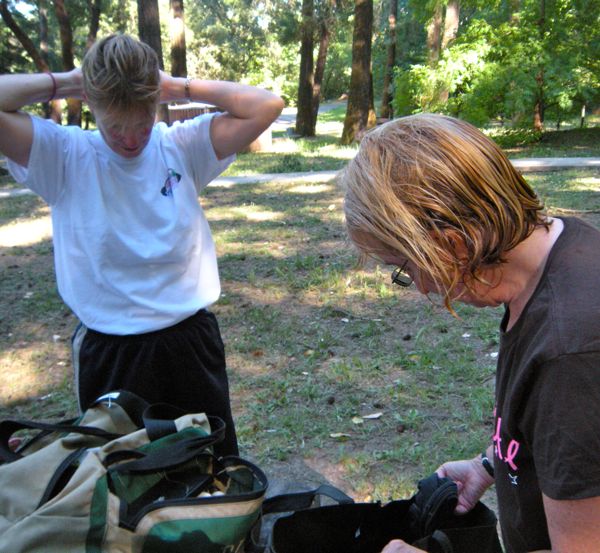
Pam Valentine and Sue Wood found the showers at Bothe State Park in Napa Valley in june to have issues. Photo/Kathryn Reed

Pam Valentine and Sue Wood found the showers at Bothe State Park in Napa Valley in June to have issues. Photo/Kathryn Reed

Look beyond the crashing waves and towering redwoods, and California’s 278 state parks are a tangle of troubles. The nation’s largest state parks system is weighed down by a $1.3 billion maintenance backlog, according to a review of park records by the Sacramento Bee.

Read the whole story


A meadow of memories

By Kathryn Reed

It’s hard not to come across several dogs when walking along Trout Creek behind Lake Tahoe Community College.

It’s a favorite urban walk, as some call it, for two-legged and four-legged animals on the South Shore. Plenty of opportunities abound for access to the cold water — either for a quick swim in the icy wet stuff or for a drink.

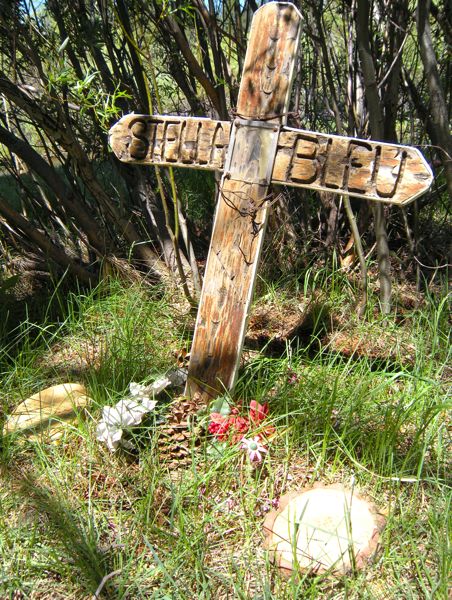
A makeshift pet cemetery near Trout Creek. Photos/Kathryn Reed

A makeshift pet cemetery near Trout Creek. Photos/Kathryn Reed

The meadow is wide-open for much of the walk. This makes spotting the lurking coyote that much easier.

Different offshoots of the trail take people closer to the creek, while others lead to the college’s Demonstration Garden.

It’s such a popular spot for dogs that several have been buried in the area. Markers of loving tribute are written to and about these pets.

ngg_shortcode_0_placeholder (Click on photos to see full size.)


Cash Only Band at Boathouse Theatre

The Cash Only Band is coming to the South Shore’s historic Boathouse Theatre on July 1 at 7:30pm.

Founded by front man guitarist Davin Kangas in 2002, the Cash Only Band started out as a Johnny Cash Tribute band and is a musical interpretation, not an impersonation.

Other band members include South Lake Tahoe’s Nate Alcorn on upright bass bringing a Western swing and slap style and Raybob Bowman on pedal steel. He has performed for more than 30 years with the likes of Naomi and Wynona Judd. Lowell Wilson is on the keyboard and synthesizer with his honky-tonk piano style and rock organ type sounds, along with Tom Parodie on drums with an innovative style.

Tickets are $15 for adults (age 18 to 54); $12 for ages 13-17 and 55+; 12 and under are $5. Military and student discounts are offered.

The annual Valhalla Arts, Music and Theatre festival is located on the shores of Lake Tahoe at the historic Tallac Site.

For the full schedule, call (530) 541.4975 or visit www.valhallatahoe.com.


Women’s mountain bike clinic

Sausalito-based LUNA Sport, a women’s cycling and athletic clothing company, anis having all-women’s downhill mountain biking clinic on Aug. 21 from 10am-5pm at Northstar-at-Tahoe.

Go to www.lunasportgear.com or email dmac@lunasportgear.com for more information.


Time fails to diminish the power of the Angora Fire

Publisher’s note: Read the Lifestyle section for details about the Angora home tour.

By Susan Wood

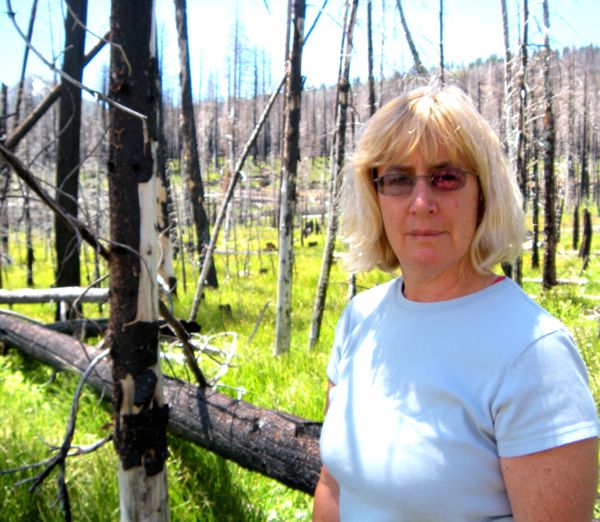
A slight breeze and blue sky marked a stark contrast in the Upper Truckee region this June, three years and two days after South Lake Tahoe’s Angora Fire that in a wind-whipped inferno burned 254 homes, displaced hundreds and caused more than $160 million in damage.

The 2010 AAUW Home Tour on Saturday brought out many people to tour seven homes rebuilt since the South Shore’s tragic event. And although much healing has occurred, the moments of drama, helplessness and fear are charred into my memory forever.

Susan Wood three years after the Angora Fire. Photo/Kathryn Reed

Reporter Susan Wood three years after the Angora Fire. Photo/Kathryn Reed

Chatting with Norma Sprague, the co-owner of a Lake Tahoe Boulevard home on the tour, took me back.

“The flames seemed far away,” she recalled saying to her husband, Warren. This was relatively true until minutes later a fire truck roared up to the curb and a firefighter yelled for the couple to get out. That was the scene on several streets branching off Lake Tahoe Boulevard, North Upper Truckee Road and Tahoe Mountain Road.

“We’re lucky to be alive,” she said with a steely look in her eye. I recognized the look as one from someone who really lived the fire.

As the first news reporter to the over 3,000-acre fire that fateful day, I would agree.

When the 2:14pm call came into the police scanner at the Tahoe Daily Tribune, I had almost wrapped up the reporting for the day. It was a tough day. I had discovered that morning one of my nephews had died. I had no plans other than to decompress and grieve.

Unbeknownst to me, I would mourn for my community that day.

There’s a level of urgency dispatchers conveyed June 24, 2007, that told me to hop in my truck and head west.

I could not believe the plume of smoke would be so large and so close to the Y. I remembered thinking and calling my editor to say: “This is big. It’s in the neighborhood.” I believe the word “unprecedented” came across my lips.

I was grateful I had put on a full fire suit. I beat the police barricade at Sawmill Pond and drove the truck up Lake Tahoe Boulevard and, knowing the drill of covering fires, turned it around to park. The wind was raging, blowing embers so hard that a small one lodged between my safety goggles and right eye. I swatted at it but kept walking toward the orange-blackened haze. I’ll never think of a crackling fire the same way. The low moan I recognized as the life of the fire.

With embers blowing from roof to roof, houses erupted into flames about 10 to 30 feet around me. People were crying, screaming and running for their lives in the opposite direction of my route. A motorcyclist turned his bike over long enough to stomp on a blaze. Residents were throwing belongings in their vehicles with just minutes to get out.

A wall of fire headed toward Mule Deer Circle with a vengeance and between occasional calls into the newsroom I wondered if the fire would climb up Tahoe Mountain Road and over Angora ridge to the Fallen Leaf Lake community.

I flagged down a U.S. Forest Service truck driven by Kit Bailey, the Lake Tahoe Basin Management Unit’s fire management officer. He said at least 100 homes had gone up in flames.

I performed an about-face to get in front of the fire. On the way down at the base of Sawmill Pond a police barricade had been established and residents were pleading with sheriff’s deputies and highway patrol officers to let them into the fire zone. One woman got in the face of one deputy because she wanted to retrieve her dog. He threatened to arrest her. Her look of desperation made me sympathetic. She looked like she was going to make a dash for it.

From there, I picked up news photographer Cathleen Allison and headed up Fallen Leaf Lake Road while fire officials had barked out the suggestion of evacuating the Sawmill Pond area. This was the first time I thought the town could be in danger. The second time came two days later when a back burn jumped Highway 89.

Allison and I were stopped by another barricade, so we parked down the road from the Tahoe Mountain Road intersection with Fallen Leaf Lake Road. We hiked up the ridge to a surreal state of emergency. A tactical tour de force of multi-agency fire units armed with shovels and bulldozers set up a barrier wall to keep the fire from coming up and over the ridge. Fire burns faster up hill. Flames shooting 30 feet in the air had engulfed at least one home off Uplands Way. My heart sank.

Upon my return to the office, a few dozen emails from concerned homeowners and citizens greeted me because my name appeared on the fire updates. They wanted to know if their homes were still standing.

Solange Schwalbe, whose rebuilt home on Zuni Street was featured on the home tour, was out of town at the time of the fire. She had a captive audience as she recalled returning to find the fire burned so hot through her neighborhood it melted the blue tarp to her Jeep.

Her demeanor has changed drastically in the last three years — from those early days of attending those sobering community meetings, trying to pick up the pieces reduced to ash and plotting her next move.

Healing has occurred. But that doesn’t mean we forget the pain that started near Seneca Pond, where an illegal campfire smoldered from the night before and erupted into the Angora Fire.

Even the squeal of a fire engine in summer on windy days puts me on alert these days.

“You’re never healed completely. It’s like losing a parent. You never quite get over it. You just learn to live with it,” Schwalbe explained to the home tour group gathered to hear her story.

As one reporter who has covered the Gondola, Showers and Angora fires, I just hope we’re humbled enough to learn from them.


Cash rebates for defensible space work

Help is available for Lake Tahoe Basin residents to make their homes and families safer in the event of wildfire. Free home inspections, tree removal permits and 50 percent rebates – up to $1,000 – for vegetation management such as tree removal are available in most Lake Tahoe communities.

A partnership of Tahoe Bbsin agencies called the Tahoe Fire and Fuels Team is encouraging property owners to take action now to establish defensible space around their home. Visit http://www.TahoeFireSafe.com for details.

Many of the steps needed to create defensible space can be completed by the homeowner, such as:

* Removing dead vegetation, including dead shrubs, dried grass, fallen branches, pine needles, pine cones, etc.

* Thinning brush and trees to create a separation. Most local fire protection agencies can provide free inspections and tree removal permits. Call (530) 543-3473 to learn more.

* Removing “ladder fuels” by pruning lower tree branches and brush underneath trees that allow wildfire to climb and spread.

Last year, more than 750 homeowners completed the Nevada Fire Safe Council’s defensible space program and received a rebate. Additionally, forest fuel reduction was completed on approximately 1,400 acres in and around Lake Tahoe communities by local fire crews.

The Five-Step Defensible Space Rebate Process:

1. Contact your local fire protection agency to schedule a defensible space inspection

2. Call the NVFSC to receive a free inspection voucher: (530) 543.3473 or apply online

3. Get any work done on your property recommended by your local fire agency as soon as possible

4. Contact the NVFSC to schedule a property evaluation

5. When the property passes the final evaluation, the NVFSC will mail a rebate check within 21 days of the completed evaluation

For more information, call (530) 543.3473 or visit www.nvfsc.org.