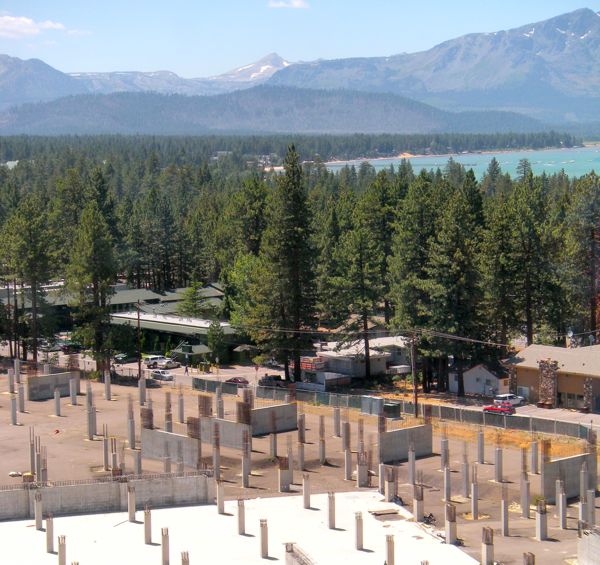
Valero a key player in California climate change initiative

By Rick Daysog, Sacramento Bee

Valero Energy Corp. CEO Bill Klesse once jokingly suggested oil industry executives should fight global warming by holding their breath. Now, his company has emerged as a major force behind the November ballot measure to suspend California’s climate change law.

valeroSince its start as a small Texas gasoline maker more than 30 years ago, Valero has grown into the nation’s No. 1 independent oil refiner and a big player in Washington, D.C. The company also is spearheading the oil industry’s campaign against the now-stalled federal cap-and-trade legislation.

Fresh from its victory in Congress, Valero, which operates refineries in Benicia and Wilmington, has spent $4 million on the campaign for Proposition 23, which would suspend California’s climate change law.

Read the whole story


Dugard writing memoir to be published in 2011

By Stephen M. Silverman, People

Jaycee Dugard’s incredible story of survival during 18 years of captivity until her 2009 rescue, will be published next year. And the author: Dugard herself.

Publisher Simon & Schuster said in a release that Dugard, now 30, will tell of her life from the time of her 1991 abduction to how she is faring now. Financial terms of her book deal were not divulged.

Jaycee Lee Dugard

Jaycee Lee Dugard

Read the whole story


Opinion: Agencies exhibit bias in Washoe Meadow-river plan

To the publisher,

The debate swirling around the Upper Truckee River Restoration and Golf Course Reconfiguration Project is not a debate about river restoration. All participants support this end. It’s not even a debate between golfers and environmentalists. Few, if any, deny the right of the golfers to play on the current Lake Tahoe Country Club.

This debate is rapidly becoming a confrontation between three state and local agencies, and concerned locals and neighborhood groups like the Washoe Meadows Community. The involved agencies are showing an undo bias toward Alternative 2, advocating golf course expansion. They appear ready to do this by ignoring preeminent laws protecting sensitive land, historical and cultural sites, diminishing animal and plant habitat, and quiet and peaceful local neighborhoods.

Aside from the obvious indifference to their own environmental standards, misleading the public about their intentions, and ignoring input from their own constituents, this is being pushed at a time of decreasing popularity in golf. The environmental impact report or EIR clearly details the declining revenues of the current state recreation area’s activities. And unless global warming overwhelms us sooner than expected, Tahoe’s fragile golf season is not going to get any longer.

It’s quite clear the State Parks, TRPA, and Bureau of Reclamation are stretching their powers here by ignoring their own history of written intentions and guidelines. The land in question is bordered roughly by Highway 50, North Upper Truckee Road, Sawmill Road and Tahoe Paradise. It was purchased by the state in 1984. The 1984 California Legislative Statute appealed for the purchase using taxpayer dollars. They called it an act of urgency “in order to acquire as state lands an environmentally sensitive parcel of approximately 777 acres of land comprising wetlands, meadows, and wildlife habitat for the purpose of protecting a unique and irreplaceable watershed.” The parcel contained an existing golf course to the east, and a fragile and diverse piece of land to the west. Separating the two was the main tributary of Lake Tahoe, the Upper Truckee River.

The side containing the golf course was designated a state recreation area, and the land across the river, bordering numerous neighborhoods along North Upper Truckee, was designated a state park, originally named Washoe Meadows Wildlife Refuge.

Here, in the words of the agencies most zealous for expansion, are the reasons Alternative 2 displays a contemptuous disregard of their own standards of stewardship. According to the states’ own Unit Purpose Statement adopted in 2000 “the purpose of the Washoe Meadows State Park is to preserve and protect a wet meadow area associated with Angora Creek and the Upper Truckee River at the southwest side of the Tahoe Basin. The unit’s associated forest sustains Jeffrey … and Lodgepole pine. The unit contains 14 Native American occupancy sites and remnants of a historic dairy, and is contiguous to other public lands important for their open space values and recreational uses.”

Consider this statement comes before the Angora Fire. It should be apparent how much more important these forests and wetland areas become as a habitat for indigenous wildlife and plants.

The Plan Area Statement of the TRPA Code of Ordinances says this about “PAS 119” (Country Club Meadow), “ the following special policies … apply to the study area:

• Areas of significant resource value or ecological importance within this Plan Area should be designated as natural areas, and they should be buffered from intensive uses.

• Creation of waterfowl habitats in association with restoration efforts of disturbed areas should be encouraged.

• Intensive uses in this Plan Area that require development of impervious coverage should be discouraged.

The agencies now argue some of these areas have been “previously disturbed,” thus implying it is acceptable to disturb them again. That’s like saying since a bank has been robbed it’s acceptable to rob it again.

What these agencies must remember is that the land in question is theirs to protect, not abuse. While they have been designated guardians of this sensitive and precious parcel of PUBLIC land, it is not theirs. The land belongs to all of us. We must let them know how we feel. Ways to comment are available here.

Steve Szekely, Meyers


Grant for group aiming to change views on pesticides

By Susanne Rust, California Watch

The state’s food and agriculture department announced the winners of a $17.2 million federal grant designed to promote specialty crops, including vegetables, fruits and nuts, in the state.

Among the 63 winners were Sunsweet Growers Inc., which received $450,000 to develop a high-fiber breakfast prune bread, and scientists at UC Davis who received more than $80,000 to keep light brown apple moths from having sex.

But there was one grant winner that received the attention and ire of the Environmental Working Group, an environmental advocacy group based in Washington, D.C.

That group, the Alliance for Food and Farming, received $180,000 to “correct the public’s misconceptions about pesticide residues.”

Read the whole story


TRTA leader blends outdoor, nonprofit experience

By Maggie O’Neill, Reno Gazette-Journal

If things go as planned Mary Bennington, 53, will be the Tahoe Rim Trail Association’s executive director when the nonprofit celebrates 30 years in 2011.

Bennington became executive director in May, replacing Mark Kimbrough who served as executive director for 7.5 years.

“This is one of those dream jobs,” she said recently. “I have people come in and ask what I love about the organization. It’s really the people. Everyone is so happy and so excited. It’s just such a positive place to work, a really fun place to work.”

“She’s doing absolutely great,” said TRTA board president Sam Viviano. “From the Rim Trail and from the board’s perspective, she’s an absolutely perfect fit.”

Read the whole story


Charities receiving less, giving less

By Mark Glover, Sacramento Bee

An industry that relies on giving is taking some lumps these days.

Northern California charitable organizations big and small have seen donations decline as the recession, high unemployment and declining home values erode donors’ wealth.

Competition for the dwindling pool of private donations is also up, since nonprofits that long relied on government funding have been hurt by local and state budget cuts. The affected nonprofits have stepped into an already crowded pool of organizations seeking donations from recession-battered businesses, foundations and consumers.

“It’s a very challenging environment at the moment,” said Steve Heath, president and CEO of United Way California Capital Region, which kicked off its annual workplace giving campaign this month at the Sacramento Convention Center.

The United Way campaign is the region’s largest, seeking donations from workers at some 700 employers in Sacramento, El Dorado, Placer, Yolo and Amador counties. Scores of nonprofits benefit from the campaign.

Read the whole story


Lane wants until 2013 to finish S. Tahoe convention center

By Kathryn Reed

Foreclosure. It is the word circulating around the bankrupt convention center project in South Lake Tahoe.

Randy Lane, principal with Lake Tahoe Development Community, wants the creditors to hold off a few more years.

“We are just asking for more time to figure things out and sell the property, which has not been well received by the city and one of the creditors,” Lane told Lake Tahoe News. “I don’t know that that is going forward. ”
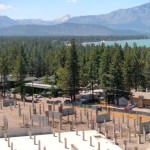
A construction zone is the view Harveys' guests have had for years. Photo/Kathryn Reed

A construction zone is the view Harveys' guests have had for years. Photo/Kathryn Reed

He knows the banks are tired of waiting.

A hearing is scheduled for Oct. 5 in U.S. Bankruptcy Court in Sacramento to discuss Lane’s latest proposal. Besides wanting to wait 2½ more years, the filing lists how the various parties would be treated.

Lane wants to be given until May 2013 to begin filling in the hole.

The project near the state line and across from Heavenly Village would have been the largest construction project in the city’s history at more than $400 million. It was supposed to have two hotels, a convention center, retail and open space. Environmental impacts were highly lauded.

Projected revenue was heady. At the get-go developers were touting 180,000 visitors a year would pump $78 million into the South Shore economy.

When ground was broken in 2007 the first hotel was projected to open two years later. Instead, in October 2009 Lake Tahoe Development Company filed for bankruptcy.

The City Council at the time signed a contract without a performance bond in place. City officials let concrete be poured and rebar installed without a final map in place.

The significance of the latter is that it means 29 parcels have to be dealt with instead of one. If the property is foreclosed on, instead of getting back dirt, most investors are still tied together because of the foundation that was allowed to be put in without the Zephyr Cove-based firm having its finances all lined up to fund to project.

Patrick Enright, South Lake Tahoe city attorney, said the city is not backing Lane’s latest proposal.

“We are saying it is way too long and a bad idea. We are not going to have a hole there until 2013,” Enright said.

Lane does have until Dec. 21 to come up with a viable plan creditors will agree to. The bankruptcy judge keeps giving him extensions to have exclusive rights.

After that date a creditor or group of them could present a plan to the court or they could foreclose. El Dorado County could also foreclose to recoup the $2.45 million in property taxes Lane has not paid.

C.L. Raffety, county tax collector, did not return a call to discuss the county’s position.

Through the Teeter Law the county has been paying South Lake Tahoe its share of property taxes, which are higher with concrete and rebar compared to when businesses were operating on the 11-plus acres. The county, when all is said and done, will collect interest and penalties on the unpaid taxes.

If no plan comes out of bankruptcy court, the county has the first chance, over all the other creditors, to file for foreclosure. It would have to foreclose on all 29 parcels. People could come forward and pay the property taxes and then they would own the parcels. If no one comes forward, the county would own the property.

With Owens Financial owed nearly $29 million, it’s doubtful the firm would walk away from this project without getting a few pennies on the dollar. Much of the property City National owns has not been touched by construction workers, so it, too, is likely to want to recoup the land to compensate for the $7 million debt it’s owed.


Why school ‘reform’ fails

By Robert J. Samuelson, Newsweek

As 56 million children return to the nation’s 133,000 elementary and secondary schools, the promise of “reform” is again in the air. Education Secretary Arne Duncan has announced $4 billion in Race to the Top grants to states whose proposals demonstrated, according to Duncan, “a bold commitment to education reform” and “creativity and innovation [that is] breathtaking.” What they really show is that few subjects inspire more intellectual dishonesty and political puffery than “school reform.”

Since the 1960s, waves of “reform” have failed to produce meaningful achievement gains. The most reliable tests are those given by the National Assessment of Educational Progress. The reading and math tests, graded on a 0–500 scale, measure 9-year-olds, 13-year-olds, and 17-year-olds. In 1971, the initial year for the reading test, the average score for high-school seniors was 285; in 2008 that score was 286. The math test started in 1973, when high-school seniors averaged 304; in 2008 the average was 306.

Read the whole story


Opinion: Of course students should have water at school

Publisher’s note: This editorial is from the Sept. 22, 2010, Chico Enterprise-Record.

Our view: Saying schools must have water available in the cafeteria is like saying classrooms must have roofs. Of course it should be mandatory.

There are two kinds of legislation that bother us. OK, maybe there are more than two, but these are the most annoying. The first are the so-called “nanny laws,” where legislators try to tell us how to live. Think of bans on spanking children, plastic bags, incandescent light bulbs, Oreo cookies, bad feng shui and procreating dogs and cats.

The second kind are the laws that shouldn’t be necessary. A bill like that is sitting on Gov. Arnold Schwarzenegger’s desk, waiting to be signed. It’s a bill requiring schools to provide free drinking water in cafeterias.

We’re not talking about expensive bottled water. We’re talking about faucets, or spigots, or a fountain. Why in the world would such a bill be needed? Well, it came as a shock to us, but apparently roughly 40 percent of schools in the state don’t have drinking water available for students at lunch, according to a survey.

In a state where legislators have taken steps to rid schools of sugar-laden drinks, there’s nothing requiring schools to provide the most economical and salubrious drink of all — tap water.

Read the whole story


Crime prevention course for rental agencies

Douglas County Sheriff’s Department is sponsoring a Crime Prevention Conference for all multi-family housing property managers, manufactured housing managers, hotel- motel managers, rental housing owners and managers including vacation rental property managers and RV- campground managers.

It is designed to help “Keep Illegal Activity out of Rental Properties”.

The free conference on the South Shore is Oct. 11 from 8am-5pm.

The Crime Free Programs were developed in 1992 by Tim Zehring, retired 22-year veteran of the Mesa Arizona Police Department.

RSVP by Oct. 9 t0 Melanie Raulston-Arnold at LakesideProperties-CFMHP@msn.com or call (775) 588.2988.