Snippets about Lake Tahoe

parks• Chris Hawken will be the interim director of the South Lake Tahoe Parks & Recreation Department now that Gary Moore has retired. A national search is going on for a permanent replacement.

• Another magazine is out of publication as of this fall – Skiing.

• Edgewood Tahoe Golf Course plans to stay open through Oct. 31.

• Fred Findlen has taken over as general manager of Hyatt Lake Tahoe in Incline.

• A hearing on the Boulder Bay project in Crystal Bay has been rescheduled by Tahoe Regional Planning Agency Governing Board to Nov. 17 at The Chateau in Incline. The Advisory Planning Commission will discuss it on Nov. 10.

• The Rev. Ben DeLeon at St. Theresa Catholic Church will bless all pets on Oct. 4 at 5:30pm at the South Tahoe church as part of celebrating the birthday of St. Francis, patron saint of animals.


Brady: now is not the time for inexperienced leadership

Publisher’s note: Lake Tahoe News is profiling candidates for South Lake Tahoe City Council and Douglas County Commission. The stories are being published in the order they were received.

Name: David James Brady

Age: 54

Hometown: Minden

How long have you lived here?: 25 years

Job/Profession: County commissioner, Douglas County, District 2, appointed by Gov. Kenny Guinn in 2005, elected in 2006. Certified financial planner, owner and president of Brady & Associates, a financial services firm, (23years), and CEO the Brady Company LLC.
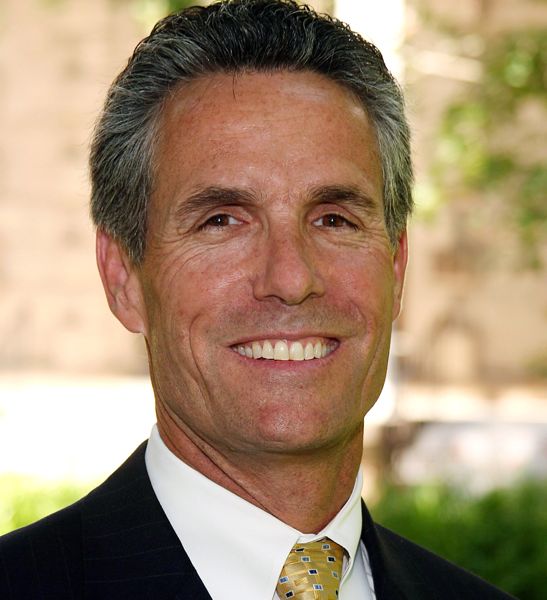
David Brady

David Brady

What would you build or tear down on the South Shore to make it great, as in what Whistler is like?: I would welcome the opportunity to build an entertainment event center so Elton John does not have to perform in a parking lot and build a five-star resort like a Four Seasons or Ritz Carlton on the Horizon property site.

What form of recreation do you participate in? What improvements to recreation would you strive to make throughout Douglas County?: I am a cyclist, surfer, sailor, hiker and motorcycle enthusiast.

Recreation tourism is expected to be the driving force of the South Shore economy in the coming years, what do you specifically plan to do to improve bike paths and roads?: Focus on the development of open space, trails and bike lanes throughout Douglas County. Work on the development of a multi-generational community center in the valley, similar to the Kahle Center. Improve bike paths and roads. We need to explore funding sources such as special assessments or a gas tax to provide a revenue source capable of providing the capital necessary to build the bike lanes and roadways throughout the county.

How do you plan to boost revenue in Douglas County?: While we have added a 3 percent transient lodging license tax to generate additional revenue for the promotion of tourism and the maintenance of our parks and recreation facilities recently, we need to embrace both the Tahoe Plan for Prosperity, and the County’s economic vitality plan which we have just introduced. The focus is multifaceted, and is centered on rejuvenating the downtowns, including the Lake Tahoe corridor, and recruiting businesses to the county that are appreciative of the environment we provide, both to the businesses and their employees. Outdoor adventure, technology and service companies are our target market.

We need to provide the infrastructure, which includes education that attracts industry and individuals that will thrive in the surroundings that we currently enjoy.

We must also continue to control our expenses, as the legislature is looking for opportunities to “confiscate” available monies to balance their own budget in 2011.

What stands out for you in the 2010-11 budget?: What stands out the most for me is that we focused on “Priority based budgeting” rather than “across the board cuts” which creates inequities and subsequently forces departments to recognize the budget will be focused on the board’s priorities as identified in the Strategic Plan.

While this process is more labor intensive, it promotes the need to make “data driven” decisions and provides the opportunity for department heads and elected officials to justify their budgets, based on case loads, calls for service and the like.

What needs to be done to allow businesses to thrive in Douglas County?: As a small business owner, I want for the government to “stay out of my way” and “stay out of my wallet”.

Excess regulation and unnecessary taxation (financial services tax) restricts my ability to thrive and limits my ability to reinvest my profits back into the community.

As a county, we are aggressively looking for ways to reduce timelines, eliminate costs and create greater efficiencies, so as to allow businesses to survive and thrive in an economy that is struggling.

What needs to be done to allow businesses to thrive in Douglas County?: In keeping with our Strategic Plan, I see the three major issues as: Maintaining the financial strength and stability of the county, providing excellent public safety, generate economic development opportunities through the Economic Vitality Plan and the Tahoe Plan for Prosperity.

I believe the economy will continue to be challenging for years to come, and with the legislature looking for revenue sources, we face a “two front’ war as it relates to our finances. We must manage our expenditures better than we ever have, and “reinvent” our approach to economic development. We can no longer rely on gaming and residential construction to carry the day. That has become a failed business model that emphasized “if you build it they will come”. Those days or over. Douglas County must become a destination resort for entertainment and lodging, as well as be recognized for the availability of outdoor adventure.

What have you done to help Douglas County be a better community?: For the past 15 years, I have strived to make Douglas County a better community by simply getting involved. My record of participation is as follows:

Douglas County School Board Trustee ( 9 years)

Douglas County Park and Recreation Commissioner (5 years)

Douglas County Commissioner (6 years)

Douglas County Sheriff’s Department Reserve Deputy (11 years)

I strive every day to make a difference in our community by lending my skills, education and experience where possible, to improve the decision-making and work product provided by the county to the citizens of Douglas County.

What boards, commissions, or other experience do you have?: Certified financial planner (1987- present)

Douglas County commissioner (2005-present)

Board of director, National Association of Counties (2009-present)

Douglas County School Board trustee (1995-2004)

Douglas County School Board president (2002-04)

Douglas County Park & Recreation commissioner (2000-04)

Board of director and treasurer of the Greater Nevada Credit Union (1987-90)

District manager, Gardnerville Ranchos General Improvement District (1987)

Financial investigator, Gaming Control Board (1985-87)

President, Redondo Beach Police Officers Association (1980-85)

Chief negotiator, Redondo Beach Police Officers Association (1980-85)

Police officer, Redondo Beach (1978-85)

Master’s degree in public administration, USC (1980)

Bachelor’s degree in public affairs, USC (1977)

Why should voters vote for you over someone else?: Voters should appreciate my background, education and experience, and recognize that serious and challenging times call for serious individuals who are best prepared to address the difficult financial times we are currently experiencing. Now is not the time for inexperienced leadership.

Examples of my leadership include:

-Called for a change in leadership in the county manager’s office in 2007.

-Advocated for the implementation of a Strategic Plan.

-Championed fiscal restraint (i.e. performance audits).

-Emphasized greater use of technology.

-Recommended the use of outside money managers to increase the total return on our investment portfolio.

-Supported the addition to our valley jail facility in lieu of a regional juvenile detention center.

-Positioned against a business license or utility tax.

-Directed the use of “Priority Based Budgeting”.

What would you do to make the lake and valley more unified?: Physically connecting the lake and valley would be a start. A tram that could provide access for tourists and residents to access the lake and valley would allow for a greater sense of community. The physical divide lends itself to the “unity” issue and if we can provide enhanced access to both the lake and valley that would be a requisite requirement.

Greater communication would enhance the opportunities for meaningful dialogue, and create relationships more conducive to positive results for all residents.

BlueGo, the public transit, is mired in lawsuits and bankruptcy. Do we need public transit on the South Shore? If so, how do you propose to make it functional?: Public transit at the lake is critical, necessary, and required. The “sustainable service plan” as identified by BlueGo needs to be adopted and supported. Routes need to be evaluated on a cost-benefit basis and changes made accordingly.

Additional traffic in the Tahoe corridor detracts from the “quality of life” we all desire, and additional participation by those who benefit from the service should be considered.

Our community plan for the lake needs to emphasize connectivity through the design and use of walking trails, bike lanes and public transit.

What is your stance on the 100-room rule for gaming growth in the county?: The Master Plan encourages the support of existing businesses in the community. With the deterioration of gaming revenues in the past years, it is important to recognize that allowing for additional non-restricted gaming, absent any capital contribution, only dilutes market share and creates no “net gain” to the community.

Gaming venues should be “destinations” for tourists that add value to their vacation experience. To allow for minimal investment by gaming operators (no 100 rooms) only creates “spot zoning” opportunities and negatively impacts those operators who have invested in their operations.

Moreover, we have excess inventory in the valley of projects on the books that create less incentive to offer additional gaming opportunities.

I support the 100-room minimum and believe it creates a “level playing field” with our neighbors to the north.

Consolidation of water agencies is stalled, yet ratepayers are faced with higher bills. What are your thoughts on this issue?: It was the expectation of this board that the water consolidation initiative would unite the valley and the lake. We got that wrong. The consolidation effort alienated the valley and lake, quite simply.

As we move forward, we must consider separate systems. The lake needs to be consolidated, separate from the valley.

Residents of the valley have no appetite for “subsidizing” the lake, plain and simple.

On the November ballot is an ordinance regarding the Minden airport. What is your position on it and why?: My understanding is that as a sitting commissioner, I am unable to comment on the ballot issue presented for the November election.

Is there any individual, group or organization you would not take campaign money from? Why?: I accept campaign contributions with the clear understanding that such contributions will not in any way affect by voting record. Historically, I self-funded my campaign so as to eliminate any question of impropriety.

Tell us something about yourself that voters don’t already know: I am a twin.


History: Bliss family’s roots of lumber and watercraft

Publisher’s note: This is from the April 1973 Lake Tahoe Historical Society newsletter.

By Marie Walsh, Lake Tahoe Historical Society

Glenbrook, that picturesque little community on the Nevada shore of Lake Tahoe, had its colorful past described to an overflow audience at the Feb. 28 meeting of the Lake Tahoe Historical Society.

Program guest for the evening was Bill Bliss, present owner of Glenbrook Inn and Resort, and fourth generation member of Tahoe’s’ legendary Bliss family.

historical society

Lake Tahoe Historical Society

Bliss is the great-grandson of Duane L. Bliss, “Grand Old Man of Tahoe,” whose interest included a lumbering empire, hotels, streamers, railroads and real estate.

An eventful year for Glenbrook and the entire Tahoe Basin was 1872, for that was the year that Bliss, in partnership with Yerington and Mills, entered into the lumber business. They formed the Carson and Tahoe Lumber and Fluming Company with Bliss as president and general manager, and purchased land and a sawmill from Capt. Augustus Pray [who had first settled Glenbrook back in 1861], as well as the Glenbrook House-Hotel, Summit Mill and Fluming Co., and other mills and properties in the area.

In 1875, Bliss and Yerington completed a monumental construction project, the unbelievably steep Lake Tahoe Railroad – a narrow-gauge line to carry lumber and cordwood from Glenbrook up to Spooner Summit, from where it was sent down water-sluiced flumes to Carson City, and then on to the Mines at Virginia City via the V and T.

The railroad was 8¾ miles in length, and consisted of 10 trestles and 2 switchbacks, one of them on a dead-end trestle which extended out over Lake Tahoe. The line climbed an average of 130’ per mile and after reaching Spooner Meadow from the northwest, followed closely the route of present-day Hwy. 28 to Spooner Junction and Hwy. 50 to the summit. A 270 foot tunnel bore took the racks thru the final ridge to the top [portions of the old roadbed and tunnel are still viable].

The main flume of the Carson and Tahoe Lumber and Fluming Company, running form Spooner Summit to Carson City, was 13 miles long, and could handle 500,0000 board feet of lumber per day! Portions of this, too, can still be seen.

As forests along Tahoe’s east shore were depleted [everything in sight was logged!] virgin timber on the west shore began being felled. Once into the water, the cut logs were chained into huge V-booms and then towed by company operated steamers [Meteor, Emerald I, Emerald II] across the lake to the Glenbrook mills.

Such exploitation of the Basin’s timber reserves soon took its toll by denuding the forest and by 1896 large-scale logging had virtually ceased.

The curtain was now rising on Tahoe’s fabulous resort era. And the Bliss family, observing the change in times, began moving its scope of operations over to the California side of the lake.

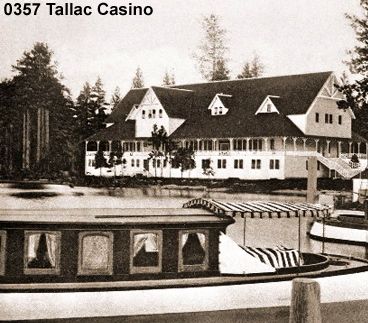
They formed the Lake Tahoe Railway and Transportation Company and purchased from the parent firm, the steamers “Meteor” and “Emerald I.” From Lucky Baldwin, they purchased the steamer “Tallac,” renaming it the “Nevada.” And in 1896 they built the 169-foot “Queen of the Lake,” the “Tahoe.”

In addition, they bought out both the Glenbrook and [Meyers-to-Bijou] Lake Valley Railroads, tearing up the rails and moving them [along with all the buildings and equipment they would need for their new operation] across the lake to Tahoe City.

Their new railroad, excursion in nature and featuring an open-air observation car and opulent parlor car, ran from Tahoe City 13 miles down the Truckee River Canyon to Truckee, where it met with the Central Pacific out of San Francisco.

In 1901, the same year their railroad was completed the Bliss family built world-famous Tahoe Tavern at Tahoe City. From the Tavern’s eighth-of-a-mile-long trestle pier which extended out over Lake Tahoe, passengers, mail and freight destined for ports of call around the lake were transferred to the company owned steamers “Tahoe” or “Nevada,” now providing mail and excursion service on an uninterrupted year-round schedule.

Meanwhile, over at Glenbrook the sons of Duane L. Bills built the present hotel and resort complex using some of the old houses and mill buildings. The year was 1906.

“Innkeeping was not a new thing when the resort complex went in,” said Bliss. “As far back as the 1860’s, Glenbrook House [a 2½ story wayside inn that fronted directly on the Lake Bigler Toll Road, the main artery of travel between Friday’s Station at the base of the Kingsbury Grade, and Carson City] catered to such distinguished patrons as Presidents Rutherford B. Hayes and Ulysses S. Grant, General William Tecumseh Sherman, Mark Twain and John Muir.”

“Perhaps the one question that is most asked of me,” said Bliss, “is why my grandfather [William Seth Bliss] sunk the Tahoe.” The “Tahoe” had been the Bliss family’s most famous steamer, and from 1896-1934 had carried up to 200 passengers, plus the mail and supplies to different ports around the lake [until the coming of improved highways in the late 1920’s].

“It was truly out of sentiment,” Bliss said. “Grandfather didn’t own the boat at the time and it was just sitting in a dry dock up at Tahoe City in a state of disrepair and being vandalized. Since it as fashionable to sell steel scraps to Japan in 1940, grandfather bought the hull [and later the hulls of the “Nevada” and the “Meteor”] for practically nothing. He then had her towed back across the lake to Glenbrook Bay, and in August of 1940 he sentimentally sunk her in the lake she had crossed and circled thousands of times in nearly half-a-century of operation.”

“The Nevada and the Meteor [which also met with identical fates] have never been located, but the Tahoe has been in approximately 370’ of water half-a-mile off Glenbrook pier. There have been parties interested in raising the Tahoe, but it appears it would just be too costly.”

“Ever wonder how Levi Straus, the famous jeans-maker, came up with his idea for the ever-popular levis?” asked Bliss.

“Legend has it that levis date back to the days when Hank Monk, pioneer stage driver along Tahoe’s Bonanza Road, often had Straus for a passenger. And Straus, taking notice that his driver wore a corduroy outfit, patched in spots with harness rivets, simply took up from there!”

Today, the historic little community of Glenbrook looks with pride upon its present role as a modern community with remarkably scenic grandeur, fine homes, sandy beaches, a public golf course, and a renowned resort complex – all situated near the Bliss family’s graceful old home, still standing in a peaceful setting of meadows, gardens and treeshaded lawns.


Sierra begins season with trash removal

Sierra Resort has planned its annual Keep Sierra Clean day for Oct. 10 at 10am and has set a target of collecting 10 pounds of trash per attendee from the slopes.

In addition to doing good for the local environment, this event annually builds momentum heading into winter for those most loyal to Sierra-at-Tahoe. Friends, family, local ski and snowboard teams, and dedicated passholders turn out to show their love for the mountain by giving their time and effort to keep it beautiful.

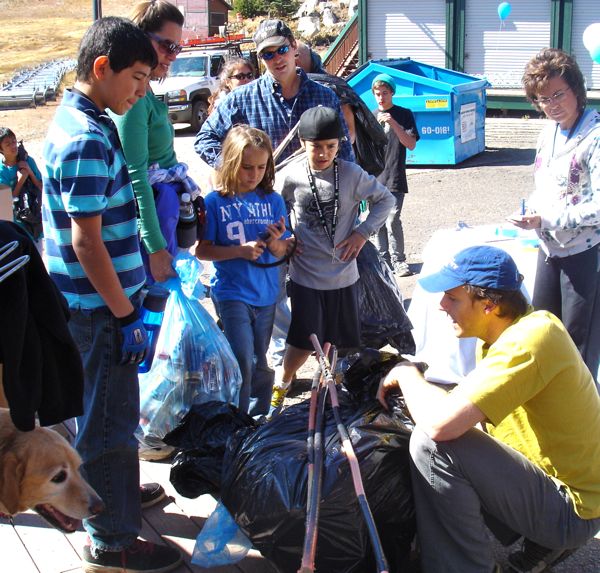
Trash from the 2009 event gets weighed at Sierra. Photo/Provided

Trash from the 2009 event gets weighed at Sierra. Photo/Provided

This year’s collection effort will cover some of the most impacted trails and base area locations, as well as spread out across areas that have not been covered by previous year’s events. All of the trash will be weighed and collected, with prizes given in a variety of categories. There will be a barbecue with live music by Acoustic MoJo at the end of the day to celebrate Keepín Sierra Clean.

Participants should come prepared to navigate steep and sometimes rocky terrain with sturdy footwear. Work gloves are recommended. To help keep the event low-impact, participants should also bring their own water bottles.

After the conclusion of the event, there will be a tailgate ski swap in “B” Lot, where participants are invited to buy and sell ski and snowboard gear. There is no fee to participate in the swap, which will end at 3pm.

Event schedule:

10:10am registration begins

10:30am head out on the mountain

Noon live music by Acoustic MoJo

12:30pm gather by the main lodge to weigh trash

1pm BBQ begins

1:30pm prizes distributed

2pm ski swap begins

3pm event concludes.


Tahoe City route transformed into kids’ discovery trail

A new nature trail at Granlibakken, just outside of Sunnyside-Tahoe City, allows parents to introduce their children to nature in an entertaining and educational manner.

The half-mile “discovery trail” features a variety of stations designed to teach kids about the lifestyles and habitats of animals. Its format combines the fun and excitement of a playground with the educational possibilities of a museum. By combining active elements, where children crawl, jump and run, with opportunities to explore and observe interesting natural phenomena, it simultaneously caters to a child’s need for physical exertion and desire to learn about the natural world.

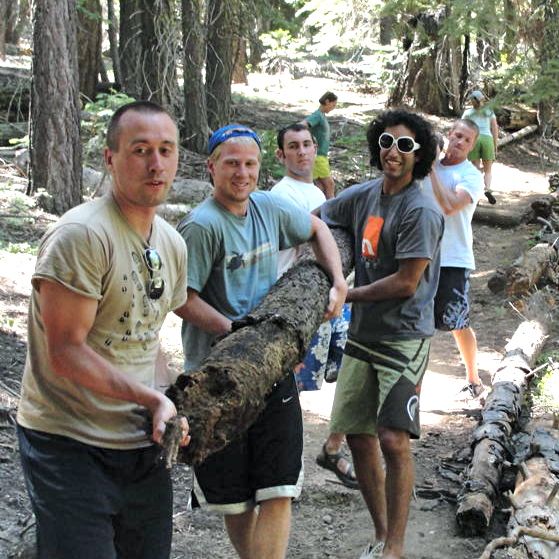
Members of Family Nature Summits build the discovery trail at Granlibakken. Photo/Provided

Members of Family Nature Summits build the discovery trail at Granlibakken. Photo/Provided

For instance, a gathering of tree stumps encourages kids of all ages to hop from place to place while pondering a frog’s mode of transportation, and a set of “critter covers” – hinged lids that open up to reveal salamanders and millipedes – teach them about the habitats of crawling creatures.

The trail was built by volunteers from around the country, who assemble every year at a different wilderness destination to learn about, enjoy, and give back to the environment. This year the organization, called Family Nature Summits, selected Lake Tahoe for its week-long program.

During the week, participants of all ages hike, kayak, bird-watch, and participate in a variety of other activities designed to teach them about the ecology and culture of the area in which they are recreating.

As part of the week’s activities, each participant dedicates a few hours to a community service project decided upon by the group’s leadership. Since the program attracts hundreds of attendees each year, this small investment of individual time is multiplied into a considerable labor force. Past projects have included planting trees in Utah’s Wasatch National Forest, removing invasive vegetation in the Smokey Mountains of North Carolina, and maintaining trails in several wilderness areas.

This year’s community service project was designed and led by Liz Brownlee, a conservation educator and longtime summiteer.

“The Discovery Trail is a space for kids to connect with nature, to see its wonders, and to have fun. That connection with nature is incredibly valuable for kids because it stimulates creativity, confidence, respect and so much more. Nature benefits, too, because each child playing in the woods is one more person who cares for the land, who wants to see it protected for the next generations,” Brownlee said in a press release.

For more information or to register, visit the website.


Lakeside Inn — an ideal spot to turn a year older

By Kathryn Reed

STATELINE — No wonder Lakeside Inn is a favorite with locals. Good food, excellent prices, fun dealers, great guest service. And no wonder tourists and locals like to stay there. Reasonable room rates, spacious hot tub, outdoor pool that isn’t visible from the highway, walking distance to lots of things.

Having never stayed at the hotel-casino, I didn’t know what to expect. I was pleasantly surprised.

Fries, beer and the Giants -- two out of three were good that night. Photos/Kathryn Reed

Fries, beer and the Giants -- two out of three were good that night. Photos/Kathryn Reed

For starters, as a non-smoker it was so nice to walk into what’s called the Edgewood Lodge and not smell smoke on either of the two floors. I didn’t even know the lodging buildings existed because I’d only been to the main casino and Latin Soul.

Wow – was my initial reaction walking into the room – because of the balloons with a note wishing me happy birthday. Anytime the folks operating the inn know a special occasion is the reason for the overnight stay, something special like this is done for the guest.

It was that added little touch that started last weekend off right.

We had one of the suites – providing ample room for birthday gifts, to set up a makeshift office and to feel like we had a home away from home for a weekend.

What got me interested in staying at the Lakeside is getting an email saying they had a deal for me with September being my birthday month. Oh my. They know how to treat a girl right. (OK, everyone who gets older gets special treatment.) Lodging discounts, a free meal, free drink, buy-in deal on poker, match play at other tables, a T-shirt and free coffee are part of the deal.

Walking around

It was time to explore the other side of town. Being typical locals, we tend to hang out in our neck of the woods near the Y.

We decided to go check out Heavenly Village since it had been a while and we’d heard good things about the Stateline Brewery.

Sitting in the seasonal outdoor area, we had a beer. (Be sure to go during happy hour.) A group of guys probably in their 30s were in town to do a little bonding while their wives and children were at home.

People drifted in and out of the shops. It was good not to see too many vacancies. Others were attempting to sink the colored ball in one of the putt-putt golf holes.

I keep trying to be a believer in villages. And still, not a single one in California has won me over. Explore Tahoe and the Heavenly gondola are definite reasons to visit this village.

Walking back, we were going east with traffic along Highway 50. Not a great idea. No sidewalk past MontBleu made me think I was in South Lake Tahoe.

The next morning we walked to Rabe Meadow to Nevada Beach. All along the way we picked up trash as part of Coastal Cleanup Day. It’s nice having this acreage so close for people who want to get outdoors.

Food, glorious, food

Friday night’s dinner came with a sunset view of Lake Tahoe atop Kingsbury Grade at the Chart House. Yes, a vegetarian at a steakhouse. But have you seen this view? The $15.99 all you can eat salad bar is a treat in itself. I skipped the caviar, but I don’t know of another salad bar in the region that has the offerings this one has.

Sue was delighted with her $28.99 filet mignon.

Skip the fried asparagus. “Jumbo spears, topped with fresh tomatoes and blue cheese butter” sounds better than what was delivered.

Richard was a superb waiter and could show a thing or two about what guest service is all about to his brethren in other South Shore eateries.

As a little twist, the top of my menu said, “Welcome to the Lake Tahoe Chart House – Happy Birthday Kae!” The other birthday people around us thought this was a pretty cool way to start the night. And we could all take the menus home as a souvenir.

Definitely save room for the Hot Chocolate Lava Cake ($9.99). The only place I’ve been that does this type of dessert better is The Beach House in Kauai.

The next night we stayed in at the Lakeside, choosing to try Latin Soul again. We had been there shortly after it opened. The biggest complaint then was smelling smoke from the nearby sportsbook. Whatever they did to the ventilation system worked.

We should have shared an entrée – the portions are that big. Sue indulged in a chicken enchilada, while I had a burrito. Vincente said they could put portabella mushrooms in it instead of meat. Yummy!

Two entrees and two beers came to about $25.

The morning we left we chose to eat at Lakeside’s other restaurant – Timber House. We had spent a little time in the bar the night before – watching the Giants lose. It was hopping then and it was hopping mid-morning.

The wait staff said locals are the ones who are usually at the tables eating.

Sue chose breakfast – an omelet she would order again; and I went with a veggie sandwich that I would gladly have again. Two meals and two bloody Mary’s cost us another $25.

Chilling at Lakeside

After doing our volunteer work on my birthday, it was time to relax. The pool at Lakeside is inviting. It’s heated through September. With the outside temperature in the 80s, I was happy to bake in the lounge chair and catch up on some reading.

The night before we had met a couple women on a girls’ weekend away from home in Reno. They had left husbands and children behind to enjoy Tahoe and the Genoa Candy Dance.

An oversized tub with jets was a perfect place to land one night. The bath salts are a great touch.

With televisions in the main room and the bedroom, it means not having to watch the same thing if you don’t want to. A mini kitchen allows for refrigerating items and heating things up in the microwave.

With the property turning 25 years old in May, it looks a bit dated. But the rooms and property are clean, the guest service impeccable, the food delicious.

It’s a bit of that old Tahoe funky that some of us love and hope stays around to keep the South Shore from being something it will never be and yet so many want it to be – upscale and soulless.

Lakeside does want to make improvements. I just hope in doing so it doesn’t lose its character and the reasons why locals fill the tables, bars, restaurants, and hotel rooms.

Talking to employees they said Sept. 24 was one of the best days of the summer tourism season. The confluence of Street Vibrations (there were a lot of bikes in the parking lot), Lake Tahoe Marathon, events in Carson Valley and fall being the best season in the basin apparently made for a profitable weekend.

It was profitable for me on my birthday. Sit at Diana’s table next time you want to play blackjack. I like turning $20 into $200. It’s probably a good thing I only gamble every few years because I know this kind of luck doesn’t hold. After all, when I lived in Vegas I cashed a paycheck once and lost the whole thing. But that’s another story.

The story I’m sticking with for now is the Lakeside is a great escape – all six miles from home. I know I’ll be back to the restaurants before I get next year’s birthday coupons.

For more information:

Website

Telephone: 800.624.7980

Address: 168 Highway 50, Stateline

ngg_shortcode_0_placeholder (Click on photos to enlarge.)


El Dorado struggles to provide child care without state budget

By Vicki Barber

The failure by the Legislature and the governor to pass a state budget threatens child care for hundreds of local families and potentially closes down local child care businesses.

State preschool and child care providers with state contracts have not been paid since July 1 for services provided to approximately 1,100 children, creating a cash flow crisis that threatens their ability to keep the doors open and the children served. Businesses cannot continue to provide services and make payroll without getting paid.

Choices for Children, El Dorado County’s local resource and referral program, makes payments for child care for low income working families and has been forced to notify providers that they will not be able to pay for child care services as of Sept. 1 until the budget is passed and the state begins to make payments.

“This is the first time ever that we will have to delay payments affecting local child care providers caring for 187 families involving 323 children. Since child care keeps El Dorado County working, this will heavily impact county unemployment and the economy. When families can’t pay for child care, licensed programs are forced to close their businesses,” said Tina Barna, Choices for Children director.

The current record-setting budget impasse is harming the businesses that contract with the State of California and threatens working families. Child care is an essential service that enables parents to go to work and supports children learning. Please contact your legislators and insist that they get back to work and pass a budget that is fair to our children and families and supports quality education.

Vicki Barber is superintendent of education for El Dorado County.


STHS students honored for advanced placement knowledge

Forty-four students at South Tahoe High School have earned AP Scholar Awards in recognition of their exceptional achievement on advanced placement exams. The College Board’s Advanced Placement Program provides students with the opportunity to take rigorous college-level courses while still in high school and to earn college credit, advanced placement, or both for successful performance on the AP exams.

About 18 percent of the nearly 1.7 million students worldwide who took AP exams performed at a sufficiently high level to also earn an AP Scholar Award. The College Board recognizes several levels of achievement based on students’ performance on AP exams.

David Wise qualified for the National AP Scholar Award by earning an average grade of 4 or higher on a 5-point scale on all AP exams taken, and grades of 4 or higher on eight or more of these exams. Wise is attending the Massachusetts Institute of Technology on a full scholarship.

Twelve students qualified for the AP Scholar with Distinction Award by earning an average grade of at least 3.5 on all AP exams taken, and grades of 3 or higher on five or more of these exams: Cameron Allen, Sarah Breisacher, William Caglia, Stephany Campuzano, Kory DiGrande, Hannah Elder, Kathryn Kalinowski, Michael Suglian, Anna Tikhomirova, Ariana Truszewski, Kyle Wilkinson and David Wise.

Nine students qualified for the AP Scholar with Honor Award by earning an average grade of at least 3.25 on all AP exams taken, and grades of 3 or higher on four or more of these exams: Nicholas Brower, Justin Dalton, Alexis Holmes, Annie Lineberry, Ellen Martin, Marriela Penollar, Tiffany Racz, Kelsey Smith, Hannah Wheelen.

Twenty-three students qualified for the AP Scholar Award by completing three or more AP Exams with grades of 3 or higher: Erika Cook, Erik Cramer, Kelsey Davinson, Elisa Escobar, Melissa Ewing, Kristine Guarino, Jennifer Gutierrz, Brady Hiob, Rachel Kaufer, Catherine Kushner, Jessica Levine, Marisol Lizaola, Melissa Miller, Peter Pielaet-Strayer, Nicholas Pillsbury, Ashleigh Richardson, Rebecca Sanders, Jaclyn Tain, Madison Treiber, Dana Tumbaga, Karla Virrueta, Jordan Yingling and Jordan Zager.


Entrepreneurial spirit needs to resurface to save Tahoe

By Garry Bowen

Back in the day, when Harveys was the Wagon Wheel with Food, Fun & Fortune as a slogan, we locals used to kid each other that Tahoe’s business climate was conducted in only one of two ways, depending on the time of year: fast or half-fast.

In the time since, we seem to have sacrificed the former and settled for a constant pattern of the latter.

It may now be useful to offer a particular vantage point of what our joking actually meant to the South Shore. As the original Harveys was “one-stop” (a cold beer, a hand of blackjack, a period of time at a one-armed bandit, a sandwich, or a tank of gas) when it started in 1944, it had few employees – and they all had to wear several hats throughout their workday. At the time, everyone was able to pour you a beer, deal you a hand of cards, be a croupier, or run outside and pump the gas necessary to go back down to California. The only real remnant of that day and age is the Sage Room, as that area remains in pretty much the same place as then, even after the rebuilding (the ’80 bomb blast), the remodeling, the additions, and the changes in ownership.

Garry Bowen

Garry Bowen

Later in the ’50s, as Stateline grew, Shehadi’s was across the street to be bought by Harrah’s and George’s Gateway Club was on the corner of Stateline Avenue. That became Harrah’s Lake Club after Bill Harrah bought both, and the interior of the Lake Club harbored the original South Shore Room, ostensibly while the location we now know was being built, being opened in 1959. Sen. George Cannon of Reno’s Cannon Airport fame was the Gateway Club’s original proprietor, with the Cal-Va-Rado coffee shop across the street in California from the Lake Club coffee shop. Two ’50s-style sit-down coffee shops, imagine that.

About the same period of time, the “originals” of Heavenly (Valley), Rudy Gersich, Curly Musso, Chris Kuraisa, later Hugh Killebrew (as their attorney) brought in Dave Gay (Gay Propane) to develop the tramway, which opened in 1962. This was the era of Koflach leather ski boots, secured to skis with long-thong leather bindings, and long, skinny skis seemingly made out of barrel staves, soon to see drastic changes in ski technology. For example, with the introduction in 1965 of the Lange poured-plastic aluminum-buckled ski boot, “space-age” in its day, the skiing industry came into its own.

Setting that stage, it is important to note that the South Shore Room, heralding the big entertainer era, was actually opened before the Squaw Valley Olympics (1960), meaning that both the tramway and the South Shore Room were strong evidence of vision, decisiveness, and a level of entrepreneurial skill we really haven’t seen since. Even the Lake Tahoe Airport was an exercise in entrepreneurial courage.

After Squaw Valley, with its first globally-televised entrée of the Lake Tahoe region into the national and international psyche, was crowned a success, and the South Shore was picking up steam. Bill Harrah was intrigued by the international exposure, and being the man that he was, began looking at how to tap into the now worldwide exposure that only Olympic events can secure. His answer was to think about extending the runway at the airport to accommodate planes large enough, and with enough range, to entice an international clientele. This would require large commercial jets, and soon the Harrah’s Starliner was born – with the familiar and graceful “swoop” underneath the Harrah’s logo that exists to this day, he instead used a number of stars following the same gentle arc on the side of the Starliner. With both the airport and the proper sized plane in place, he embarked upon the now-obscure junkets direct from our now-moribund airport to Mexico City, where folks from Caracas, Buenos Aires, and elsewhere, joined those already assembled in Mexico City to fly directly into the Lake Tahoe Airport.

From a gaming perspective, this added a particularly elegant spin to the Tahoe South Shore experience, coinciding as it did with the introduction of baccarat, a simple and cosmopolitan game of high dollar fame. It appears that its introduction was thought to be more of an attraction to the sophisticated upper-end clientele of European descent, and as a baccarat dealer had to speak at least three languages (ala Europe and South America), they were also dressed elegantly: black tie, cummerbund, and dinner jacket.

As baccarat is traditionally played only with cash (no chips), and is played relatively fast – it is only you against either the player or the dealer, with a high count of 9 (face cards are counted as zero), their floor-to-ceiling glass enclosures were a sight to behold, as real money changed hands, sometimes in amazing amounts.

This in turn compounded the “dinner show” experience, also similarly (but not quite) dressed up, as baccarat enclosures were alongside the entrance to the South Shore Room – creating a special Tahoe cachet. This, combined with the more egalitarian “nickel player” and Oriental keno players, assured that all the “sales per square foot” aspects were covered across the entire casino floor, with food and beverage to match.

Ironically, after Bill Harrah died, and the Harrah’s enterprise changed hands, the focus was lost, as it changed to more of a bottom-line emphasis, as the business model success that Harrah achieved with his comprehensive innovations became a convenient source for corporate bean counters to cut.

One glaring example concerned the now-successful Embassy Suites next door – it replaced a large valet parking lot that spanned the space between Harrah’s and the now-gone 600 room Tahoe Inn. As Harrah’s was purchased by Holiday Inn, the hotel mentality took over, as the large prominent space looked pretty inviting to develop. Only problem was the existing valet parking lot was generating more cash flow for Harrah’s than could any hotel/motel property due to the fact that, in a location like Tahoe, reliant as it is on Highway 50 and ’50s era car travel (still), cars were pulling into Harrah’s even before they were even in Nevada, and the parking lot spaces could be filled with new customers on an ongoing basis, around the clock. The 500-car valet parking lot was turned over five or six times in 24 hours versus a 400-room Embassy Suites having each room turn over but once – regardless of full occupancy. That parking lot also did not have a capital expense of over $100 million, while at the same time diluting Harrah’s traffic flow, thereby its revenue stream. Harrah’s lost significant ground – literally.

A valet parking lot may not seem to be an important business element, but “Attendant” parking was a stand-alone department for Bill Harrah, but was soon subsumed into just another hotel function for a hotelier — a mere channel into a room check-in. The difference in emphasis is profound, as the efficiency of that department resulted in yet another synergistic compounding of the business innovations already mentioned for Harrah, and resulted in their ongoing Stateline prominence over Harvey’s, Sierra Tahoe, and Caesars.

In this milieu, the weather was also a business consideration, which is easiest described as “make hay while the sun shines”. As provincial as that now seems (almost quaint), it was nevertheless a serious factor.

Coming out of the ’40s and ’50s, the highways openings and closings were not as reliable, in that Highway 50 was closed a lot more during winter. This created an atmosphere that cultivated the idea of doing as much business as you could during the emerging spring, as much as possible during summer, and the nurture of another market descending into fall. Winter would then take care of itself, with one exception: if your business employed people with families, rent and mortgages to pay, food and clothing to buy, then you had better have some customers whether it was day, swing or graveyard. The answer was to have, only in late fall into emerging spring, a “leave-the-driving-to-us” (thanks Greyhound) marketing campaign to bus-in supplemental clientele, shoring up what Bill Cosby, Glen Campbell, Sammy Davis Jr. and Ann-Margret drew in the ever-busy summers. Current corporate management’s only emphasis is to insist that the “shoulder season” should be as lucrative as summer, even though they were chipping away at their own “making hay” by canceling big entertainment, and not fully understanding what they had in the first place. Flattening out your revenue streams is obviously not the answer, and will not ever be.

Slow-forward to now (emblematic of a serious decline) and realize that such business models are no more, now combined as they are with the “picture-postcard mentality” inherent to a second/third home real estate emphasis, and the need for a serious reinvention of South Shore economy is much easier to perceive.

Couple this with a serious lack of negotiating skills (for insight, the word business in Spanish is negotio) it becomes much clearer why progress is seriously undermined with our now-infamous “Ta-hole”, our transit system going bankrupt with an over $2 million deficit (in spite of having a dozen-member board), and now the ridiculous contractual discussions shutting down our gateway project at El Dorado Beach.

This long look-back is timed with the “au currant” popularity of the soon-to be-done Prosperity Plan, as Tahoe will need to extend its perspective with a foundation of understanding what Tahoe has been to its constituents (whether they live or just visit). It has the deep “carriage-trade” roots of other eras, a history of profound entrepreneurial innovation, and magnificent natural beauty, all very transferable into new sustainable economic development, but not if it thinks in continued terms of ‘half-fast’.

To restore our confidence in ourselves requires a nostalgic appreciation way beyond such environmental symbiotic relationships like those of the TRPA and “Keep Tahoe Blue”. We don’t need to be “fast” and certainly not “half-fast”. We need to “get real” real fast.

Garry Bowen has a 50-year connection to the South Shore, with an immediate past devoted to global sustainability, on most of its current fronts: green building, energy and water efficiencies, and public health. He’s also in the process of planning with his classmates their 50-year South Tahoe High reunion. He may be reached at tahoefuture@gmail.com or (775) 690.6900.


Questioning whether Twain visited cove to be named after him

By Steve Timko, Reno Gazette-Journal

Writer Mark Twain is being honored by having a body of water at Lake Tahoe named after him.

But one Lake Tahoe writer opposes the honor because it perpetuates what he said is a myth that Twain had a connection to that specific location.

The Nevada State Board on Geographic Names voted recently that a cove on the eastern shore of Lake Tahoe, just south of Sand Harbor and north of Thunderbird Lodge, will be named Sam Clemens Cove.

Some think that’s the area where Clemens visited in 1861 when he planned to stake a claim on timber and accidentally started a forest fire 149 years ago.

Read the whole story