Drug Store Project
Drug Store Project is March 29 form 8am-3pm at Lake Tahoe Community College in South Lake Tahoe.
For more information, click here.
Drug Store Project is March 29 form 8am-3pm at Lake Tahoe Community College in South Lake Tahoe.
For more information, click here.
2010 is turning out to be the year of the education documentary. This summer, no fewer than four documentaries, most of them independently produced, were released. All present various perspectives on the current state of U.S. education. School reform has become compelling drama and the media attention surrounding these films and others has helped spark a national debate.
To give this important issue the platform it deserves, Sierra Nevada College’s Teacher Education Department has collaborated with Lake Tahoe School Parents Association to present the 2010-11 “Discussions on Education Series.”
During the next few months, the series will present “The Race to Nowhere,” “Two Million Minutes,” “Do Schools Kill Creativity,” and “Bring on the Learning Revolution” on the SNC campus, Tahoe Center for Environmental Sciences, rooms 139/141, Incline.
The first film “Race to Nowhere” will be screened Nov. 4 at 6:30pm.
The series will explore depictions of the American school system from provocative, at times opposing, perspectives with the intent to start and support an on-going dialogue among the audience; and to seek answers, discussion, and understanding from a variety of points of view. The premise of the SNC/LTS discussion series is that the documentaries are the start of the conversation and not the end.
Facilitators from both schools will lead post-film discussions designed to create positive dialogue about the challenges facing education reform in the U.S.
All events are free and open to the public. Seating is limited.
For more information, contact Katrina Midgley, Teacher Education Department, at (775) 831.1314, ext. 7517, kmidgley@sierranevada.edu, or Mary Danahey at marydanahey@gmail.com.
Upcoming discussions:
Jan. 13: “Two Million Minutes” is a groundbreaking, controversial documentary film about how students in the United States allocate their high school years (approximately four years or 2 million minutes) compared with India and China. www.2mminutes.com/films
March: “Do Schools Kill Creativity” and “Bring on the Learning Revolution” are two TEDTalks lectures by visionary leader/author Sir Ken Robinson in which he challenges the education system to cultivate creativity and acknowledge multiple types of intelligence. http://www.ted.com/speakers/sir_ken_robinson.html.
To the community,
This is just a reminder regarding an important gathering and conversation about the Tahoe economy and its arts alternatives that is taking place this Saturday at the Ski Run Marina.
“Liberty” takes on lots of significance when it is figured in as a major component of financial freedom. Please attend and encourage others to do so. We, the South Shore in particular, need to look hard and deeply at how the business of art can offer economic help and long-term sustainability to our business and employment base.
Take a long look at the poster — this will be a fun time. And it’s an important initial step in re-educating our citizenry and city as to how we can get and keep more “ga$” in our engine. Getting to know the “players” and others with this common concern is our goal. We are not reinventing the wheel, just realigning it.
Let’s talk and then act. The art$ are good for business.
Robert Schimmel, Tahoe Art League
Each November, members of the North Lake Tahoe Resort Association elect and/or re-elect members of the board of directors.
This year, there are three open seats, including small lodging, recreation and general. All are three-year terms. The filing deadline for interested candidates is Nov. 5 at 5pm.
Nine of the 11 seats on the NLTRA Board of Directors represent a category of chamber/NLTRA membership. Those interested in running for a seat must be an owner or manager of an active member in good standing or the designated representative of that member, of the membership category that he/she represents. According to the organization’s bylaws, one business may not have more than one board seat at a time, regardless of the number of membership categories for which that member may qualify.
For election purposes, consistent with the bylaws, a qualified board candidate must be from a business, which has a primary office or location within the Placer County portion of the North Lake Tahoe membership area. The business must also have a Placer County business license.
Ballots will be mailed to voting members by Tuesday, Nov. 9, and are due to the office of McClintock Accountancy Corporation no later than Nov. 30. The results will be announced Dec. 1 at the NLTRA Board of Directors meeting at 8:30am at the Tahoe City Public Utility District Board Room.
For more information about the election or to file for nomination of a board seat, call Kym Fabel, North Lake Tahoe Chamber of Commerce manager, at (530) 581/8764 or kym@puretahoenorth.com.
The Heavenly Snowboard Foundation is hosting the Bijou Battle Skate Jam Oct. 23 at the Bijou Skate Park in South Lake Tahoe.
This event is a family event and all ages are welcome to register and participate. The event is a fundraiser for the Heavenly Snowboard Foundation, a nonprofit that helps youth in the community experience snowboarding.
Registration will begin at 8:30am with a rider’s meeting at 10:30am and event kick-off at 11am. Helmets are required.
Cost is $10 and includes an event T-shirt (supplies are limited). The competition will be a jam format, with each division allotted 10 minutes, only 10 riders will be allowed per session. Three judges will be judging on overall impression, trick difficulty, landings and style.
Males and females will compete together. Divisions are: 9 and under, 10-13, 14-17, and 18 and over.
Prizes will be given to the top finishers in each division and include skate decks, trucks, wheels, backpacks, and tons of other donated items.
The Bijou Battle will feature a tent village with vendor tents from the Heavenly Snowboard Foundation, U.S.A.S.A., Shoreline, the Heavenly TPC and others. There will also be a bake sale, food vendors and a raffle.
If you have questions, contact Aimi Xistra-Rich at (530) 314.9285 or heavenlyssf@yahoo.com.
Sierra-at-Tahoe Resort honored three top employees at its annual Golden Eagle Awards dinner this month at the Swiss Chalet restaurant in South Lake Tahoe.
Each year, the Golden Eagle Awards dinner offers an opportunity for Sierra Resort’s year-round employees to acknowledge the hard work of the previous winter and look forward to the coming season.
“We’re a tight family here at Sierra Resort,” General Manager John Rice said in a release. “The Golden Eagle Award winners are people who have made some of the most significant contributions to this resort. We are proud of every one of them.”
This year’s winners are Cathy Johns in accounting (Golden Eagle), David Rios, Sierra Pub supervisor (Silver Eagle), and Dennis Cambron, Lift Operations supervisor (Bronze Eagle).
Johns has been a member of the Sierra-at-Tahoe Resort family for 14 years – always behind the scenes helping resort supervisors stay on track from a financial perspective. Often she is the first to arrive and the last to leaves.
Rios has elevated the level of service and the options at one of Sierra Resort’s busiest restaurants – the Sierra Pub. Comments from peer nominations for the award included, “Dave is always moving, always working, and is never too busy to jump behind the line and do the same job as his employees. Whatever it takes, Dave is there.”
Cambron is no stranger to the Eagle awards, having won bronze and silver in previous years. His flexibility is one of his strongest assets as he has overseen multiple departments in the past few years including Lift Operations, Parking, Tubing, and Ticket Checking.
By Toni Sopocko
OCEAN CITY, Wash. — Even living in a beautiful place like Lake Tahoe, sometimes you’ve just got to get out of Dodge.
For this year’s fall adventure we decided to take the land yacht (our 19-foot trailer) somewhere it had never been before — the Washington coast. We settled on shooting for the Olympic coastal town of Ocean City because it has a state park with campgrounds and we have generally had good luck with those in other states.
We were not disappointed.

Fires on the beach in Washington. Photos/Toni Sopocko
The park was great and it was just a short stroll through the shrubbery to the beach from our site.
But I had a hankering for more so we cruised north a little to another state park at a place called Pacific Beach. I thought I had found RV paradise. The state park has a few tent sites, but it’s heaven for trailers and motor homes with its beachfront property on a river mouth. We lucked out and got a site right at the sand and were able to watch the sun set that night while sitting on the lawn right behind our trailer.
High tide brought the waves up nearly to the breakwater below the trailers and low tide had us walking out hundreds of yards to the clam beds. The dogs had a fabulous time chasing seagulls from the shore during the day while we walked the beach collecting sand dollars.
At night we built bonfires on the beach and chatted with other campers.
It’s a great spot, but small, so next time we’ll make reservations. As it was, the coming weekend was open season on those thousands of clams that we knew lurked in the sand so we had to vacate our site. The timing was actually fortunate because a storm was heading in and with the total exposure of the campground; I suspect it might have been an uncomfortable weekend.

Northwest ocean beaches provide plenty of space to stroll.
While in Washington we took a couple side trips into the Olympic National Park. It’s a stunning place, though awfully wet. Shades of green on green like you’ve never seen in your life.
We drove around Lake Quinault, a lovely little lake. While there we saw the biggest Sitka spruce in the world and took a hike through a blow-down forest. They must get some incredible winds up there.
We wandered around the Hoh River — a distinct possibility for a future trip. We noted quite a bit of elk poop while there, so did some more snooping and were rewarded by watching a small herd ford the river. Several does and calves and one big buck that posed for some out-of-focus photos.
Buzzed up to the town of Forks where the “Twilight” movie was filmed to have some lunch. It’s a cute little town, seriously into its vampires. Even saw Bella the truck at the information center.
In the future I’d do a complete circle of the Olympic National Park when we can spend more time there – but not during the rainy season.
We headed south from there to Fort Stevens State Park in Oregon, just outside of Astoria. Astoria is a great little city at the mouth of the Columbia River. Lots to do. If you ever get there, you’ve got to go the Columbia River Maritime Museum. It’s a beautiful building with excellent displays of nautical history. Give it at least three hours. We spent most of a rainy day there, absolutely enthralled.
Astoria also has lots of good restaurants. One little spot we found was the Portway Pub. It’s “the oldest watering hole in the oldest American settlement west of the Rockies”. That alone was recommendation enough for me. They had great burgers and beer.

A lighthouse with history.
Fort Stevens Park is a nice place to camp, too. We did have to hole up for a day and a half in the storm, but the campground is well protected from the elements.
When we were able to get out, we found the park has a wonderful system of bicycle and pedestrian trails that wind for miles to the beaches, river and historic fort. There are batteries and barracks and a museum with lots of good information for the history buff. Fort Stevens was in operation from the Civil War to WWII. It was even shelled by a Japanese submarine, but no damage done and no fire returned, as the sub was too far offshore.
We spent a few days exploring the beach and the fort until it was time to get back to the road to head home.
I still have the sound of the surf in my head and in my heart.
By Tressa Gibbard
The Sugar Pine Foundation (SPF) is a local nonprofit working to save the sugar pines and other white pines from the threat of a nonnative, incurable fungus called “white pine blister rust.” The SPF is working to maintain Tahoe’s legendary environmental health and scenic beauty by finding sugar pine trees that are resistant to the blister rust fungus, collecting their cones and planting their progeny.
In October and November, the SPF will be conducting planting events throughout the Tahoe region. They hope to plant more than 5,000 sugar pine seedlings that will add to Tahoe’s healthy forests of the future – and they are looking for community volunteers to help with this task.
Community planting events are planned for Nov. 6 in the Angora burn and Nov. 13 in Zephyr Cove. At 10am volunteers will receive instructions and materials for the planting that will last until noon. Some seedlings will also be available for people to take home.
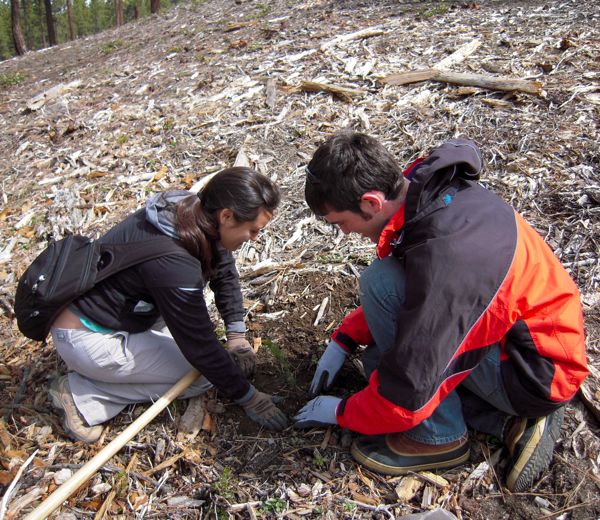
Sierra Nevada Alliance AmeriCorps volunteers Reyna Yagi and Nick Santos plant a sugar pine at the Sugar Pine Foundation's April community planting in Zephyr Cove. Photo/Provided
The Nov. 6 planting is a special event dedicated to the memory of Susie Kaiser. Kaiser served on the SPF’s board of directors and was tragically killed in a kayaking accident in late August. Kaiser’s friends and family have helped sponsor a community planting in her name on a lot in the Angora burn that Kaiser identified for sugar pine restoration.
The planting on Nov. 13 will take place at the Whittell High School in Zephyr Cove. The purpose of this planting is to enhance forest health by adding sugar pines in an area where the Jeffrey pines are heavily infected with mistletoe.
Planting trees is fun for everyone, kids and adults alike. Maria Mircheva, executive director of SPF says, “Kids especially love to come back and visit their trees.” Mircheva conducts plantings in conjunction with teachers and students throughout the Tahoe region. This fall, the SPF will plant trees with Glenshire Elementary School fourth-graders, Whittell High School students, and the sixth-grade class at North Tahoe Middle School.
Support for these projects has been obtained primarily from local sources, which is a testament to the community’s commitment to the environment. The Foresight Fund at the Parasol Tahoe Community Foundation and the Tahoe Truckee Community Foundation are funding the Whittell High School and Glenshire Elementary school plantings, respectively.
Sugar pines are renowned for their enormous cones and uniquely beautiful, octopussy shape, but less well known is the fact that they are the largest species of pine in the world. Historically, sugar pines accounted for 25 percent of Tahoe’s mixed-conifer forest composition at lake level. Today, due to heavy selective logging during the Comstock era of the late-1800s and the more recent introduction of the blister rust fungus, sugar pines account for only 5 percent of the trees in Tahoe’s forests.
Restoring Tahoe’s forest composition with sugar pines that can survive the presence of blister rust is highly beneficial for forest and watershed health, wildlife and fire safety. Maintaining Tahoe’s scenic beauty and recreational potential is also a key to sustaining tourism as the economic backbone of the region. Educating Tahoe’s youth about the importance of forest stewardship will ensure that this place is protected and cared for properly for generations to come.
There are so many good reasons to come out and plant trees with the Sugar Pine Foundation, so mark your calendar, bring the whole family, and plant some sugar pines this fall.
Nov. 6, 10am-noon, Susie Kaiser Memorial Planting at 1045 Coyote Ridge Circle in South Lake Tahoe. Street parking available.
Nov. 13: 10am-noon, Whittell High School in Zephyr Cove. Park in the school parking lot.
Please bring a shovel or trowel if you can.
For more information, visit www.sugarpinefoundation.org or call Maria Mircheva at (650) 814.9565.
Tressa Gibbard is development coordinator for the Sugar Pine Foundation.
By Garry Bowen
In the last article written, “Entrepreneurial Spirit Needs to Resurface to Save Tahoe” (Oct. 3, Voices), the seeming focus was on the “glory days”, as one respondent described my take on what made South Lake Tahoe’s economy so vital in the late 1950s and, in particular, the entire ’60s. Another derided the idea of “living in the past”, which only reminded me nostalgically that the “glory days” were in fact long gone.
Does that then mean that entrepreneurial spirit has no place in Tahoe ever again?
Well, if you would be kind enough to notice, that review of business entrepreneurial skill was necessary in order to put in appropriate perspective the idea that there is another kind of entrepreneurial spirit to consider when thinking of Tahoe’s future.
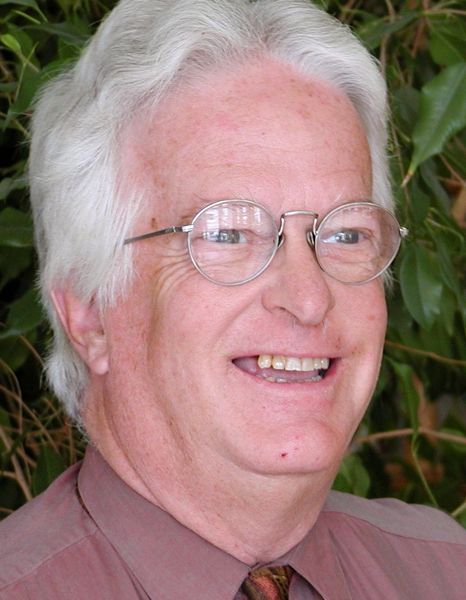
Garry Bowen
Civic entrepreneurship is the form needed to beckon business entrepreneurs to town in ever-increasing numbers; as the civic function will have to be awakened to adequately attract those who want to make a life here. In a very real sense, another community spirit will have to emerge based on a necessary but contemporary paradigm shift: that of sustainable economic development.
The new, but already highly-touted Prosperity Plan is in many ways our newest flavor of the month — similar to the description above, in that there are already folks positioning themselves to play heroic roles in its inception without even noticing that by its very creation the current gap is now actually wider than before doing it. We are once again ill equipped to proactively go forward.
The infrastructure now needed to realize balance is Redevelopment Area 2, with the prudent set-aside of funding to get it off the ground, so to speak, but the progenitors of such directions are beset by the influence of the Peter Principle. The marketing /promotional folks all seem to be champing at the bit to reinvent the town without a proper sense of what they have to work with.
Geotourism — everything from Apple Hill to Fannette Island to Vikingsholm to the Flume Trail to the earlier America’s Most Beautiful Playground campaign are, in one form or the other, already here or have been. Why haven’t they been considered as an attractive package before now?
As a matter of fact, now that it’s mentioned, they’ve all been here forever.
So, what is missing?
The Prosperity Plan has three clusters, two of which are geared to sustainable economic development: green building and sustainability, not to mention that health and wellness are also in that category by default. Given the difficulty of the electorate’s ability to embrace TRPA’s internal desire to make a shift which includes transect zoning’s rightful place in sustainable economic development, (even though, for their part, TRPA have not even been administering Dr. Robert Bailey’s IPES scoring the way he envisioned it) then the burden of “half-fast” thinking will still encumber us, in not fully realizing what we are working with – to make a point, the group paid to create a prosperity plan will move on, while sleeping dogs continue to lie.
The new reality in the world, which fortunately can embrace Tahoe’s need to renew itself, is actually of the same dimension as that of all environmental care and concerns in a sustainable way: develop in a way that is simply and completely conducive to life. This is fundamental to sustainable development: reduce the error of our ways, thereby reducing the very costs associated with those errors, inevitably leading to more “found” money. Simple, elegant, and profound are all prerequisites that may be necessary to meet Tahoe’s looming imperatives.
Or, in the words of Leonardo Da Vinci: “Simplicity is the ultimate sophistication.” Why complicate everything all the time?
Sustainable economic development can also, for Lake Tahoe’s immediate future prospects, be thought of as the ultimate civic engagement process, along with the actual and pragmatic realization that we are all in this together. We all recognize the tremendous need to change, but are always either jockeying for position to control it, or finding ways (ego or hubris) to argue about how to go about it. Both of these ways are unsustainable. Our direction, as now being portrayed, will continue to be ecotistic.
Lake Tahoe News prefaced the query of City Council candidates with a question about “being like Whistler”. Being like Whistler is a great standard, as this writer can easily testify, having participated with the folks there 10 years ago, at the time of their Olympic bid, but even that standard can be surpassed by considering Tahoe’s rebirth as the ultimate civic engagement project. We deserve no less but only if we work smarter.
As literally everyone is supportive of clean air, clean water, good health, reduced costs, and “better bang for the buck”, then a sustainable economic development framework has something for all in the “new and improved” sense, in the same way that Whistler has exported their framework experience to literally hundreds of municipalities across Canada. Even the U.N. noticed.
In the classically facetious sense, it is not “rocket science”, but as it is founded on the only irrefutable science we have, the Laws of Thermodynamics, it immediately satisfies the powers-that-be need to make all decisions scientifically-based. In fact, decisions elsewhere based on this framework have resulted in being able to plan over 100 year time spans, versus 20 years which become 23, 24, 25 due to the conflicted nature of the goals. Global decisions on local levels (the bumper sticker of yore) – a pragmatic and sustainable concept if ever there was one.
Harvard University, whose Kennedy School of Government I’ve been working with on civic engagement issues for over a year, gleaning insight about the issues rampant in my own hometown, recently concluded, in a draft paper, that all across America the main issue is, at No. 1, stalled progress.
This indicates that Lake Tahoe needn’t feel guilty, or uptight, about its current status – we just need more awareness of how to fill the wider gap created by the Prosperity Plan, so we don’t end up falling into it (as the void that it is now) in the same way that the community spirit fell into “Ta-hole”, BlueGo, and now Lakeview Commons. And then move forward to a greater destiny.
Creativity, innovation, and civic entrepreneurship will come, but Tahoe will need to learn better how to put the horse before the cart. The only known antidote to the Peter Principle is re-education – not a bad solution in a world that, from now on, will require lifelong learning. That will be better founded on a strong sustainable orientation. It is great to be able to do the right thing, but it is even more important to do the thing right. Set the proper foundation, have the patience to do it right, and then, success for posterity, full of prosperity – for people and the planet.
Garry Bowen has a 50-year connection to the South Shore, with an immediate past devoted to global sustainability, on most of its current fronts: green building, energy and water efficiencies, and public health. He’s also in the process of planning with his classmates their 50-year South Tahoe High reunion. He may be reached at tahoefuture@gmail.com or (775) 690.6900.
By Kathryn Reed
A sense of pride fills the students as they give adults tours of the school. They talk about their campus with enthusiasm. They know the answers to every question asked.
Starting in the hallway at Mount Tallac High School is a wall of student photos. They are part of the three A’s. Every week the wall is updated to reflect those who have excelled in academics, attendance and attitude.
On Wednesday, seniors Arnulfo Jimenez and Carlos Lopez take Lake Tahoe News around to the various classrooms as part of the annual open house at the alternative school in South Lake Tahoe.
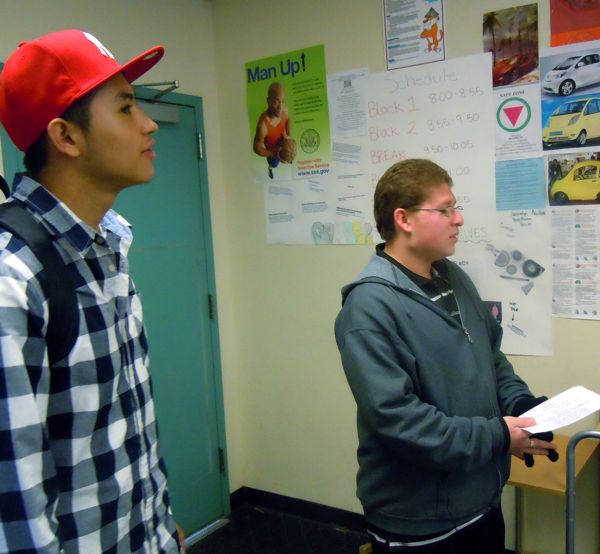
Mount Tallac students Arnulfo Jimenez, left, and Carols Lopez give a tour of the school. Photo/Kathryn Reed
About 40 people came through the morning of Oct. 20 – including most of the school board and Superintendent Jim Tarwater. It was considered an honor to be picked as one of the guides.
Some of these students have lives many in the community could not relate to.
The student who gave Tarwater his tour is living with her 18-year-old sister who is pregnant. Their parents were deported. The Tallac student works 40 hours a week to help support her non-traditional household. Before going to college next year, her first stop will be to visit her parents.
Jimenez and Lopez didn’t talk about their plight, what brought them to the continuation high school. What they wanted to talk about was continuing their education and getting jobs after high school graduation.
They like the flexibility Tallac offers them and the education they are receiving.
Jimenez explains how Matt Kauffman has started Sphere of Influence as an offshoot of the regular art class he teaches.
“It keeps kids from tagging illegally,” Jimenez explains. “It helps the community and it keeps the kids out of danger.”
Sharing this teaching space is Jackie Tan, who joined the staff earlier this fall from Diamond Springs.
Tan is working with the students to master math so they will be able to pass the state high school exit exam.
Hardly a speck of wall space is visible in Steve Simmons class. Student work is everywhere. Simmons teaches history, life and physical science, and monitors physical education credits.
“The kids set their own pace. No one micromanages. It’s up to them,” Simmons said. “They need to see the value in education.”
Clearly, the girls who use the nursery next to Simmons’ classroom see the value of an education even though they are already parents.
“Most of the girls are parents by themselves,” Lopez says outside the nursery where the little ones are sleeping.
The campus is expanding a bit. While the main high school just up the road gets millions upon millions of dollars in new buildings and equipment, Mount Tallac got one of South Tahoe High’s old portables.
The plan is this fall after some work is completed it will be usable as a counseling site. Right now privacy at the school is an issue. Principal Susan Baker and counselor Amy Jackson share office space.
Tours of Mount Tallac may be scheduled any time – not just on open house day – by calling (530) 543.2245.