Understanding the types of domestic violence

By Jennifer Marshall and Liliana E. Sanchez

After going over the different stages of the cycle of violence in yesterday’s article, we begin to understand a bit more about the way in which abusive relationships work. Today, we are going to take a look at the abuser and try to understand the characteristics and tactics of those who batter.

wo centerDomestic violence and emotional abuse are behaviors used by one person in a relationship to control the other person. Partners may be married or not married, heterosexual, gay or lesbian, living together, separated or dating. Many men are in abusive relationships, however the most common victims of abuse are women and children. There are many tactics perpetrators of abuse use to gain and maintain power and control over their victims.

Types of abuse include physical, emotional, sexual, financial and verbal abuse as well as making threats, using children as a manipulation tool, intimidation, and isolation. The most widely known and most dangerous form of abuse is the physical form. Physical abuse can involve a range of tactics including pushing, dragging through the house, kicking, threatening with weapons, rape, pulling hair, and more. This type of abuse is often when the police and medical teams become involved.

Emotional abuse can involve the abuser embarrassing their partner in front of others, constant put-downs, forcing their victim to live in a home with drugs and alcohol, constant demand of their partner’s time, suicide threats or attempts, unpredictable behavior, and the silent treatment.

Someone can also sexually abuse their partner by forcing unwanted sex, making the person feel that it is their duty to have sex, forcing their partner to get pregnant, or physically harming the person if they do not have sex.

Abusers often control all of the family money and may not allow their partner to work or get an education, or on the other hand, will refuse to get a job.

Verbal along with emotional is the most common form of abuse and involves constant put-down by the abuser, the victim being told they are crazy, stupid, or lazy, the abuser using racial slurs, and even threatening to kill their victim. Many victims report that broken bones will heal, but verbal and emotional abuse leaves a more permanent scar.

Other common tactics of abuse include intimidation, isolation, and using the children as a form of control. Abusers may intimidate their victim through looks, actions, tone and volume of voice, and destroying property to instill fear in their partners. Isolation is common and can include controlling where their partner goes, excluding family members and friends, and not allowing their partner to get a driver license or use the vehicle.

During the winter months, South Lake Tahoe is an ideal spot for the isolation of victims as we receive hundreds of inches of snow per year. Victims without transportation may be trapped in their homes with their abusers for days at a time. Abusive partners may also make their victim feel guilty for having children and may use the children to deliver intimidating messages that continue the abuse even after a victim has left the relationship.

So, why does someone become abusive? It is important to realize that physically and psychologically abusing an intimate partner is not an issue of anger management, but a learned behavior or a choice that a person makes. For example, many abusers are able to manage their anger quite effectively with friends and co-workers, and only use that anger in a negative way when they choose to batter their partner or their children. There is no definitive way to determine why some people are abusive and some are not, but there are common psychological and environmental characteristics and factors that increase a person’s risk from becoming an abusive person.

Many batterers grew up in homes where they experienced or witnessed abuse themselves and never learned healthy ways to cope with everyday stresses. Many individuals feel that they never had any power or control over their own lives, and now finally, they can assert power over someone else. For some men who batter, physical and emotional abuse is often the result of a man’s belief that women are an inferior gender. They see women’s behavior as wrong, inappropriate, or even evil. With this belief, some men feel that it is necessary to control women, and will use violent and abusive actions to do so. This type of thought is generally not personal, but rather social and cultural. These social norms and beliefs do not force anyone to be abusive, but can explain the source from which the choice to abuse comes from.

As there are environmental factors that can lead to abusive behavior, there are also risk factors that can exacerbate abuse. Although many victims and batterers have substance abuse problems, there is no evidence that alcohol or drugs cause violent behaviors. An abusive person will batter their partner when they are intoxicated as well as when they are sober. Many times, alcohol and drugs are used as coping mechanisms for other problems that the batterer is dealing with such as depression, child sexual abuse, witnessing abuse as a child, and other psychological disorders.

While environmental and psychological factors can increase a person’s risk for becoming abusive, it is very important to recognize that abusive behaviors are almost always a choice and therefore can be controlled. With that said, what can we do to decrease domestic violence in our community? Long-term Batterer’s Intervention Programs are available to address issues of abuse and work with male and female abusers to hold them accountable for their behaviors and allow them to recognize and change their behavior. We can work to reduce prejudice against women and batterers would be less able to justify the abuse to women and the community.

It is also important to provide unconditional support to victims throughout their relationship and if they decide to leave. We need to realize that it is possible to prevent abuse before it starts and can begin by respecting and valuing young boys and girls as equals as well as supporting young girls to increase their self-esteem and become powerful individuals.

For more information about domestic violence, prevention, and intervention programs, please contact the South Lake Tahoe Women’s Center at (530) 544.2118. The Women’s Center Business office was financed through a low-cost loan from the Rural Community Assistance Corporation.

Jennifer Marshall and Liliana E. Sanchez work for the South Lake Tahoe Women’s Center.


Wind advisory on Lake Tahoe

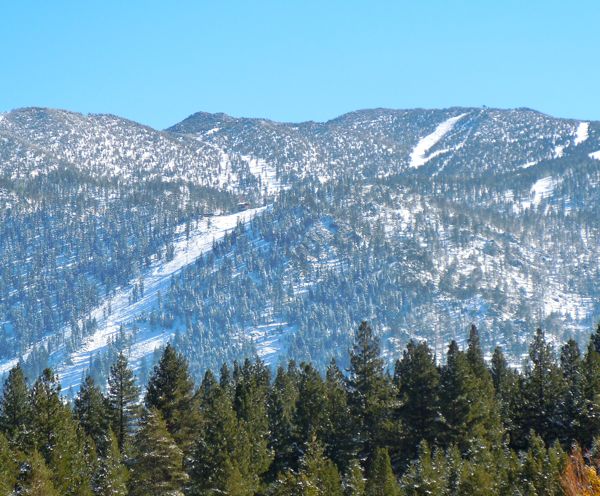
The National Weather Service has issued a wind advisory for Lake Tahoe from 6pm Sunday to 6am Monday.

Winds will be from the northeast at 15-25mph, with gusts up to 35mph. Wave heights are expected to be 2 to 3 feet from the West Shore near Dollar Point to South Lake Tahoe.


Southwest Gas Corp. narrows loss in third quarter

By Las Vegas Sun

Southwest Gas Corp. of Las Vegas said its third quarter loss narrowed on lower revenue.

Losses, which are normal in the third quarter for the seasonal business, came in at $4.8 million or 11 cents per share in the most recent quarter vs. $8.3 million or 18 cents per share in 2009’s third quarter.

Revenue of $307.7 million was down from $317.5 million for the company, which serves Nevada and parts of Arizona and California.

Higher rates in Nevada boosted operating margin by $1 million, while the company added 17,000 customers during the last 12 months, boosting operating margin in the quarter by another $1 million.

Operating margin is defined as operating revenue less the cost of gas sold.


Sierra foothill wineries unite to have louder voice

By Chris Macias, Sacramento Bee

There’s a new wine association brewing in them thar hills. Make that the Sierra Foothills Wine Alliance, an association that covers approximately 800 square miles of wine country ranging from the counties of Calaveras to El Dorado and Amador.

All of these areas already have respective associations to promote wine tourism and all throw events to draw the wine-drinking masses. But the competition around California’s wine areas can be tough, so in a tough economy, banding together might be the best strategy for the Sierra foothills.

“The producers here in our neck of the woods are mostly family-owned and -operated,” said Beth Jones of El Dorado County’s Lava Cap Winery and president of the El Dorado Winery Association.

“It’s difficult to get a foothold in the market against the larger corporate entities and fight for shelf space. The understanding is that we have lots of small voices that need to band together and be heard.”

Read the whole story


Paul Abowd Tribute Dinner

The Paul Abowd Tribute Dinner is a culinary love note to a man who has owned myriad Northern Nevada restaurants since the 1950s and is still manning Reno’s Stone House Café kitchen.

At this gastronomic Super Bowl, Abowd and fellow diners will be feted by chefs like Gregg Carano of the Eldorado, Jorge Flores, the Stone House Café; David Silverman, Silver Peak Brewery; Craig Rodrigue, Truckee Meadows culinary arts program; Troy Cannan, from Lulou’s and the Eldorado, and of course the ringleader Charlie Abowd. Each chef will have a chance to speak about their thumbprint on the menu and their relationship with Paul Abowd.

Adding to the feel-good vibe of the event is its non-profit beneficiary, The Greenhouse Project. Its mission is to establish and operate a community-based greenhouse using renewable energy sources and ecologically sustainable growing methods. With a focus on environmental stewardship, it will provide educational and vocational opportunities for students, youth groups and special needs individuals. It will also provide year-round organic produce to agencies serving low-income Carson City residents. For more information, go to carsoncitygreenhouse.org.

Event Details:

* Paul Abowd Tribute Dinner will feature a seven-course dinner with each course prepared by a different chef. Adele’s Anthony Kingland will match the wines. The dinner will highlight Nevada sourced produce, wine and meat.

* When & Where: Nov. 21 at 5pm at Eldorado Hotel and Casino, Reno.

* Tickets: Tickets are $150 per person and are available at the Stone House Café, Adele’s Restaurant and Lounge, J’s Old Town Bistro, Lulou’s, Silver Peak Brewery and the Cracker Box. For more information, call Adele’s at (775) 882.3353 or the Stone House Café at (775) 284.3895.

* Menu: Visit the website for a complete menu.


Holiday tree cutting permits available next week

The U.S. Forest Service Lake Tahoe Basin Management Unit will be offering permits for the public to select and cut holiday trees in the Tahoe basin beginning Nov. 22.

Permits cost $10 each (cash or check only, no credit cards) with a limit of two permits per family, valid for cutting on or before Dec. 25. Permit holders may choose from varieties of pine, fir or cedar, in designated cutting areas, and must abide by specific permit conditions for proper and responsible collection.

Permit sales will be available at two locations:

* On the South Shore, permits will be sold at the LTBMU Forest Supervisor’s Office located at 35 College Drive, South Lake Tahoe. This office is open Monday through Friday from 8am-4:30pm and Nov. 27 and Dec. 4 during the same hours.

* On the North Shore, permits will be sold at the North Shore Forest Service Office located at 855 Alder Ave., Incline Village. This office is open Thursday through Saturday from 8am-4:30pm.

Both offices will be closed Thanksgiving. The last day to purchase a permit is Dec. 23.


Nevada considering banning driving while holding cell phone

By Martha Bellisle, Reno Gazette-Journal

At least four people in Washoe County were injured in car crashes in the past five years because the driver was busy putting on lipstick or mascara.

Dozens of others were hurt when the driver lost control while messing with the CD player or radio.

Eleven more were injured because a driver was reading. Yes, you read that right.

But the single activity responsible for causing an increasing number automobile crashes in Washoe County since 2005 involves cell phones and texting, according to data collected from law enforcement officers who worked the scene.

For that reason, a group of legislators in the state Assembly, one state senator and the Nevada Office of Public Safety have all submitted requests to change state law to place drivers’ hands back on the wheel, and their minds back on the road.

Read the whole story


Decent winter snowfall forecast for Lake Tahoe

By Joel Gratz

“Hey La Nina, what’s in it for me?” When geek-speak goes mainstream, you know the nerds must have a hot topic on their hands. You might think that I’m talking about The Facebook Movie (“The Social Network”), where geeks write computer code over shots of Tequila. But not quite.

I’m actually talking about meteorology. With the words La Nina getting mainstream attention this fall, all skiers are scrambling to hone their weather skills in hopes of finding just what “The Girl” (or “The Nina” according to Chris Farly) has in store for them. As a meteorologist and lover of snow and skiing, I’m here to turn the geek speak into snow information.

Early snow covers Heavenly on Nov. 9. Photo/Kathryn Reed

Early snow covers Heavenly on Nov. 9. Photo/Kathryn Reed

To save you most of the suspense, here’s the conclusion right up front. If you’re further north in the U.S., you’ll probably see higher than average snowfall. If you’re further south in the U.S., you’ll probably see lower than average snowfall. Don’t worry; there are more details in a bit.

You might be thinking, “Why do we care about La Nina, or El Nino?” In short, it’s really the only reliable clue that meteorologists have to predict temperature and precipitation patterns months and seasons in advance.

Meteorologist Joel Gratz is the creator of ColoradoPowderForecast and is based in Boulder, CO. Data from Tony Crocker contributed to this article. His website has additional information on the impacts of El Nino and La Nina on snowfall.

Read the whole story


Carson Valley couple joyful to be off doomed cruise ship

By Kathryn Reed

This may have been the first cruise where passengers lost weight instead of gained a few pounds.

That’s what happens while living off salads and odd sandwiches (think beet, cucumber and tomato – but just one of those with bread) for three meals a day.

Karen and Bob Smith who live in Gardnerville and work at Lake Tahoe were two of the 3,299 passengers aboard the Splendor – the Carnival cruise ship that was pulled to shore by two tug boats Thursday after a Nov. 8 engine fire crippled the vessel.

Bob and Karen Smith

Bob and Karen Smith

“We never want to eat another sandwich or salad for a long time,” Karen Smith told Lake Tahoe News from Disneyland.

The couple decided to salvage their vacation by staying in Southern California to enjoy a few days at the Magic Kingdom before returning home today and having to go back to work. Karen works at Heavenly and Bob at MontBleu.

Everything started well Nov. 7 as the 952-foot ship departed Long Beach for the Mexican Riviera. The couple had gone to one of the shows, which was highly entertaining.

Then came the announcement across the public address system at 6am Monday, “Alpha team to the engine room.”

Smith said, “They said they would never come over the PA in the room unless it was an emergency.”

The next announcement was for all passengers to report to the ninth floor, which is outside, because there was a fire below. Despite being told there was no reason to bring lifejackets from the room, some passengers did.

“We could see all this smoke as soon as we opened the door,” Smith said.

But before any announcement was made to the masses, the Smiths knew something was wrong.

Their outside cabin near the stern of the boat was on level one.

“It happened right underneath us. We had just woken up. We were sitting there and it almost felt like an earthquake with the rumbling and shaking,” Smith said. “I looked at my husband and said we better get dressed.”

For hours the passengers sat on the deck not knowing what was going on. Finally, that afternoon they were told the cruise was terminated. The “fun ship” cruise line was becoming just the opposite.

Carnival Splendor

Carnival Splendor

“It was a little scary at first. Out of the smokestack pitch black smoke was coming out all day. It was still coming out very lightly the day we got off the ship,” Smith said.

She praised the cruise director for his calm, reassuring voice. About 80 percent of the people went with the flow, while some thought it a good idea to yell at crewmembers for things beyond their control.

Smith said the 1,167 crewmembers were phenomenal. One criticism, though, was the delay in trying to salvage any sort of fun. Activities didn’t return until Tuesday afternoon. Passing out free beers helped ease tensions.

Without electricity and everything computerized, not much could happen. Camp Carnival for the kids was started Tuesday, plus games in one of the show rooms.

Having a window in their room allowed them the convenience of being able to be in their room during the day.

The Smiths through their son heard what was supposedly in the food packages airlifted in by the military.

“We didn’t see any Pop Tarts. That would have been nice. We didn’t see Spam either,” Smith said.

She said some people complained of smelling rotting food, but they never smelled it. Their big stink issue was the bathrooms. Their toilet wasn’t usable until Wednesday. It was cold showers every day.

As cruise veterans, this little adventure is not going to deter them from going back on the water. In fact, with their free voucher from Carnival they are planning a spring cruise to the Caribbean.

By the time they hit terra firma their credit card for the ill-fated cruise had been refunded as had all charges made on the ship until the power went out.


History: Cascade Lake’s owners interesting past

Publisher’s note: This is from the May 1973 Lake Tahoe Historical Society newsletter.

By Marie Walsh

“In 1897, my grandfather’s tax bill on 1,300 acres of land, from the middle of Emerald Bay to Baldwin Beach and including Cascade Lake, was $155. By 1938, it had grown to $399. And by 1968, it had jumped to $36,000 – for only half of the original property!

history“That pretty well explains what’s happened up here at Tahoe, and why it’s become prohibitive for me to keep my 730 acres at Cascade in private ownership.”

So remarked Harold “Shrimp” Ebright during his talk to an overflow audience at the April 30 meeting of the Lake Tahoe Historical Society.

Ebright, a man who’s become somewhat of a living legend at Tahoe, is the familiar owner of Cascade Lake, nature’s snow-water basin at Tahoe’s southwest end.

Cascade Lake has been privately owned by the Ebright family ever since the 1880s when Shrimp’s grandfather, Dr. Charles Brigham, internationally famous San Francisco surgeon, purchased the glacial amphitheater for the fishing it afforded, as well as for its adjacency to his Lake Tahoe frontage.

Originally a Franco-Prussian war doctor, Brigham had migrated to San Francisco from his native Boston. Soon thereafter, he was acclaimed as the first doctor to perform successfully a complete stomach removal, although the operation itself wasn’t perfected until after World War II.

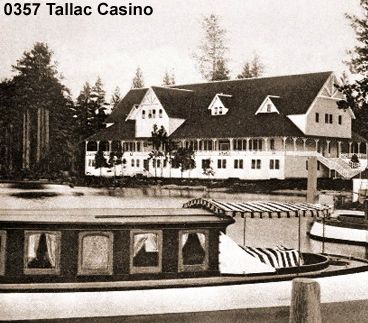
In the spring of 1882, Brigham came to Lake Tahoe and purchased his first property here – a small acreage to the east of Cascade lake. On the bluff where Cascade Stables stands today, he built a large summer home, complete with a steamer landing that was frequented by such celebrities as Mark Twain, John Muir, and the Governor of Nevada.

Over the years Brigham added to his holdings, and by 1892 his property not only included Cascade Lake, but continued over the ridge (present-day Highway 89) to the southeast shore of Emerald Bay, and then south along Tahoe’s shoreline to Tallac Meadow where it met with Lucky Baldwin’s property.

“You’d be amazed at how much property my grandfather bought for the little amount of money that was spent,” Shrimp said.

At the time, of Brigham’s death in 1903, his 1,300 acres were inherited by his wife, Alice Babcock. Upon her death in 1934, the estate was acquire by Brigham’s two daughters, Alice Wyer and Kate Brigham Ebright, and then subsequently by Kate’s two sons Shrimp and the late Charles Ebright.

Shrimp himself was born in San Francisco. As a youngster, he came to Cascade every summer with his family.

“We always stayed a couple of months past the opening date of school, so my mother would always arrange for a tutor to compensate for the missed school days.

“Charles and I never did have the same one twice, though – they couldn’t stand us! But, one of our tutors was John Steinbeck. My mother had hired him in 1926 as a caretaker for the winter, as my grandmother’s chauffeur for the summer, and as our tutor during the fall.

“Steinbeck wrote his first book, ‘A Cup of Gold,’ while he was at Cascade, but we never saw much of him after that. And he certainly wasn’t much of a worker. When one of our buildings caved in from the snow, all he did was salvage a couple of books out of it.

“My grandfather was kind of a stubborn fella,” continued Shrimp. “I particularly remember the time when the telephone line was supposed to go in atop Cascade Falls. The phone company had come out and informed him of their plans, and he had said ‘fine, but wait ’til I get back from Europe.’ Upon his return, he’d learned from the caretaker that the phone people had already started to put up the lines. He was livid, and he immediately called his lawyer who told him that as long as the lines weren’t in yet, he could take down the poles. Today, those 6×6 redwood poles are still lying there.

“We always had Indians working for us,” Shrimp said. “They also seemed to just always be around, I guess because they usually gravitated to where they were fed. We had a working deal with Celio’s slaughterhouse to buy cuts of meat for those that were around, and one day when my mother asked for ’30 pounds of Indian meat’ the reply was ‘Madam, we stopped killing Indians 100 years ago.’”

Shrimp mentioned that during the 1930s and ’40s, Cascade Lake was a much-sought-after motion picture locale, particularly because at that time Hollywood’s interest lay in producing wilderness pictures.

He said that Will Rogers made his first movie, “Lightnin,” at Cascade. “To my brother and me, Will was the greatest thing that ever walked – he always had time to ride with us, and take walks with us.”

In 1936, “Rose Marie,” starring Jeannette MacDonald and Nelson Eddy, was filmed at Cascade. And in 1956, the 170-foot-deep glacial lake was the backdrop for “A Place in the Sun” starring Elizabeth Taylor, Shelley Winters and Montgomery Clift.

Additional aspects of life at Cascade included:

• Fishing at Cascade – “To tell the truth, I’ve never thought of it as a great fishing lake. I know in the old days the guests from Baldwin’s Tallac House used to fish it, and it was quite good. But in my lifetime it’s been spotty as all get out. Some folks have caught 24-inchers, not even 100 feet off shore, but that really doesn’t happen very often. For the most part, the trout that are in there are a rare strain known as Lahontan trout, or local native Tahoe trout, and they tend to be long and skinny. They’re a good fighting fish, but they’re just consistently skinny, even with age.”

• Emerald Bay Road – “When it first went in, it was a real narrow two-lane road. If you ever met another car, there were some real hellish argument over who would go forward, and who would go backwards!”

• His father – “My dad was the sort of man who could get his point across without using any profanity – something I’ve just never been able to do! He was the one who would build the road going into present-day Emerald Bay State Park.”

• The old steamers – “Prior to 1915 everything, including the mail, was delivered by water. Grandfather had built a steamer landing directly in front of his house, and the steamers were always docking at his doorstep The ‘Tahoe’ had to stay out in relatively deep water, but the others pulled in right alongside the dock with hay, supplies and everything else we needed.”

• Baldwin Meadow Dairy – “At the northernmost end of what’s today the Baldwin Beach parking area, there was once a dairy. It was quite a going concern, and it continued in operation up until 1925, having to employ an old Chinese cowboy and local Indians of the James family.”

• Horse and cattle drives – “In 1955, only 18 years ago, we quit driving horses down the middle of Highway 50. We ended our cattle drive down the highway two years before that.”

Shrimp and his wife continue to spend nine months out of the year at their rustic, lake view home in Cascade Properties. The remaining months are spent at their ranch in Novato, in Marin County.