Vehicles leave significant traces in Washoe Meadow park

By Kathryn Reed

A tree-thinning project in Washoe Meadow State Park that left substantial tractor tracks in the meadow and surrounding area has been suspended for the winter.

Rich Adams, forester with California State Parks, visited the South Shore park Dec. 7 after being notified by park users about the perceived degradation of the area.

His written recommendations to his superior, senior environmental scientist Tamara Sasaki, are, “Do not attempt additional over snow operations on the meadow this season.
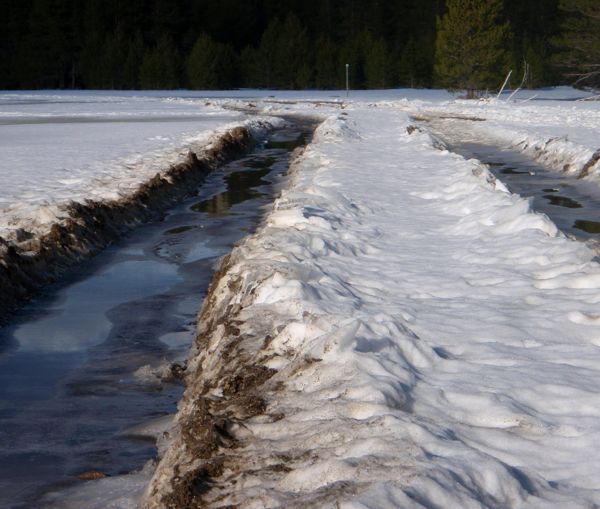
Deep ruts in Washo Meadow park from a tree-thinning project. Photos/Provided

Deep ruts in Washoe Meadow park from a tree-thinning project. Photos/Provided

“Revisit and inspect the meadow after all the snow and ice has melted off to adequately determine the full extent of soil compaction that occurred during over snow tractor operations.

“After the winter season has ended, mitigate any and all areas of soil compaction by lifting the compacted soil with hand tools such as fire rakes and shovels. The contractor has already agreed to perform this task. At least some handwork will be required, although it is impossible to determine the extent of handwork that will be required until the meadow is completely clear of snow and ice.”

The Tahoe Regional Planning Agency permitted the 12-acre fuels reduction project. Over the snow operations are supposed to be less harmful to soils in stream environment zones.

The area being logged is one-eighth of a mile east of Seneca Drive and east of North Upper Truckee Road.

Adams in his report said, “The tree harvester and the log forwarder, two pieces of rubber-tired logging equipment equipped with snow chains and steel tracks, were operated over snow from Amacker Ranch to the forest thinning area, over a large open meadow. Ruts in the snow pack were visually very obvious today [12/7/2010].”

The work was done Dec. 1 and Dec. 2. By Friday contractor Dave Mercer determined further operations could not continue because of the deteriorating snow conditions brought on by warmer weather and snowmelt.

Jeff Cowen, spokesman for TRPA, said his agency’s forester, Megan Scheeline, visited the site Dec. 2 at which time she deemed the site looked fine.

Photos taken Dec. 4 that were sent to Lake Tahoe News are the same ones sent to Adams. He said the photos look worse than reality.

“Upon close inspection, the visible segments of meadow surface actually appeared almost entirely untouched. There was some localized evidence of at least some minor soil compaction, where the weight of the logging equipment left an impression a few inches below the surrounding soil level,” Adams wrote. “These compacted areas were isolated and for the most part, shovel digging of the snow and ice immediately next to the melted out snow ruts showed that the meadow surface below the melted out snow ruts was still at the same elevation as the surrounding meadow surface. Therefore the dramatic photos of melted out snow ruts within the shrinking snowpack do not necessarily show rutting in the underlying meadow surface.”

For now, the logs will remain stacked until the contractor can remove them after the snow is gone.



Research in Antarctica to come to life at Sierra Nevada College

By Stephen Ward

When a stone skips across water, tiny imprints diffusing from the contact point are often the only indication it was ever there. These ripples, caused by turbulence, help scientists gauge the flow of water in an area and the ensuing environmental impact.

By applying this method of measurement to glaciers, a more probing study can be conducted.

This was one of the primary foci of Alexander Forrest’s research during his three-week study of McMurdo Sound in Antarctica. The study was an international collaboration between research teams in New Zealand, Canada, United States and France.

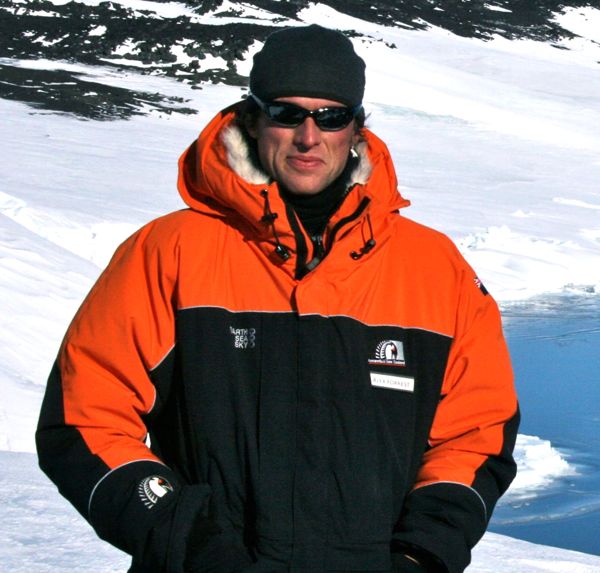
Alexander Forrest

Alexander Forrest

Forrest is a post-doctoral researcher at the UC Davis Tahoe Environmental Research Center at Sierra Nevada College in Incline Village.

Along with turbulence, Forrest investigated different temperatures and the mixing processes around the Erebus Glacial Tongue by using an autonomous underwater vehicle, or AUV.

Instead of being limited to a two-dimensional scan of the glacial tongue, the AUVs allow scientists to gather a more sophisticated perspective of the water by measuring horizontally.

“The (AUVs) allow researchers to characterize the environment in ways that have never been done before,” Forrest said. “It provides us with a much bigger picture. Not only is it a technological breakthrough, but an environmental breakthrough as well.”

Forrest went on to compare the new technology with the more traditional methods.

“Now, instead of dropping a censor and pulling it up, we can measure 50 to 1,000 feet out from the same hole,” he said.

The results, which Forrest said are in the initial stages of being processed, will hopefully provide researchers with clues to the collapse of sea shelves, which make up 50 percent of Antarctica’s coastline.

The project was one of many in Forrest’s catalog of fieldwork at subzero temperatures. He has been on five polar campaigns, including trips to the Canadian High Arctic region, Iceland and the Arctic Ocean near the North Pole while conducting research at the University of British Columbia in Vancouver.

“You know, working in minus 30- to minus 40-degree (Fahrenheit) temperatures is generally hard,” Forrest said, “but one of the amazing things about being out on the McMurdo Sound is the scenery, like the 4,000 meter peak of Mount Erebus.”

The 33-year-old scientist initially proposed the investigation in Antarctica with UBC research staff about a year ago. UC Davis was connected to the study when he began working at the facility in August 2010.

Forrest will give a presentation on the research project entitled “Flying Under the Big Ice: Robotic Submarines Under Arctic Ice” on tonight at 6pm at the Tahoe Center for Environmental Sciences.


Bread & Broth thanks Heavenly for support

To the community,

Bread & Broth members would like to express their sincere gratitude to Heavenly Mountain Resort for recently adopting a Day of Nourishment.

On Nov. 15, executives of the resort were on hand to enthusiastically serve more than 140 meals. The generous donation of their time and money is greatly appreciated. Sandy Bobman, Bread & Broth volunteer coordinator, raved that “the Heavenly volunteers were wonderful. They stepped right in and helped with everything from prep to serving, and even stayed to clean up.”

Bread & Broth's Diane Weidinger, center, is flanked by Heavenly's Tom Fortune, Casey Blann, Nancy McCoy, and Pete Sonntag. Photo/Provided

Bread & Broth's Diane Weidinger, center, is flanked by Heavenly's Tom Fortune, Casey Blann, Nancy McCoy, and Pete Sonntag. Photo/Provided

Bread & Broth is able to continue its mission of feeding the hungry of South Lake Tahoe in large part because of the generosity of the local community. A $250 sponsorship covers the cost of food and beverages for the approximately 100 folks who visit each Monday evening.

To find out how your business can Adopt A Day of Nourishment, contact Connie Blue at midwest2tahoe@yahoo.com or (530) 544.4945.

Bread & Broth team


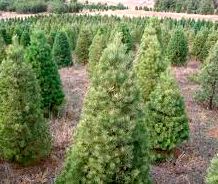
Tree farms benefit environment

By Carlos Alcalá, Sacramento Bee

Cut down a tree. It’s good for the environment.

tree farm“We’ve been telling people that for years,” said Jane Harris, but she would say that.

Her family has operated Harris Tree Farm in Pollock Pines for half a century.

Now she has some environmental movement support.

The Nature Conservancy is campaigning for people to use real Christmas trees, not the manufactured kind, as a way to lower our carbon footprint.

“The Nature Conservancy is all about trees,” said Frank Lowenstein, Climate Adaptation Strategy Leader for the organization. “They clean our air, they clean our water.”

Even when you cut them down?

Read the whole story


Artist-novelist Manninen at Bona Fide Books

Artist and graphic novelist Jared Manninen will show his work and take orders for his first graphic novel at Bona Fide Books on Dec. 17 from 7-9 pm.

artAn assortment of his original artwork will be available for sale, and the art for his graphic novel will be on display.

Bona Fide is located behind the Getaway Cafe in Meyers.


Budget gifts: Helping the Sugar Pine Foundation

Publisher’s note: Lake Tahoe News is publishing idea for gifts costing less than $20. Click here for information.

holidayIf you have friends or family who are hard to shop for, the Sugar Pine Foundation has a solution: Everyone loves sugar pines.

You can Adopt-a-Tree or Adopt-an-Acre in anothers name, or purchase quality gifts with the logo. All proceeds go directly toward planting more beautiful sugar pines in the greater Tahoe region.

Shop online.


Snow park permits on sale

California snow parks are on sale for the 19 areas on the Sierra, which include 10 near Lake Tahoe.

This is the first year they can be purchased online. A $1.95 service fee is charged for each online purchase, as well as a mailing fee for seasonal permits. Permits are $5 daily or $25 for the season.

Each locale is essentially a parking lot cleared of snow to provide access to snow activities..

For more information, call (916) 324.1222.


Ice time, cost pit customers against South Tahoe officials

Publisher’s note: This is the first of two stories about the South Lake Tahoe Ice Arena.

By Kathryn Reed

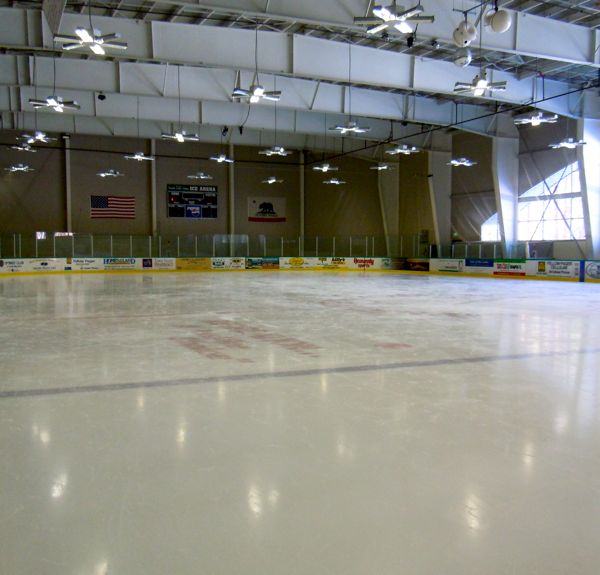
Some customers of the South Lake Tahoe Ice Arena are getting a colder reception than the temperature inside the rink. And it’s uncomfortably icy in there.

“First and foremost we need to recognize the problems before we can address them. We can’t be in denial. I’m not,” City Manager Tony O’Rourke said. “From the number of people I’ve talked to I believe there is validity. There is some consistency in the issues raised. Some call it complaints. I call it customer feedback.”

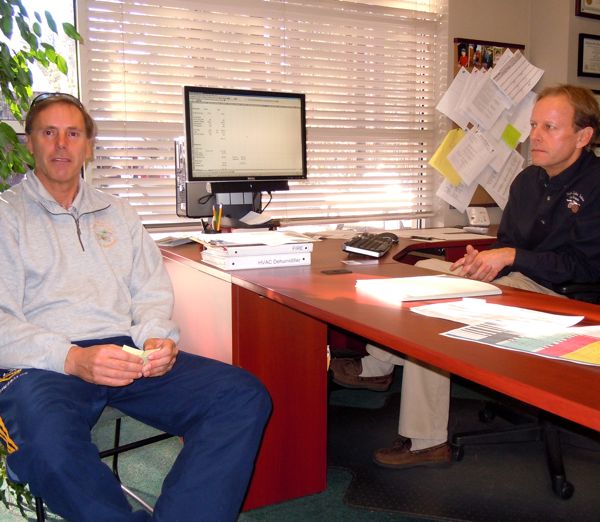
Chris Hawken and Rob Swain talk about the ice rink. Photos/Kathryn Reed

Chris Hawken and Rob Swain talk about the ice rink. Photos/Kathryn Reed

The issues have been raised for years, but nothing has changed. Until now. Change has started with a new city manager and recreation director. (Stan Sherer starts in January, but will be in town Thursday to meet with some ice rink users who are dissatisfied with the customer service.)

Disagreements about ice time among the user groups and favoritism are some of the reasons for the discontent.

As with most ice rinks, there are three main groups using the ice – the public, hockey players and figure skaters.

A meeting Nov. 29 among nearly 40 stakeholders and three city officials has created a thawing of emotions.

“There is change coming. We perceive a huge light at the end of the tunnel,” said Joanie Malarchuk, a figure skating coach. “With regards to figure skating ice time, we don’t have consistent ice time year after year, month after month, day to day.”

Looking at the six-week calendar posted on the arena’s website proves her point. The freestyle listing is for figure skaters.

Inconsistency makes it difficult for Malarchuk and other coaches to grow the figure skating program when they can’t tell clients what days/hours are available for training on a long-term basis.

Some users didn’t want to speak to Lake Tahoe News for fear it would cause a setback in the progress being made.

Rob Swain, who runs the rink that opened in May 2002, says flexibility is needed to accommodate everyone.

Figure skaters need the ice at 23 degrees, while hockey players have it at 19 degrees. The former can shatter the ice with their skate tips if the ice is too cold.

In between user groups the $80,000 Zamboni makes the sheet usable again.

The rink has about 73 hours of programs a week out of a possible 168 hours. To have the rink open it requires at least one person at the desk and possibly a skate guard depending on the users.

Chris Cefalu, who is credited with keeping the A league hockey program going, is content with what is going on.

“There is no unhappiness. I think the rink cooperated with me,” Cefalu said. He blames the economy for the dwindling number of hockey players and the desire to have fewer games.

Swain said with South Tahoe being the only rink in the region (Reno no longer has one) people travel more than an hour for this sheet of ice. This can present scheduling issues.

The ice rink costs $270/hour to rent. The December 2010 fee schedule says adult hockey leagues pay $260/hour. It costs a local resident $7.50 during public skate time. Figure skaters pay $12/hour.

“More transparency is causing some resentment because people want the same deal,” Swain said.

Swain said hockey players want to renegotiate what they are paying. Swain, who is a hockey player and has kids in the sport, said hockey players are subsidizing the ice rink.

However, it is not unusual for various user groups at other ice rinks to pay different rates. What’s unusual are the constant changes, and not sticking with a posted and department approved payment plan.

These types of rate fluctuations could be considered a gift of public funds – which is illegal.

Swain says it’s just part of doing business – trying to appease users by making deals regarding rates.

But Swain, during a four-hour interview with Lake Tahoe News this week, admitted he has bent to pressure from different user groups to offer payment plans that have not remained consistent over time.

Looking for resolution

rink

The South Tahoe ice rink is often not used, but still people argue about access.

Swain is defensive about what is going on at the rink. He is not thrilled someone outside the department was brought in to handle disgruntled customers. But customers said their complaints were met with silence – not even an answer to why something could not change.

Nancy Kerry is the city employee tasked with devising a plan for the ice rink. Although her job as No. 2 in the Redevelopment and Housing Department might seem like an odd choice, it’s her background as a former assistant city manager that gives her the skills for such a job.

“I needed a fresh approach. I was not satisfied with the institutional response,” O’Rourke said. “She has been a very good facilitator.”

Interim parks Director Chris Hawken, who did not get the top job, told Lake Tahoe News he is fine with having someone else take a look at what is going on at the rink.

“I see a downfall on our side is we need better communication,” Hawken said. “Afterward, people said ‘if we had known all that was going on, we wouldn’t have had to come to the meeting.’ We do listen to concerns.”

He is referencing the Nov. 29 meeting facilitated by Kerry, with himself and Swain in attendance.

Hawken said ideas in recreation tend to be cyclical. He thinks that is part of what is going on at the 8-year-old facility.

O’Rourke and Kerry disagree because the complaints have been going on for years without resolution. Swain acknowledged stacks of emails have been presented to higher ups.

Kerry said her goals include creating consistent policies, a coaches’ manual, and developing customer service directives for staff.


Opinion: Constitution trumps public opinion

Publisher’s note: This editorial is from the Dec. 7, 2010, Sacramento Bee.

Anational audience was treated to a fascinating debate Monday on Proposition 8, broadcast live from the old appeals court building in San Francisco before a federal three-judge panel. Passed by voters 52 percent to 48 percent in 2008, that constitutional amendment eliminated the right of same-sex couples to marry in California.

Regardless of the outcome in the courts, state Sen. Tom Harman, R-Huntington Beach, who was a 2010 primary candidate for attorney general, has a legislative agenda.

Asserting that “direct democracy” through the initiative process is “under siege,” he plans to introduce what he’s calling the “Ballot Box Defense Act.” It would require California’s attorney general to defend any voter-approved initiative or constitutional amendment.

Just what is the problem he’s seeking to solve? In a Saturday opinion piece in The Bee, he notes that Attorney General Jerry Brown declined to defend Proposition 8 in court. “As an expression of the people’s will, initiative statutes should be shown deference by California’s elected officials and zealously defended when challenged in court,” Harman wrote.

Hmmm. Doesn’t California’s attorney general, the state’s chief law officer, have the duty to uphold the California Constitution?

Read the whole story


Telluride Mountain Film Festival

The Telluride Mountain Film Festival general public showing is scheduled for Dec. 17 at Resort at Squaw Creek in Olympic Valley. The doors open at 6:30pm, with a no-host bar and an 8pm film program.

Tickets purchased online are $20/person with current Squaw Valley Institute members at $10/person and residents with North Tahoe/Truckee identification at $15/person. Tickets at the door (if available) are $20/person. Each event will run about two-and-a-half hours.

For more information about the Telluride Mountain Film Festival and to purchase tickets, go to www.squawvalleyinstitute.org.