Budget gifts: Humane society dog calendar

holidayPublisher’s note: Lake Tahoe News is looking for ideas for gifts that cost less than $20 to share with readers. Read this for details.

Need a present for your holiday party? Want to spread a smile to all the pet lovers you know? Your purchase of a 2011 Humane Society of Truckee-Tahoe “Lucky Dogs of Tahoe” calendar is a gift that gives back. All proceeds from this calendar will help save and improve lives of local animals.calendar

Calendars are $20 and are available at several retail locations, including Truckee-Tahoe Kennels, Burger Me!, Elijah Bleu’s House of Coffee, Ace Mountain Hardware & Sports and Wild Cherries Coffee House in Truckee; Tahoe House and Scrap’s in Tahoe City; and Scrap’s and True Value Hardware in Kings Beach.

You can also purchase the calendar online. The calendars will be shipped within one business day to ensure you have them for the holidays.

For more information, call (530) 587.5948.


Disabled skiers converge in Colorado

By Anastasiya Bolton Kusa, Reno Gazette-Journal

BRECKENRIDGE, Colo. — Thanks to some bright minds, technology similar to what powers your computer at home or work is helping people with disabilities ski or snowboard.

Several hundred disabled skiers, including more than 150 veterans from Iraq and Afghanistan, came from all over the word to take part in this week’s 23rd Annual Hartford Ski Spectacular in Breckenridge. The gadgets they’re using were not even conceivable just a short time ago-like a computerized prosthetic limb.

“I’m an amputee. I work in a slow-motion world. All of a sudden I get to the top of a mountain; I can go 30, 40, 50 miles an hour down the slopes,” said Kirk Bauer, the executive director of Disabled Sports USA. “It is the most exhilarating feeling and free feeling in the world.”

Bauer lost his leg in Vietnam. He told 9NEWS he couldn’t imagine running a marathon until recently because technology now allows for that.

This is one of the few times each year that people can see some of the latest developments in snow sports in one place.

Read the whole story


‘The Good Earth’ captivates decades after first published

By Kathryn Reed

Reviewing a Pulitzer Prize-winning piece of literature written by a Nobel Prize-winning author seems a bit unnecessary, but here goes.

book“The Good Earth” by Pearl S. Buck has stood the test of time. The novel was first published in 1931. It won the Pulitzer. In 1937, it was made into a motion picture for which Luise Rainer won an Academy Award for best actress.

For whatever reason, it wasn’t until this fall that I read the book for the first time. Fiction is not often what I’m pulled toward reading. But it doesn’t read like fiction.

This classic delves into the life of a farmer in China in the early 20th century. Buck is able to easily bring her characters to life because she spent most of the first 40 years of her life in China even though she was born in the United States in 1892.

It’s one of those books you don’t want to put down because the characters become friends of sorts. And they are so believable. It’s not that you like each one all the time. Some are never likeable.

Set in a part of the world that is foreign to me and during a time long before I was born, the circumstances the women endure because of the men are beyond my imagination. And, yet, how the story is told and unfolds, makes all seem natural for that place and time.

The story is that of a farmer – Wang Lung – and his dutiful wife O-lan. But it’s much more than a couple on a farm. The depth Buck goes to describe the land, the conditions and the nuances of the culture make the subject matter compelling.

Hard work, ambition, family struggles, poor v. rich, men v. women, educated v. non-educated, love, romance, thievery, famine – it’s all in the 379-page paperback.


Recycling state’s toxic waste involves shipping it overseas

By Tom Knudson, Sacramento Bee

In the soft morning light, the silver-gray mountain of electronic trash did not look especially hazardous. But it was.

wasteInside that massive rubble of technology, with its V-shaped canyons of printers and keyboards and its fin-like ridges of fax machines and coffee makers, was enough toxic material – including lead, cadmium and brominated flame retardants – to poison California watersheds for centuries and sow disease in humans.

“This is the problem,” said Jim Taggart, president of ECS Refining in Santa Clara, where the e-waste was waiting to be safely recycled. “This is the material that most people are exporting. They’ll get paid 5 to 10 cents a pound for shoving it in a container and shipping it overseas.”

Five years after California launched an ambitious effort to control pollution from electronic waste, much of our e-waste is being shipped overseas, where it is contributing to a legacy of pollution and disease that would not be tolerated in this state, a Bee investigation has found.

Domestically, California’s program is doing just what officials intended: It has outlawed e-waste from landfills and jump-started a multimillion-dollar state industry to recycle televisions, computer monitors and other video display devices, paid for with public money.

But there is a blind spot: The program provides no money for anything else, meaning large volumes of low-value, hazardous electronic waste that are difficult to recycle at a profit in California are instead being exported, a consequence the state did not anticipate. Much of it is flowing to developing nations where it is picked apart by workers exposed to a high-tech cocktail of contamination.

“Most people just don’t know what’s happening to their material when it’s dropped off,” said Taggart, one of the state’s leading e-waste recyclers. “If they knew, they wouldn’t be dropping it off.”

Nearly all TVs and monitors are recycled – at least initially – in California. That is not true for the towering mountains of other electronic products sold in the state.

Read the whole story


Lessons about Christmas tree safety

To the community,

Select a fresh tree with good color and firm, flexible needles that do not easily pull from the branches.

sltfdPlace the tree in plain water immediately after re-cutting the trunk at least one-half inch above the old cut.

The container you use for your tree should hold 2 to 4 quarts of water.

The longer you wait to place your tree in water, the greater the chances are that it will lose the required moisture content to keep it fresh through the holiday season.

Never place your tree on a wooden stand.

Locate the tree away from sources of heat. Avoid placing the tree near heaters, wood stoves, fireplaces, large appliances, such as TVs, and direct sunlight.

Be careful not to block a door or other exit with the tree or rearranged furniture.

Use mini-lights on your tree and never place candles on or near your tree. Remove your Christmas tree as soon as possible after the holiday.

Never burn your Christmas tree or wrapping paper in the fireplace. The rapid burning and excessive heat can damage the firebox and chimney creating a serious fire hazard.

The South Lake Tahoe Fire Department wants to wish everyone a fun and safe holiday season.

Sallie Ross-Filgo, SLTFD


TV show features couple married in South Lake Tahoe

South Lake Tahoe’s Lakefront Wedding Chapel was recently featured on a special episode of NBC’s “Where are They Now” updating fans on past contestants from “The Biggest Loser” show.

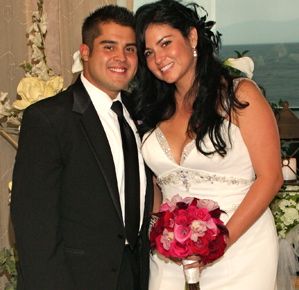
Bernie Salazar, the At Home winner in Season 5, was married at the Lakefront Wedding Chapel in August.

dldlldl

Bernie Salazar and Jennifer Verastegui

“This is great publicity for the wedding business in South Lake Tahoe,” Jana Walker Spano, owner of the Lakefront Wedding Chapel, said in a press release. “The entire nation was able to visualize Lake Tahoe as the ultimate wedding location in the western United States.”

Salazar is a Chicago teacher who lost 130 pounds to win $100,000 on “The Biggest Loser” in 2008. He married Jennifer Verastegui in the Lakefront Chapel on the shores of South Lake Tahoe on Aug. 8. They met during tryouts for the show.


Snowshoeing and learning about the night sky

By Allen Pierleoni, Sacramento Bee

Snow will be piled up in the Sierra between Christmas and New Year’s Day, making for an abundance outdoors options during the holiday season.

There’s a new one that combines a walk in the woods with a learning experience: the Stargazing Snowshoe Tour at Northstar-at-Tahoe Resort.

“We had such a phenomenal year with our summer stargazing tours that we decided to open this new product,” said “star guide” Tony Berendsen, who operates Tahoe Star Tours in Reno (www.tahoestartours.com). “We get people from all over the world (for summer stargazing), and a huge number of them come from the Sacramento area.

“My goal is to bring awareness of the night sky to those who wouldn’t normally have it,” he said. “We’ll see stars hundreds of light-years away, so we’ll actually be looking hundreds of years back in time.”

Berendsen, 58, said he has “a huge passion for stargazing” and has been in love with the night sky for 50 years. He is the president of the Northern Nevada Science Coalition and past president of the Astronomical Society of Nevada.

Read the whole story


What food says about class society in the U.S.

By Lisa Miller, Newsweek

For breakfast, I usually have a cappuccino—espresso made in an Alessi pot and mixed with organic milk, which has been gently heated and hand-fluffed by my husband. I eat two slices of imported cheese—Dutch Parrano, the label says, “the hippest cheese in New York” (no joke)—on homemade bread with butter. I am what you might call a food snob. My nutritionist neighbor drinks a protein shake while her 5-year-old son eats quinoa porridge sweetened with applesauce and laced with kale flakes. She is what you might call a health nut. On a recent morning, my neighbor’s friend Alexandra Ferguson sipped politically correct Nicaraguan coffee in her comfy kitchen while her two young boys chose from among an assortment of organic cereals. As we sat, the six chickens Ferguson and her husband, Dave, keep for eggs in a backyard coop peered indoors from the stoop. The Fergusons are known as locavores.

foodAlexandra says she spends hours each day thinking about, shopping for, and preparing food. She is a disciple of Michael Pollan, whose 2006 book The Omnivore’s Dilemma made the locavore movement a national phenomenon, and believes that eating organically and locally contributes not only to the health of her family but to the existential happiness of farm animals and farmers—and, indeed, to the survival of the planet. “Michael Pollan is my new hero, next to Jimmy Carter,” she told me. In some neighborhoods, a lawyer who raises chickens in her backyard might be considered eccentric, but we live in Park Slope, Brooklyn, a community that accommodates and celebrates every kind of foodie. Whether you believe in eating for pleasure, for health, for justice, or for some idealized vision of family life, you will find neighbors who reflect your food values. In Park Slope, the contents of a child’s lunchbox can be fodder for a 20-minute conversation.

Over coffee, I cautiously raise a subject that has concerned me of late: less than five miles away, some children don’t have enough to eat; others exist almost exclusively on junk food. Alexandra concedes that her approach is probably out of reach for those people. Though they are not wealthy by Park Slope standards—Alexandra works part time and Dave is employed by the city—the Fergusons spend approximately 20 percent of their income, or $1,000 a month, on food. The average American spends 13 percent, including restaurants and takeout.

And so the conversation turns to the difficulty of sharing their interpretation of the Pollan doctrine with the uninitiated. When they visit Dave’s family in Tennessee, tensions erupt over food choices. One time, Alexandra remembers, she irked her mother-in-law by purchasing a bag of organic apples, even though her mother-in-law had already bought the nonorganic kind at the grocery store. The old apples were perfectly good, her mother-in-law said. Why waste money—and apples?

Read the whole story


LTUSD dropout rate declines from previous year

By Kathryn Reed

Lake Tahoe Unified School District is bucking the state trend of rising dropout rates.

Data released this week for the 2008-09 school year show the South Shore district with a 5.3 percent dropout rate in grades 9-12. This compares to 2007-08 when the district 9-12 dropout rate was 6.5 percent.
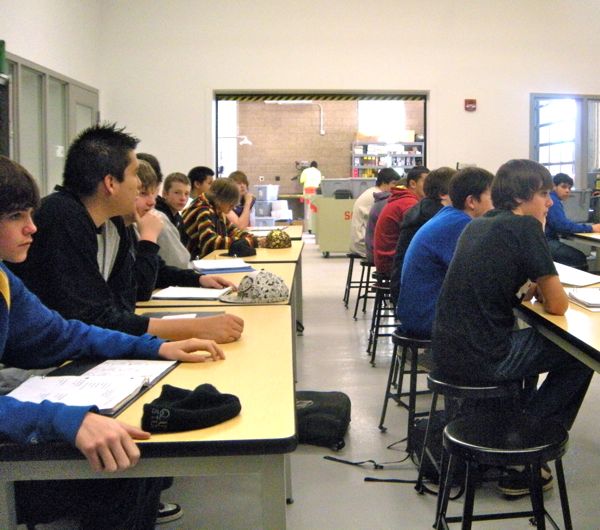
The opening of the Career and Technical building is touted as a draw to keep kids enrolled at STHS. Photo/Kathryn Reed

The opening of the Career and Technical building is touted as a draw to keep kids enrolled at STHS. Photo/Kathryn Reed

This compares to the state rate of 5.7 percent in 2008-09 and 4.9 percent the previous school year.

“It’s going in the right direction,” LTUSD Superintendent Jim Tarwater said.

The current data reflects the third year of using the California Longitudinal Pupil Achievement Data System or CALPADS.

“We now have a data system that allows us to track students more accurately and have honest conversations about how to improve graduation rates and reduce dropouts among all subgroups of students,” Jack O’Connell, state Superintendent of Public Instruction, said in a prepared statement.

Most of the dropouts are seniors – 15 for the 08-09 school year at South Tahoe High School. One junior and one sophomore also dropped out.

At Mt. Tallac, the continuation high school, for that same reporting period it was 31 seniors, two juniors and one sophomore who dropped out.

At the transitional learning center, 10 seniors dropped out.

It’s normal for seniors to have the highest dropout rate, according to Tarwater. If they don’t have the units to graduate or have failed the state high school exit exam, they see no reason to keep going to school.

With better tracking of students in the transitional learning center, Tarwater is hoping those numbers will come down in the future to reflect a more accurate number. But some students leave the country and therefore cannot be tracked, but are considered a dropout for LTUSD.

The state’s 3-year-old data collecting system allows the district to send queries electronically to find out if a student has enrolled someplace else. Without knowing where students have gone, they are considered dropouts.

“Part of what we are trying to do with the netbooks is get kids engaged and hook them more,” Tarwater said. The plan is for all students in grades 3-12 to have one of the mini computers.

Assignments can be downloaded if a student is absent. The possibility of using Skype when they are out of town is being looked at.

The district is also banking on the new facilities at the high school that are bringing more programs and enriching the ones in place as factors to drive students to be in the classroom.

Enrollment remains a concern. The bottom has not been reached. The district started with 3,910 when the doors opened in August. Now enrollment is at 3,867.

It’s the high school that is losing students. Since the beginning of the year 12 ninth-graders have left, four 10th-graders, 10 11th-graders, and 11 12th-graders.

The middle school is staying even.

The elementary level is a mixed bag of gains, losses and status quo.

“Some of those kids are legitimate. There is probably a 10 percent mobility factor. Mainly it’s related to work which makes a ton of sense to me,” Tarwater said of why kids are leaving. If their parents got a job elsewhere, they had to go.

Every nine seconds, a student in the United States drops out of school, according to the National Center on Secondary Education and Transition. The National PTA is focusing on the dropout issue in the December 2010-January 2011 edition of its magazine Our Children, which will be available online later this month.



Bear-a-thon will benefit South Shore children

Through Dec. 19 Unity at the Lake is having its 17th annual Bear-A-Thon at the South Lake Tahoe Senior Center, 3050 Lake Tahoe Blvd. from 9-11:30am.

All are encouraged to bring a new bear to Sunday service to hug, cuddle and fill with special blessings and healing light. All the bears are donated to the SLT Women’s Center, SLT Fire Department, and El Dorado County Sheriff’s Department to be given to children who may be in need of some loving energy.

For more info, call (530) 544.2266 or visit www.unityatthelake.org.