History: Recounting how Fallen Leaf Lake chapel came to be
Publisher’s note: This is reprinted from the July 1973 Lake Tahoe Historical Society newsletter.
By Marie Walsh
I doubt that I’ll ever forget the overwhelming feeling of awe and inspiration that was mine to experience this morning.
The moment I stepped from the car, I was immediately caught up in the beauty and serenity of the surroundings – towering pines, colorful wildflowers, lush ferns, chirping birds, and melodic chimes heralding the commencement of the 10 a.m. service at Fallen Leaf Lake’s quaint little Chapel of St. Francis of the Mountains.
Today’s service, however was not designed for the campers, the tourists, and the townsfolk who would normally flock to the chapel to receive a bit of God ‘midst the great outdoors. Rather, it was a service conducted especially for the “Friends of Fallen Leaf” in observance of the chapel’s 50th Anniversary.
It was back on the fist Sunday of July, in 1923, that the picturesque chapel first opened its doors. And today, as with every 10 a.m. service on Sundays past, the chapel’s wooden benches were filled to capacity, both indoors as well as outdoors neath the shading canopy.
Invitations to some 125 persons had been sent out back in mid-June, in the form of postal cards with the rustic chapel pictured on the front of each card. On the reverse side was a hand-written note inviting the Friends o Fallen Leaf to the brunch and social hour which would be held outdoors following the historic service.
As the congregation began singing the opening hymn, “America,” I felt that surely this must have been the only hymn ever used to open each service with. Somehow the words … “I love thy rocks and rills, thy woods and templed hills, my heart with rapture thrills, like that above” … just seemed to so beautifully blend in with the surroundings, and render a deeper meaning to the service.
Charm and tradition were present everywhere I looked … most particularly in the freshly-picked bouquet of wildflowers that decorated the altar and the window boxes. These flowers were just one more little nicety that the W.W. Price’s [of Stanford University who first began to develop the resource of Fallen Leaf Lake back I n 1896], and their daughter, the late Harriet Price Craven, insisted be a part of every service.
Officiating at the historic service was Bishop Edward McNair, a longtime friend of Harriet Price Craven who had not only worked with her in the chapel, but had headed the chapel program for many years.
Bishop McNair told his audience that he would share as much of Fallen Leaf Lakes’ history with us as he possibly could.
He took us back to the year 1896 when, under Mr. Price’s tutelage, Fallen Leaf was first developed as a camp for boys. Camp Agassiz was located at a spot one-half mile below Glen Alpine. By 1906 the area had become so popular that Price began the development of Fallen Leaf Lodge.
Fallen Leaf Lodge has remained in the Price family since its inception, and is today operated by Bill Craven [Harriet Price Craven’s only child] and his wife, Barbara. The Price’s devotion to the tenet that the beauty of Fallen Leaf lies in its natural surroundings is exemplified by the area’s complete lack of commercialism.
Back to 1902, it was the Prices’ dream to have a little chapel at Fallen Leaf. For several years, services were held outdoors in the woods, and around the campfire at the lodge. The addition of a den to the lodge in 1919 made it possible for this to be the first building used for services. But economics simply made it impossible to begin construction of a chapel until more funds were generated.
The sale of Mrs. Price’s booklet, “Legends of Tahoe,” greatly helped, but, according to Bishop McNair, money for the chapel was coming in so slowly that other methods of fund raising were needed. It was then that Horace B. Clifton and L.P. Lattimer wrote and illustrated the lovely poetic plaque that still hangs on the outside of the chapel, to the right of the front door.
In the year 1921, Price was finally able to begin building his dream chapel. Two years later, the chapel was completed. And, on the first Sunday of July, in 1923, it was dedicated in living memory to Dr. Price.
In September of 1924, the first christening was conducted in the chapel. In 1926, the first wedding was performed uniting Dixwell Pierce and Katherine Bradley [Mrs. Pierce is one of our Life Members, and is a member of the Gilmore family that discovered and developed Glen Alpine Springs].
Bishop McNair said that if we were to walk around the chapel, “we’d see all kinds of interesting things.”
— the cross upon the altar that was used in the temporary chapel of St. Grace Church in San Francisco after the great earthquake of 1906.
— the marble credence table was carved from the only unbroken pillar of the communion rail of the old Stanford Chapel.
— the mosaic head of Christ was a gift from Dr. Charles Gardner of Stanford University who had received it from an artist friend in Florence, Italy.
In addition, many memorials have been placed inside the chapel honoring pioneers of the area, thereby making the chapel a place of charm, inspiration, and historical significance.
Personally, I felt that the most poignant memorial were the bronze plaques that have been placed on the wall alongside the altar, in honor of Fallen Leaf’s three pioneers … W.W. Price [1871-1922], his wife Bertha DeLaguna Price [1870-1933], and their daughter Harriet Price Craven [1904-1973].
Bishop McNair concluded his ‘sermon’ by saying that “the spiritual heart of the whole of Fallen Leaf is, indeed, this Chapel of St. Francis of the Mountains.”
He added that there were three distinct groups of people at the Fallen Leaf today … the Stanford people, the old-timers who have been coming to Fallen Leaf for years, and the tourists. “So, this chapel is truly the unifying force.”
Before the closing hymn, “Faith of Our Fathers,” was to be sung, Bishop McNair announced that the 50th Anniversary Service would culminate in a most unusual historic event. “We will now conduct the ceremony of Holy Baptism for the great-grandson of the man who, 50 years ago, stood in this exact same spot and officiated at the first service held in the Chapel of St. Francis of the Mountains.”
And so, little Michael Evans Doolittle, great-grandson of the Reverend David Evans, was baptized on this, a beautifully-historic Sunday morning.

Vegas rethinks marketing message in post-recession era
By Richard N. Velotta, Las Vegas Sun
The Las Vegas Convention and Visitors Authority is revamping its marketing and advertising strategy to focus on attracting the likeliest visitors in a post-recession economy.
Board members heard a report from a team of marketing experts Tuesday that said the destination should focus its attention on a core base of steady Las Vegas customers and another group that will need some persuasion to choose Las Vegas over another resort destination.
New technologies and social media should enable the LVCVA to zero in on those different market segments, they said.
The plan is a departure from previous strategies that gave more consideration to the demographics of potential visitors and where they come from.
The new strategy was generated following research into how consumers have changed since the Great Recession.
The market segmentation study, developed by LVCVA executives, Las Vegas-based advertising consultant R&R Partners and Heart+Mind Strategies of Washington, is based on research that determined 38 percent of the market are core customers who love Las Vegas, 41 percent are in the “persuade and convince” group and 21 percent are uninvolved or disinterested.
The new strategy will be to appeal to the “core” and “persuade” customers and devote no resources to others.
While much of the LVCVA’s past marketing efforts have targeted specific demographic groups in particular regions of the United States, the “core” and “persuade” targets are all across the country but can be reached with target marketing enabled by new technologies.
Opinion: New reality of aging
By Barry Rand, AARP Bulletin
Recently I participated in a roundtable discussion at Stanford University on the new realities of an older America. Hosted by Tom Brokaw, our discussion focused on “Generation Ageless: Longevity and the Boomers.”
What became clear to me is that five key changes are shaping the aging of America. First, older people are growing in number and living longer. During the 20th century, life expectancy grew by nearly three decades, and longevity gains are continuing. We’re approaching a time when older adults will outnumber children for the first time in history. And while people are living longer, they also are doing so with lower rates of disability and poverty than previous generations. This is creating a new longevity that has tremendous implications for people 50-plus and for society — young, old and everyone in between.
Second, this new reality is also shaped by increased racial and ethnic diversity. By 2030, racial and ethnic minorities will make up 42 percent of the U.S. population, and one in five Americans age 65-plus will be Hispanic.
UNR students want to be leaders in tourism promotion
By Richard N. Velotta, Las Vegas Sun
It was just like old times in Reno last week.
Twenty-seven years after then-Gov. Richard Bryan formed the Nevada Tourism Commission and organized the first Governor’s Conference on Tourism, the organization observed its 25th anniversary at the Peppermill Resort.
That happened because the killer recession forced the commission and the industry to retreat for two years.
But with visitation statistics on the rise and a hint of optimism in the air, the commission and its staff pulled together Governor’s Conference Lite, packing nine panels and presentations, a quarterly commission meeting and a tribute lunch for Bryan into 1½ days.
This year’s conference had a different feel from years past. Many of the same leaders attended, although not as many as in the go-go years of the late 1990s and early 2000s. About 250 people signed up for this year’s event compared with close to 1,000 back when.
Because the conference was organized in a series of general sessions instead of splitting it into breakout meetings, it was easy to gauge the level of interest — and most of the seats were filled throughout the event. It seemed that people attending this year’s conference were hungry for information.
One event that had a low turnout — and, in fairness, it wasn’t actually part of the conference because it filled time between the end of the commission meeting and the opening session of the conference — was interesting because it provided a snapshot of the future of the state’s tourism industry.
Between Lt. Gov. Brian Krolicki’s poundings of the gavel ending the commission meeting and opening the conference, students from UNR’s Reynolds School of Journalism and Center for Advanced Media Studies presented a proposal to promote the Governor’s Conference in 2011.
Calling their agency “BluePRint,” in honor of UNR’s school colors, 20 students affiliated with the Public Relations Student Society of America demonstrated what tomorrow’s travelers are going to look like and how to engage them.
Tamarack Lodge opens today at Heavenly Mountain Resort
By Kathryn Reed
Something dramatically different is in store for skiers at Heavenly Mountain Resort today – the first new lodge in 30 years at the South Shore resort is open.
With 40-foot windows giving expansive views to the slopes and an interior that barely feels like you’ve left the woods, the multi-million dollar Tamarack Lodge is ready for hungry skiers.
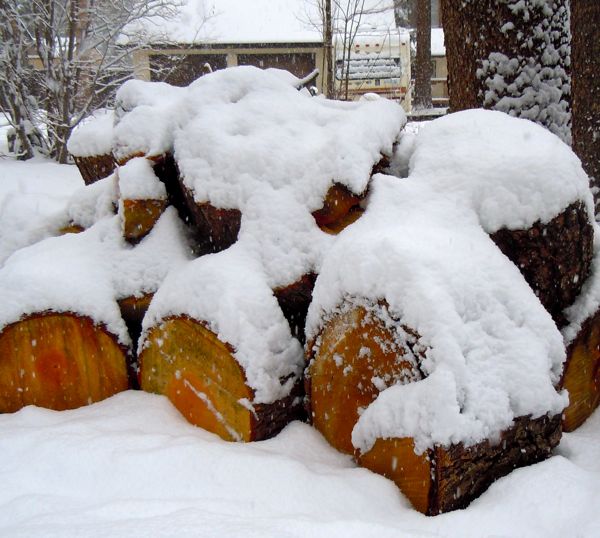
Inside the 9,150 Bar are round wooden tables made from trees that had been removed a few years ago when the Olympic lift was reconfigured. The resort kept the trees on site just in case they’d have a future use.
Blaise Carrig, co-president of Vail Resorts Mountain Division and one-time COO at Heavenly, said he got the idea for the tables from having seen a similar design at the Manzanita restaurant at the Ritz-Carlton at Northstar.
Sixteen of those tables are scattered about the bar – which got its name from the elevation of where it sits.
The lodge’s name is from the six-pack chairlift – Tamarack – that is just steps from the lodge.
With the moisture lasting into early summer, the lodge was almost scrapped this building season. But the builder – SMC Contractors – convinced resort officials it could have everything done by February. Clearly, they finished well ahead of schedule.
“Heavenly gave us the resources we needed to work at an accelerated schedule,” Joe Stewart with SMC told Lake Tahoe News. This included providing snowcats and snowmobiles for workers to get to the job site once the snow started to fall.
Stewart also credits the planning of the project for his crews to be able to do their job.
He is extremely complimentary of Carrig’s interior design savvy. And Carrig returns the compliment to Stewart and his team.
Carrig has an eye for such endeavors, having designed two of his houses – inside and outside. He did some substantial design work for previous employers at Sugar Bush and the Canyons.
“Back in the day when I was a ski patrol director, in the summertime I had a small building business,” Carrig told Lake Tahoe News. “At that time we specialized in old Vermont architecture style, like old farm houses.”
Part of what he wanted for the Tamarack Lodge was for it to have a comfortable lodge feel even though the windows are high and the room wide-open.
With painting the sheet rock red and then putting Douglas fir planks horizontally on the wall with 2-inch gaps in between so the red shows through, it gives the room some depth. Plus, the black bolts give it a more of rustic feel.
“Large chandeliers also anchor the ceiling and make the room feel smaller than it is,” Carrig said.
Carrig’s fingerprints are all over the lodge. He was working hand-in-hand with the architect – right down to the bar tops, bar features and tile for the bathrooms.
For the oversized restrooms with numerous stalls Carrig selected large square natural curry tiles.
This lodge near the top of the gondola finally gives skiers a place to escape the elements – which for this weekend will be a welcome change if the forecast holds.
Five themed food stations are available, with 500 indoor seats and 250 outdoor.
Heavenly’s master plan calls for two more lodges – Powder Bowl and Sand Dunes. Construction dates have not been set for either one. East Peak Lodge is the last dining facility to open at Heavenly – that was 1970.
“The company is really proud of this,” Carrig said of Tamarak the day before it officially opened. “Heavenly definitely needed to have a really comfortable lodge.”
Santa photos at Heavenly benefit foundation
In cooperation with the Heavenly Sharp Shooters and Heavenly Mountain, the Heavenly Ski and Snowboard Foundation will host Photos with Santa on Heavenly Mountain Dec. 18–24 from 9:30am to 2:30pm (weather permitting).
Santa will begin his day at Gunbarrel Express and make his way over to the top of the Gondola where he will be from noon to 1pm. Catch him at Ridge Run at 10am and 1:30pm.
The Santa photo package is $25 and includes four photos, one 6×8, one 4×6 and two 2×3; for an additional $10 you can purchase a snowflake ornament two-sided photo frame. Photos will be available for same-day pick-up at the base of the gondola or in the California Lodge Cafeteria at 3pm.
Opinion: Education reform could have big impact
Publisher’s note: This editorial is from the Dec. 13, 2010, Sacramento Bee.
The more strong voices there are prodding education bureaucracies to improve results for kids, the better.
That’s what makes former D.C. schools chancellor Michelle Rhee’s new StudentsFirst venture intriguing. Within one year, she aims to create a 1 million-strong membership organization. Within five years she aims to raise $1 billion, some of which would be used to influence local school board and state legislative elections, starting in 2012. Ultimately, she’s aiming for 10 million members, with people joining for as little as $5 a month.
Modeled on membership organizations such as AARP, the Sierra Club and the National Rifle Association, Rhee says the StudentsFirst organization launched in Sacramento last week comes out of a couple of things – her experience as D.C. chancellor, with courageous teachers and others telling her that they felt alone in battling the bureaucracy; and from the film, “Waiting for ‘Superman,’ ” which has inspired people to ask her what they can do.
Rhee realized there was no call to action. StudentsFirst seeks to remedy that.
Her four goals are the right ones to draw a broad audience: great teachers, giving parents choices, sending money to programs that work and getting parents more involved.
USFS needs volunteers to work with kids outdoors
The U.S. Forest Service Lake Tahoe Basin Management Unit is looking for volunteers to assist with the Winter Trek Express environmental education program for fifth-graders beginning Jan. 10 through March 31.
This three-hour environmental education program takes place at 9,000 feet at Heavenly Mountain Resort.
U.S. Forest Service rangers lead the class through the wilderness to learn snowshoe skills and discover winter adapting animals.
This is an opportunity for individuals who wish to gain experience in the environmental education field and have a strong desire to work outdoors and give back to their community. The ideal applicant should have experience working with children, good communication skills, an outgoing friendly personality and the ability to commit to a minimum of one day a week for 12 weeks. The Forest Service will provide a uniform, training, and snowshoes if needed. Volunteers should provide winterized boots.
Prospective volunteers should submit their resume electronically. To learn more, contact Megan Johnson at (530) 543.2694.
South Tahoe has sandbags ready in case of flooding
Snow levels are lower than originally forecast, with snow coming down all day Friday in the Lake Tahoe Basin. This means the threat of flooding has decreased.
Nonetheless, South Lake Tahoe crews are ready in case temps warm up and the moisture turns to rain as the system stays over the Sierra for the next few days.
“City street crews are prepared for either scenario or a combination thereof,” John Greenhut, South Tahoe Public Works director, told Lake Tahoe News.
Sand and bags are available at the rear of Fire Station No. 3 off James Avenue and at Bijou Park off the Pavilion Loop Road at the back of the park.
Residents will need to fill the bags with their shovels.
Expect breaks in the weather Saturday and Monday, with an even more substantial storm rolling in for Tuesday and Wednesday.
— Lake Tahoe News staff report