Tour de California
Tour de California — Amgen’s multi-day cycling race — starts in South Lake Tahoe May 15, finishing at Northstar-at-Tahoe.
For more information, go online.
Tour de California — Amgen’s multi-day cycling race — starts in South Lake Tahoe May 15, finishing at Northstar-at-Tahoe.
For more information, go online.
By George Warren, News 10
SACRAMENTO – An elaborate scheme promising help for struggling homeowners targeted dozens of Sacramento-area Russian families, a News10 investigation has revealed.
A search of property records in Sacramento, Placer, El Dorado and Yolo Counties shows roughly 50 Russian families and individuals deeded their homes in 2008 and 2009 to an organization called “Shon-Te-East-A Walks with Spirit” in an attempt to reduce or eliminate their mortgage payments.
Many of the homes are now in various stages of foreclosure or have already been lost.
“When you are in trouble you look for help,” said Orangevale homeowner Anatolii Tkachenko, who was struggling with a $430,000 mortgage at more than 9 percent interest. He said the lender was unwilling to modify the loan.
Sierra Human Resources Association is a community organization that provides business owners, managers and HR professionals the opportunity to network and discuss management practices and business issues that affect employees and our livelihood.
SHRA is seeking enthusiastic leaders with a variety of skill sets in the areas of Membership Development, Public Relations and Marketing, Program Development, Meeting Coordination and Administrative Support. The time commitment is minimal.
SHRA presents an annual calendar of quarterly meetings, networking lunches and workshops.
For more information, contact Laura Moriarty at (530) 573.0224 or laura@tahoetrainingpartners.com.
The 2010 Census enumeration began last January in a remote corner of Alaska and in the months that followed, America stepped up and achieved a successful census. As mandated by the Constitution, the census counts every resident in the United States every 10 years to determine the number of seats each state receives in the U.S. House of Representatives. Beginning this month, the nation will see the first results from the 2010 Census as a new portrait of America begins to take shape.
 2010 Census results:
308,745,538: Official resident population of the United States on April 1, 2010.
9.7: Percentage increase of the nation’s population from 2000 to 2010.
37,253,956: Population of California, the most populous state in the country on April 1, 2010. The least populous was Wyoming (563,626).
35.1: Percentage growth of Nevada’s population from 2000 to 2010, the highest in the nation.
710,767: Average number of people each member of the U.S. House represents, as apportioned by the 2010 Census.
8: Number of states that gained congressional seats in 2010. They are Arizona, Florida, Georgia, Nevada, South Carolina, Texas, Utah, and Washington.
4: Number of congressional seats Texas gained, more than any other state.
10: Number of states that lost congressional seats in 2010. They are Illinois, Iowa, Louisiana, Massachusetts, Michigan, Missouri, New Jersey, New York, Ohio, and Pennsylvania.
32: Number of states that did not gain or lose a congressional seat in 2010.
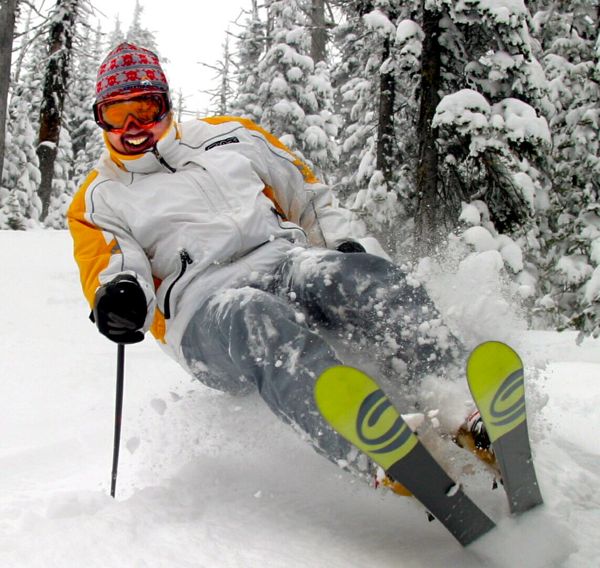 The sun is out, but it sure isn’t warm right now. Dress accordingly.
Here is the ski report from Curtis Fong, the Guy from Tahoe.
By Kathryn Reed
Former South Lake Tahoe City Councilwoman Kathay Lovell has been appointed to a four-year term on the state Board of Occupational Therapy.
“Being on the recipient end of occupational therapy I might have something different to offer than those in the industry,” Lovell told Lake Tahoe News.

Kathay Lovell
The seven-member board is required to meet twice a year, though in 2011 there are four scheduled meetings – two in Los Angeles, one in Sacramento, and one in San Francisco.
Lovell has begun her homework by going through past meeting minutes. She will be sworn in either Jan. 1 or Jan. 2.
“It’s an opportunity for me to learn something new. They wanted someone with extensive board experience. It was quite an honor to be asked and an ordeal to go through the process,” Lovell said.
When the governor’s office first contacted her in September it was for a possible appointment to the Lahontan Regional Water Quality Control Board. However, based on her husband working for El Dorado County, she had to pass up that opportunity.
Lovell wanted to be part of a board she had an interest in. This isn’t about money. She can be reimbursed up to $100 for travel expenses; otherwise there is no money involved.
Before being given the job the state reviewed her credit, she had two interviews, submitted a resume, filled out “a really extensive, I mean extensive history,” and finished with a follow up phone call for more background information.
Allison Steinmetz joins Barton Internal Medicine after 10 years of medical practice in Santa Cruz with Dominican Hospital. Prior to practicing in Santa Cruz, Steinmetz spent three years as a physician in Houston.
She serves as a primary care physician for all ages with a specific talent for treating menopausal issues, teenagers and women’s health.
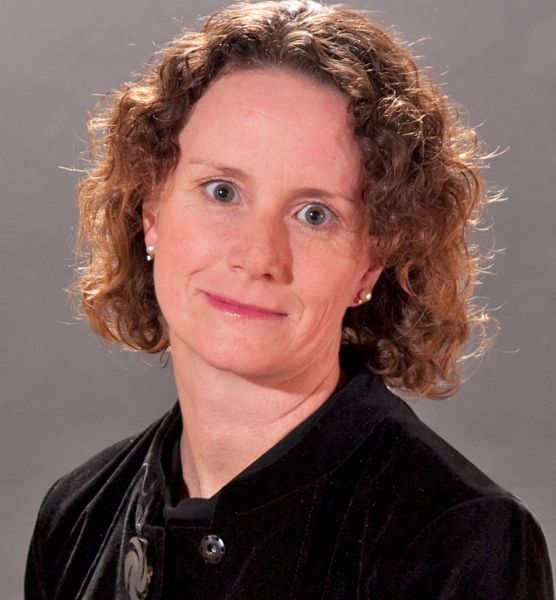
Allison Steinmetz
Her excitement for the outdoors is what brought her here to Tahoe. She enjoys snow sports, hiking and surfing.
Steinmetz joins Internal Medicine physicians, Drs. Gary Cooper, Paula Crenshaw, and Jay Chung, as well as ear, nose and throat specialist Dr. Ronald Roth at 2175 South Av. in South Lake Tahoe across the street from Barton Memorial Hospital.
She is accepting adolescent and adult new patients. For more information or to make an appointment, call (530) 543.5685.
Lake Tahoe Community College Theatre Arts Department will present the wildly successful off-Broadway hit “Almost, Maine” as the winter producation.
On a cold, clear, moonless night in the middle of winter, all is not quite what it seems in the remote, mythical town of Almost, Maine. As the northern lights hover in the star-filled sky above, Almost’s residents find themselves falling in and out of love in unexpected and often hilarious ways. Knees are bruised. Hearts are broken. But the bruises heal, and the hearts mend – almost – in this delightful midwinter night’s dream.
Auditions for the college’s winter production will be Jan. 4 at 7pm in the Duke Theatre.
Performances will be March 11, 12, 17, 18, 19 at 8pm and Sunday matinees March 13 and 20 at 2pm.
For more information, contact director Susan Boulanger at Boulanger@ltcc.edu.
By Brett Prettyman, Salt Lake Tribune
There comes a point when every more-than-once-a-year skier faces the same question:
 Is it time to buy a pair of skis or a snowboard?
Economics is at the core of the question. Would you feel you got your money’s worth on what many consider a serious investment?
The answer depends on whom you ask.
“Everybody likes to add it up and see how many times they would need to rent to equal the cost of buying their own,” said Brenton Sondrup, the rental manager at Christy Sports in Millcreek.
That magic number, depending of course on the cost of the skis you are eyeing, is somewhere between 12 and 15 trips to the slopes.
There is a blizzard of other questions to consider when weighing the pros and cons of renting or buying.
With technology constantly changing for skis, how long will it be before a skier starts feeling old school on the lift with his or her own gear? Will you spend more on your equipment to get it tuned and waxed, or can you do it yourself?
Most rental fleets are updated at least every other year and usually offer a wide range of price and skill options. Shops review every item when it comes back from being rented and perform maintenance before renting it out again.
For many people, the biggest concern with renting equipment is the fit of the boots.
Molly MacGregor of Dave’s Skis and Boards in Lake Tahoe suggests buying only boots. “Boot technology does not change that often, but skis change yearly. If you buy boots, then you can rent nice skis and they come tuned/waxed every time and you can always get the latest and greatest,” she said. “I bought skis just two years ago and I already want new ones. My boots will last forever.”
By Steve Kubby
It’s the holiday season, our mountains are filled with a record snowpack and local businesses are prospering. Life is good, unless you happen to be a patient who depends upon medical marijuana for relief. For this group, the actions of the South Lake Tahoe City Council are a direct threat to their safety and very lives, all because of the misguided attempt by the City Council to fix something that isn’t broken.
What new medical marijuana cultivation ordinance can we expect from the South Lake Tahoe City Council in 2011? So far, we’ve seen proposed ordinances that demand fees and inspections of patient gardens, without offering any meaningful protection in return. The city also wants to demand building permits for anyone who grows cannabis at home, creating a public record for thieves and drug agents to use to locate and invade the homes of bona fide medical marijuana patients.
Even if you are already carefully following every confusing detail of the laws regarding medical marijuana, drug agents have their own interpretations of the law which they believe allows them to ignore the Constitution and enter homes or vehicles, without a warrant or any probable cause other than the alleged odor of marijuana. Too bad that the City Council is about to force patients to violate their own rights and place themselves in the crosshairs of a deadly drug raid.
Leading the fight against sick people is Councilmember Bruce Grego, who has been accused by a grand jury of illegally obtaining and retaining nearly a thousand dollars of city funds. So if the city continues to press for marijuana regulations, while ignoring the findings of the Grand Jury, the very legitimacy of the Council to pass any ordinance will be called into question and brought before the courts.
Whatever the council attempts to pass in the way of marijuana ordinances, it will be dead on arrival if it violates the privacy of patients. That’s because the Supreme Court has ruled unanimously that laws cannot be used to force marijuana users into incriminating themselves.
In Leary v. United States, (1969), the U.S. Supreme Court ruled upon the constitutionality of the Marijuana Tax Act. Dr. Timothy Leary, a professor and activist, was arrested for the possession of marijuana in violation of the Marijuana Tax Act. Dr. Leary challenged the act on the ground that the act required self-incrimination, which violated the Fifth Amendment. The unanimous opinion of the court was penned by Justice John Marshall Harlan II and declared the Marijuana Tax Act unconstitutional:
“Compliance with the transfer tax provisions would have required petitioner unmistakably to identify himself as a member of [a]…’selective’ and ‘suspect’ group, we can only decide that when read according to their terms these provisions created a ‘real and appreciable’ hazard of incrimination.”
Even requiring patients to disclose their activity to landlords creates a hazard of incrimination and thereby violates their Fifth Amendment rights. If property owners don’t want marijuana grown in their homes, they can say so on their leases and evict anyone who violates those terms.
Most legal medical marijuana patients want to comply with the law, but if any law or local ordinance requires disclosures of any kind, it is not constitutional and will not be tolerated. Although California offers a photo ID to patients, those cards have only a photo and a code number which allows law enforcement to determine if the card is valid. No personal information is allowed.
The consequences for anyone who is viewed by law enforcement as a member of a “selective” and “suspect” group associated with cannabis can be as severe as a terrorist attack by Al-Qaeda. That’s because drug agents are notorious for kicking down doors, detonating stun grenades, terrorizing occupants, and shooting family dogs, even if the dog shows no aggressive behavior or is actually fleeing. Just ask Cheye Calvo, the mayor of Berwyn Heights, Maryland, about how SWAT team members burst into his home without knocking, terrorized his family and shot his two dogs to death, as the dogs attempted to flee, all because a pound of marijuana was accidentally delivered to his home a few minutes earlier.
It’s been just over a decade since my own family was surveilled during the Christmas holidays and then raided by 20 heavily armed agents. I pointed out to the invading deputies that I was only exercising rights that had been granted by the voters in the passage of Prop. 215, an initiative I helped to write and pass. I was told that California’s new medical marijuana law “might be fine for those faggots in San Francisco, but it didn’t fly in Placer County.” They seized everything, even Christmas presents to our daughter.
My wife and I were then jailed and charged with 19 felonies, over something that was ultimately dismissed. To his credit, Placer County Sheriff Ed Bonner apologized to me and promised his department would respect the new law. Unfortunately, the physical and emotional scars of that holiday raid still haunts my family, especially this time of year when our family should be able to enjoy all that life has to offer.
This holiday that brings so much joy and happiness to the world, isn’t quite so rosy when you consider the terrifying threat of any contact with a federal drug agent. Under current federal law, simply growing a small tray of 100 seedlings or clones could force a medical marijuana patient to face a 10 year mandatory minimum in sentencing. Furthermore, as was the case for El Dorado County’s own long-time resident, Dr. Marion Fry and her husband Dale, the feds can add up how many plants one grows over several years and if that number exceeds 100, prosecutors can demand and get a 10 year mandatory minimum sentence.
Instead of further endangering sick people, the City Council should be crafting a cultivation ordinance that provides meaningful protection to patients from violent crimes by drug agents conducting a drug raid who shoot the family dog or discharge a weapon when children are present. In fact, the city should demand that no marijuana raid can be conducted by any drug agents, unless a real victim — who is not an agent or paid informant — actually files a real police report and an investigation shows actual violations of state law taking place.
For those who might think anything written here is any sort of exaggeration, I dare you to watch this video of a drug raid showing agents shooting the family dog with a seven-year-old boy present — even though no drugs were ever found. This is exactly the kind of violent, dangerous, state-sponsored terrorism that the current proposed cultivation ordinance would unleash upon our otherwise peaceful and law-abiding community.
Steve Kubby is a South Lake Tahoe resident who has been active in legalized medical marijuana in California.