Submissions about Tahoe being sought by book publisher

Everyone has a Tahoe story. Bona Fide Books wants to read yours.

Bona Fide Books_2Bona Fide Books, a small press in Meyers, is seeking short fiction and nonfiction for a collection about life at the lake. Micro-stories from any fiction or nonfiction genre are welcome: memoir, humor, action-adventure, tragedy, mystery, love or love lost, even ghost stories. The only requirements: each piece must be about or occur in the Tahoe region, and it can be no more than 500 words.

Like the pea-sized gold nugget sifted out of the Upper Truckee, tiny but priceless. Short enough to be read on the lift or while sipping a latte. No time for a warm-up, just instant clarity.

No subject is taboo. Gambling, mountaineering, romance — let it fly. Unsung stories are also sought: the Washoe, environmentalists, old-timers. Bona Fide Books wants to hear from everyone and create a book that reflects the amazing, complex place we know and love.

Submissions will be accepted through May 1. Go online for more information.


Bitter cold rolling into Tahoe, plus more snow

A 24-hour winter storm warning has been issued by the National Weather Service in Reno starting at 4pm today.

Expect 1 to 2 feet of snow above 7,500 feet and 6-12 inches at lake level.

“There will be a period of rain or a mix of rain and snow below 6,500 feet Tuesday evening before precipitation changes to all snow early Wednesday morning,” the NWS said.

Besides more snow to shovel and ski on, the most dramatic change in the weather is likely to be the temperature. Beginning Wednesday the overnight lows will be single digits before rising to the teens Friday night.

Today’s high is expected to be in the 30s in the Lake Tahoe Basin, with the high in the 20s for the rest of the week.

– Lake Tahoe News staff report


Community dinner a success because of volunteers, donors

To the community,

St. Theresa’s 5th Annual Community Christmas Dinner was a heartwarming success thanks to all of the wonderful volunteers who came out to plan, organize, decorate, set-up, shop, cook, greet, serve, entertain and clean up; far too many to name, but you all know who you are. In all, about 200 meals were served on Christmas Day in Grace Hall and Santa Claus passed out gifts and candy canes during a brief stop.

Special thanks to our “secret Santa” who has donated the prime rib for this special dinner each and every year. And thanks to Safeway for selling it at a discount. Mega thanks to Jeanette and her crew at the El Dorado County Jail who provided all of the baked goodies and helped prepare some of the side dishes, too. And thanks to all those who contributed money, food and gifts for the occasion.

Peace and blessings to all who made Christmas a special celebration for many who wouldn’t have otherwise had one. You’re the greatest.

Fondest Regards,

Vicki Raucci Gonzales, Sue Jackson and Tiffany Davis Kostelnik


California drivers face slew of new laws Jan. 1

Jan. 1 not only ushers in a new year but also a handful of laws for California motorists.

These new traffic laws were passed by the Legislature and signed by the governor earlier this year.

Below are synopses of a few of the significant changes for the upcoming year:

Instruction Permit: Motorcycle (AB 1952, Niello)

This bill added Section 12509.5 to the Vehicle Code, which lays out the age-specific requirements drivers must fulfill to obtain a motorcycle instruction permit. Among those requirements for drivers younger than 21 years of age is the successful completion of the motorcycle safety course administered by the CHP.

Motorcycle Theft: (AB 1848, Garrick)

This bill adds Section 466.65 to the Penal Code and makes it a misdemeanor to possess, give, or lend the following:

· Any device designed to bypass the factory-installed ignition of a motorcycle in order to start the engine without the manufacturer’s key.

· Any motorcycle ignition or part of motorcycle ignition, with the intent to unlawfully take or drive, or to facilitate the unlawful taking or driving of a motorcycle, without the consent of the owner.

· Items of hardware, including bolt cutters, electrical tape, wire cutters, wire strippers, or allen wrenches, with the intent to aid in the unlawful taking or driving of a motorcycle without the consent of the owner.

High-Occupancy Vehicle (HOV) Lanes (AB 1500, Lieu & SB 535, Yee)

These bills extended the life of the yellow and white clean air stickers for low emission vehicles. Vehicles bearing these valid stickers can continue to access HOV lanes regardless of vehicle occupancy. Hybrids with Yellow Clean Air Access stickers set to expire the beginning of January 2011 will be given a six-month extension until July 1. White Clean Air Access stickers will be valid until Jan. 1, 2015. Additionally, SB 535 provides that starting in 2012, 40,000 HOV access stickers can be issued to early purchasers of Enhanced Advanced Technology Partial Zero Emission Vehicles.

Windshield Video Event Recorder (AB 1942, Fletcher)

This bill amended Section 26708 of the Vehicle Code to allow a video event recorder to be mounted in a 7-inch square in the lower corner of a vehicle windshield on the passenger side, or a 5-inch square in the lower corner of the vehicle windshield on the driver’s side, outside of an airbag deployment zone. It also makes it legal to mount the video event recorder in a 5-inch square in the center uppermost portion of the interior of the windshield. The law also defines a video event recorder and requires a vehicle equipped with one to have a notice posted in a visible location which states that a passenger’s conversation may be recorded. In addition, this law lays out rules for recording events, notes who the rightful owner of the footage is, and who is entitled to a copy of the recording.

Emergency Alert System: Law Enforcement Officers (Blue Alert) (SB 839, Runner)

Much like an AMBER Alert, this bill added Section 8594.5 to the Government Code. Activation of the Emergency Alert System for a Blue Alert would occur if all of the following conditions are met:

· A law enforcement officer has been killed, suffers serious bodily injury, or is assaulted with a deadly weapon, and the suspect has fled the scene of the offense.

· The investigating agency has determined that the suspect poses an imminent threat to the public or other law enforcement personnel.

· A detailed description of the suspect’s vehicle or license plate is available for broadcast.

· Public dissemination of available information may help avert further harm or accelerate apprehension of the suspect.

Neighborhood Electric Vehicle (NEV) (AB 584, Huber & AB 1781, Villines)

Specific to Amador County, the cities of Jackson, Sutter Creek, Amador and the city of Fresno, these two bills allow for development of an NEV transportation plan within those communities until Jan. 1, 2016. They also specifically require NEV operators to possess a California driver license and comply with established financial liability requirements.

Mobile Billboard Advertising Displays (AB 2756, Blumenfield)

This bill created Section 395.5 of the Vehicle Code, which defines “mobile billboard advertising display” as an advertising display that is attached to a wheeled, mobile, non-motorized vehicle that carries, pulls or transports a sign or billboard and is for the primary purpose of advertising. This bill also amended Section 21100 of the Vehicle Code to give local authorities the ability to adopt rules/regulations by ordinance/resolution to regulate mobile billboard advertising; this includes establishing penalties that could authorize removal of the mobile billboard advertising display. In addition, VC Section 22651 was amended to say that the mobile billboard advertising display may be towed when left parked or standing in violation of a local ordinance. Warning citations advising of the consequences, including towing of the mobile billboard display, are sufficient enough warning to the public.

Miscellaneous Transportation (SB 1318, Senate Transportation & Housing Committee)

This bill was responsible for the following new law, as well as the amendment of others:

· Section 667 of the Vehicle Code was added to define a “utility trailer” as a trailer or semitrailer used solely for the transportation of the user’s personal property which cannot be used in commerce, cannot exceed gross weight of 10,000 pounds, but can be used for transportation of livestock.

· This bill also amended Section 5201 of the Vehicle Code to require license plates to be mounted parallel to the ground so the characters are upright and display from left to right.

· Section 21755 of the Vehicle Code which allows drivers of vehicles to pass on the right under specified conditions was amended to clarify that it does not prohibit a bicyclist from passing on the right in either a bicycle lane or on a shoulder.

· Section 22511.55 of the Vehicle Code has been amended to allow a disabled person or disabled veteran to display their distinguishing placard on a clip installed by the vehicle’s manufacturer on the driver’s side front windshield.

There are a couple bills that were passed by the Legislature and signed by the governor this year that don’t go into effect in the coming year, but are worth highlighting:

Driving Under the Influence (DUI) Repeat Offenders (AB 1601, Hill) Section 23579 was added to the Vehicle Code which authorizes the court to order a 10-year revocation of a driver’s license if a person has been convicted of three or more DUIs. However, under this new law, a motorist will be allowed to apply for reinstatement of his or her driver’s license with the Department of Motor

Vehicles (DMV) after five years if the person installs an Ignition Interlock Device (IID) in their vehicle. It also allows the DMV to terminate the restricted license if the IID requirements are not met. This law goes into effect Jan. 1, 2012.

Motorcycle Exhaust Systems (SB 435, Pavley)

It will be illegal to park, use or operate a motorcycle registered in California, which does not bear the required applicable federal Environmental Protection Agency exhaust system label consistent with federal regulations. This law only applies to motorcycles manufactured on or after Jan. 1, 2013, or a motorcycle with after market exhaust system equipment that is manufactured on or after Jan. 1, 2013.

These points are only a synopsis of the new laws listed here and only a partial list of new laws adopted for 2011. For complete information on chaptered bills enacted in 2010, refer to the Legislative Counsel website.


Decontamination program in Tahoe deemed successful

By Peter Brumis

Watercraft inspection data and scientific reports continue to indicate that Lake Tahoe’s waters remain clear of invasive Quagga and Zebra mussels, which are considered major threats to Lake Tahoe and surrounding water bodies. Tahoe Resource Conservation District (Tahoe RCD) watercraft inspectors performed 8,000 inspections this boating season, and there were an additional 19,000 launches comprised of watercraft with intact Tahoe-issued inspection seals.

“We’re very happy with the watercraft inspection program thus far,” said Patrick Stone, TRPA’s senior wildlife and fisheries biologist and lead for early detection monitoring of invasive mussels. “Investigations conducted around Lake Tahoe, Fallen Leaf Lake, and Echo Lake confirmed that Quagga and Zebra mussels have not established in our lakes. These results are a credit to the inspection program.”

Fallen Leaf Lake has a decontamination facility.

Fallen Leaf Lake has a decontamination facility.

Concern among local agencies remains high, as more Western water bodies have shown evidence of invasive mussels and other aquatic invaders. Water bodies in California and Nevada known to be infected with invasive mussels include San Justo Reservoir, Lake Mead, Lake Havasu, and the entire Colorado River system. As watercraft continue to arrive from high-risk waters, the importance of Lake Tahoe’s watercraft inspection program remains critical.

Federal appropriations through the U.S. Fish and Wildlife Service in 2010 enabled the program to implement off-highway inspection stations. This created an opportunity to streamline inspection procedures and increase decontamination capacity.

2010 saw a dramatic increase in watercraft decontaminations, which doubled from approximately 600 in 2009 to 1,208 this year. Improved decontamination capacity at off-highway inspection locations allowed inspectors to be more thorough in treating high-risk watercraft. Additional improvements to inspection protocol allowed inspectors to increase prevention efforts by intercepting watercraft arriving from waters known to be infested with aquatic invasive mussels.

Eleven watercraft showing the presence of aquatic invasive species of concern were intercepted and decontaminated.

“It only takes one contaminated boat to introduce aquatic invasive species into Lake Tahoe,” said Tahoe RCD Biological Resources Program Manager Kim Boyd. “We need to remain vigilant and not let our guard down. We hope that by demonstrating the success of the watercraft inspection program for Lake Tahoe, the Tahoe RCD and its partners can create a model for prevention programs by sharing our resources and providing support. The TRPA, our key partner in invasive species prevention, continues to be instrumental in the success and evolution of this program.”

While the addition of convenient off-highway locations enabled boaters to receive their watercraft inspections and decontaminations when entering the Lake Tahoe Basin, marinas and boat launches continued to be the busiest locations for inspections in 2010. Cave Rock saw the most inspections, followed by the Tahoe Keys Marina, Lake Forest Boat Launch, Meyers Inspection Station, Alpine Meadows Inspection Station and Sand Harbor. Off-highway inspection stations accounted for approximately 31 percent of all inspections performed during the 2010 boating season.

This year’s prevention efforts also included a more rigorous non-motorized watercraft inspection process at ramp facilities, US Forest Service kiosks and Fallen Leaf Lake. Tahoe RCD inspectors surveyed over 1,900 paddlers to assess the risk of transporting aquatic invasive species from previously visited water bodies. Paddlers were also educated about self-inspecting and decontaminating canoes, kayaks and paddleboards.

Current information on the boat inspection program, including hours of operation for boat launches and snow closures, is available online or by calling 888.824.6267.

Peter Brumis is public outreach specialist for the Tahoe Resource Conservation District.


Eagles & Ag experience in Carson Valley

The Carson Valley agricultural and ranching community, along with the Carson Valley Visitors Authority, the Lahontan Audubon Society, the Nature Conservancy, the Western Nevada Resource Conservation & Development Office, the University of Nevada Cooperative Extension and other members of conservation community will once again present the unique birds of prey viewing and agricultural education experience, Eagles and Agriculture, Feb. 25-27.

Eagles & Ag, now in its ninth year, provides a once a year opportunity to experience the influx of bald eagles and other birds of prey that come to the Carson Valley each year during the winter calving season. This interaction between nature and agriculture attracts photographers, birders and nature-lovers of all kinds who come to closely observe bald and golden eagles, hawks, falcons, owls, and a variety of other bird and wildlife species.

While registration is limited to ensure a high quality experience, nearly 4,000 enthusiasts have attended previous year’s events and have given rave reviews. Participants are encouraged to sign up soon as space is limited for all Eagles and Agriculture events. The tours and workshops demonstrate how agricultural stewardship benefits wildlife and their habitat in Nevada.

All proceeds benefit local wildlife, conservation and agriculture projects. All tours and events are staged at or hosted by the Carson Valley Inn on Highway 395 in Minden.

Registration for the event is available online.


Roethlisberger’s Tahoe case before Nevada Supreme Court

By Cy Ryan, Las Vegas Sun

CARSON CITY – A civil suit against Pittsburgh Steelers quarterback Ben Roethlisberger by a casino employee who accuses him of sexually assaulting her is now before the Nevada Supreme Court.

It’s a pre-trial battle between Roethlisberger and Andrea McNulty on where the case should be tried.

A district judge has ruled the trial should be held in Reno in Washoe County, but Roethlisberger and his lawyers have appealed to switch the case to Douglas County where the alleged assault took place.

McNulty filed her civil suit in July 2009 accusing Roethlisberger of assault, sexual assault and battery, false imprisonment, false pretenses, fraud and intentional infliction of emotional distress.

The quarterback filed a response denying wrongdoing and lists counterclaims against McNulty of civil extortion, abuse of process and defamation. No criminal charges have been filed in the case.

Roethlisberger and his lawyers want the suit transferred to Minden, the county seat of Douglas County, where the alleged attack took place at the Lake Tahoe casino where McNulty was employed.

The civil suit names eight current and former employees of Harrah’s Lake Tahoe accusing them of failing to take action in the July 2008 alleged assault and trying to cover it up.

Read the whole story


Sports injury prevention lecture

Orthopedic surgeon Terry Orr and physical therapist Chris Proctor will give a presentation about injury prevetnion, surgical options and sport specific conditioning on Jan. 26 from 6:30-7:30pm.

The lecture will be at Lake Tahoe Community College, Aspen Room, in South Lake Tahoe.

It is free and open to the public.

For more information, call (530) 543.5656.


STHS S Club collects socks for Christmas Cheer

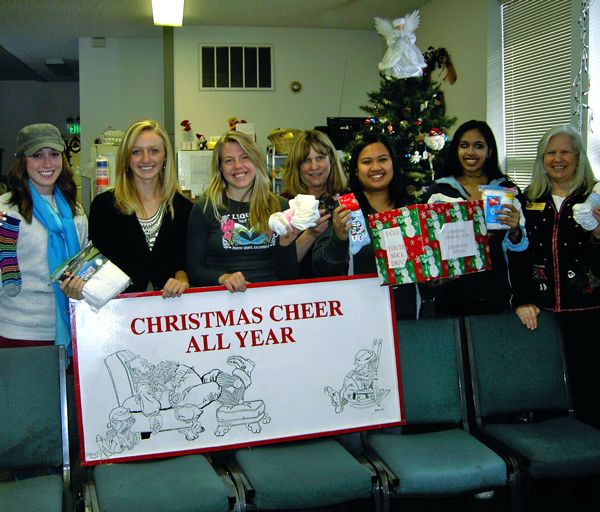
The South Tahoe High School S Club had a Holiday Sock Drive in November and December to benefit local youth as part of the Christmas Cheer All Year “Children Are Special” Project.

S Club members collected 548 pairs of new and “gently” used socks during the drive. The socks were delivered to Christmas Cheer All Year by S Club members and advisers to be distributed to local youth this winter.

S Club members from South Tahoe High give to Christmas Cheer. Photo/Provided

S Club members from South Tahoe High give to Christmas Cheer. Photo/Provided


Quiet lawmaker prompts national environmental law changes

By Susan Ferriss, Sacramento Bee

Her face clouded, just a bit, as she talked about failing to ban the chemical BPA in all baby bottles sold in California.

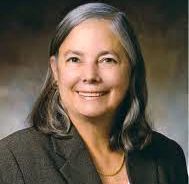
But Fran Pavley, an unassuming state senator from the hills north of Los Angeles, has many victories to savor. Her impact on American environmentalism shows how a state legislator can leverage California’s power to force national change.

Fran Pavley

Fran Pavley

This year, Pavley’s bill limiting levels of the hazardous metal cadmium in children’s jewelry became state law. California’s sheer market size is likely to force manufacturers to change all kids’ jewelry, which is often imported, for the national market.

Pavley won again in November when California voters rejected a proposal to block the state’s ambitious greenhouse gas-capping law, which Pavley had championed in 2006.

Read the whole story