Sparks ski manufacturer turns hobby into international business

By Kara Lapoint, Reno Gazette-Journal

Casey Hakansson learned how to build skis in a snowboard manufacturing shop.

It was not the conventional route for starting a ski company, but it’s where the journey began for the 32-year-old founder and president of Sparks-based Moment Skis.

“My friend was making snowboards over at Sentury Snowboards (in Reno),” Hakansson said. “Through bugging him and seeing how he did it, and just asking a bunch of questions, is how the first Moment Skis were built.”

The Gardnerville native, who grew up with a passion for skiing but began his career by running his family’s Gardnerville masonry after college, said making skis started out as something “super hobby-ish.”

“I definitely had no plan of being where we are now,” he said.

And just where is Hakansson’s company?

Read the whole story


Squaw explains issues during holiday week

To the community,

Squaw Valley was blessed with a wonderful holiday period including an abundance of bluebird days, fresh snow and amazing mountain conditions. Unfortunately, as we welcomed the holidays and more snow to the mountain, the resort was challenged by electrical, transportation and weather related issues that created inconveniences for those of you who were on the mountain. With this note, I want to acknowledge these challenges and openly and directly inform you of exactly what took place.

First, most notably, Squaw Valley experienced brief power outages on Dec. 30 and 31. Experiencing a problem of this nature during one of our busiest and most important times, and during relatively cold temperatures, is a disappointment for our customers, our team members, and our management team. This was a very unique situation, as the staff at NV Energy put it, and an occurrence that did not meet any of our expectations or standards. The following is an important summary of what took place including our team’s response.

On Dec. 30 at about noon, the power lost one “leg” from the bottom of Headwall to the upper mountain. We immediately pursued contingency plans to activate backup power, and contacted the power company, NV Energy. A fuse located on a power pole operated by NV Energy near Granite Chief Road had failed. It took us 30 minutes to locate the fuse following the failure, at which point the power company was already en route. Upon arrival, the power company repair crew replaced the fuse, which they found had melted. We were advised, based on the state of the melted fuse, that failure was attributable to a defective fuse and was not related to the mountain’s infrastructure or operations. To ensure that guests could get their lift ticket’s value, we ran the lifts for an additional 20 minutes in the afternoon that day.

The same fuse failed again on Dec. 31 at 11am. Again, our team immediately mobilized backup power supplies and generators. NV Energy was on site within 30 minutes. A decision was made to replace the fuse with a larger set, which had to be sourced and delivered. The process took about 30 additional minutes. Again, we ran the lifts later that afternoon and provided vouchers for those particularly affected by the outage. NV Energy has made modifications to this “leg” that ensures this failure will never be replicated. Furthermore, we have requested replacement of the fuses in the other two legs of power with the same larger size to prevent any future problems. As an additional precaution, Squaw Valley will be engaging NV Energy and other specialists to conduct a thorough review of our power lines, our internal infrastructure, and our operational methodology to ensure that the potential for future failures is minimized.

Secondly, on Dec. 30, the entire North Lake Tahoe road system was overwhelmed by traffic, including our local area. Snowstorms put the county’s already stressed road crew in a position whereby they weren’t able to widen Squaw Valley Road, a critical function which allows us to build three lanes to support ingress and egress from the resort along this roadway. Additionally, at the end of the day, a malfunctioning traffic light on Highway 89, toward Truckee, exacerbated an already maxed out roadway system. On the next day, Dec. 31, our own road crews took the initiative to widen the roads to create three lanes. While this is outside of our responsibilities, we did this in an effort to alleviate the stress and problems of the previous day. I was informed by many contacts that the entire region’s roadways were problematic during this time. I can assure you that our team will continue to work with local and regional transportation authorities on this issue to ensure that it does not happen again.

Finally, the snowfall that has made for incredible skiing and riding experiences, coupled with significant wind events, has required our Ski Patrol to literally work harder than ever during their snow safety missions. The number of days that we’ve experienced delayed lift openings is directly related to the extraordinary weather, including wind and record-breaking early season snowfall. Patrol conducted snow safety on 15 days during December, and Squaw Valley experienced 189 percent of average snowfall during the month. Together, November and December have delivered more snowfall than anytime during the previous 40 years. You can be assured that our team will continue making every effort to open the mountain as early as possible; however, we will always operate the resort with your safety and the safety of our team members as our primary concern.

We appreciate your patience as we strive to overcome these challenges and seek to improve every facet of the resort’s operations. Thank you for taking the time to review this information, and I sincerely hope that this summary provides you with some insights into our operations over the holiday period.

Thank you for choosing Squaw Valley USA.

Best regards,

Andy Wirth, Squaw Valley president and CEO


Lecture about winter sports nutrition

Performance Nutrition for Winter Sports is the title of Dana Lis’ program. The registered dietitian will speak Jan. 11 at 6pm at Tahoe Center for Environmental Sciences, 291 Country Club Drive, Incline Village.

A no-host bar opens at 5:30pm.

A $5 donation is requested. With valid student ID it’s free.

Whether training for The Great Race or looking to maximize your ski pass, what you feed your body before, during and after exercise in cold environments can have a huge impact on your energy levels, hydration, performance and safety. This workshop will provide you specifics for fueling in cold, high and dry environments to optimize your winter sport performance.

Working in sport, Lis recognizes the individual and specialized nutrition needs of every athlete and ensures that her practice is based on leading edge, reliable research. Whether recreation, high performance or somewhere in between, what you feed your body plays an invaluable role in realizing your full potential as an athlete and healthy individual.


Spooner Summit fire station ready for USFS to occupy

By Kathryn Reed

SPOONER SUMMIT — Tucked off the side of the road near the top of Spooner Summit is a new fire station that belongs to the U.S. Forest Service.

The contractor finished the nearly $1 million project last month. Half of the money for the structure is from Forest Service coffers, while the other half came from the Aramark Corporation. Aramark is the concessionaire – operating as Zephyr Cove Snowmobiles. The two entities share the building.

The two old structures that had been on the property were destroyed. They were in such sorry shape the regional Forest Service office in Vallejo condemned the structure in 2006 for winter use because of cracks in the beams and the threat it wouldn’t hold the snow.
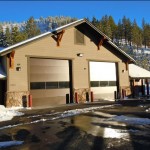
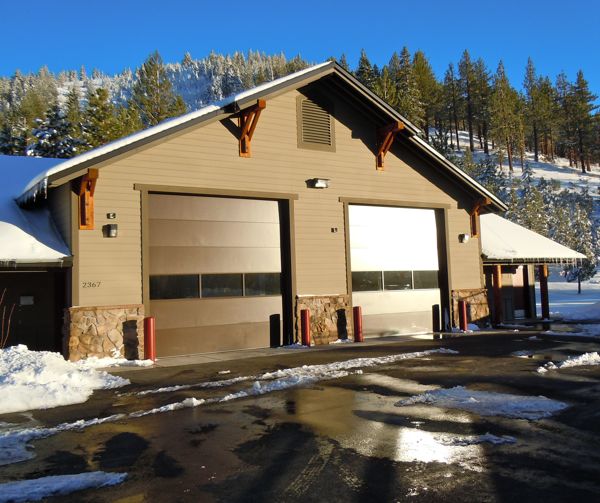
The fire station is on the left, the snowmobile operation on the right. Photos/Kathryn Reed

The fire station is on the left, the snowmobile operation on the right. Photos/Kathryn Reed

“We started the process nearly a decade ago,” Mike Gabor, USFS engineer, said of the agency’s desire to create a functioning facility. Funding was the hold up.

No longer are rodents running around. No longer must a porta-potty be used. No longer is the inside temperature similar to the outside chill. No longer does the fire engine have to be kept outside.

The old buildings didn’t even have foundations, let alone running water.

Gabor said crews used to operate out of a 20 foot by 30 feet one-room building.

Although the fire station does not have an engine year-round, with the snowmobile operation going on, the site will be used 12 months.

During fire season one engine with five crew members and one fire prevention technician will be stationed at the building. However, the men and women sleep in their own bed each night.
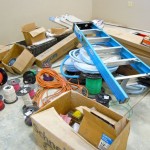
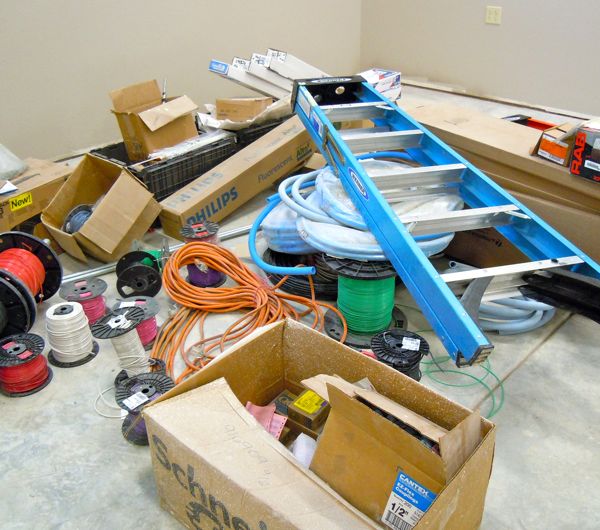
A pile of stuff to clean up ago before the USFS took over.

A pile to clean up a week before the USFS took over.

The Forest Service has space for three offices, a weight room, and break room-training area, in addition to the bay for the engine.

The snowmobile side has a slightly smaller bay for storage of the sleds, an efficiency kitchen, and restrooms that can be accessed from the outside for the public during operating hours.

The structure is built to LEED standards, but because of the cost involved to get the green building certification the USFS opted not to go that route.

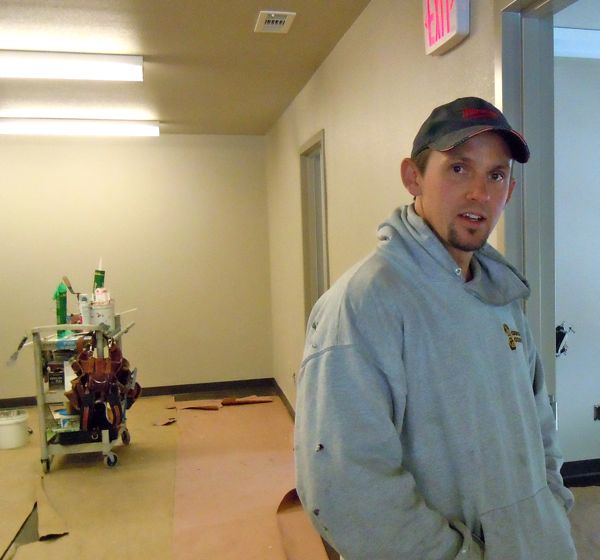
Cory Jennings, with Building Solutions out of Reno, is the superintendent on the project. Despite contending with snowstorms, he said drilling the six 200-foot holes for the pipes for the geothermal system was the trickiest part of the job.

Cory Jennings, construction superintendent, talks about the energy efficient building.

Cory Jennings, construction superintendent, talks about the energy efficient building.

The engine bay has heated floors. Passive solar is being used for the heat exchange.

Neither diesel nor propane is on site.

Recycled blue jeans were used as the insulation.

This acreage on the south side of Highway 50 just before the junction of Highway 28 has an interesting history. Concrete from the ski hill the Bliss family operated in late 1940s-early 1950s still exists behind the new firehouse.

Prior to that, the area was known as the Spooner Station and Summit Camp during the Comstock era.

In 1961, the state of Nevada built tent housing at the site for working inmates. Two years later a Carson City motel was brought up the road to provide some housing, office space and a dining area. The Spooner Honor Camp stopped operating in 1970.

Speculation is during this time is when the structures that were destroyed this summer were built.

The Forest Service acquired the property in 1971, using the old motel as a fire station starting in 1972. That structure was destroyed a few years later.

Raggio’s retirement leaves void in Nevada Legislature

By Bill Hagar, Reno Gazette-Journal

Bill Raggio, Nevada’s longest-serving state senator, said Wednesday that he is resigning because he can no longer navigate the lengthy hallways of the Nevada Legislature due to a torn Achilles tendon in his left ankle.

The departure of Raggio, an 84-year-old Reno Republican, will further diminish Northern Nevada’s clout in the Legislature and could doom any chances of the expansion of the Legislature in the redistricting of Nevada’s legislative districts later this year, political experts said.

Raggio, whose resignation is effective at 5 p.m. Jan. 15, had championed the idea of expanding the Legislature to keep up the representation of northern and rural Nevada in the face of the state’s overwhelming population base in Clark County.

“There is absolutely no question that the single-most powerful force for Northern Nevada in the state Legislature is now gone,” said Reno’s Pete Ernaut, president of government affairs for R&R Partners.

“This makes things kind of interesting for the north because here’s the guy who has been cutting deals for them for 30 years or so,” said Dave Damore, an associate professor of political science at the University of Nevada, Las Vegas. “So obviously in that sense, it creates a void.”

Without Raggio, expansion of the Legislature is probably a moot issue, some experts said. Raggio also tried and failed to add seats to the Assembly and state Senate 10 years ago.

Read the whole story


Chairlift cable dislodges at Heavenly

Updated: Jan. 6 3:20am.

No one was injured this week when the Mott Canyon chairlift at Heavenly Ski Resort derailed. Fourteen people were evacuated by rope and the lift remains offline.

“At approximately 1pm on Jan. 4, a male snowboarder at Heavenly Mountain Resort slid through the entrance gate at Mott chairlift, hitting an outgoing chair and causing it to derail. The lift system worked as designed, automatically stopping the lift and preventing any further derailment,” according to resort spokesman Russ Pecoraro.

Ski patrol used ropes to bring the 14 to solid ground on the Nevada side of the bi-state resort.

“The lift has received a post-incident inspection and is scheduled to operate pending U.S. Forest Service approval,” Pecoraro told Lake Tahoe News. The resort resumed operations Thursday.

The incident did not affect other lift operations.

— Lake Tahoe News staff report


‘Two Million Minutes’ to air in Sierra Nevada College

The second presentation in the Discussions on Education series, a collaboration between Sierra Nevada College and Lake Tahoe School Parents Association, will be Jan. 13 at 6:30pm in rooms 139/141 of the Tahoe Center for Environmental Sciences on the SNC campus. The film, “Two Million Minutes”, takes a startling look at how the three superpowers of the 21st Century — China, India and the United States — are preparing their students for the future.

Based on the premise that regardless of nationality, as soon as a student completes the 8th grade, the child has approximately 2 million minutes until high school graduation. How this time is spent will affect their intellectual foundation, their preparation for college, and ultimately, their on-going economic prospects. The film follows two students, a boy and a girl, from each of these countries and describes the different emphasis students, parents, and teachers put on socialization, academic rigor, and discipline.

According to the film, less than 40 percent of U.S. students take a science course more rigorous than general biology, and a mere 18 percent take advanced classes in physics, chemistry or biology. Only 45 percent of U.S. students take math coursework beyond two years of algebra and one year of geometry. And 50 percent of all college freshmen require remedial coursework. These statistics give rise for concern when compared to the dramatic leaps India and China have made in educating their middle classes.

The SNC-LTS discussion series is exploring depictions of the American school system from provocative, at times opposing, perspectives with the intent to start and support an on-going dialogue among the audience. Facilitators from both schools lead post-film discussions designed to create positive dialogue about the challenges facing education reform in the U.S.

All events in the series are free and open to the public but please register your attendance at: http://2mmsierranevada.eventbrite.com. Seating is limited. For more information, contact Katrina Midgley at (775) 831.1314, ext. 7517, kmidgley@sierranevada.edu, or Mary Danahey at marydanahey@gmail.com.


Pro skier from Squaw creates reality show

By Charles Bethea, ESPN Action Sports

Coming to a network near you: the gnarly evolution of “Nitro Circus.” Over the past year, Squaw Valley-based pro skier Mike Wilson, with the help of sponsors and partners, has raised and spent an estimated $1 million filming six episodes of what the 24-year-old calls an “action-sports-based-adventure-travel show.” The pilot, now complete, will be shopped around major networks next week.

“I basically dreamed up a bunch of the gnarliest things in some of the most dangerous sports I could come up with,” says Wilson, from his parents home in Squaw Valley, after a mid-December day on the slopes, “and my friends and I set out to do them all.” So far he and a revolving crew of action sports accomplices — including Byron Wells and Jesse Hall — have been heli-skiing, BASE-jumping, wing-suiting, snowmobiling, sky diving, snowboarding, rope swinging and zip-lining around the world.

Wilson’s full-time partners on the project are Patrick Rivelli, owner of the website unofficialsquaw.com, and Johnny DeCesare, filmmaker and founder of action film company Poor Boyz Productions. Rivelli, who had the original idea for the show, has contributed capital — as have a few of Wilson’s skiing sponsors — while DeCesare has contributed filmmaking know-how and equipment. Wilson, who is an executive producer and the show’s de facto star, has been responsible for rounding up the talent, and creating the game plan, which amounts to “going to some of the most beautiful places in the world with incredible backdrops and stuff to do something crazy or gnarly.”

Read the whole story


Brown: School budget v. income taxes

By Kevin Yamamura, Sacramento Bee

Gov. Jerry Brown will spare K-12 schools from further drastic cuts in his budget – so long as voters extend higher income taxes in a special election, according to sources familiar with his proposal.

The tradeoff wouldn’t cure education ills, and many districts would still face another year of fewer school days and larger class sizes. But it could avert even deeper cuts after years of school rollbacks and help Brown galvanize powerful education support for tax hikes in a June special election.

“If something like that happens, I’m going to be looking for the feet to be kissed,” said Kevin Gordon, a veteran education lobbyist, of the Brown education proposal. “The big question is, what will the voters do, and if voters don’t come through, will we go through incredible anxiety all over again?”

Brown does not plan to suspend Proposition 98, the state’s minimum guarantee for K-12 and community college funding, though he may seek to do so if the tax hike extensions don’t pass.

Without any increase in state revenue, K-12 schools and community colleges stand to lose more than $2 billion in funding in 2011-12 – roughly 4 percent – because tax rates are scheduled to decline this year, according to the nonpartisan Legislative Analyst’s Office. Several school officials asked Brown at his Los Angeles forum on Dec. 10 to raise taxes to avoid further cuts to education.

Absent those taxes, the analyst’s office projects 2011-12 to be the worst year for schools in the current slump. Thereafter, schools stand to receive more money as the economy recovers.

Read the whole story


Plastic recycler keeps material from going to China

By Tom Knudson, Sacramento Bee

The journey begins with a plastic bottle tossed into a California recycling bin.

And it ends, more often than not, in China, where that bottle is turned into a cheap trinket or toy – a long-distance, low-grade form of recycling that contributes to global warming and sows no green jobs in California.

Now a company in Turlock is starting to change that.

With dreams the size of a Central Valley super-farm, Peninsula Plastics Recycling is buying up billions of California plastic bottles and feeding them into a jungle of industrial equipment in hopes of jump-starting a new eco-friendly food packaging industry.

The feedstock for that new industry is a Sierra Nevada snowstorm of plastic flakes made from all those bottles. The flakes are trucked to a sister company near Visalia that shapes them into the crinkly, see-through containers that cradle apples and strawberries, that cushion cookies and cupcakes in supermarkets across the United States.

Read the whole story