Tahoe Tails — Adoptable Pets in South Lake Tahoe

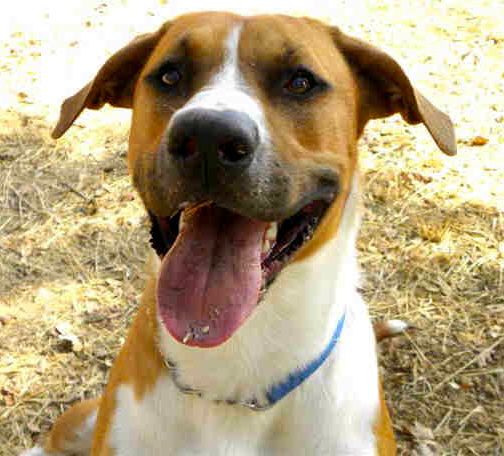
BamBam is a 16-month-old Saint Bernard mix. He is house and crate trained and would love to go to training classes to learn more leash manners. He knows sit, come and down.

dogHe likes most dogs, but would like to meet yours before going home with them. He didn’t chase the cats that he met here, but they didn’t run either.

He is a very energetic boy and would be a great hiking partner.

BamBam is neutered, microchipped, and vaccinated.

He is at the El Dorado County Animal Services shelter in Meyers, along with many other dogs and cats who are waiting for their new homes.

Call (530) 573.7925 for directions, hours, and other information on adopting a pet. For spay-neuter assistance for South Tahoe residents, go online.

— Susan Baumflek


Opinion: Tips for tax season

By Rick Rodgers

For most people, tax time is for worrying about getting audited and hoping for a refund that will help make ends meet.

There are more ways to save for retirement than just taking advantage of your company’s 401(k), which today is almost the equivalent of stuffing your savings in a mason jar and burying it under your porch. People need to get creative and really take advantage of all the different ways the law allows to save money now, earn more money tomorrow and have more to retire on later.

My advice for tax time this year includes:

* The average tax refund for 2009 was $3,035. If this were saved each year for 30 years, it could provide a significant part of your retirement income. Better yet, reduce your tax withholding at work by $253 per month and save the same amount monthly. Monthly compounding instead of annual compounding grows even faster.

* Do not defer your income in a 401(k) plan if you are in a 15 percent tax bracket unless your employer matches the amount you save. Save the money in a Roth IRA instead. Tax brackets will probably never be lower than they are now and there’s a good chance they will be higher. Distributions from a Roth IRA will be tax free in retirement.

* Money saved outside of a retirement account should be invested in stock mutual funds. Most of the earnings on stock funds are either in the form of qualified dividends or long term capital gains. Both types of income are taxed at zero percent in a 15 percent tax bracket and a maximum of 15 percent in higher tax brackets.

* Tax-free funds currently offer returns comparable to taxable funds. The average yield on intermediate tax-free fund was 3.6 percent in December versus an intermediate taxable fund at 3.9 percent.

* Say no to higher health insurance premiums. Start a Health Savings Account with a high deductible policy. The maximum deductible contribution is $6,150 for 2011 for families and $3,050 for single coverage. Distributions are tax free if used for medical expenses and balances can be carried over from year to year. Premiums on a high deductible health insurance policy are typically half the cost of a traditional policy.

* Taxpayers who are age 70½ with IRAs can give money directly to a charity from their IRA this year. Making charitable gifts this way keeps the taxable income off your tax return. This could lower the amount of your Social Security benefits that are subject to tax.

* If you took money out of a retirement account before age 59½, you will owe tax on the distribution but you may be able to avoid the penalty. There are six exceptions to the penalty. Find out if you qualify for any of them.

The law allows people many ways to save money, so while those filing the quick and dirty tax forms may get a quick refund, they may be shortchanging themselves in the future. There are so many more opportunities out there to stretch your retirement savings. A little research today could mean a lot less worrying about retirement later.

Rick Rodgers is a CFP, author, keynote speaker, wealth manager and president of Rodgers & Associates.


Quest to name peak after South Tahoe’s Ryan Shreve

By Kathryn Reed

Peak 9441 is listed on maps just like that, with no other name.

Mike Shreve is on a mission to name the Desolation Wilderness peak Mount Ryan after his son who died in 2003.

In 1992, when the South Lake Tahoe father and son were on a Boy Scout backpacking trip, Ryan asked what the name of the peak was. 9441, its elevation, is what U.S. Geological Survey maps call it.
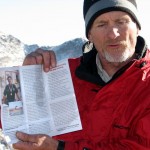
Mike Shreve, holding an SIS brochure, at the top of what he would like to be Mount Ryan. Photos/Provided

Mike Shreve, holding an SIS brochure, at the top of what he would like to be Mount Ryan. Photos/Provided

Eleven years later, the day before Ryan’s memorial, Shreve and his son’s best friend Mitch Underhill hiked to Echo Peak.

“It was snowing lightly. Mitch looks to the west. He said, ‘What is the name of the peak to the right with no clouds and in the sun?’”

It was Peak 9441.

“Let’s call it Mount Ryan,” Underhill said.

It’s an arduous process to get peaks named something other than what they are labeled, especially with the 1999 Wilderness Act as a deterrent. But that is not slowing Shreve. He has the endorsement of the El Dorado County Board of Supervisors. In July he will take his cause to the USGS meeting.

In the mean time, Shreve is collecting signatures on petitions from people who support his idea. He will be asking all those who participate and watch the annual Ryan Shreve Memorial Firefighters Race at Sierra-at-Tahoe on March 15 to endorse his idea.

Education about SIS

Most of Shreve’s focus since his 24-year-old son died after a wakeboarding accident on Folsom Lake has been to educate whoever will listen about Second Impact Syndrome.

“That second impact the brain expands again and has nowhere to expand in the cranial cavity,” Shreve explained. “There is only one option and it goes south into the lower portion, the brain stem region.”

This often leads to strokes because the blood flow into the brain has been limited.

The Ryan Shreve Head Injury Awareness Foundation was created in the 1997 South Tahoe High School graduate’s name in hopes of limiting the number of deaths like his. The biggest fundraiser is the ski event at Sierra.

Money goes mostly to the printing costs of the SIS brochure. Last August the California Interscholastic Federation requested brochures for the 1,650 high schools in the state.

The brochures were first created in 2004. It was a collaborative effort with El Dorado Hills Fire Department, where Ryan Shreve was a firefighter and paramedic, the county’s Emergency Medical Services, and Dr. Terry Murphy who at the time was president of the EMS Medical Directors of California Association.

At last year’s ski race, enough money was raised to print 20,000 brochures.

Shreve says the awareness of SIS has grown substantially since Ryan’s death. He said it was a one on a scale of 1 to 10 in 2002 and is at a 10 today. He attributes this in part to high profile deaths like Sonny Bono and Natasha Richardson, as well as the numerous concussions Steve Young sustained during his career with the San Francisco 49ers.

Ryan Shreve

Ryan Shreve

The SIS brochure says about 50 percent of reported SIS cases end in death. The Center for Disease Control and Prevention estimates there are a minimum of 300,000 sports related concussions annually.

The ski event

The fundraiser is at Sierra because this is where Ryan grew up skiing. He was on the Buddy Werner team in the mid-1980s and skied at Sierra while on the STHS ski team all four years.

The categories include skiing, snowboarding and the 3-inch hose relay. It’s open to firefighters, paramedics and their families. And the racers must be wearing their firefighter turnouts.

“Those things are bulky. That is what makes it all the more fun,” Shreve said.

Competitors come from as far away as Santa Cruz.

For the relay, teams of three race against another team carrying a fire hose.

“When you get two good teams coming down the course, it looks like Chinese serpents coming down,” Shreve said.

The race is March 15 at 10:30am next to the halfpipe at Sierra.

For more information about naming Peak 9441 to Mount Ryan, email mshreve@edhfire.com.


Caltrans working on opening Hwy. 89 around Emerald Bay

By Kathryn Reed

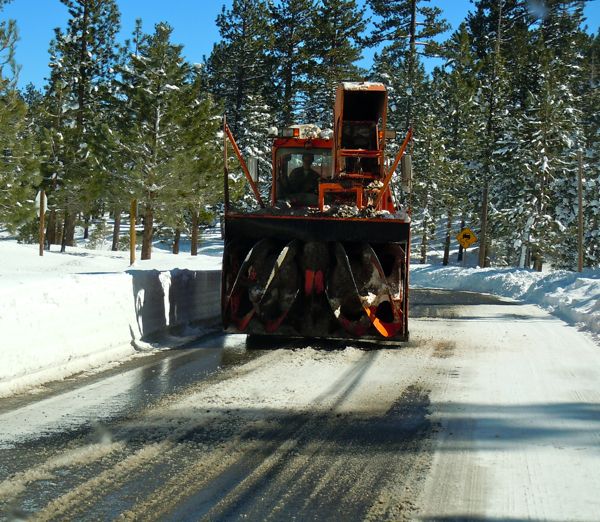
Caltrans crews on Sunday started the multi-day process of clearing Highway 89 around Emerald Bay Road.

People trying to get up that way were being turned around at Cascade Road on the South Shore on Sunday afternoon.

A Caltrans worker who did not give his name said it would take at least two days for the several feet of snow to be removed from the road. The state workers go from south to north to clear the highway.

Caltrans equipment heads toward Emerald Bay on Feb. 20. Photo/Kathryn Reed

Caltrans equipment heads toward Emerald Bay on Feb. 20. Photo/Kathryn Reed

Besides the mounds of snow to contend with, the route is susceptible to avalanches.

Nicole Chapman, owner and operator of Metal Towing and Transportation, was at the turn around.

She said Saturday night she helped with an Office Depot “big-box van” trying to get to the West Shore that ended up off the pavement Chapman said it caused a 14-car chain-reaction accident of fender benders and no serious injuries.

A California Highway Patrol dispatcher said she was not working Saturday night, so had no information and said no one would be available to talk about the pile-up until Tuesday.

Chapman is trying to spread the word to get motorists to be more educated about the Move-Over law, which Lake Tahoe News wrote about a year ago.

A colleague of hers died earlier this month. A procession of tow truck drivers made its way down Interstate 80 on Feb. 18 from Sacramento to Roseville following the funeral of Michael Sanders. The 27-year-old worked for Welcome’s Auto Body & Towing in South Lake Tahoe before getting a job with Ace In The Hole Towing.


Ski report: Bluebird day

curtisStorms erase “Sierra cement” phrase from people’s vocabulary.

Here is the ski report from Curtis Fong, the Guy from Tahoe.


Mancuso ends World Championships with 2 silvers

By U.S. Ski Team

GARMISCH-PARTENKIRCHEN, Germany -– Frenchman Jean-Baptiste Grange ignored rapidly deteriorating course conditions Sunday to convert a first run lead into the FIS Alpine World Ski Championships slalom gold medal.

World Champs rookie Nolan Kasper of Warren, Vt., was 15th and giant slalom gold medalist Ted Ligety of Park City 19th as the U.S. Ski Team closed the World Championships with three medals including a pair of silvers from Julia Mancuso of Squaw Valley and Lindsey Vonn of Vail.

Official results, 2011 FIS Alpine World Ski Championships, Garmisch-Partenkirchen, Germany, Slalom

Gold: Jean-Baptiste, Grange, 1:41.72

Silver: Jens Byggmark, Sweden, 1:42.15

Bronze: Manfred Moelgg, Italy, 1:42.33

15. Nolan Kasper, Warren, VT, 1:43.83

19. Ted Ligety, Park City, UT, 1:44.17

Did not finish second run:

David Chodounsky, Crested Butte, CO

Did not finish first run:

Will Brandenburg, Spokane, WA


Opinion: Family farmers need livestock market reforms

By John Crabtree

I met an advertising man once who spent the better part of an hour explaining to me why the farmer and the cowboy are America’s most enduring and iconic images. Growing up on my family’s farm in Iowa made me skeptical. But I recognize that the concept of American agriculture that most of us hold in our minds is that of the owner-operated, family farm or ranch.

We imagine men and women living and working on farms and ranches that they own, determining their own destiny, making their own decisions and remaining fiercely independent and self-sufficient. Above and beyond the food they raise, family farmers and ranchers are America’s original and most quintessential entrepreneurs. They are the cornerstone of America’s economy and the wellspring of our nation’s values. And they are the stewards of vast stretches of rural America’s remotest and most beautiful landscapes, including the sprawling vistas that define rural California.

The economic survival of family farmers and ranchers in California and throughout rural America depends, however, on access to markets for their crops and livestock that are based on fair competition – a fair shot for ordinary folks who work hard and do a good job.

John Crabtree is the media director for the Center for Rural Affairs in Lyons, Neb. The center advocates for strong rural communities.

Read the whole story


Learn about mailman Snowshoe Thompson

Explore Tahoe Winter Speaker Series continues Feb. 24 at 6pm. The Friends of Snowshoe Thompson present the Life and Adventures of Snowshoe Thompson, the legendary mailman of the Sierra Nevada.

Explore Tahoe is located in the Heavenly Village next to North Face at 4114 Lake Tahoe Blvd.

A $5 donation is requested and refreshments are provided. A flat rate of $5 is offered in the parking garage after 4pm.

For more information, call (530) 542.4637.


Mancuso, Bahrke star in California tourism ad

By Lori Weisberg, Sign On San Diego

Olympic skier Julia Mancuso is among winter athletes featured in a new California tourism ad campaign airing on cable TV.

California tourism officials have turned to celebrity athletes and chefs to promote the state as an ideal destination for skiing and snowboard enthusiasts, as well as vacationers with a hankering for fine food and wine.

Its new “Friends in High Places” television advertising campaign employs such notables as Olympic ski champions Julie Mancuso and Shannon Bahrke, both of whom grew up on the slopes of Lake Tahoe, to showcase California’s top skiing and snowboarding locales. The ad is not devoted just to skiing but also highlights such activities as dog sledding, tubing and ice skating.

California ski resorts last year attracted 8.1 million snow enthusiasts and typically generate $700 million in direct visitor spending annually, according to the California Ski Industry Association.

Read the whole story


Nevada Division of Wildlife may take donations for specific programs

By Guy Clifton, Reno Gazette-Journal

The Nevada Department of Wildlife, looking for ways to help fund programs and match federal grants, is proposing the establishment of a “gift account” that would let people and organizations donate directly to the department rather than have the money funnel through the state’s general fund.

The program would also allow conservation organizations or individuals to donate money for a specific project, said NDOW Director Ken Mayer.

“The neat part of it is if a person donates and says they want their funds donated to project X, we can earmark it for that purpose,” Mayer said.

The state Department of Cultural Affairs has a similar program that allows for donations directly to museums.

State funding for NDOW has declined annually from $1.74 million in 2006 to $721,000 in 2011 and will drop to about $495,000 in 2012 and 2013 if Gov. Brian Sandoval’s proposed budget is approved.

The department’s budget is largely funded by the sale of hunting and fishing licenses, trout stamps, boat registrations and with federal dollars that often require a match.

Read the whole story