Census: Douglas Country grows 13.9% in 10 years

The U.S. Census Bureau today released population totals and demographic characteristics about Nevada.

The five most populous incorporated places and their 2010 Census counts are: Las Vegas, 583,756; Henderson, 257,729; Reno, 225,221; North Las Vegas, 216,961; and Sparks, 90,264.

Las Vegas grew by 22 percent since the 2000 Census. Henderson grew by 47 percent, Reno grew by 24.8 percent, North Las Vegas grew by 87.9 percent, and Sparks grew by 36.1 percent.

The largest county is Clark, with a population of 1,951,269. Its population grew by 41.8 percent since 2000. The other counties in the top five include Washoe, with a population of 421,407 (increase of 24.1 percent); Lyon, 51,980 (increase of 50.7 percent); Elko, 48,818 (increase of 7.8 percent); and Douglas, 46,997 (increase of 13.9 percent).


Countersuing ADA litigator pays off for one business

Publisher’s note: Scott Johnson has been making the rounds in South Lake Tahoe, too.

By Nicole Banks, North Sac News

“I almost fell out of my chair.”

That’s the response Johnnie Walker had after learning the judge’s verdict.

Those legal costs were the result of one letter. That letter was from Scott Johnson, an ADA litigator from Carmichael. Johnson’s letters have appeared on doorsteps throughout the state from restaurants to dentist offices to gas stations. The notice states that the business must become compliant with various changes to disabled signage and parking as required by the American’s with Disabilities Act. It gives notice to alter the property and/or to settle with Johnson monetarily. For businesses unaware of the guidelines, it is a shock; some of whom risk shutting down for the cost of paying thousands of dollars in fees or construction for the proper wheelchair slopes, redesigning of the interior of a location and parking expansions.

For Johnnie Walker, it meant he was getting sued. He manages the property at 6500 Watt Ave., but wasn’t the one to receive the letter. It was his tenant, operators of a massage therapy office.

“I’d never seen the guy before in my life. Neither had the people leasing my property. In court he had no receipts, no proof he came to the business. First I thought it was a joke or something. But it turns out this guy wanted a lot of money.”

He found out what Johnson was doing was neither a joke nor illegal.

Read the whole story


History: Ex-TRPA member’s memories of Lucky Baldwin

Publisher’s note: This is reprinted from the January 1974 Lake Tahoe Historical Society newsletter.

By Sheryl Morris

Ray Knisley relived some of his personal experiences at Lake Tahoe during the early part of the century and recalled stories about the settlers of some of the big estates on the Southwest Shore of the lake last week when he addressed members of the Lake Tahoe Historical Society.

historyKnisley, a Nevada business executive and member of the Tahoe Regional Planning Agency, was involved with the Tahoe area in the early 1900’s because of his position as general manager of the ranch properties belonging to E.J. “Lucky” Baldwin.

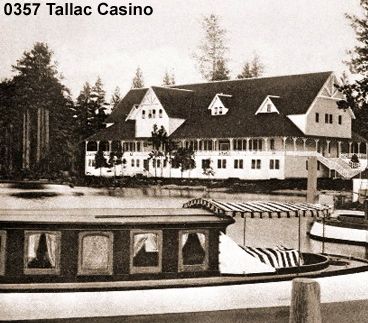
Baldwin not only owned property in the Tallac area of Tahoe, but had holdings throughout the state of California. In fact, Knisley noted, Lucky was the largest individual property holder in all of California’s five largest counties, including Los Angeles County by the 1920’s.

Knisley traced Baldwin’s exploits from his home state of Ohio to California at the age of 19. It was the Gold Rush that beckoned Baldwin west and it was the thousands of people making the trek that helped him get his start in business.

In 1851 Baldwin went to Salt Lake City with six wagon loads of trade goods. He sold the wagon and team, bought a buckboard and four horses, and then traveled down the south fork of the Humboldt River through Lovelock, to Tahoe and on to Placerville and San Francisco.

“When Baldwin went through here, he was determined he’d come back,” Knisley said, adding that at that time there were only two small places in Lake Valley.

Operating a brickyard in San Francisco, Baldwin got enough money ahead to invest in the Virginia City mines. Because of his success in the Nevada mining operations, he was given the nickname of “Lucky.”

When he moved to Southern California, Baldwin had some $20 million in cash. He bought Rancho Santa Anita, which is now the Santa Anita Racetrack.

He also became involved in the financial world, making loans at 12 per cent interest and starting the National Bank of the United States in that area.

“Then came the panic of the 1880’s. The squeeze was being put on the leading people of the community and Baldwin had developed such a reputation as a scoundrel and thief that they were after him,” Knisley said.

Baldwin became interested in the Tahoe Basin in 1914 when the federal government announced plans to drive a tunnel through Incline mountain 12 feet below the normal low level of the lake. They wanted to take the water out and send it on its way over to the Nevada valleys.

“This would have spoiled Lake Tahoe, cut off the Truckee River, and caused numerous problems,” Knisley explained.

The few families living in Lake Tahoe at that time banded together and fought the project. Knisley recalled, adding that they included mainly the Baldwin and Bliss families.

“Baldwin was undoubtedly the earliest conservationist in California,” Knisley said. Baldwin bought Yank’s Station, the first commercial place at Tahoe, when he began acquiring property in the Tallac area. He had a violent dislike for the cutting of trees. In fact, Knisley continued, Baldwin made a stipulation in his will that the Tallac property was never to be logged.

Knisley first saw Baldwin’s Tallac House and other Tahoe properties in 1921 to familiarize himself with all the Baldwin holdings. It was from that time on that he became involved with Tahoe area and came to know the other families who were early landowners here.

The Tevis Family owned what later became known as the Pope Estate. Tevis was an English banker who moved to California and financed he undertakings such as the Moffit Tunnel in Colorado. When the Tevis Family was forced to dispose of its Tahoe property, the estate was sold to George Pope.

The Popes were originally from Maine. They came to California with their friends, the Talbot and Walker families. The three families acquired holdings in San Francisco, Puget Sound and the Sierra. They were steamship people and for many years they ran ships to South America and the Orient.

Descendants of the Pope family are still in the forestry business today, Knisley noted. In fact, he said, Pope-Talbot lumber was used in front of the new Waystation in South Lake Tahoe.

The original owners of the Valhalla Estate, were of the Walter Hellers of San Francisco and the Copelands were the original owners of Camp Richardson.

Knisley pointed out that the historic old estates on the West Shore have been bought up by the Unites States Forest Service. “This acquisition has not only created a beautiful area, but it has brought the wilderness in touch with Lake Tahoe,” Knisley added.

Following his address on the estates, Knisley was asked to comment on the Tahoe Regional Planning Agency on which he presently serves as the governor’s appointee from Nevada.

“I think it is still possible for people to use Lake Tahoe, enjoy it and for it still to be protected so long as the Tahoe compact exists and is accurately administered,” he said.

When questioned about his vote on the proposed construction of a Raley’s Shopping Center at Tahoe Vista, Knisley explained that the developer had met all the requirements so there was not one legislative reason for denial.


Lone wolverine continues to roam Sierra

By Tom Knudson, Sacramento Bee

“Picture a weasel – and most of us can do that, for we have met the little demon of destruction, that small atom of insensate courage. … Multiply that mite by some fifty times and you have the likeness of a wolverine.”

Ernest Thompson Seton — “Lives of Game Animals, Vol. II,” 1925 – 1927

He wanders long distances at night, alone.

He curls up under wind-stunted trees at the timberline.

And from a distance, he can hear the rumble of traffic along Interstate 80.

But almost no one has ever seen him.

“He’s gone before you even have a clue he’s there,” said Amanda Shufelberger, a wildlife biologist with Sierra Pacific Industries who has tracked the animal across the Sierra Nevada since 2008. “He does not want to see you.”

Three years after the discovery of a wolverine in the Tahoe National Forest north of Truckee, the elusive creature continues to roam the region, defying expectations, delighting many and stirring calls to find him a mate.

Read the whole story


Opinion: Reid’s prostitution stance is all about bitter politics

By David Colborne

At 14.6 percent, nearly 5 percent higher than the national average, Nevada has the highest unemployment rate in the nation. Consequently, when Harry Reid, Nevada’s senior politician in Washington and the current Senate majority leader, came to address the Nevada Legislature on Tuesday, his focus was, logically enough, on jobs. He discussed how many jobs his support for the stimulus package from two years ago had saved, noting especially how much money went directly to Nevada’s teachers from the stimulus. He highlighted his efforts at bringing clean energy companies to the state and how many jobs that would bring in.

Then he suggested that Nevada, the state with the highest unemployment rate in the nation, should abolish an industry.

Thirty years ago this year, Storey County became the first county in Nevada to officially license and regulate a brothel, starting with the infamous Mustang Ranch. Now, Nevada’s safe, well regulated brothels employ hundreds of women, providing a substantial boost to the local and regional economies and tax bases that they serve. Every year, for example, each brothel in Storey County is required to furnish at least $75,000 a year in licensing fees – each brothel effectively pays the entire salary, including health and retirement benefits, of one school teacher, and that doesn’t even include property or sales taxes. Brothels also exhibit a salutary effect to the tourism industry, providing yet another unique attraction to advertise that’s only available in Nevada. They do all this while maintaining the safest working conditions for prostitutes and their customers in the country, if not the world, with regular screenings for sexually transmitted diseases and a consistent application of the same labor and safety laws followed fastidiously by every other legitimate business in the country. Consequently, drugs, diseases, and pimps might all be common ailments of illegal streetwalkers, but they’re unheard of among the employees of Nevada’s legal brothels.

How would abolishing this industry bring jobs to Nevada? It wouldn’t, unless you relied upon the anecdotal evidence of one senator, who quoted a single, unnamed businessman that was mortified that brothels were legal in Nevada. According to Sen. Reid, there are legions of parents and businessmen who fear that their children will see a brothel on their way to school; this is curious since less than 10 percent of Nevada’s 2.7 million people live in a county with a licensed brothel present. Surely the longest serving senator for the state of Nevada could point these parents and businessmen toward any of Nevada’s brothel-free urban school districts, including the ones serving Carson City, Reno, or Las Vegas?

Of course, Nevadans know the real reason why Senator Reid wishes to end legal prostitution in Nevada – it’s politics, pure and simple. Nevada’s rural counties failed to support Sen. Reid, so he wants to cut their economies off at the knees. Even when Nevada’s unemployment rate is the worst in the nation, Sen. Reid can’t help but put petty, partisan politics above the needs of his constituents.

David Colborne is the chair of the Nevada Capital Libertarian Party. He may be reached at chair@nvclp.org.


Ax falls in S. Tahoe; positions gone, retirements imminent

By Kathryn Reed

“Thank you for your email. Eugene Palazzo is no longer employeed (sic) with the City of South Lake Tahoe. Please contact Tracy Franklin at 530-542-6093 or tfranklin@cityofslt.us. Have a great day. Gene”

That is the auto-reply Gene Palazzo left on his email Feb. 23, the day he found out he no longer had a job with South Lake Tahoe. He had been the director of Redevelopment and Housing.

sltHis is one 11 positions being eliminated. Another 10 employees are taking early retirements.

Some departments are being re-organized, while some people are taking on new responsibilities in positions that are being created.

“This will allow us to streamline operations,” City Manager Tony O’Rourke told Lake Tahoe News late Wednesday. “The reorganization is more of a rebalancing. It allows us to introduce new concepts to the city.”

The anticipated re-org is expected to save the city $10.2 million across five years.

The city has been in the red millions of dollars a year for the past few years, with the anticipation of much the same in the future because of declining revenues from hotel, sales and property taxes.

Spending is the main area the city can control. That is what the reorg is all about. Past practices have been to take from reserves to cover the deficit. O’Rourke and the current council want the city to live within its means.

“We have to control our own destiny,” O’Rourke said. Seventy-eight percent of the General Fund goes toward employee salaries and benefits.

The City Council will discuss the reorganization and five-year budget during the work session March 1 after the regular council meeting.

Positions eliminated on Wednesday also include assistant city manager (Rick Angelocci) and assistant Parks and Recreation Director (Chris Hawken).

The employees represented by unions – those who are not at-will employees – have been told what is in store. However, it is the council that must vote on those jobs. That will happen March 15. The workers have 30 days after that to vacate their jobs.

With bumping rights in the city, the exact people leaving all positions is not known. It’s the positions the city desires to eliminate that are outlined here.

O’Rourke said he wants to work with the unions to abolish the bumping rule because it can mean a person who is less qualified or not a good employee keeps his job based on seniority and nothing else — and bumps a newer hire into the unemployment lines when that person in fact is the one who management would have preferred stayed on the payroll.

Severance packages are still being worked out for everyone.

The positions likely to be eliminated are:

• Accounting technician –  (was filled by a temporary employee)

• Assistant engineer –  (position was vacant)

Funding will dictate if another engineering position is cut in October.

• Associate planner

• Fire division chief (was vacant)

This leaves one division chief per shift. Fire Chief Lorenzo Gigliotti is keeping his job for now, but will have to step it up a notch, which includes taking a shift in the firehouse and filling in when a division chief is out.

• Housing rehabilitation specialist

• Senior accounting technician

• Senior airport assistant

• Administrative assistant in public works –  (was temporary worker).

Those being offered early retirement will leave at different times. They include:

• Fire captain

• Fire engineer

• Human resource analyst

• Information technology manager

• Public Works director (John Greenhut will leave in May.)

• Police captain (Martin Hewlett will leave next February.)

• Police sergeant

• Police officer

• Recreation supervisor (John Collins is leaving; Rob Swain is moving from the ice rink to the senior center.)

One other position is likely to be gone with early retirement; that was expected to be finalized Thursday.

In O’Rourke’s staff report, he says, “The vacant positions resulting from these early retirements will be filled, with the exception of the Public Works Director, Human Resource Analyst and Recreation Supervisor. The Police Captain position will be reclassified to a Community Service Officer and the Police Sergeant reclassified to a Community Service Officer.”

O’Rourke met with everyone Feb. 23 who would no longer be receiving a paycheck from the city, except for Hawken, who no one could locate.

South Tahoe downsized in 2009 in what was called a cost containment plan. On April 21, 2009, the council approved six early retirements in various departments, seven people lost their jobs, and a few positions were left vacant.

Seven months later, on Nov. 17, the council laid off one person, approved nine early retirements and froze more positions.

This is also when furlough days started.

Consolidation, which means departments are being reclassified, is also part of the plan that will be before the council in March.

Hilary Hodges, the current planning manager, will head the Development Service Department at least for the interim. This department will include redevelopment, housing, economic development, sustainability, planning, building and the engineering section of public works.

Stan Sherer, who took over the Parks and Recreation Department last month, will run the Community Services Department. The new department will also include streets, fleet management and facilities maintenance – everything that was in public works except for engineering.

The airport and parking will come under finance; still led by Christine Vuletich.

“Those are enterprise operations that should break even at best or make money. We really need a financial focus on those operations,” O’Rourke said.

Four other positions are being reclassified, with current staff filling the jobs.

The city’s special events coordinator will be Lauren Thomaselli. She has been running Explore Tahoe. Someone within the city will fill her shoes at the visitor center.

“The city is going to be much more engaged in producing new events and assisting other people’s events. This is tied to economic development,” O’Rourke said.

Engineer Jim Marino will be the capital improvement coordinator.

Tracy Franklin, who worked in Redevelopment and Housing, will be the volunteer coordinator. One of the things in the citizens’ survey that was recently released was the desire by locals to volunteer more. The city could reap millions of dollars worth of free service from residents.

Nancy Kerry, manager of Redevelopment and Housing, is moving into the role of communications/public affairs manager. She will work directly for O’Rourke. The job will also include marketing of city services, like Parks and Recreation.

“This is a major step forward, but not the only or final step,” O’Rourke said of all the changes. “We will have to monitor and modify as we go forward.”


S. Tahoe grad near epicenter of New Zealand temblor

Updated Feb. 25, 2011, 11:30am.

Publisher’s note: Hillary Santana, the 2008 salutatorian at South Tahoe High School who works for the Lake Tahoe Basin Forest Service office in the summer, is an exchange student in New Zealand from her university in Pennsylvania. The following is from her dad. Hillary is the daughter of David and Bernadette Santana, who work at STHS.

By David Santana

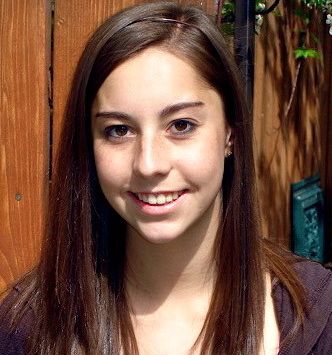
When South Tahoe High School graduate Hillary Santana elected to pursue her Environmental Studies concentration abroad, she had no idea how immediate and impactful her education would soon be. The Swarthmore College junior arrived in Christchurch, New Zealand, to attend classes at the University of Canterbury just more than a week ago.

Before then, her only brush with adversity had been a half-day’s wait on a delayed arrival of luggage from the North Island’s Auckland airport. After spending a week acclimating to her new environs and enrolling in classes, Hillary witnessed what could only be described as a life-changing experience as she sat in a lecture hall on the Canterbury campus.

Hillary Santana

Hillary Santana

Shortly before 1pm on Feb. 22, as the class listened to a speaker, the building began to shudder and roll, and students and staff scrambled for the shelter of desks and doorways as a reported 6.3 magnitude earthquake struck just more than 2 miles below the New Zealand city.

In an emergency phone conversation with home shortly afterward on a dedicated line, Hillary described the experience: “Dad, it was crazy — I’ve never been so scared in my life. As soon as the shaking stopped, we got the heck outta there, and out onto the lawn!”

The University of Canterbury campus, located only 3 miles from the quake’s epicenter, was quickly evacuated as many of the older buildings had to be secured and inspected. No major damage was immediately found there, but downtown Christchurch, only 3 miles away, was not so fortunate.

To date, there have been 65 confirmed deaths, and hundreds of people missing as rescue crews scour several devastated buildings for survivors. Water and power have been shut down in much of the area, as damage to drinking water, sewage, and gas and electric systems have been reported. The night following the disaster has been a long and wet one for many of the evacuees, as rain began falling on hundreds of individuals preferring to spend the night outdoors as aftershocks riddled the area

“They finally let us back into our dorms this evening, but my flat’s on the fourth floor, and I’m not too sleepy, if you know what I mean.”

Describing her flatmates as “pretty freaked out”, Hillary has been trying to keep updated on the chaos downtown.

“It’s not good, Dad. Several of us are looking to volunteer at the shelters they’re setting up outside of the areas of devastation for the evacuees,” she said. Classes at Canterbury have been canceled for the week, pending any further developments.

“It looks like we’ll have lots of time on our hands to help out,” she said.

Although Internet and phone service have been limited in the hours following the earthquake, people wishing to help out and stay informed may contact the New Zealand Red Cross.

Here is an update, day two:

“Dad, there’s no water, and we’re still feeling aftershocks every half hour or so. I still can’t believe how bad things are in downtown. It’s only a 15-minute bus ride away.”

Hillary has been able to communicate with family by phone, but Internet service is still down at her location near the University of Canterbury campus. As to the moment the quake struck, she states: “I had been packing my things to leave class, and the room started shaking violently. It felt pretty unreal, and I literally asked myself if it was really an earthquake. It felt as if the building was no longer attached to the ground. Most of us ducked under desks, and covered our heads. When it stopped, we were told to move outside and away from any buildings — no problem there! A large aftershock occurred soon after, and it was very strange to see concrete shake.”

Back at her apartment dorms an hour later, emergency personnel were still limiting access until inspections were completed.

“The building next to mine suffered a crack, so the people living there had to stay in another flat. At that point, we still had no power or water, and phone service was still spotty. I was still nervous and confused, but I really had no idea then how bad things were a couple of miles away.

“Little information has been passed along yet as to how locals can volunteer, and emergency efforts have restricted travel. I will continue to keep everyone updated as best I can, and I hope everyone out there is thinking hopeful thoughts for the city and its people, as I am. I’m fortunate to be in a relatively safe place, and this city has been very welcoming to me since I arrived here only 10 days ago. I hope things will turn up, and that people who are still missing will be found and returned to their loved ones.”

Day 3

“So, the aftershocks are becoming almost commonplace by now … it’s not easy to sleep, but you just kinda look around and ride them out.

“Water at the apartments is still out, and we’re being asked not to flush toilets, as the sewage system is badly damaged down the line — not too pleasant ….” Hillary is entering Day 3 after the devastating Christchurch quake, and reality is settling in as clean-up and rescue efforts go into overdrive downtown, a few miles away. The official death count has risen to 75, and numbers are expected to rise sharply as downtown buildings are excavated, and hundreds are still trapped. The Christchurch Airport has re-opened for domestic flights, and is limited international flights for transport and rescue craft. Some airlines are offering reduced fares for tourists and international students who wish to leave the area.

“Some of my international classmates have left for Auckland (North Island) or Australia, but once we got our power back, I saw some of the video from downtown … I mean, the devastation is only a few miles away from the campus, and it’s awful … I decided I couldn’t go.”

Hillary will be joining approximately 300 other University of Canterbury students who call themselves the Student Volunteer Army. They will be busing into adjoining neighborhoods to help with clean-up efforts. “Downtown’s pretty much cordoned off and limited to army, rescue and police personnel, but surrounding neighborhoods are in need of help,” she said. ”We’ll be leaving in a little bit, so I’ve gotta go — I’ll let you know where we are when we get there — I love you.”

New Zealand Prime Minister John Key has declared Christchurch a national disaster, the country’s deadliest in more than 80 years. Besides the destruction of several downtown high-rises, water and sewage systems have been badly damaged by the liquefaction of the ground beneath the city in several places, and hundreds, possibly thousands, have been displaced. International rescue teams continue to arrive in Christchurch, and President Obama has pledged American support for the beleagured city.

“I was taking pictures of the Christchurch Cathedral just last Friday, and cruising the downtown square with my classmates — the news clips are just surreal, Dad.” Hillary will be staying on in Christchurch to help with cleanup efforts, and urges her classmates and South Lake Tahoe residents to do the same.

Although Internet and phone service has been limited in the hours following the earthquake, people wishing to help out and stay informed can contact the New Zealand Red Cross.

Day 4

“Up early today to join with other University of Canterbury students (Student Volunteer Army) in clean-up efforts.

“Downtown is heavily cordoned off as search and rescue in the demolished buildings continues. Death toll has risen to 113, and still hundreds unaccounted for. We headed to the coastal communities out by New Brighton Beach in buses. The earth movement has shifted the substrata, pushing up lots and lots of sand and muck into neighborhoods, and clogging drainages. We were assigned to a residence of elderly folks in their 70s and 80s, where we spent the day digging and wheel-barrowing their yards, garages, and nearby gutters. Their neighbors’ house had a large crack running down the center of their floor. We grabbed our shovels and dug in. It was hard work, but the people were exceedingly grateful and fed us what lunch they were able to put together. Being down by the coast, all I could think of was tsunami activity, as the aftershocks have only now begun to subside. I thought about my sister, Victoria, who was in the Navy aboard the USS Duluth during tsunami relief efforts after the disasters in Thailand and Sri Lanka in 2004. It was their job to provide fresh water for the locals, as their ship had water desalination systems on board. Back at the dorm, we’ve still had to boil our water before using it to drink and cook, but in many areas here people are still getting their water from tanker trucks. When we got back to our apartments, we were tired and sore, but happy to find out that we were finally allowed to take short showers. After today’s work, we would’ve been pretty nasty without them. What’s more, we were allowed to flush the toilets – Happy Day!

“Later in the evening, our internet service came on, and as I contacted my folks and friends back home, I realized just how much we take for granted not only basic services like water, sewage and power, but the niceties of the tech age. Just a week ago, I remember complaining to my dad that we had to pay additionally for Internet access at the dorms, while back at Swarthmore we enjoyed campuswide Wi-Fi for free. What a reality check …

“Classes are still suspended at University of Canterbury, and it appears they will be for another week, at least, while things are put back in order, and buildings checked. I was counting on the three-week break between terms to do some traveling around New Zealand and possibly Australia, but adjustments to the schedule might impact that. For now, we’re all following the progress downtown, limiting our water use, and helping when we can.

“I strongly urge people to help, if they can, as the situation only a few miles away has become truly heartbreaking.www.redcross.org.nz/donations.”


Who will win best picture at the Oscars?

Howie Nave, Lake Tahoe News’ movie reviewer, has seen all the films up for best picture. He’s busy compiling his article that will reveal who he believes the winners will be Sunday night. No sneak preview here.

howie bagelsWho will Nave pick to win the Oscar on Feb. 27 for best picture? Remember, there are 10 films to choose from this year. They are:

* Black Swan

* The Fighter

* Inception

* The Kids Are All Right

* The King’s Speech

* 127 Hours

* The Social Network

* Toy Story 3

* True Grit

* Winter’s Bone.

Can you pick who Nave will pick? The first three people who post the correct comment, will be sent a Lake Tahoe News T-shirt. You must post your full name and use your true email address. The latter won’t be made public, but LTN will need to reach you to get an address to send the shirt to and find out what size to send.

Winners will be revealed the same day Nave’s predictions are published.


Weather Service warns people to stay off Sierra passes

The winter storm warning for the Lake Tahoe Basin begins at 4pm Thursday and is scheduled to end at 4am Saturday.

The National Weather Service is calling for 12 to 24 inches at lake level, with 2 to 4 feet above 7,000 feet.

The agency warns, “Anyone planning travel over the major passes should consider completing their trip over the Sierra by midday Thursday or postponing travel until Saturday.”

The Carson Spur west of Kirkwood on Feb. 19. Photo by Casey via Facebook post by Seth Frank

The Carson Spur west of Kirkwood on Feb. 19. Photo by Casey via Facebook post by Seth Frank

The super cold storm is expected to bring powdery snow, significant blowing and drifting snow, and whiteout conditions.

The high for South Lake Tahoe on Thursday is set for 20 degrees, and 18 on Friday and Saturday. It will warm up to 32 degrees on Sunday.

In the Reno, Carson City and Minden areas the storm warning is in effect from 10pm Thursday to 10pm Friday. Three to 8 inches are expected below 5,000 feet.

With forecasters calling for snow on the streets of San Francisco, that’s a definite signal this is a cold, snowy storm on its way to the Sierra.

— Lake Tahoe News staff report


El Dorado County seeks grant funds for Rubicon Trail

The El Dorado County Department of Transportation and El Dorado County Sheriff’s Department are applying to the California Department of Parks and Recreation, Off-Highway Motor Vehicle Recreation Division for the 2010-11 grants program for funding of projects on the Rubicon Trail.

The grants applications will be posted on the OHMVR website on March 8. To review the grant applications submitted, go online.

The 30-day public review and comment period for the 2010-11 Grants and Cooperative Agreement Program begins March 7 and ends April 4.