Demand for building down

By Linda Fine Conaboy

When times are tough in a community, there seem to be multiple indicators signifying just how bad things really are. You see closed storefronts, not much exterior maintenance being done to spruce up buildings, unfinished building projects or simply not many new building starts, and fairly high unemployment.

In the Lake Tahoe region, another indicator is the number of unused building permits (allocations) that have been carried forward, unused from year-to-year.

Normally, by this time, the 2011 permits would have been distributed by the Tahoe Regional Planning Agency. But this year, the designated date is sometime in April. Some in the basin question why and even worry the TRPA will not be issuing allocations this year.
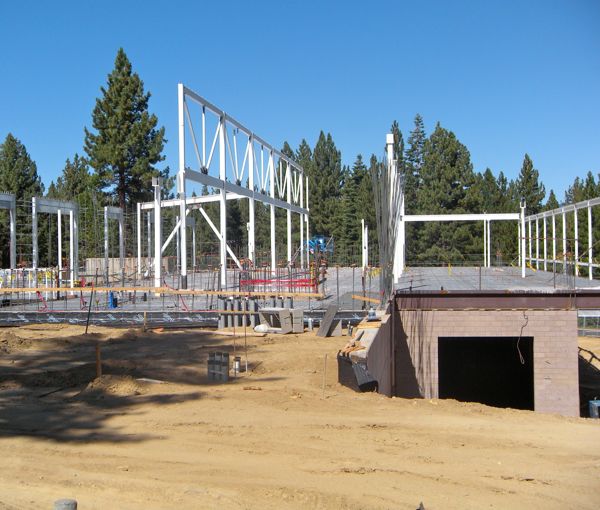
While construction has been robust at South Tahoe High for a couple years, its near non-existent for small projects. Photo/LTN file

While construction has been robust at South Tahoe High for a couple years, small projects in the basin are near non-existent. Photo/LTN file

Not so, said Jeff Cowen, TRPA community liaison.

Although the agency has also found itself mired in various financial issues mandating reorganization with a plan to eliminate eight positions and reclassify 12 others, the reason for late allocations isn’t an internal staffing issue, he said.

In addition, according to Cowen, the jurisdictions making up the Lake Tahoe Basin are not pounding down the door for allocations. There’s a direct relationship between a lack of requests for allocations and the region’s economic activities, he said.

Although the process of granting building permits or allocations is an intricate one, with many nuances sometimes making it difficult for the lay person to understand, the official definition of an allocation, provided by Cowen is: an apportionment of additional development opportunity for residential, commercial, tourist accommodation and certain recreational projects.

Although this may sound convoluted, it all boils down to who can build where.

“We were not in a hurry to release the allocations this year even though we are closing out the allocations pool from the 1987 Regional Plan. We are a couple of months behind,” Cowen admitted, explaining usually the process is completed in January. However, he said, no new allocations will be allotted until the Regional Plan is updated — an ongoing work in process for a number of years, but according to Cowen, it’s in the final stages of development.

The current Regional Plan, in place since 1987, was set to sunset in 2007.

“Things are contentious in the basin,” he said. “That’s why we’re still working on the plan. We’ve actually been working on it since 2004.”

A bit of history

He said because of runaway growth, TRPA put the brakes on rampant building in 1969.

“Come the 1980s, all the harmful growth was stopped, but [we] failed to put in place practices that would make things good — all the broken stuff was still there. The majority of Tahoe’s development was created without environmental guidelines. The lake’s clarity was still declining.”

In 1997, then-President Bill Clinton and Vice President Al Gore came to Lake Tahoe to establish the Environmental Improvement Program, which is a federal, local, state and private partnership.

And in 2007 the EIP was updated, followed just recently by the potential reauthorization of the Lake Tahoe Restoration Act, which hit the floor of Congress on March 2. This act continues the federal commitment at Lake Tahoe by authorizing $415 million over eight years to improve water clarity, reduce the threat of fire and restore the environment. Cowen said the act has broad support and has a good chance of being approved.

By way of explanation, the area benefitting from the allocation process is located between the Carson Range on the east and the Sierra Nevada on the west, straddling the California-Nevada state line. It consists of a large geographical area including South Lake Tahoe, as well as portions of Douglas, El Dorado, Placer, Carson and Washoe counties. About two-thirds of the region is in California, with the remaining one-third in Nevada.

There are about 50,000 year-round residents within the region, a number that is in decline. With 44,000 developed parcels, about 50 to 65 percent of homes are occupied by seasonal residents. About 13 percent of the region is developed.

Who gets what

While all of the machinations at TRPA may not be apparent to the builder or homeowner who’s anxious to begin a building project, they are important to the overall process.

Although Cowen says he understands the urgency of getting shovels in the ground and the short digging season in the Tahoe basin (May 1-Oct. 15), the simple fact of the matter is that none of the jurisdictions is hammering on the TRPA’s door for allocations. Building is definitely slow, he reiterated.

He said TRPA understands it has a reputation of being dense and obtuse stemming from year’s back. Be he also said the agency has changed a lot.

“We’re on a strict path to improve our business processes,” Cowen said.

At the time this article was written, Cowen said there will be allocations available, but he didn’t know how many. “We’re working on that now.”

In 2009 TRPA issued allocations to local jurisdictions without the normal expiration date at the end of the year.

“So, the 2009 allocations that were distributed have lasted through two building seasons and all but one jurisdiction (Douglas County) still has allocations remaining from that pool as we head into a third year. In the past, that kind of retention would have been unheard of.”

Here’s a distribution recap for 2009-10:

• South Lake Tahoe: 32 distributed with six remaining — these are all on hold for multi-family projects; no single-family available right now

• Douglas County: 15 distributed; none remaining

• El Dorado County: 69 distributed; more than 30 remaining

• Placer County: 50 distributed; 42 remaining

• Washoe County: 40 distributed; 32 remaining.

As far as the total number of allocations remaining for years to come, Cowen said TRPA planners are still working on that figure and will know more in April.

What others think

Jill Bricker, a local Realtor and the governmental relations chair for the South Tahoe Association of Realtors, knows the local market well and has some words of advice.

“If you’re planning to apply for a building allocation now, be prepared to have patience. The staffs at [TRPA], the city and the county have been drastically cut because of consolidation, etc.”

Anyone who can build right now should do so, she said — it creates jobs.

Bricker said STAR and the Sierra Board of Realtors recently completed a joint study, the results of which will be passed on to TRPA and the California Tahoe Conservancy so these agencies can better understand what realtors deal with and how it affects the timing of various projects.

“Although response was limited, the majority of the membership feels allocations are not such a hot commodity anymore,” Bricker said.

“TRPA is one of the toughest planning agencies in the nation and sets the standard for environmental issues and protections when it comes to development. What we are concerned with are commercial allocations and tourist accommodation units, which are now being redefined.”

The TRPA website defines TAUs as a saleable commodity within the Tahoe basin. They are available for purchase from the California Tahoe Conservancy, private parties or can be transferred from existing projects.

Roger Trout is the El Dorado County director of development services and in his position deals with building allocations.

“Quite a few people let their allocations expire and they go back into the pool,” he said. “In the past, we’d get 70, 80, 100 allocations each year and they would all be consumed and we had a waiting list. Now, probably because of the state of the global housing market, the need for allocations has declined.”

Trout said he is hopeful TRPA will issue new allocations and re-supply El Dorado County.

“Back in the 1980s and early 1990s we always had more requests than we had allocations,” Trout said.

Mimi Moss, community development director for Douglas County, concurred with Trout when it comes to the number of requests for allocations, although Douglas County has used all of its for the current time period.

“Previously, Douglas County issued 12-13 allocations per year and we had a waiting list. If someone is not issued an allocation, the list rolls to the next year, which is why we have a large waiting list,” Moss said.

If it’s any consolation to the citizens of Tahoe, the area is not alone in its current building malaise — the entire United States housing market is in the deep doldrums.

According to an article on cnnmoney.com, the housing market can’t catch a break. The article reports that the number of permits issued in February for future housing construction fell to a new all-time low, according to a government report issued recently.

Building permits are down 8.2 percent, nationally, from January, the U.S. Department of Commerce Department said. That was the lowest level seen since the government started tracking the figures in 1959.

But spring is here, soon the snow will melt, the allocations will be issued and life may make a stab at normal. Maybe when the building season opens May 1 the sounds of construction will reverberate throughout the basin.



Music scene coming to Northstar

The Lake Tahoe Music Festival is scheduled at the Village at Northstar™ for its 29th season at July 21, Aug. 4 and Aug. 25.

For more information on the festival, visit www.tahoemusic.org.


Tourism forum slated on road events

A tourism forum featuring the AMGEN bike Event is scheduled at the Horizon Casino April 14 at 5:30pm.

Topics discussed will be AMGEN,the Highway 50 closure and other events. The event is organized through the Lake Tahoe South Shore Chamber of Commerce.


Aquatic invasive species subject of talk in S. Tahoe

The Lake Tahoe Aquatic Invasive Species Coordination Committee is hosting a public forum on April 5 from 5:30 to 7:30pm at the U.S. Forest Service building, 35 College Drive, South Lake Tahoe.

Brief presentations will focus on aquatic invasive species prevention and control projects in the Lake Tahoe Basin, including the Tahoe Watercraft Inspection Program, invasive aquatic plant and Asian clam control efforts, and nonnative fish removal.

The evening will conclude with a question and answer period.

Presenters include scientists, research professionals and agency personnel from UC Davis Tahoe Environmental Research Center, TRPA, the U.S. Forest Service, Tahoe RCD and the U.S. Fish & Wildlife Service.


Explaining the truth about Tahoe’s early pioneers

By Guy Rocha

“Today, one can stand where Carson and Fremont stood thanks to a trail running from the top of the Heavenly Ski Resort tram,” according to an article in the Nevada Day 2000 Official Program published in Carson City’s Nevada Appeal. “The view was ‘awesome’ then, history records Fremont as saying, and it remains one of the definitive vistas around Lake Tahoe today.”

tahoeNothing could be further from the truth.

The location where John Charles Fremont and cartographer Charles Preuss viewed Lake Tahoe on Feb. 14, 1844, was about 20 miles to the south of where Heavenly Mountain Resort is today. The area is near Highway 88 and Carson Pass.

More importantly, Kit Carson was not with Fremont and Preuss at the time Lake Tahoe was sighted on their journey to Northern California.

Fremont wrote in his journals that, “With Mr. Preuss, I ascended to-day the highest peak to the right [Red Lake Peak]; from which we had a beautiful view of a mountain lake at our feet, about fifteen miles in length, and so entirely surrounded by mountains that we could not discover an outlet.”

Guy Rocha is the former state archivist with the Nevada State Library and Archives, a Division of the Department of Cultural Affairs. For more information, visit http://nsla.nevadaculture.org.

Read the whole story


Ski report: Warming up

curtisIt looks like mid-winter conditions on the slopes, and it’s warming up. Check out the ski report from Curtis Fong, the Guy from Tahoe.


El Dorado Passport vintners weather first weekend

By Susan Wood

PLACERVILLE — El Dorado County wineries represent a gutsy, resilient lot.

First, some have found their pricing endured the economic recession.

Plus, an aging America hasn’t dampened the spirits of a youth movement interested in wine – with this county being no exception.

Now, a wild winter came out in full force this past weekend when a major storm Saturday knocked out power to some of the mostly southern wineries during their premier event – Passport weekend. The event prompts wineries in the association to feature their product of Chardonnays, Viogniers, Barberas, Sirahs and signature Zinfandels as well as cook for the wine lovers on tour.

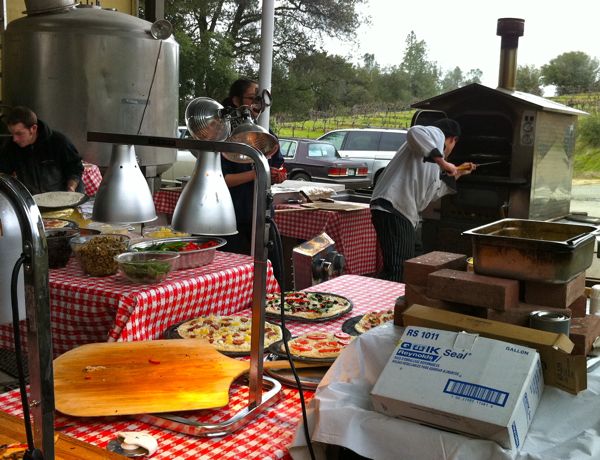
The power went out at around noon at Charles B. Mitchell Winery off Fairplay Road. Thankfully, the staff was still able to cook its wood-fired pizzas outside.

Charles B. Mitchell winery workers Kyle Gazlay and Noelle Savage serve up the wood-fired pizza.

Charles B. Mitchell winery workers Kyle Gazlay and Noelle Savage serve up the wood-fired pizzas. Photo/Susan Wood

Elliot Graham at Busby Cellars noticed that attendance dropped off to almost half the 600 wine drinkers who usually tour the wineries on the Passport day.

At Latcham Winery off Omo Ranch Road, the storm and power outage prompted the staff and customers to improvise.

“We dressed warmer the second day,” regular customer Sheila Sanchez of Somerset said Sunday on her family’s second day of their outing.

“We lit lots of candles,” winery owner Margaret Latcham said Sunday.

She tried to seize the generator from her nephew running its sister winery, Granite Springs, but to no avail.

“Sorry, Auntie Margaret. You’re not getting the generator,” Latcham quipped, as she recalled what he said. Being that they had no heat, staff wore gloves.

“It was like a wine cave,” Latcham added. The staff scrambled to find light.

Customers cleared out – many to the north end of the tour route — but returned on Sunday. And next weekend’s forecast appears to look like a blue skies Passport event when the association hosts its second weekend on April 2 and 3.

The wine business comes with its ebbs and flows of trends in agriculture and consumer demand. Adjustment is the name of the game.

Two trends have made Latcham and other vintners pleased with business – more younger drinkers contributing to a segment returning to the pricier wines than the bottles that were bought at the start of the severe economic recession.

For that, Latcham’s maestro of winemaking, Ruggero Mastroserio, has introduced an ultra premium label of Zinfandel, which was on the table for tasting and buying at as much as $50 a bottle. Latcham is well known for its quality Zins hovering at about $14 to $30 a bottle as well as their signature table wines – Gold Rush Red and Gold Rush White. They can be picked up for as low as $8 a bottle with wine discounts and bulk pricing.

The middle-of-the-road wines priced over $20 are being bought up in greater numbers according to the Nielsen Co., which tracks U.S. wine trends. Total U.S. wine sales rose 4.1 percent to $9.3 billion last year. Recent studies have pointed to the millennial generation as an up-and-coming market joining its baby boomer counterparts.

“We’re definitely seeing more young people buying wine,” Latcham confirmed.

The same goes for Charles B. Mitchell wine tasting room manager Patty Forester. She had noticed many wine buyers seeking “a sale” when the recession hit. Moreover, some were canceling their wine club memberships because spouses lost their jobs. Things have improved.

“Now we’re seeing people tired of conserving. They want to spend money,” Forester said.

Winery Association spokeswoman Jolaine Collins had noticed the “recession has worked to our benefit” in terms of seizing the customers looking for the mid-range wine purchases.

Pam Miller of Single Leaf has seen an upsurge in dollars spent per visit. Miller has not only witnessed more of the younger set coming to the winery off Fairplay Road, but she’s also seen those who make it to the winery wanting “to make the most of their trip,” because of higher gas prices.

Most of the vintners are optimistic this coming Passport weekend’s sunny weather in the forecast will bring out the enthusiasm among their customers. A sellout is anticipated – especially with the recent trends.

“We’re finding the young consumers are very interested in wine, and they’re coming for the intimate settings where they can learn about the wine,” said Winery Association President Beth Jones, who works for Lava Cap. The north-end winery fared better during the storm Saturday and only lost power for seconds.

Jones insists El Dorado is being “discovered more” as a choice for wine up to Napa and Sonoma. Unlike the latter counties’ national push, this county tends to focus its marketing efforts on the region.

The El Dorado Winery Association may be reached at 800.306.3956.


Snippets about Lake Tahoe

mancuso• Olympian Julia Mancuso of Squaw Valley is opening a gym in Truckee in April.

• Barton Family Health Day is April 30 from 11am-3pm at South Tahoe Middle School. For more information, go online or call (530) 543.5615.

• Lahontan Regional Water Quality Control Board is accepting comments on its proposal to amend the regionwide pesticide water quality objective, which effectively prohibits pesticide application to water, with a regionwide waste discharge prohibition with exemption criteria for aquatic pesticide application to water. This document has more information.

• Ashtrays aren’t just for putting out butts. Some people collect them. A little bit more info about that is on About.com.

• Richard Moreno, journalism professor and director of student publications at Western Illinois University, has authored his 10th Nevada-related book — “A Short History of Carson City.” Moreno is a former publisher of Nevada magazine.


K’s Kitchen: Vegetarian lasagna good enough for meat lovers

By Kathryn Reed

There was a time when I did not like lasagna. I would push it around my plate. Maybe I’d take some bread and dab at the sauce to make it look like I was eating it.

Oh my, how things have changed. Now it’s rare I don’t have seconds.

k's kitchenI think what got me is as a kid I saw my mom make it and it was this gooey mess of stuff. I’m guessing it was the ricotta cheese. It’s amazing still to me how the end product can be so much different than the individual ingredients of a recipe.

Luckily, my childhood experience with lasagna did not negatively impact me forever. In time I learned lasagna comes in many different forms. Yes, I actually make them with ricotta cheese. Another favorite is from my friend Patty called Tex-Mex Lasagna.

However, the one I tend to make over and over is a different vegetarian lasagna. I think it’s the artichoke hearts and feta cheese that make this one stand out. It also helps that it is pretty easy to make. It’s also hearty enough to satisfy the meat eaters in the crowd.

I found the recipe years ago on Allrecipes.com.

I serve it with a green salad, bread and red wine.

Artichoke Spinach Lasagna

Cooking spray

Olive oil

9 uncooked lasagna noodles

1 onion, chopped

4 cloves garlic, chopped

1 (14.5 ounce) can vegetable broth

1 T chopped fresh rosemary

1 (14 ounce) can marinated artichoke hearts, drained and chopped

1 (10) ounce package frozen chopped spinach, thawed, drained and squeezed dry

1 (28 ounce) jar tomato pasta sauce

3 C shredded mozzarella cheese, divided

1 (4 ounce) package herb and garlic feta, crumbled

Preheat oven to 350 degrees. Spray 9 x 13 baking dish with cooking spray.

Bring a large pot of lightly salted water to a boil. Add noodles and cook for 8 to 10 minute or until al dente; drain.

Coat large skillet with olive oil over medium-high heat. Sauté onion and garlic for 3 minutes, or until onion is tender-crisp. Stir in broth and rosemary; bring to a boil. Stir in artichoke hearts and spinach; reduce heat, cover and simmer 5 minutes. Stir in pasta sauce.

Spread ¼ of the artichoke mixture in the bottom of the prepared baking dish; top with 3 cooked noodles. Sprinkle ¾ C mozzarella cheese over noodles. Repeat layers 2 more times, ending wit artichoke mixture and mozzarella cheese. Sprinkle crumbled feta on top.

Bake, covered for 40 minutes. Uncover and bake 15 minutes more or until hot and bubbly. Let stand 10 minutes before cutting.


Opinion: In truth, 60 is the new 60

By Marc Freedman

By now the story is familiar. A gray wave of aging boomers is crossing into their 60s, hitting retirement age, morphing suddenly into senior citizens, and bringing with them a new era of demographically determined dependency and despair. We’re trading baby strollers for walkers and wheelchairs.

Don’t believe it. The sixty-somethings headed our way will invent an entirely new stage of life — the encore years — between the end of middle adulthood and anything resembling old age and retirement. We brand them the young-old, or the working-retired. Or maybe just the oxymoronic years.

On one hand, these new-stagers are implored to hang on to their fast-fading youth — 60 is the new 40, we’re told. On the other, my pharmacy offers a “senior discount” to anyone over 60. It’s either clinging to lost youth or accepting premature aging.

In truth, 60 is not the new 40 any more than it is the new 90. It’s the new 60. Indeed, the whole 60- to 80-year-old period is simply new territory, and the people in this period constitute a 21st-century phenomenon.

Marc Freedman is author of The Big Shift: Navigating the New Stage Beyond Midlife, to be published by PublicAffairs.

Read the whole story