Engineer claims facts about Lake Tahoe are wrong

By Linda Fine Conaboy

Author, professional speaker, civil and environmental engineer and self-proclaimed myth buster, David Antonucci says he just wants to set the record straight about, as he puts it, the widely repeated fibs, fakes and falsehoods surrounding Lake Tahoe.

In a recent interview with Lake Tahoe News, Antonucci said, “We spend hundreds of millions of dollars protecting Lake Tahoe and heavily regulate the built environment. We should as least have our basic facts about Lake Tahoe correct.”

And what, you ask, are these falsehoods? According to excerpts from his blog, Antonucci states that instead of 72 miles of shoreline, the lake is really 75.1 miles in circumference. The distance from north to south is in actuality 21.2 miles instead of the purported 22, and the width is 11.9 miles, which is close to the often-quoted 12 miles.
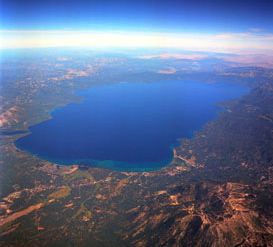
Facts about Lake Tahoe are being questioned.

Facts about Lake Tahoe are being questioned.

What initially generated his suspicions was the frequently cited 72 miles of shoreline.

“I knew it could not be true because the encircling highways total 71.8 miles and the highways shortcut the major points jutting out into Lake Tahoe.”

He said he used his knowledge of Lake Tahoe, going back to his studies in environmental engineering at graduate school in 1972, to judge whether a fact seemed reasonable or not.

“I did my project for my master’s degree on Lake Tahoe water pollution control facilities,” he said. “These corrected scientific facts are based on my professional opinion as a civil and environmental engineer with a total of 37-years experience, including 36 at Lake Tahoe.”

Antonucci said he measured the length, width and circumference himself using U.S. Geological Service mapping.

“I got the shoreline length from the TRPA Shorezone Plan — they measured it directly — and I compared that to the USGS mapping for agreement. I spoke with UC Davis Lake Tahoe researchers on various issues. Most of my information comes directly or indirectly from research performed by UC Davis and others.”

Antonucci said he compared the cited facts to various credible sources and used his professional judgment to determine the truth for himself using his skills as an engineer.

“The initial problem was inexperienced people who went to various sources such as the book ‘Saga of Lake Tahoe’, but they got wrong information,” he said. “It got much worse with the advent of the Internet because people with no science or media training and no critical thinking skills were doing websites. They simply lifted the wrong information from another website and then mindlessly repeated the misinformation with reckless unrestraint over a modern-day digital path paved with laziness, naivety and fallacy.”

Not only is Antonucci at odds with the lake’s dimensions, he also takes aim at the reasons for its astonishing palette of blue and green. We all know Lake Tahoe is a mirror, reflecting the ebbs and flows of the sky, right? Wrong. While it is widely believed that the lake’s brilliant colors are a result of the sky’s reflection on the water, Antonucci says not so.

We spend hundreds of millions of dollars protecting Lake Tahoe and heavily regulate the built environment. We should as least have our basic facts about Lake Tahoe correct.

“We spend hundreds of millions of dollars protecting Lake Tahoe and heavily regulate the built environment. We should as least have our basic facts about Lake Tahoe correct.”                                  — David Antonucci

“The blue color is from the backscatter of blue light that penetrates the lake and overwhelms any reflection that may be occurring,” Antonucci said. “However, when the sun angle is flat and obscured by clouds, the lake surface can reflect the sky. I have seen orange and pink reflections, but the important point is that the famous blue color is not from the blue sky but from backscatter of blue light.”

Heather Segale, education and outreach director for UC Davis Tahoe Environmental Research Center located on the Incline Village campus of Sierra Nevada College said the dimensions of the lake may be splitting hairs, but she agreed with Antonucci about the color, which she said has everything to with the important matter of Lake Tahoe’s clarity.

“There is definitely a bunch of stuff out there that’s not true,” she said. “Some of the sites that have wrong facts are various chambers of commerce and the USGS has some incorrect info too.

“The most important fact that is incorrect is the explanation why the lake is blue,” Segale said. “It has to do with clarity, sediment and the algae in the water. Because there’s so much emphasis on keeping Tahoe blue, people need to understand it’s a function of the clarity and not the reflection of the sky. Otherwise all lakes would be blue like the sky, and they’re not.”

Unlike Segale, though, there are those who may not be as passionate about setting the facts straight as Antonucci.

Lake Tahoe weather historian, author and professional speaker, Mark McLaughlin said he thinks Antonucci may be too concerned about fairly minor matters, although he has not looked into the assertions and said he can’t comment on their veracity.

McLaughlin has his own bucket list of incorrect facts, such as the claim that the region receives 300 days of sunshine a year or that Jacques Cousteau explored Tahoe in a submersible, perhaps both subjects of another article.

Jeff Cowan, community liaison for TRPA has known Antonucci for a number of years and said he holds him in high regard.

“I think David’s claim is a delightful addition to the lore and mystery of Lake Tahoe,” he said. “We would defer to the USGS and U.S. Army Corps of Engineers for the official dimensions, but I don’t think changing Tahoe’s measurements could ever change how awe-inspiring this place can be.”

Chiming in, too, is Cheva Heck, public affairs officer for the U.S. Forest Service Lake Tahoe Basin Management Unit. She says her agency uses USGS as its last word on matters pertaining to Lake Tahoe. When asked about the interpretative signs around the lake and what it would mean as far as changing them to reflect potentially incorrect information, Heck said should that happen the signs would be corrected as they’re due for replacement.

“The signs are costly,” she said. “We’d want to be sure of the official numbers, but we’d change the numbers on the signs as they’re replaced.”

With a plethora of credentials to his credit (Antonucci has undergraduate and graduate degrees from Cal Poly and Oregon State; is qualified as an expert on Lake Tahoe water quality in various courts in Nevada and California; spent several years on the Lahontan Regional Water Quality Board; served as the general manager and chief engineer of the Tahoe City Public Utility District, and more), he sticks to his guns when it comes to setting the record straight about Lake Tahoe’s basic facts.

And he’s serious about getting the word out. He developed his website, www.tahoefacts.com, wrote a booklet about Lake Tahoe entitled “Natural World of Lake Tahoe”, hands out his Tahoe Facts summary sheet when and where he can and gives free lectures to local, nonprofit groups.

“I think most people agree (with me) when presented with all the facts and an understandable explanation,” he said. “Most people don’t have a strong scientific background, so they rely on experts to interpret and make it understandable.”

For now, Antonucci will continue his quest to officially make what he believes are necessary changes to correct the record.

“I’m a myth buster at heart,” he said. “I like to use science to solve mysteries and debunk myths.”


Electric company plans open house

South Lake Tahoe’s new electricity purveyor, Liberty Energy-California Pacific Electric Company, is hosting an open house for its customer base on April 4.

The ribbon-cutting presentation sponsored by the Lake Tahoe South Shore Chamber of Commerce is scheduled for 11am at 933 Eloise Ave. KTHO’s Paul Middlebrook will broadcast from the site.

Hours of operation are set for Monday through Friday from 8am to 5pm.

Liberty Energy recently took over the South Shore’s approximately 48,000 California customers from Sierra Pacific Power based in Reno.


Opinion: Getting to the bottom of Lake Tahoe stories

By Guy Rocha

The B.S. associated with Lake Tahoe might be as deep as the lake. That’s if you believe the Sierra Nevada lake has a bottom. Some tell tales of dead bodies sinking to the lake bottom still intact today because of frigid water temperatures. They include Chinese woodcutters from the late 19th century and victims of 20th-century mafia hits. Perhaps every sizeable lake in the world has its equivalent stories, but what do we actually know and why?

We can thank Nevada journalist, writer and politician Sam Davis for giving us the tall tale of “The Mystery of the Savage Sump,” (1901) which claimed that Lake Tahoe had a hole in its bottom and was connected to the lower levels of the Comstock mines. The hole was plugged or unplugged as needed to manipulate the price of mining stock, or so Davis’ tale went. William Meeker, a San Francisco stock speculator involved in the elaborate stock market swindle was murdered in 1869 at Lake Tahoe by Colonel Clair, his partner in crime, according to Davis, and his mangled body found in the scalding waters of the Savage Mine sump. The short story is pure humbug and a hoax.

The stories are myriad about a submersible under the direction of the famed Jacques Cousteau detecting perfectly preserved bodies, including those of drowned Chinese woodcutters. The truth is that Philippe Cousteau, Jacques’ grandson, visited Lake Tahoe in April 2002, but there is no record of Jacques ever seeing the jewel of the Sierra, much less his being involved in an underwater expedition or using a motorized submersible camera to explore the icy depths.

Guy Rocha is the former state archivist with the Nevada State Library and Archives. For more information, go online.

Read the whole story


Mancuso picks up her 12th title

WINTER PARK, CO – Olympic champion Julia Mancuso of Squaw Valley overcame a 1.52 first run deficit to win her 12th U.S. title with giant slalom victory at the 2011 Putnam Investments U.S. Alpine Championships.

It was Mancuso’s third consecutive U.S. giant slalom championship and extended the American record for U.S. titles she set last season when she bumped a mark held by Andrea Mead Lawrence for 55 years.

First run leader Sarah Schleper (Vail, CO) finished second with Stacey Cook (Mammoth Mountain, CO) third in sunny Winter Park. U.S. Development Team racer Abby Ghent (Edwards, CO) earned top junior honors ahead of Burke Mountain Academy athlete Mikaela Shiffrin. The U.S. championships continue Saturday with men’s and women’s super G.

OFFICIAL RESULTS

Putnam Investments U.S. Alpine Championships

Winter Park, CO – April 1, 2011

Giant Slalom


1. Julia Mancuso, Squaw Valley, CA, 2:21.61

2. Sarah Schleper, Vail, CO, 2:22.22

3. Stacey Cook, Mammoth Mountain, CA, 2:23.55

Juniors

1. Abby Ghent, Edwards, CO, 2:25.42

2. Mikaela Shiffin, Burke Mountain, VT, 2:26.55

3. Devin Delaney, North Conway, NH, 2:27.05

–U.S. Ski Team


Giants fan beaten after Dodger baseball opener

By Richard Winton, Los Angeles Times

As police searched for a group of Dodgers fans who allegedly beat a Giants fan, officials said about 25 people were arrested for various infractions during Thursday’s opening day festivities at Dodger Stadium.

Los Angeles Police Department Sgt. Sanford Rosenberg said most of the 25 arrests were related to intoxication due to the consumption of too much alcohol. The number of overall arrests was markedly down from last year’s opening day, when 132 arrests were made.

Because Dodgers opening day is known for its heavy drinking, rowdy crowds, the LAPD was out in full force at Thursday’s game to try to avoid a repeat of unruly behavior of past years.

The most serious incident occurred after the game when a Giants fan was beaten.

“The man suffered a serious head injury during the assault after the game,” said LAPD Sgt. Sanford Rosenberg, watch commander at the Northeast Station.

Rosenberg said the victim was one of three Giants fans attacked in the parking lot around the end of the game by two unidentified men wearing Dodgers clothing.

The unprovoked attack occurred about 8:30 p.m. in Parking Lot 2 when two men in Dodgers clothing approached three victims in Giants apparel, police said.

The two men then attacked the trio, kicking and punching them and shouting expletives about the Giants as they delivered the blows, Rosenberg said. The attack left one victim hospitalized in critical but stable condition, Rosenberg said.

The LAPD arrested at least two people for public intoxication in the parking lot compared with more than 130 on opening day last year.

Detectives ask anyone with information on the attack to call the LAPD’s Northeast Station at (213) 485-2563.

Public intoxication has been an issue at Dodger home openers in the past, leading to police crackdowns. It’s unclear if drinking was a factor in this case. The Dodgers beat the Giants 2-1.


Truckee’s Rahlves to join hall of fame

By Tom Kelly, USSA

Sun Valley, Idaho – In a competitive career spanning two decades, Truckee’s Daron Rahlves has his share of medals and trophies. A super G World Championship in 2001. Hahnenkamm champion in 2004. Two medals at 2005 Worlds. 12 World Cup victories. The 2008 X Games skicross gold. Saturday, Rahlves will be honored with induction into the U.S. Ski and Snowboard Hall of Fame at a ceremony in Sun Valley.

Pointing his Atomic skis downhill at 85 mph was just one phase of Rahlves’ career. Ski racer? Yes. But, first and foremost, a skier.

 “I don’t want people to look back on my history and say ‘man that guy was a good ski racer,’ said Rahlves. “I want people to know me as a skier who loves skiing. Staying active and influential in the ski world is really important to me.”

It’s fitting that among the group of six Hall of Fame inductees are two more of skiing’s greatest names – Glen Plake and the late Shane McConkey. Plake is a former freestyle skier turned skiing ambassador whose trademark Mohawk hairdo is known to every skier young and old. McConkey was one of the sport’s most daring skiers, literally defining a generation of extreme skiers before his tragic death in a 2008 skiing accident.

“Everyone grew up watching Glen Plake,” said Rahlves. “For the last 20 years, he’s been the most iconic guy in the ski world. He’s done a lot for our sport in terms of recognition. It helps to have a two-foot Mohawk. But it’s also about his smile and that signature cackle.”

Rahlves and Plake caught up at a ski event earlier this winter and joked about their induction. “He said he didn’t think he was going to accept it because he’s not done skiing,” laughed Rahlves. “I told him you don’t have to hang it up to be in the Hall. Besides Plake’s never going to hang it up and neither will I.”

Plake, McConkey and Rahlves all grew up skiing Tahoe. Each drew inspiration from the others.

“Shane, he’s done some amazing things,” said Rahlves. “Before my first World Cup win, I was skiing with Shane in Tahoe the day before I left for Norway. He opened my eyes to a whole new way of being creative on the mountain. I was always into going fast and doing bigger lines. But he was just really technical and always having fun. I have to attribute some of the feeling I have for that win in Norway to Shane. After ripping with him, I just took that fun into ski racing.”

That March, 2000 weekend in Norway, Rahlves swept to a pair of wins on the same course that brought Tommy Moe Olympic gold fame six years earlier in Kvitfjell.

“Daron had a passion for skiing that was unlike any other World Cup racer,” said former U.S. Ski Team Coach Phil McNichol, who was with Rahlves during the pinnacle of his racing career. “A lot comes from his lineage of being a Tahoe skier growing up with Glen and Shane. He just had this intense passion whether skiing the Mousefalle or skipping a rest day to hit some powder.”

McNichols shared a story of the U.S. Championship downhill at Squaw Valley being canceled due to new snow. “Daron was out there inspecting in downhill skis with racing bindings when it was called. He didn’t waste a minute getting to the powder – didn’t even take time to change skis. He caught massive air off this jump, the skis didn’t release and he threw out his hip.”

Today, from his home base in Truckee, CA where he lives with wife Michelle and their twin boys, Rahlves globetrots to powder fields and innovative ski events. It’s a big change from the five-month grind of the World Cup circuit where for a decade he was best in the world.

In 2001 at St. Anton, Austria, Rahlves literally silenced the crowd of 25,000+ Austrians with his unprecedented win in the World Championship super G. It was an event that Austria totally owned. Until that day.

 Three years later, after he had won over many Austrian fans, he did the unthinkable, winning the fabled Hahnenkamm. From 2000 to 2006, Rahlves won a dozen World Cups. He took three wins in Kvitfjell plus wins on the classic courses in Kitzbuehel, Bormio and Wengen. But winning at home in Beaver Creek on the Birds of Prey – well, that was very special.

“Every win was cool, but the highlights are definitely the first World Championship, Kitzbuehel, Wengen and especially Beaver Creek,” he reminisced. “Birds of Prey is just a big deal for me. I skied so many years there and then it was time to just start winning on home turf. To get two wins there and also be on the podium a number of times is such a good feeling.”

Not only did Rahlves dominate on the Birds of Prey, he did so together with teammate Bode Miller. Over four Decembers from 2003-2006, Rahlves or Miller won every year, often with the other right behind in second place. It was the most dominating period in U.S. men’s downhill history.

“That was a very special time in history,” said McNichol. “When we walked into Kitz or Beaver Creek, we did it with our heads held high. We were proud!”

“There’s a special feeling that goes along with winning a big event in Europe,” said Rahlves. “Whether it’s a World Championship or Kitz or the Lauberhorn, they all carry a magic that can’t be described.

“But I’m also really proud of what I’ve been able to do after my ski racing career – winning the X Games for skicross, going to the Olympics in a completely different sport.”

Rahlves is a part of one of the most prestigious classes in Hall of Fame history. In addition to Plake and McConkey, he is joined by the legendary ski racer Bobby Cochran, Paralympic medalist Muffy Davis and Sun Valley and Snowbasin resort owner Earl Holding. The six will be honored Saturday evening at the Sun Valley Inn.

The U.S. Ski and Snowboard Hall of Fame is located in Ishpeming, MI – the birthplace of organized skiing in America in 1905. The Hall has recognized nearly 400 athletes and sport builders since 1956. The annual induction rotates around to America’s greatest resorts, including Sun Valley which is celebrating its 75th anniversary.

“This is definitely a big honor and something I’m proud of,” said Rahlves. “But to be among this list of names makes it even more special.”


Lake Tahoe Boys and Girls Club to celebrate 20th anniversary

The Boys & Girls Club of Lake Tahoe is celebrating its 20th anniversary on April 27 with guest speakers and special observations to honor club supporters from the past 20 years.

The BGCLT opened its doors in 1991 as a nonprofit organization dedicated to establishing youth development programs for the community of South Lake Tahoe. In 1993, the club became a chartered member of the official Boys and Girls Club of America while offering programs for students in grades K-12.

BGCLT promotes the social, educational, health, leadership and character development of children in the area and has been a place for 15,000 kids to learn and grow during the past 20 years.

The organization relies on a combination of funding sources, including private and business donations, an annual giving campaign, corporate sponsorships and grants from the federal and state governments and private foundations. Additionally, the organization hosts a fundraising golf tournament at Edgewood Tahoe every fall and uses the proceeds for various club expenses.

The BGCLT facility has recently completed the first phase of renovations to coincide with its 20th birthday. Phase I improvements included new paint along the exterior and interior walls and a new hand-carved wooden sign. Phase II will include a facility clean-up, new carpets and new furniture.

The 20th anniversary event begins at 5pm at the old Al Tahoe Elementary School in South Lake Tahoe, 1100 Lyons Ave.


Ski report: Apply sunscreen, repeat

curtisThe forecast calls for highs in the 60s, no foolin’. Check out the ski report from Curtis Fong, the Guy from Tahoe.


TAMBA to host trail crew events

With the Tahoe Area Mountain Bike Association in the process of being reformed, TAMBA is sponsoring a two day visit by the IMBA Trail Care Crew for a series of presentations running from April 8-10.

Read more about it online.


Snippets about Lake Tahoe

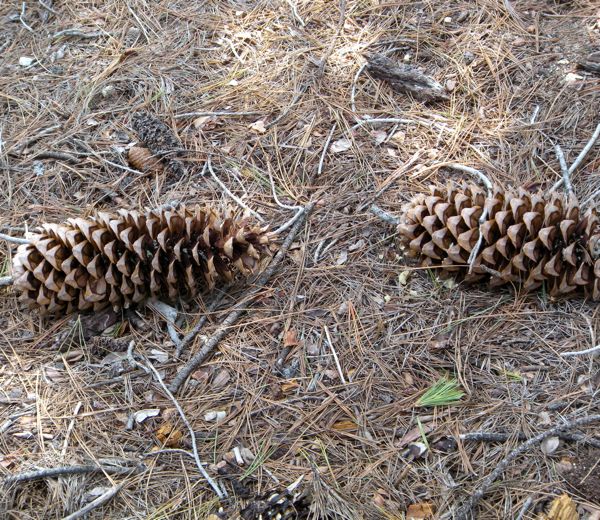
sugar pines• Sugar Pine Foundation has a variety of seeds for sale — sugar pine, whitebark, limber, foxtail and bristlecone pine seeds are all $1 each. Shop online.

• The last day of school for Lake Tahoe Unified School District is June 16, despite two extra snow days taken last week.

• Expect roads in Markleeville to be torn up this summer as a 40-day water line and meter installation project is set to begin July 18.

• Barton Health Care has two lectures coming up this month. One is about the spine and the other about shoulder injuries.

• Greg Feet is the general manager of Tahoe Keys Property Owners Association.

• Minden-Tahoe Airport Manager Bobbi Thompson has been nominated for the General Aviation Airport Manager of the Year award by the National Air Transportation Association. She is one of six people in the United States nominated for the award. The winner will be announced later this spring.