Federal government shutdown could disrupt lives of Californians

By Cassie Myers, California News Service

The Border Patrol would remain on duty, mail would be delivered, and Social Security checks should go out on time. But a looming government shutdown could stall tax refunds, close national parks and museums, and put tens of thousands of Californians temporarily out of work.

Stopgap measures have kept government operations going since the current budget year began Oct. 1. The latest measure expires at the end of Friday, and with Democrats and Republicans unable to reach an agreement, the White House has told agencies to begin planning for a shutdown on Saturday.

California has a huge population of federal workers, roughly 170,000 according to the U.S. Office of Personnel Management, nearly the same number as Washington itself.

Employees deemed essential, such as air traffic controllers, doctors at VA hospitals, border agents and military personnel, probably will remain on the job as they did during the last major shutdown in 1995. Others, such as Internal Revenue Service employees at 27 California locations, might find their offices closed on Monday.

None would be paid until the dispute is over, though essential employees are likely to be reimbursed with back pay.

Read the whole story


Ski report: Winter is back

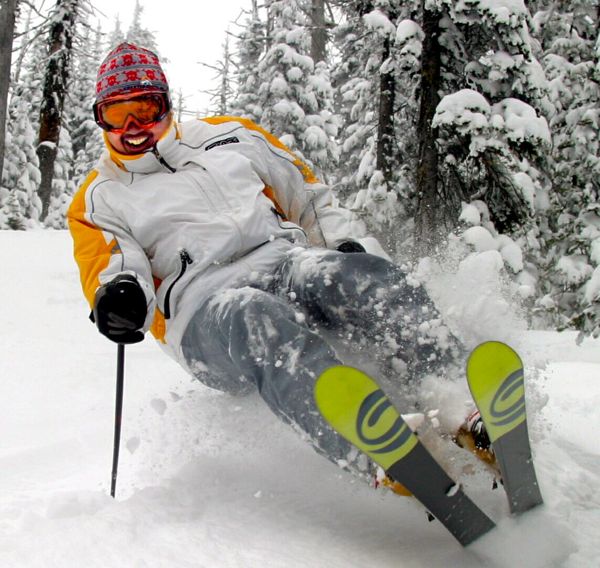
curtisA winter weather advisory remains in effect until 11am. Expect wind and snow showers throughout the morning, with thunderstorms possible this afternoon. Be safe out there, and call ahead for conditions on the slopes. Here is the ski report from Curtis Fong, the Guy from Tahoe.


History: Formation of LTUSD, what fire protection used to be

Publisher’s note: This is reprinted from the April 1974 Lake Tahoe Historical Society newsletter.

Some 60 years of Lake Tahoe memories were nostalgically reflected upon at the March meeting of the Lake Tahoe Historical Society by longtime local resident, Stanton Meyer.
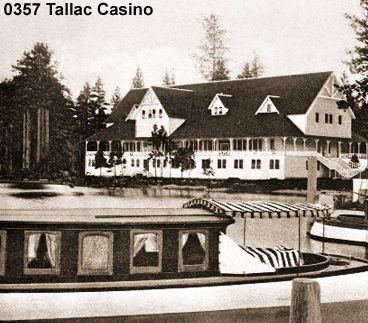
historyMeyer first saw Lake Tahoe in 1915 when his parents purchased the Porterfield cottage as a second home. This cottage is still standing today on the corner of Tallac and Oakland Avenues in the Al Tahoe area.

His first trip to Tahoe was via the Southern Pacific to Truckee, then via narrow-gauge railway to Tahoe Tavern, and then aboard the Steamer ‘Tahoe’.

Arriving a the Al Tahoe area, the steamer debarked at the end of the long pier which extended from the lake front, between Pasadena and Riverside Avenues, straight out into Lake Tahoe approximately one-quarter mile.

Meyer noted that the long Al Tahoe pier had been built by Al Sprague who not only had conceived the community name ‘Al Tahoe’ by tacking his nickname of ‘Al’ onto Tahoe, but also pioneered Al Tahoe’s lakefront property, and built the original Al Tahoe Hotel in 1910 (in 1925, the hotel became Globin’s Al Tahoe Inn).

“During my younger years at Tahoe, we held an annual bonfire in the backyard behind our log cabin, and invited all the folks in Al Tahoe.”

“There were many chipmunks in those days; also red-headed ground squirrels. I made a few dimes and quarters by trapping and selling them. One fall, I took a dozen red-heads to Sacramento and gave them to McKinley Park.”

Meyer recalled that in 1916, and for many years thereafter, the road running form the Tahoe Valley ‘Y’ to Bijou was on a considerably different alignment than our present day Highway 50. He noted that in those days the road came due north, past the one-room Lake Valley Schoolhouse (then located where the Safeway store stands today), past Dunlap and Anderson’s Dairy, and then over Trout Creek Meadow where there were several gates to open; from there, the road entered the Al Tahoe tract, near where Phil Greuner’s home stands today. He said that children would frequently be at the gates to open and close them, thereby earning a little extra pocket money.

After leaving the meadow area, the road extended on down to the lakefront (along the line of present day Bellevue Avenue), and from there is turned east and followed the shore (via present day Lakeview Avenue) to Bijou.

After buying the Al Tahoe property in 1933, it was suggested to Meyer that he become a candidate for Justice of the Peace in Lake Valley Township. “I planned to do so, but I was called to active duty with the Civilian Conservation Corps. I was assigned to Camp Riverton, about two miles up the old Ice House Road from the Riverton Bridge. In the Spring of 1934, a tend camp was established at Rubicon Point, and the initial work in developing what is now Bliss State Park was begun.”

The summer of 1937 found Meyer once again a civilian, and instrumental in the formation of the Al Tahoe Property Owners Association. He said that during that year, at a tax sale in Placerville, he bought two 50 x 100 lots in Al Tahoe for $15.00. “Would that I could have looking into the future …”

“Fire protection in those years was provided by a Forest Service pumper stationed at Camp Richardson. The Property Owners Association purchased a device which enabled the pumper to pump directly from the lake, or a stream. One winter, the association arranged to pay rent to Lakeland Garage so the Forest Service pumper could be garaged there, and thus provide fire protection during the winter.”

Along with others, Meyer said that he went to Placerville to argue for high school facilities at South Lake Tahoe. Eventually, the Trustees of the El Dorado Union High School District established a branch high school which was housed in the auditorium of the American Legion Building. The auditorium was divided into four classrooms. The first year, a freshman class was enrolled; the second year, both freshmen and sophomores were in attendance.

He noted that on Dec. 7, 1951 voters at South Tahoe approved the formation of a Unified School District, and elected five trustees – Lou Rogers, who owned the Tahoe Cottage Court near the ‘Y’; Lou Fitzgerald, owner of the Blue Crystal Chalets on Ski Run Blvd.; Francis Hodgkins, owner of Phillips Resort along Echo Summit; Don Clarke, and himself.

“I felt that formation of the Unified School District would keep our school taxes at home, and that we would have more local control over how the tax money was spent.”

“However, when I learned that three of the trustees had selected as Superintendent of the District the principal of the Lake Valley Schoolhouse (who had not applied for the job, so far as I knew), and had agreed to pay him $1000 more per year than the four applicants who had come before the board for interview, I felt it useless to stay on the board, an therefore resigned. Previously, however, the new District had, on my motion, been named the Lake Tahoe Unified School District.”

In 1955, Meyer became a year-round resident of South Lake Tahoe. In July of that year, he was sworn in as acting postmaster of Al Tahoe.

Meyer recalled that immediately after he became postmaster, he was told to move the Al Tahoe Post Office from the Globin property to the Tahotel Building.

“The evening after my clerk and I moved the post office, Golda and I were in attendance at the Rowan and Martin show at Harrah’s. We had a small table to ourselves. Under the table, I placed my briefcase with my stamp stock and postal funds because there was no safe in the new postal quarters!”

Meyer served as postmaster until 1963, when the Al Tahoe Post Office became a branch of the Bijou Post Office. At that time, he became Superintendant of the branch, serving in that position until 1971.

In June of 1972, Stan and Golda moved ‘off the hill’ and over to Carson City. “I decided I had all I wanted of snow shoveling!”

Snippets about Lake Tahoe

chamber logo• The second annual Sample the Sierra festival has been confirmed for the afternoon of Sept. 4 on Ski Run Boulevard in South Lake Tahoe. The event features regional artisans, music, food, beer and wine and represents one in a slate of activities planned for Labor Day weekend, including a fireworks show. For more information, visit www.samplethesierra.com or call (775) 588.1728 or info@tahoechamber.org.

• The Lake Tahoe Basin Wildfire Awareness Week is planned for May 28 through June 5. The theme this year is “Get Defensive: We’re Counting on You!” The focus of the week will be to promote community based defensible space activities. Fire agencies, fire safe chapters and local organizations will collaborate to hold community cleanup days including offering free chipping and pine needle pick ups and hosting neighborhood meetings and educational activities. Check the Living with Fire website at www.livingwithfire.info/tahoe to find out about events.

• The Tahoe Rim Trail Association and Sierra Nevada Journeys are organizing backcountry camps starting in July. The programs offer opportunities for teenagers to develop backcountry skills. The dates are: July 6-8, July 28-30 for session 1; July 24-26, Aug. 14-16 for session 2. Interested parties may register at www.sierranevadajourneys.org.

• The Tahoe Maritime Museum is putting on a summer launch party on May 28 from 5-8pm. Refreshments will be served.

• Bethany Drysdale, who has promoted Nevada’s tourism attractions for more than five years for the Nevada Commission on Tourism, will head the public relations department starting April 23, Lt. Gov. Brian Krolicki announced. Drysdale has served as the public relations specialist for NCOT for six years. She replaces Chris Chrystal, who is retiring as manager April 22, after a 48-year career in news reporting and public relations that included 13 years with NCOT.


Nevada allows betting on non-sports events

By Bill O’Driscoll, Reno Gazette-Journal

Imagine placing a bet on the Academy Awards. Or “American Idol.” Or the Great Reno Balloon Race or Best in the West Nugget Rib Cook-off.

State gaming regulators recently revised the rules to allow wagering in Nevada’s race and sports books beyond sporting events. The move could generate new revenue in a financially ailing industry, as well as draw casual bettors into sports books.

“We’ve thought about some fun things, like the rib cook-off, or even something as off the wall as our pig race,” said Beth Cooney, executive director of marketing at John Ascuaga’s Nugget, sponsor of the annual Best in the West Nugget Rib Cook-off over the Labor Day weekend.

Bill Eadington, director of the Institute for the Study of Gambling and Commercial Gaming at the University of Nevada, Reno, said the challenge will be in marketing a new betting event.

“Can you find events that will have popular appeal and clientele that will wager on them?” he said. “It’s a bit of a gimmick. But it provides additional dimension. Betting like this is already available in the U.K. We’ve really been constrained to just sports.”

No formal requests have gone before the Nevada Gaming Control Board yet, officials say, and any that do will receive a thorough review to assure they meet standards set out in regulation.

Read the whole story


Opinion: Sustenance outweighs need for growth in region

By Chuck Alvey

In 2004-05, the citizen-based leadership of the Economic Development Authority of Western Nevada saw our region’s explosive growth and asked if we were creating the kind of place we would want to live in five to 10 years.

Were we growing too fast without a quality-of-life focus for the longer term?

When we released a request for proposals to conduct a thorough economic study of our region’s potential with key recommendations, proposing firms noted their pleasant surprise that we were asking for such help during such a high-growth period. They also felt we were asking the right questions at the right time.

Fifty regional leaders helped review and approve the Target2010 strategic economic plan, which was issued in 2006, just before the bottom fell out of the economy everywhere.

A recent segment on “60 Minutes” highlighted the nearly 25 percent of children who are in poverty in the U.S. Middle-class families who have lost their homes live in their car, a hotel room or with another family. Belongings are stored, and when families can’t pay rent, those few precious items are auctioned off.

Chuck Alvey is president and CEO of the Economic Development Authority of Western Nevada.

Read the whole story


Knee replacement surgery good for 20 years

By Shari Roan, Los Angeles Times

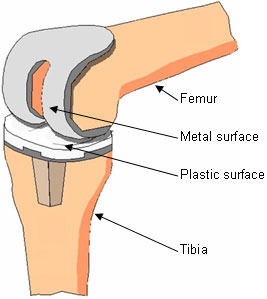
Knee replacement surgery has become common in the last 30 years, and more younger people with bad knees are considering the surgery. A study presented last month at the American Academy of Orthopaedic Surgeons annual meeting may reassure them that the replacement should hold up for a long time.

knee-replacementResearchers evaluated 128 people who had lived at least 20 years after total knee replacement surgery. The patients’ average age at the time of surgery was 63. The average age at the post-20-year follow-up was 82. The study found that almost all of the patients had good physical function. Most could walk at least five blocks, and half said they had “unlimited” walking ability. All but two could walk up and down stairs. None of the patients had experienced an implant failure.

Read the whole story


New South Shore recreation measure slides into first base

By Susan Wood

It may have the makings of a great novel — perceived sexism, money and the law.

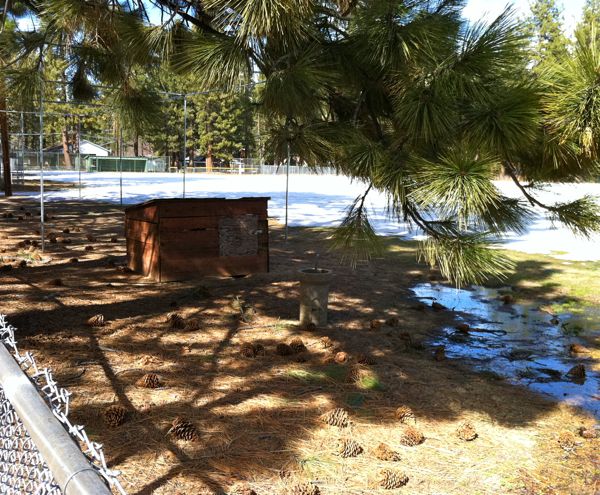
Ballfields like the one on Rufus Allen Boulevard could be headed toward improvements if a new measure goes before voters in November. Photo/Susan Wood

Ballfields like the one on Rufus Allen Boulevard could be headed toward improvements if a new measure goes before voters in November. Photo/Susan Wood

A proposed measure to go before El Dorado County voters in November to fund recreation improvements for ball fields and bike trails as an altered version of Measure S passed its first hurdle with the city. And already, recreation alliances and competing forces have formed to vie for the coveted $470,000 collected since the first recreation-oriented initiative passed.

Essentially, the South Lake Tahoe Recreation Facilities Joint Powers Authority and recreation advocates would like to change the controversial Measure S that’s been in effect for more than a decade. In 2009, advocates of ball field improvements tried to channel that money away from bicycle trails, but Measure B failed with only 62 percent of the vote. The ballot initiative needed a two-thirds vote.

Former City Councilman John Upton, the one staff person managing the finances of the JPA, got the approval from the city Tuesday to proceed to the next base but not before entering into an almost two-hour discussion on the preliminary ballot language.

The new language highlighting “Little League” fields came into question when a softball mom challenged the baseball-myopic group pushing the new measure to include the predominantly girls leagues.

And she had listeners in high places – namely City Councilwoman Angela Swanson, who had to remind the male dominated group speaking to the matter that girls have taken a second seat in sports for too many years pre- and post Title IX of the Civil Rights Act of 1964.  The federal law dictates the support of facilities for women’s sports on an equal playing field with the men.

“By law, you have to bring the girls facilities up to the men,” Marilyn Breisacher said. The softball mom watched her daughter grow up wondering why “her brother got to play on better fields.” She doesn’t want that to happen anymore.

On several occasions, she cited AB2404. enacted in 2005 and mandated for local governments five years later, making California the first state in the nation to enforce the civil rights of girls in community athletics as an institution in local jurisdictions and special districts.

Breisacher also took issue with the language singling out the field on Rufus Allen Boulevard at the former Al Tahoe Middle School where the Little League teams play as the one place getting the money for improvements such as batting cages, irrigation systems and a snack bar. She wants to see the improvements expanded to the South Tahoe Middle School field.  Right now, Tahoe Valley Elementary is where the softball teams play.

When all was said and done, Upton pledged to broaden the language to read “baseball/softball” fields and deleted the specific reference to improvements at one particular ball field. Councilman Tom Davis repeatedly asked if the changes would meet the state bill requirements. To that, Breisacher nodded.

The $6.5 million Measure S has turned out to be a hot-button issue in some circles because it was written in vague language to cover “ball fields.” Even the specifics haven’t always followed the letter of the law. The multipurpose field built next to Lake Tahoe Community College opened with much fanfare, but three were supposed to be constructed, and both baseball and soccer teams compete for playing time there. Softball leagues get bumped.

The intent of the new measure is to take the $470,000 currently on the books and split it between ball field improvements and bicycle trail maintenance to routes built before Measure S passed. This current law now only allows the money to be spent on trails constructed after the measure passed. That’s not many trails. Only eight of the anticipated 25 miles have been laid. The shortage created a cash-cow fund building at $5,000 per year, per mile that the JPA collects from taxpayers on about 50,000 parcels to the tune of $18 per year. The Measure lasts until 2030.

“I hate to see that money languish like this,” Mayor Hal Cole said Tuesday.

Cycling advocates would like other trails to get much-needed maintenance in this pothole infested region.

Longtime cycling advocate Tom Wendell supports changing the law under this new proposed measure “in theory” because the effort appears more inclusive and covers more trails because many were built long before 2000. He couldn’t say this about Measure S or even Measure B. He also takes issue with the money collected being called “excess” funds when they were clearly designed to go toward the maintenance of the area’s dilapidated, broken trail system.

“We are in dire need. Those trails are bad,” Wendell said Wednesday.

“We have fallen short in terms of meeting our obligations. We have to address in the end that the bike trails are getting a great deal of that money. There’s no way on God’s green Earth we are going to take that money for upkeep of the trails and give it (all) to the ball field people,” said El Dorado County Supervisor Norma Santiago, who also serves on the JPA board consisting of the city, county and Tahoe Paradise Resort Improvement District run out of the park in Meyers.

Santiago has a history with Measure S. She ordered the complete audit of the funds in 2006, when it became clear the infrastructure it was designed to protect was in disrepair and a lot of money was being collected.

The county is expected to hear the proposal for the new measure in the next few weeks.

Then by May 5, the JPA will meet and determine whether it wants to cough up $35,000 to support an election effort. The ballot measure’s language must be finalized by the end of June to make the November ballot.


Summer party set at museum

The Tahoe Maritime Museum is putting on a summer launch party on May 28 from 5pm to 8pm. Refreshments will be served.


Heavenly celebrates spring thaw

Heavenly Mountain Resort will host a spring thaw party to benefit the ski patrol and Special Olympics Team Tahoe. The benefit started April 16 from 4:30pm to 8:30pm. Prizes, refreshments and music will be on hand at the top of the gondola.