Opinion: Streamlining essential to refocus TRPA on regional issues

Publisher’s note: This is one in a series of columns from the Tahoe Regional Planning Agency.

By Joanne Marchetta

Much is said in commentary about the complicated regulatory environment at Lake Tahoe. For decades, environmental rules here have overlaid the usual building codes for public health and safety. The reason people came together in the 1980s to establish these environmental rules, was to stop harm to Lake Tahoe’s sensitive environment.

But TRPA and partner agencies discovered in the mid-1990s that regulation alone would not improve Lake Tahoe’s environment fully or fast enough. We know now, based on scientific studies, that a regulatory system that results in promoting the status quo where private properties become rundown leads to the continued degradation of the lake and our communities.
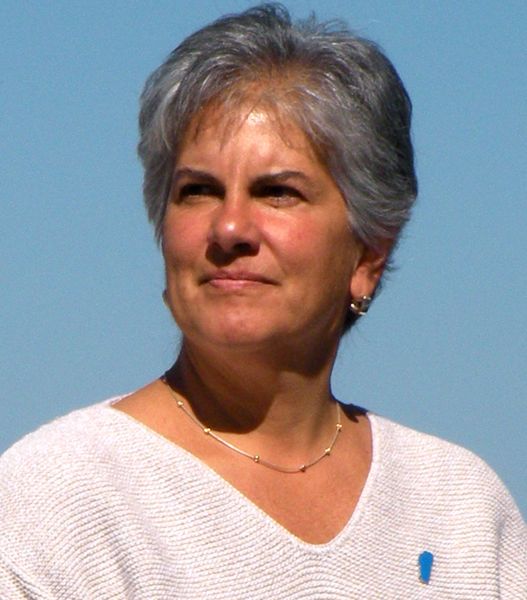
Joanne Marchetta

Joanne Marchetta

We can change this path. TRPA is updating ordinances and permitting processes to help property owners deliver good, environmentally beneficial projects. Since so many properties were built before we had conservation standards in place, there’s a great deal of what we call “environmental redevelopment” work to do. And this work can achieve multiple benefits—not just for the environment, but for the economic health and vitality of our local communities.

Last year, TRPA embraced a strategic plan built on four pillars to achieve our mission. This article is the first in a series describing the four strategic pillars and what they mean for you and the ecosystem in which we are privileged to live. This first part speaks to the importance of streamlining the Tahoe Basin’s regulatory processes, which have come to be known as a problem rather than the solution they need to be. Forthcoming are articles describing how we propose to

• Achieve accelerated environmental gain on the ground

• Improve the agency’s operational efficiency

• Engage the community and advance excellent customer service.

What we are doing to simplify our regulations is especially pertinent because of the bill recently introduced in the Nevada Legislature to withdraw Nevada from the Bi-State Tahoe Compact. According to senators sponsoring the bill, its impetus lies in the intrinsic differences and strained relationships between the states of California and Nevada. However, there is also an understandable amount of frustration and criticism directed at the complexity of the basin’s rules and processes to get a permit, allowing property owners to change the status quo. The introduction of this bill has provided an important opportunity for me to help educate legislators and members of the public on the dramatic shift TRPA has made recently to improve our performance in this area. I have also had the opportunity to outline the many external challenges that exist to the improvements TRPA is trying to make.

With our overarching mission to improve the lake’s water quality, the top priority for TRPA’s streamlining effort is to reformat and simplify the TRPA Code of Ordinances in a way that is illustrative and narrative so that any property owner or local building inspector can understand what’s called for and easily put it to use. A team of staff and consultants have already started this important work and so far, just through reorganization and consolidating redundancy, have found a way to reduce the weight of the document by more than a pound.

Converting all paper records to a more accessible electronic form is another streamlining directive on which we’re making progress. Having more records available online will help streamline real estate transactions and basic information searches. When a property owner wants to know how much land coverage is available or other practical information to plan a project, it should be easily accessible from a computer anywhere. These measures will be supported by bringing permit applications online to tie into the revised code of ordinances making all agency processes more transparent, accessible and understandable to the people who need to use them.

But perhaps a more fundamental shift, and one that will take greater resolve and support from partner agencies and conservation groups alike, is the effort to delegate more categories of residential and commercial permitting to your local building departments and to ultimately move TRPA back into the role of innovative, regional planner that was originally envisioned. TRPA needs to focus on partnerships, area-wide solutions, and multi-jurisdiction coordination to deliver quantum leaps in needed environmental improvement. Permits for a project in your back yard can be consolidated with permits from your local building department to simplify your experience. This ultimate streamlining move will not be easy. Where TRPA has already built strong partnerships with local governments to offer permit services on our behalf, we need to go further so that TRPA can focus on areas where science tells us much greater environmental gains are possible over the next several decades.

Shifting our emphasis to regional environmental goals and leaving residential projects to local governments will achieve far greater benefit for the lake’s environment than the cumbersome way we do our business today.

Change comes hard at Lake Tahoe and we’ll need community support to work through the opposition that may come from special interests. But TRPA can become the regional planning agency we once were. We can once again live up to our reputation on the world stage as a cutting-edge environmental leader. By becoming the very best at building regionwide partnerships to deliver environmental gain, we can help local communities build their own sustainable futures around a healthy, world-famous environment.

TRPA is taking a hard look at itself and has found that our problems are fixable, and I have set TRPA on a course to do just that. Take a closer look at our strategic plan online.

Until next time, thank you.

Joanne Marchetta is executive director of the Tahoe Regional Planning Agency.



Tech tycoon serves up ultimate cookbook

By Katrina Heron, Newsweek

For a wunderkind who began his career as a research assistant to Stephen Hawking, went on to become chief technology officer for Bill Gates at Microsoft, and now leads an invention brain trust, producing a cookbook might suggest, well, a half-baked anticlimax. Or would, if the work in question could by any plausible definition be called a mere cookbook.

There can be little fear of that for Nathan Myhrvold’s much anticipated Modernist Cuisine: The Art and Science of Cooking, which goes on sale March 7. In size alone the six-volume set defies categorization, weighing in at 43 pounds (not counting a five-pound custom-made acrylic case). Then there’s the outsize price tag: $650. (Online retailers Amazon and Barnes & Noble are advertising a discounted price of $467.62 and free shipping, which will come in handy.)

At 2,438 pages, laden with illustrations and edibly explicit photography (from skinned animal carcasses to microscopic globs), Modernist Cuisine stakes its raison d’être on its title, seeking to establish the past, present, and—most important—the future of food preparation as a purely scientific yet inherently artistic endeavor. By turns breathless and pedagogical, it aspires to be to cooking what Le Corbusier’s Towards a New Architecture was to the building arts of the 1920s: a true modernist manifesto.

“Something much like this book could have been done earlier,” Myhrvold says, noting that many of the techniques and even a fair amount of the technology employed are not new. What he and his team bring to the table, he says, is “the attitude and outlook of the cuisine”—a way, in other words, to savor its intellectual and emotional impact on us, the eaters.

Myhrvold, 51, was on the hunt for such first principles when, back in 2004, he set out to learn the secrets of sous vide (a method of slow-cooking food inside vacuum bags in a water bath). From there, he pondered the greater mystery: why had the modernist thinking that revolutionized art, architecture, and design in the 19th and 20th centuries all but ignored the clanging in the kitchen?

Read the whole story


El Dorado County Fair exhibit forms available online

The El Dorado County Fair’s exhibit application process is going digital. Exhibitors of livestock and still exhibits may download entry packets from the fair’s website.

fairThe fair has traditionally published a printed booklet, containing general information and entry rules and applications. This year, while limited printed forms and information will be available at the office in Placerville, the fair has otherwise discontinued the printed booklet in an effort to be environmentally green and save costs.

Fair CEO Jody Gray says the online entry guide is organized similar to its hard copy predecessor. Gray notes that residents who do not have access to a personal computer, may access the fair’s online entry guide via public computers available at local libraries and the fair office.

Livestock entry forms are due on or before May 7. Most other entry forms, including adult poultry, are due on or before May 13. There are a few exceptions such as floriculture and the special contests, see the entry form for deadlines on these.

The 2011 El Dorado County Fair, themed “Rockin’ & Wranglin’”, will take place June 16 to 19 in Placerville.


Open houses focus on Kirkwood’s utility plans

By Cathy Locke, Sacramento Bee

Two open houses regarding a power line project to serve the Kirkwood community will be sponsored by the U.S. Forest Service.

The sessions are scheduled April 30 and May 3 to discuss the environmental impact reports for the project, which is intended to provide electrical power to the Kirkwood Meadows Public Utility District.

The project proposes to construct, maintain and operate a 28-mile power line that would connect the Kirkwood service area to the regional electric grid at Salt Springs Reservoir. The line would be owned and operated by the utility district to provide the Kirkwood community with a more reliable, cost-stable and cleaner source of electricity, according to a Forest Service news release.

The line would be constructed in El Dorado, Alpine and Amador counties.

About 3.1 miles would be built along an existing overhead line between Salt Springs Reservoir and Bear River Reservoir. The remaining 25 miles would be buried.

Read the whole story


Officials pump up benefits of cycling event, Hwy. 50 closure

By Kathryn Reed

STATELINE — It was part informational session and part cheerleading rally as more than 60 people gathered to hear about what could be the convergence of the start of North America’s largest road bike race and the main artery to the South Shore being closed.

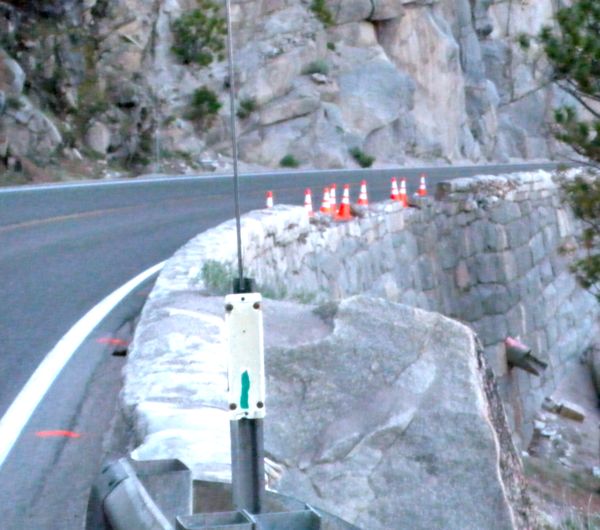
amgenA Caltrans rep and consultant from its hired public relations firm started the Thursday night meeting at Horizon hotel-casino with a brief overview of the plans to soon close Echo Summit in order to replace the dilapidated rock wall.

That was followed by an enthusiastic talk from Alison Green, marketing coordinator with Lake Tahoe Visitors Authority, about the Amgen Tour de California.

With predictions of 35,000 people being on the South Shore for the 10:30am May 15 start of the multi-day cycling event, it could be a scenic inconvenience if spectators have to come to the area some other way than Highway 50.

Deanna Shoopman, Caltrans Tahoe basin outreach coordinator, was adamant and repetitive in saying no date has been set for when the highway will be closed. When it is, though, it will be off-limits for two weeks solid, 24 hours a day. After that, it will be subject to delays for up to six weeks.

B Gorman, executive director of Lake Tahoe South Shore Chamber of Commerce, spoke of her experience of traveling between Tahoe and the Bay Area every weekend before moving to South Lake Tahoe. She said she always found it faster during heavy traffic – like what the Highway 50 one-way traffic will be like – to go via Highway 88 by Kirkwood. Plus, she added, it’s a great route on a motorcycle.

One glimmer of hope for workers who commute between the South Shore and locales on the other side of the closure is Shoopman will know by Monday afternoon if those people will be granted a permit to get through the construction area.

The rock wall at Echo Summit that will be replaced. Photos/LTN

The rock wall at Echo Summit that will be replaced. Photos/LTN

“We know it will not start until (at least) the first week of May,” Shoopman said of the initial two-week, 24-hour a day closure.

The good news is Heavenly Mountain Resort and Sierra-at-Tahoe will be able to stay open through Easter weekend knowing skiers and employees can get to the mountains.

Shoopman was also emphatic in stating the decision to close will be based on having a 10-day window of clear weather.

Cyclists will also be banned for the first two weeks while work is being done.

When it comes to the Tour de California, some firsts are being set with it starting in Tahoe. This is the highest elevation start, riders make two passes through the start area, and it’s the first time Nevada is part of the event. The other first is having 19 professional teams compete – the largest number in the event’s six-year history.

The eight-day race ends in Thousands Oaks, headquarters of Amgen, the tour sponsor.

The Tahoe portion starts in Stateline with riders leaving near the entrance of MontBleu casino May 15. They are expected to average about 28 mph, finishing the 72-mile loop about 1pm, and then ending the first stage at Northstar-at-Tahoe. The next day the riders take off from Squaw Valley as they head south through California.

One audience member asked what happens if it snows May 15. Gorman said the race coordinators have a contingency plan they have not shared with her.

Alison Green talks April 14 about the Tour de California.

Alison Green talks April 14 about the Tour de California.

It’s expected to be one big party along Highway 50 from Stateline to the Y. The LTVA’s Green said there is talk of having deejays on opposite sides of the street competing to get the crowds excited and keep them entertained while they wait for the cyclists to ride through.

“The best thing to do that day is park somewhere and then get out on your feet,” Green said.

The roads involved with the race will have rolling closures as the cyclists come through, which could cause delays of 30 minutes. This also means BlueGo buses will not be running their usual routes.

It will be up to private property owners – which is what the bulk of Highway 50 is except for Linear Park and the eventual Lakeview Commons site – do when it comes to allowing parking for non-customers and activities on their property.

Lauren Thomaselli, events coordinator for the city, said a map is being prepared of all the events along the cycling route on the South Shore.

A slew of events are being planned for 10 days before the pros take to the road.

The April 14 informational meeting replaced the annual tourism conference the South Shore chamber and LTVA have been putting on.

One of the things that kept being talked about was businesses should tap into the spectator demographic – ages 25-45 – because they travel with full wallets.

More information about the road closure is on this website.

Information about the cycling event is here.


Squaw Valley ski patrol competition

Squaw Valley is hosting the second annual nationwide Helly Hansen Professional Ski Patrol Olympics April 26-28.

Ski patrollers from all over North America will be competing for glory and $10,000 in cash and other prizes such as avalanche probes, backpacks compliments of Helly Hansen, Alpine Traverse, Recco and BCA.

Competitions will include a randonée race, beacon competition, GS race, sled race, bamboo throw and simulated bomb throw. All competitions will be visible from the Cornice II snow lounge and BBQ area where spectators can partake in the excitement and suspense.

New this year, the Helly Hansen Professional Ski Patrol Olympics has added an Avalanche Rescue Dog competition where resorts’ top dogs will go head-to-head in a two-day challenge. Avalanche rescue dogs are an important component of any patrol team. The K-9 competition will include a timed retrieval of buried objects.

Registration for the event will take place April 26 from 6-9pm at the Papoose Discovery Center located across from Cornice Cantina. Registration to compete costs $89 per patroller and includes a two-day lift ticket to Squaw Valley and participation in the events.

A discounted entry fee is available for patrollers with Squaw Valley season passes.

Spectators are invited to watch the competition and enjoy the only the snow barbecue in the Cornice II Bowl.

For more information about the Helly Hansen Professional Ski Patrol Olympics, call (530) 452.7124 or email eknudson@squaw.com.


Ski Run businesses planning Easter events

Ski Run neighborhood businesses are sponsoring an Easter egg hunt for kids.

Events will include pictures with the Easter bunny with kids and/or animals, animal owner look alike contest and a cake walk.

The event is April 23 from 11am-2pm on Ski Run Boulevard at Larch Avenue in South Lake Tahoe. The egg hunt starts at 11:15am.


DIY store in South Tahoe granted permit to sell lumber

By Kathryn Reed

Lumber will be able to be bought on a Sunday sometime this summer on the South Shore.

This is because on Thursday afternoon the South Lake Tahoe Planning Commission agreed to DIY’s special use permit that would allow the store to sell lumber.

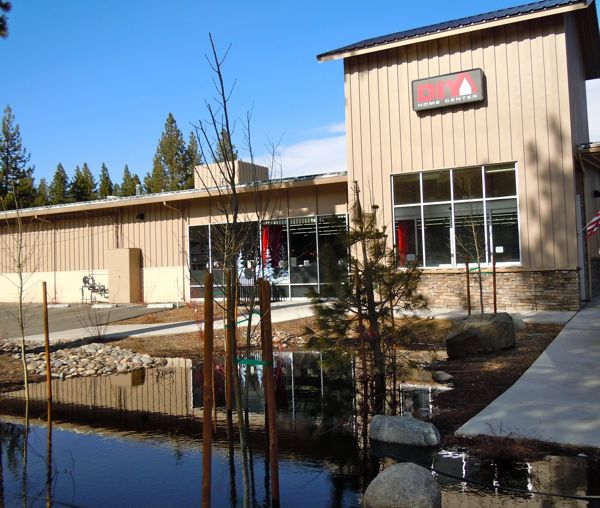
DIY will sell lumber this summer add 12 parking spaces. The driveway apron will be changed to concrete down the road. Photo/LTN

DIY will sell lumber this summer and add 12 parking spaces. The driveway apron will be changed to concrete down the road. Photo/LTN

The controversial store – at least when it was going through the permit process more than a year ago – expects to start construction on the building that will house the lumber as soon as dirt can be moved May 1. The permits are in hand.

Jordan Haun, manager of the Tahoe Do It Yourself, said execution of the permits didn’t happen because there was no need to have a lumber building when the use permit didn’t allow the sale of that product.

When DIY President Jess Ruf signed a 10-year lease on the old South Shore Motors building in December 2008 he believed he would be opening the following summer.

Then the controversy started in 2009 when the Southern California-based chain started to go through the permitting process. Appeals by representatives of Scotty’s, Nel’s and Meeks led to the City Council approving DIY to operate a general merchandise store, which meant it could not sell lumber. In doing so, the city essentially gave Meeks a monopoly on the sale of lumber on the South Shore. However, Meeks’ South Tahoe and Meyers locations close at 4:30pm on weekdays and is not open Sundays – whereas, DIY has longer hours and open both weekend days.

Lew Feldman, attorney for DIY, told planning commissioners April 14, that granting the special use permit will address the leakage of retail sales off the hill by having a one-stop shop that is open on Sundays.

At the time of the multiple public hearings nearly two years ago, Judy Brown spoke out at a meeting saying how DIY should not be allowed to move in — that proximity of similar businesses should be taken into consideration.

Now she is on the Planning Commission. While she acknowledged what she had said in the past, she voted for the special use permit.

“At this point I feel like my hands are tied. It is existing and it’s an allowable use,” Brown said.

Robert Cosmi told Lake Tahoe News after meeting he does not know if he will appeal the decision. Scotty’s Hardware, which he owns, is walking distance from DIY. He has contended all along that DIY would cut into sales of existing hardware stores.

Ace Hardware, which was on the same street of Scotty’s and DIY, went out of business this year, though they said not because of DIY.

South Tahoe codes allow applicants to reapply for special use permits one year after being denied – which is just what DIY did.

In other action at the Planning Commission meeting:

• The group approved the General Plan Update, which now goes before the City Council on May 3 for approval. It will be one of the topics of the council’s workshop after its regular meeting on April 19.


AYSO soccer program looking for players

AYSO of South Lake Tahoe has open soccer registration April 19-20 6-8pm, April 30 9am-noon and May 3 6-8pm at the South Lake Tahoe Ice Arena.

AYSO’s six philosophies are Everyone Plays, Balanced Teams, Open Registration, Positive Coaching, Good Sportsmanship, and Player Development.

Cost is $75 per player. Family discounts and scholarships are available.

More information is on the website or call (530) 542.2562.


Cinco de Mayo celebration

The South Lake Tahoe Family Resource Center’s 8th annual Cinco de Mayo Celebration is May 6 from 5-10pm at Heavenly’s California Lodge.

Tickets are $20 for adults and $10 for children ages 6-12 and free for kids under 6. There will be raffles, a silent auction, and music. Participating restaurants include: Latin Soul Restaurant, Chevy’s Fresh Mex, Rigoberto’s Taco Shop, Taco Bell, Lake Taco, Los Portales, Taco Taqueria, La Promesa and Los Mexicanos Restaurant.

Click on flyer for more information.