Opinion: Nevada pulling out of TRPA would hurt transit at Tahoe

By Carl Hasty

The Tahoe Transportation District is on the brink of becoming an unfortunate casualty of legislation proposed to withdraw Nevada from the bi-state Tahoe Regional Planning Agency Compact with California. The unintended consequence of Nevada Senate Bill 271 will be a direct threat to over $400 million programmed over the next five years for vital transportation improvements that will connect communities within the Tahoe Basin and further protect the clarity of Lake Tahoe.

SB271 was introduced by Nevada state Sens. John Lee, D-North Las Vegas, and James Settelmeyer, R-Capital Senatorial District. The bill is co-sponsored by Assemblymembers Kelly Kite, R-Minden, Pat Hickey, R-Reno, and Randy Kirner, R-Reno.
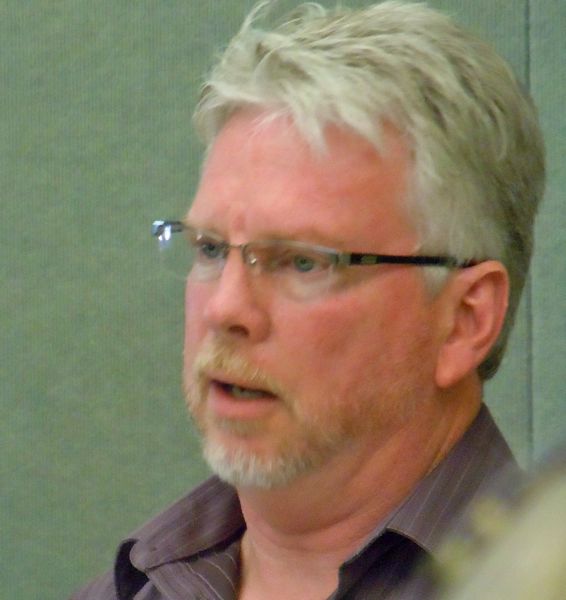
Carl Hasty

Carl Hasty

I attended the recent hearing on the bill and understand the frustration with the state of California and the Tahoe Regional Planning Agency expressed by the committee. When such frustration leads to hurried action, more problems can be created than solved. There are clearly problems to be resolved, some sooner than others. We welcome the spotlight that the bill shines on these problems, but we are concerned it may cause more uncertainty and confusion and eliminate worthwhile projects. Rational discussion involving all parties, and a timeline for resolving major issues, may be a more constructive way to proceed.

In 1980, Public Law 96-551 passed by Congress amended the 1969 Compact between Nevada and California which established the TRPA. Article IX of this law created the TTD as an independent agency within the Compact. TTD is charged with facilitating and implementing safe, environmentally beneficial, multi-modal transportation programs and projects for the entire Tahoe basin in Nevada and California.

A primary funding source for TTD projects comes from the Federal Highways Administration through the Tahoe Metropolitan Planning Organization, a federal transportation planning authority tied to the Compact in 1997. Should Nevada withdraw from the Compact, the flow of these funds would cease because the TTD and TMPO would no longer exist.

The 2010 Maximum Daily Load Report published by the Nevada Division of Environmental Protection and the California Water Quality Control Board, Lahontan Region, documents that 70 percent of fine sediment and particulates clouding Lake Tahoe are a direct result of the region’s 20th century transportation system.

TTD’s outlook is to the future. The projects proposed and developed by the agency and its many partners are vital to protect and enhance Lake Tahoe while improving mobility in the 21st century and beyond. Those living and working in the basin and visitors from all over the world will be losers in the long run if projects are put on hold or never completed.

The TTD currently operates BlueGo, a bi-state transit service and has several projects in the planning and development stage. Those projects include a bikeway on the Nevada side of Tahoe, anchored by a roundabout and related improvements at the intersection of Highway 28 and the Mount Rose Highway; Highway 50 Stateline Community Revitalization project, a centerpiece for the transformation of Stateline South Shore in Nevada and California; and the Highway 89/Fanny Bridge Community Revitalization project in Tahoe City. TTD is currently evaluating feasibility for a Lake Tahoe aquabus, a trans-lake passenger ferry service between the north and south shores, and potentially connected to smaller water taxis for shorter trips.

These projects will benefit all Nevada and California residents and visitors. However, without a fully functioning TTD and TMPO, there is very little likelihood that any of them will be accomplished.

Carl Hasty is executive director of the Tahoe Transportation Department.


Study: 1% of U.S. energy consumption used for indoor pot grows

By Colin Sullivan, New York Times

Indoor marijuana cultivation consumes enough electricity to power 2 million average-sized U.S. homes, which corresponds to about 1 percent of national power consumption, according to a study by a staff scientist at the Lawrence Berkeley National Laboratory.

Researcher Evan Mills’ study notes that cannabis production has largely shifted indoors, especially in California, where medical marijuana growers use high-intensity lights usually reserved for operating rooms that are 500 times more powerful that a standard reading lamp.

The resulting price tag is about $5 billion in annual electricity costs, said Mills, who conducted and published the research independently from the Berkeley lab. The resulting contribution to greenhouse gas emissions equals about 3 million cars on the road, he said.

Narrowing the implications even further reveals some staggering numbers. Mills said a single marijuana cigarette represents 2 pounds of CO2 emissions, an amount equal to running a 100-watt light bulb for 17 hours.

The resulting price tag is about $5 billion in annual electricity costs, said Mills, who conducted and published the research independently from the Berkeley lab. The resulting contribution to greenhouse gas emissions equals about 3 million cars on the road, he said.

Narrowing the implications even further reveals some staggering numbers. Mills said a single marijuana cigarette represents 2 pounds of CO2 emissions, an amount equal to running a 100-watt light bulb for 17 hours.

Read the whole story


Way too early to think about planting flowers

By JoAnne Skelly

Yes, daffodils are poking out their sunny heads. Yes, the forsythia and flowering plums are blooming. Yes, there are some beautiful warm days.

However, it’s still too early for planting tomatoes or peppers, cucumbers, squash, beans and many others.

It never fails, when the first lovely spring days arrive, people new to the area want to know if they can plant their tomatoes. Hold your horses! Or, maybe I should say, “Hold your plants.”

The last average frost date for much of the area is May 15. Note the operative word here — average. Last year we had a killer freeze after that date. Most gardeners lost their fruit buds, lilac flowers and iris buds. In Washoe Valley where I live, I wait until June 1 to plant because I know we are colder than most areas. Many of the other outer valleys freeze more readily and stay colder longer than in town.

Here’s some good advice to gardening newbies — become a weather watcher. Know the weather and the microclimates around your house and neighborhood. Track the last and first frost dates, not only for your area, but for your home. However, even that might not do you any good in avoiding frosts. After all, we all had a late freeze last year after June 1, even in town.

JoAnne Skelly is the Carson City/Storey County Extension educator for University of Nevada Cooperative Extension.

Read the whole story


Sierra sets plans for Appreciation Day

Skiers and riders will have one last chance to shred Sierra-at-Tahoe this season after closing day on April 24. On April 25, Sierra will host its Annual Customer Appreciation Day.

Skiers and riders of all ages may purchase a lift ticket for $25. All proceeds raised from the day’s lift ticket sales will be donated to sponsor youth recreation and education.

Sierra Resort will operate a limited number of lifts from 9am-2pm.

All guests are invited to join John Rice, general manager, and the rest of Sierra Resort’s managing team for the official “last run of the season” from the top of Grandview Express beginning at 2pm. Last call at the Sierra Pub will be at 2:45pm, in time for the ending of all winter operations at 3pm.


Private parking company axed, S. Tahoe to take over

Updated: April 20 11:47am.

By Kathryn Reed

The term “parking Nazis” for the people charged with patrolling the lot at the Village Center near Stateline will have to be retired now that South Lake Tahoe is severing its agreement with High Sierra Patrol.

Since the reorganization at the city, staff has been delving into why the parking garage at Heavenly Village is losing money and what various contracts say.

A kinder, gentler approach to parking at the Village Center near Stateline is coming. Photo/LTN

A kinder, gentler approach to parking at the Village Center near Stateline is coming. Photo/LTN

Truth is the garage is not losing money, city officials revealed April 19. It’s breaking even. It’s the enforcement across the street at the private Village Center that is taking a toll on keeping expenses in line. City officials are going to separate the two entities – as they admit should have been done at the time contracts were signed in 2002.

As with many contracts signed in that era, the one that says the city must provide enforcement at what was called Crescent V Center near Stateline essentially goes on for perpetuity. High Sierra also had contracts with the city starting before 2000 to patrol various locations in the city.

The odd thing about High Sierra Patrol being able to cite people is the 2000-01 El Dorado County Grand Jury report criticized the city for using the private company. At the time, the city said it would go back to using employees for parking enforcement. That policy did not last long.

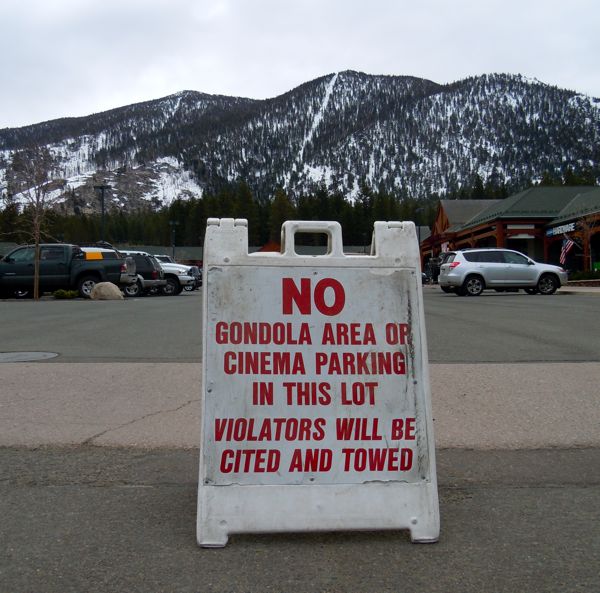
Terry Hackett, who owns the Village Center, got the city to pay for the enforcement after convincing the powers that be that people using the Heavenly gondola and those shopping or eating at Heavenly Village would clutter his lot in an attempt to avoid paying to park across the street.

Hackett told Lake Tahoe News on April 20 that when he is in town next month he plans to discuss various aspects of the parking issue with city officials, including how long people can park, communication between enforcers and the public, and the implementation of things.

The nastiness between patrons and parking enforcers has gone on for nine years, with residents riled up at parking hearings, locals and visitors writing scathing letters to the media, and the city earning another black eye.

Much of the consternation had to deal with High Sierra telling people they could not cross the street if they were parked at the Village Center. Arguments erupted. People were upset. It was a public relations nightmare for the city.

With High Sierra out as of the end of May, it means the city will use mostly community resource officers to patrol the area. They will chalk tires, then issue citations if the person parks for more than two hours. People will not be harassed if they are seen walking across the street. It’s all about how long the car is parked, not where the people are.

The city’s 2010-11 contract with High Sierra had the company receiving $85,604 for parking patrol and $37,730 for snow removal enforcement.

The city will save that money by doing things in-house, which could mean the parking authority breaks even.

“The goal is not to issue more citations,” Nancy Kerry, spokeswoman for the city, told Lake Tahoe News after the City Council meeting. The city just wants to enforce the rules.

The tickets High Sierra writes cannot be tracked by location even though the contract for each area is unique. This is why the city cannot say how much money was brought in from a particular area.

A third party, JDS, collects the revenue.

“The city can discern based on revenue about two to three tickets a day are written at the Village Center,” Kerry said.

From each $50 parking ticket the city takes in about $42. The city doesn’t see a dime until the appeals process is complete.

One way the city hopes to generate income is by putting in parking meters. The first will go in this summer near Heavenly Village on Bellamy Court. The plan is it will be less expensive to park in those 20 spaces than in the garage.

More paid parking will be added near city beaches in the coming years.

Other items of note:

• The council is expected to decide June 7 on the bids it receives from potential ice rink operators. There was a walk through April 18 with perspective bidders. One was from within the city, two were groups from the community, and one person from Virginia.

• The two workshops were postponed because the meeting did not end until 5:30pm. The General Plan will be on the regular May 3 agenda, with City Manager Tony O’Rourke giving updates individually to councilmembers before then. If the capital improvement plan does not fit into the May 3 workshop, a special meeting will be called on May 10.

• In order to play fair, the appointments to the city’s fiscal sustainability committee won’t be made until May 3. This is because two applicants missed the deadline. This means the process is open until April 27.

• The state City Clerk Conference will be hosted by South Lake Tahoe at Embassy Suites April 26-29.


S. Tahoe council supports Nevada leaving TRPA

By Kathryn Reed

South Lake Tahoe’s City Council took a baby step toward wanting to be done with the Tahoe Regional Planning Agency. On the same day, the council agreed the board and members of the League to Save Lake Tahoe should get a clue about what is really going on in the basin and then find a new executive director.

sltIn what was a marathon council meeting April 19, one topic was whether the council would support a bill in the Nevada Legislature that would have it withdraw from the bi-state Compact with California that formed the TRPA 42 years ago. Another item centered on a letter to the League.

In what appeared more like a sparring match between Councilmembers Bruce Grego and Claire Fortier that had to be refereed by Mayor Hal Cole, it was eventually agreed the council would send a letter in support of the Nevada Senate bill. The vote was 4-1, with Fortier the lone dissenter.

But the motion was much more than that. It also included sending a letter to South Tahoe’s representatives in the California Legislature stating all the reasons why it doesn’t like TRPA, the proposition of forming a new bi-state agency, and the threat of South Tahoe withdrawing from TRPA if its demands are not met.

South Tahoe wants more control. It wants an elected Governing Board, not political appointees. It wants logic in decision-making by the TRPA, not having it involved with the paint color of houses or whether a drive-though business should be allowed.

Fortier supports petitioning California lawmakers for change, but does not believe the city should be involved in Nevada politics.

To complicate matters, during councilmember comments at the end of the meeting, Councilwoman Angela Swanson said although it was not legal at that point to switch her vote to no, that is how she intended to vote.

The motion as it was made was convoluted and probably should have been separate motions to adhere to protocols the city operates by. Nonetheless, the motion would have passed if she had voted no.

A no vote by Swanson would have been in line with her arguments. She, too, has issues with a California city telling Nevada what to do. She also said a letter to California lawmakers needs teeth and that a meeting with Tahoe’s reps should be called for so they could introduce legislation.

No one at the meeting, including the city attorney, could say what happens if Nevada votes to pull out of TRPA because Congress formed the bi-state regulatory agency.

The NTRPA and CTRPA existed before the TRPA was formed.

“NTRPA still exists. It’s essentially the Nevada delegation of our board. They have a special meeting once or twice a year to discuss gaming issues and to elect the ‘at large’ Nevada board member,” Julie Regan, TRPA spokeswoman told Lake Tahoe News. “CTRPA dissolved in the early ’80s after the Compact was amended to gain more statewide representation on the Governing Board.”

Special interest groups got a bad rap Tuesday, with Fortier calling the League a special interest, and Cole saying Gov. Jerry Brown and the Attorney General’s Office are special interests. Brown is labeled as such partly because of his most recent appointment to the Governing Board – attorney Clem Shute, a longtime League supporter.

“He has been a problem ever since he was attorney general,” Cole said of Brown. “If I were in Nevada, I would support this whole-heartedly.”

It was Davis who brought forth the idea to write a letter to the League, in which the original draft said the environmental nonprofit used “underhanded tactics.” His colleagues voted to have that scraped.

At one point Davis said he wanted to cooperate with the League and in the next breath called them obsolete. But he could never answer Swanson’s question of what the purpose of the letter would be.

Grego added that the letter should also ask for a meeting between the council and League’s board.

Although Davis kept saying this is a new day, his tactics are the same as they were when he was first on the council from 1992-2004 – write a letter to complain. He had no other ideas to effect change.


Math-science day for girls in grades 6-8

South Lake Tahoe AAUW and Lake Tahoe Community College are co-sponsoring a Math and Science Career Day for girls in grades 6-8 on April 30 from 9am-3pm at the South Lake Tahoe college.

The goal is to encourage middle school girls to become interested in science, technology, engineering and mathematics careers.

The keynote speaker will be an orthodontist with workshops featuring local women currently working in geology, wildlife biology, medicine, mathematics, physics and chemistry.

The event will feature hands-on learning and real-life connections to careers in math and science.

The first 60 girls to sign up will have the opportunity to attend this event and familiarize themselves with the college campus.

Lunch is provided free to all attendees.

Preregistration is required. Contact Bev Palley at (530) 544.2724 or bpalley@sbcglobal.net by April 25. Further information is also available online.


I-80 construction to cause delays near Truckee

Caltrans started work April 19 on a $1.7 million concrete barrier project along eastbound Interstate 80, east of Truckee.

caltransThe project will replace existing guardrail with a permanent concrete barrier at seven locations between the Truckee River and Nevada state line.

Motorists can expect eastbound lane closures from 5am Mondays to 1pm Thursdays through June 30.


Candidate Gaines planning for life in Legislature

By Torey Van Oot, Sacramento Bee

The election is still several weeks away, but 4th Assembly District candidate Beth Gaines is already contemplating bill packages and committee assignments.

The Roseville Republican has met Gov. Jerry Brown and the first lady several times. She’s even attended a news conference on the Capitol steps.

Gaines and Democrat Dennis Campanale are the sole candidates on the May 3 ballot to fill the seat formerly held by her husband, Ted Gaines, who was elected to the state Senate in January.

The two emerged as the top vote-getters in an eight-way March primary battle, with Beth Gaines besting her closest Republican rival by just one percentage point.

But the upcoming round of balloting isn’t expected to be much of a nailbiter.

Name recognition and a double-digit perentage registration edge for Republicans, who make up 45 percent of district voters, give her a leg up in the race for her spouse’s old job.

Gaines, hoping for spots on the education and health panels, says she wants to be “completely ready on Day One” to dive into the budget and other issues up for debate under the dome.

Read the whole story


Nevada lawmakers returning money from poker firm

By Jon Ralston, Las Vegas Sun

The PokerStars PAC report shows that 48 out of 63 lawmakers received cash last year, shortly before the company paid for two of them – Assemblymen William Horne and Kelvin Atkinson — to go to London.

I have listed the contributions below from the PAC filing, although some lawmakers are now pulling out records as they say they do not have any recollection of getting the money.

The real issue: Why would anyone take money or favors from a company the feds had already alleged had been operating illegally here?

The algorithm for contributions was obvious at the top – leaders got a lot of cash – but stranger as it got toward the bottom, with differing amounts and no good reason to leave some of those 15 off the list. And why not Bill Raggio, who at the time was returning to be the biennial power he always was.

Read the whole story