Opinion: Marijuana cultivation ordinance goes up in smoke

By Steve Kubby

The City Council rejected a proposed new medical marijuana cultivation ordinance with reduced penalties and improved security for patients from ripoffs and raids. Instead, the fine for noncompliance, which was reduced by the city manager and attorney to $100, was increased back to $1,000 per day.

Even more disturbing, the City Council opted to add a clause that would make public the names of patient growers who are alleged to not be in compliance with the city ordinance, a terrible policy that will be abused by burglars and rogue federal drug agents to harm sick people.
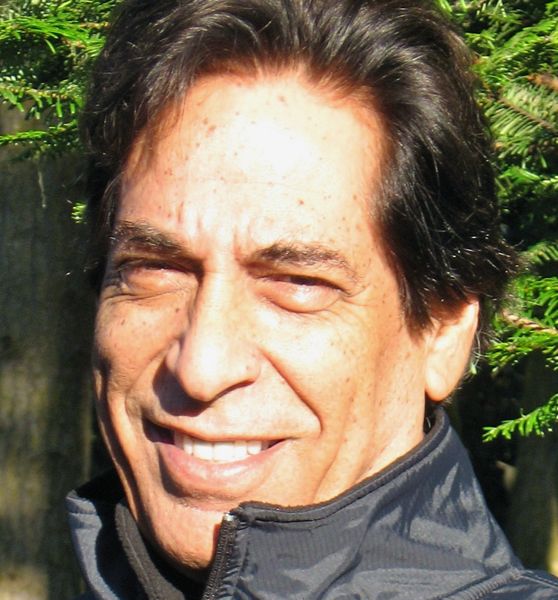
Steve Kubby

Steve Kubby

The version of the ordinance that was sent to the City Council was a model of tolerance and safety, thanks to efforts by local dispensary operators Gino DiMatteo, Cody Bass and Matt Triglia, as well as the extraordinary cooperation of the city manager and attorney. However, the City Council chose to reject a marijuana cultivation ordinance that could have set an example for cities and counties across the country.

City Council members apparently refuse to recognize that many patients who grow are struggling just to get through each day. Instead, the City Council wants to force sick, disabled and dying patients to jump through hoops that carry severe financial penalties for anyone who messes up. It’s a misguided and dangerous effort to micromanage sick people who they suspect of breaking laws, when those who deliberately or criminally abuse the law or trash homes can still be charged for serious crimes, based upon illegal activities and/or property damage.

The City Council is trying to fix something that isn’t broken, based upon an obsolete legal view of cannabis. Considering that California physicians have safely supervised hundreds of thousands of medical marijuana patients, since the passage of Proposition 215 nearly 15 years ago, it should be clear that marijuana no longer qualifies as an illegal, schedule 1 substance and should be treated just like any other medicinal herb.

Despite threats and fraudulent assertions by the DEA and U.S. attorney, the courts have determined that “currently accepted medical use” does not require FDA approval or more than one state to recognize the medical use of cannabis. Once California passed Prop. 215, cannabis should have been immediately rescheduled. Instead, government at every level perpetuated this fraud and continued to arrest, prosecute and incarcerate citizens based upon a classification that was obsolete and kept in place to target and punish a particular group within society.

The South Lake Tahoe City Council has refused to make a serious commitment to protect the health and safety of our patients, opting to create a Big Brother approach instead. That raises an even bigger question: Why does the City Council seem overly preoccupied with smokescreen issues like pot, instead of real issues like the explosion of pot holes in this town?

Frankly, these and other misdirected actions by the City Council looks suspiciously like a hidden agenda to attack medical marijuana, TRPA, League to Save Lake Tahoe, Gov. (Jerry) Brown and anything, but the real problems facing the city.

What are the priorities of the new City Council? Does the City Council believe it is their job to micromanage everyone, but themselves? What good is a City Council that just adds another layer of bureaucracy and expensive fines, instead of actually doing stuff to make our lives easier or better?

We haven’t heard a word about The Crater (I refuse to call anything that big a Hole), or how to deal with the $300 million repair bill for our streets, or how to pay the $200 million redevelopment debt, or how to overcome the structural deficit of $1 million per year in the budget.

No, instead the City Council is busily adding a $1,000 a day fine to some poor patient who is struggling to make it through each day. Instead of inspecting pot holes and broken streets, the City Council is marshaling our severely limited resources to inspect every cannabis garden in the city.

Getting tough with sick people who grow their own medicine may play well with constituents, but it is a cruel fraud and shameful disservice to the people and businesses of South Lake Tahoe. At this point, the only credible path for the City Council is to suspend any further discussion of pot, until something has been done about real problems like pot holes and broken streets.

Steve Kubby played a key role in the drafting and passage of Proposition 215. He has written two books on drug policy reform and serves as executive director of the American Medical Marijuana Association.
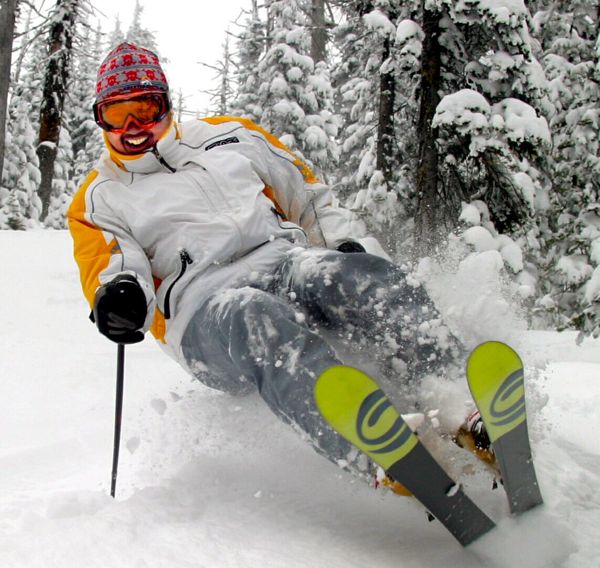


Ski report: Spastic weather

curtisAt 7:40am Thursday the sun is out with blue and gray sky, and it’s snowing in South Lake Tahoe.

Here is the ski report for April 21 from Curtis Fong, the Guy from Tahoe.


Snippets about Lake Tahoe

relay• The South Shore will not have a Relay for Life event this summer. This event raises money for the American Cancer Society.

• South Lake Tahoe’s Max DeLallo in his first year at Williston State College in North Dakota threw a perfect game April 16. He struck out eight in a 17-0 win.

• Placer County Board of Supervisors this month confirmed the appointment of Mary L. George as county director of library services.

• Lake Tahoe News is also on Twitter.

• The next TAMBA meeting will be April 27 at 6:30pm at Las Panchitas, 8345 North Lake Blvd., Kings Beach.

• The first of three volunteer orientations for the Amgen Tour de California will be April 22 at the Lake Tahoe Visitor Authority office at 6pm. The remaining orientations will be scheduled at the North Lake Tahoe Visitor Center and Squaw Valley the first week of May. Details are online.

• A Nevada bankruptcy judge on April 19 granted MV Transportation a 30-day extension to amend its complaint against South Shore entities regarding the BlueGo bus system. MV had asked for 60 days.

• Caltrans is issuing passes during the upcoming Highway 50 road closure to people who live on one side of Echo Summit and work on the other side.


Endless hours spent on S. Tahoe pot law without resolution

By Kathryn Reed

Many of the rules to control the cultivation of medical marijuana in South Lake Tahoe are already on the books, but it would be hard to know that based on the number of hours staff, council and the public has to endure when it comes to discussing the topic.

potOnce again, it was an agenda item for the City Council. Once again, they delayed passing the ordinance.

On April 19 the five electeds gave staff direction to come up with another version that may be voted on at the May 3 meeting.

California’s landlord-tenant rights handbook will take care of a number of concerns. City building codes dictate much of what can be grown where, along with the fire codes. Health laws also are already in place. Then there’s the Fourth Amendment about search and seizure. Law enforcement should be able to handle the rest. Plus, Proposition 215 – state law – has a say in what the city can do.

All the city needs to decide is how much growing area to allow (probably will be 10 percent of the square foot of the dwelling), the fine structure (most likely starting at $1,000) and if the name of people with a cultivation permit will be public information (could be secret unless a violation occurs).

Once the council figures out an ordinance, then the nearly 600 residences out of compliance can be brought into compliance. This could be a moneymaker for the city because the suggested fee for a permit is $300, plus an annual inspection by the fire marshal of more than $200.

One reason the city needs to allow cultivation to occur is Proposition 215 does not allow the transportation of medical marijuana. So, the three collectives must get their supply locally.


Gardening books tackle apartment gardens, simple composting

By Susan Skorupa, Reno Gazette-Journal

Real estate is expensive. You pay for it in rent or a house payment, says a garden book author. So if you’re a gardener, make that real estate count.

That’s what the authors of two new books hope to help gardeners achieve this season.

One book cuts to the simplest terms and most basic illustrations offering simple procedures and explanations for the garden newcomer or cut-to-the-chase hobbyist. Another explores a very specific wrinkle in garden culture complete with slick pages and full-color photography.

“Garden Rules: The Snappy Synopsis for the Modern Gardener” (Cool Springs Press, $9.95 paperback) by Jayme Jenkins and Billie Brownell, gives down-to-earth advice about a lot of topics the glitzier garden books take for granted.

Read the whole story


Choices for Children reaches out to care providers

To the community,

In honor of the Month of the Young Child, Choices for Children organized the annual Provider Breakfast honoring our community’s childcare providers for the services they provide to families and children throughout the year. The Early Care & Education field came together on April 16 at the Lake Tahoe Golf Course. This year’s topic, “Understanding Behavior and Discipline in the World of Young Children” presented by Cheryl Erwin, attracted 76 childcare providers from Alpine and El Dorado counties. The highlight of the event was the opportunity to connect with adults working in the same fields, encountering the same joy and challenges and hearing the importance of attachment in the early years.

The Positive Discipline basics steps include knowing what children need:

• A sense of belonging and significance

• Appropriate personal power

• Discipline that teaches (is kind and firm at the same time)

• Social and life skills to develop character and competence

Knowing that the Latin origin of the word “discipline” mean to “teach”, the following Positive Discipline tools might become handy when working with children:

• Connection before correction

• Be firm and kind

• Decide what you will do

• Follow through

• Encourage effort and progress, not just results

• Positive time out

• Take time for training

• Use 10 words or less

• Spend special time

• Take care of yourself

• Hugs, hugs, hugs

As you teach discipline to children ask yourself the following questions:

• Does it create connection and belonging?

• Is it respectful and encouraging?

• Is it effective long-term?

• Does it teach valuable social, character, and life skills?

• Does it help children believe “I am capable?”

The event ended with a green art activity promoting relaxation and creativity. Raffle prizes donated by our community made the CFC Annual Child Care Professionals Appreciation Breakfast very special. CFC would like to THANK: Thran’s Flowers, Mont Bleu, Harvey’s/Harrah’s, Lake Tahoe Golf Course, Sorensen’s, Ernie’s Coffee Shop, Passaretti’s Italian Restaurant, Chevy’s Fresh Mex, Sessions, City of SLT Parks & Recreation and Ice Arena, Lake Tahoe Cruises, Embassy Suites, Round Table Pizza, Side Street Boutique, Kirkwood, Freshies, Orchid’s Thai Cuisine, Mandarin Garden, 4 Seasons Café, Blue Dog Pizza, Fasta Pasta, Sprouts, Applebee’s, Sessions, Sierra@Tahoe/North Star@Tahoe, Bio-Spirit Day Spa, The Ski Renter & Snowboards, Paradise Beauty Supply/Salon, and Heavenly Village Cinema for their generous donations, especially in light of the current economy. Your support to professionals who provide child care for our community’s children and the children of families visiting Lake Tahoe is greatly appreciated!

Nadine T-Davis, resource coordinator Choices for Children


Quake expert shakes things up with talk of Tahoe faults

By Kathryn Reed

STATELINE — “My fear is we don’t even remotely have a clue how to deal with something like this.”

Those are the words of Graham Kent, director of the Nevada Seismological Laboratory and professor of the Department of Geological Sciences and Engineering at UNR. He is speaking about when the next big quake hits Lake Tahoe and a tsunami wipes-out much of what’s on shore.

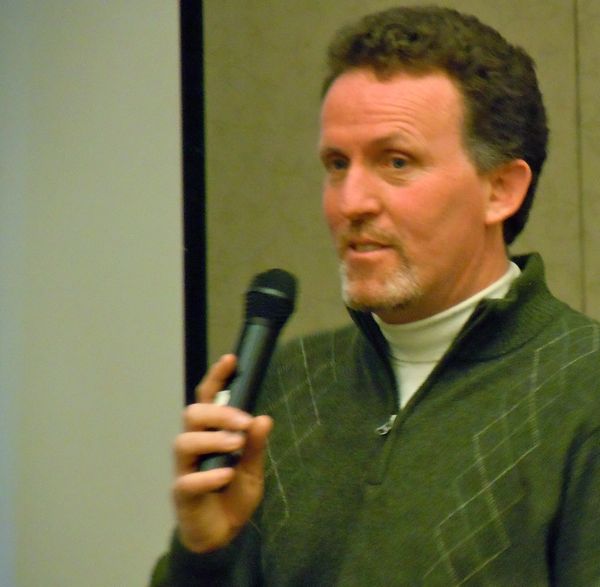
Graham Kent talks April 20 about Tahoe earthquake faults. Photo/Kathryn Reed

Graham Kent talks April 20 about Tahoe earthquake faults. Photo/Kathryn Reed

The West Tahoe Fault hasn’t had major action in 4,500 years. Scientists say it’s due because history shows it erupts every 4,000 to 5,000 years.

“This is a big, big fault,” Kent said as he spoke to Soroptimist International South Lake Tahoe on April 20 at Harrah’s Lake Tahoe.

Besides being a leader in his field, Kent is a 1980 South Tahoe High School graduate. So, this isn’t just work for him – it’s a bit about educating his hometown about the dangers that lie beneath Angora, Cascade, and Fallen Leaf lakes, as well as the Incline Village and Stateline faults. Then there’s the Genoa fault in the Carson Valley.

What Kent sees as a danger is the lack of monitoring that is going on in Tahoe. No equipment exists on the East Shore. He is hoping to change that.

He believes officials are not planning for what an earthquake and subsequent tsunami would do to the region.

Kent showed computer-generated videos of what the water surge would look like – making some comparisons to the March tsunami in Japan.

“We need to do a much better job of putting signage on beaches. There are 17,000 people (on Tahoe) beaches in the summer. They wouldn’t get out,” Kent said.

He doesn’t want to be an alarmist, but he does want to be a realist. He sees what other countries are doing when it comes to earthquake research compared to the United States and he’s dismayed. He sees what the Northwest does to warn people about tsunamis and evacuation routes and can’t believe the dialog isn’t even happening in the Lake Tahoe Basin.

Kent is hoping his agency will be able to change that – in terms of education and obtaining better data about what is going on when is comes to seismic activity in the Lake Tahoe Basin.

This audience was the first to see lidar (light detection and ranging) images of the Tahoe faults. This technology helps to better define the faults for the naked eye.

These images are available online, then search for Tahoe.

He said as much as the basin keeps putting money toward fine sediment reduction, it would take one earthquake a matter of seconds or minutes to undo all that work.

“Tahoe is strewn full of catastrophic events,” Kent said.

Kent’s crews will be doing work on the Stateline fault this summer. He hopes to get onto Cascade Lake next month to do research. And when the snow melts, he will be walking the West Tahoe Fault at Angora to find out more about the area where he spent many a summer jumping off the cliffs into the lake.


Skiing Kirkwood helps Tahoe cycling community

April 22 is locals’ day at Kirkwood Mountain Resort.

Lift tickets are $20 for all locals – if you’re from Lake Tahoe, Carson Valley, Jackson or any of the surrounding areas, just bring in your ID.

Kirkwood is giving $5 of every locals’ lift ticket sold that day to Lake Tahoe Bicycle Coalition.


Earth Day inspires people to reuse stuff

By Debbie Arrington, Sacramento Bee

What would you do with a stack of old tires? How about a heap of plastic bags? Can a pile of junk become a gold mine?

Inspired by a drive to recycle and powered by imagination, inventors and artisans are finding unusual uses for other people’s discards. They’re mining the dump and making treasure out of trash.

On Friday, millions of people around the globe will celebrate Earth Day, not so much as a holiday but as a reminder that most resources are finite.

“Reuse, repurpose, recycle” has become a mantra as “green” goes mainstream. For some people, it represents opportunity, too.

Clinton Watson and Mark Platt are prime examples. In their Applegate workshop, discarded tires find new uses as garden art and home products.

Flowerpots, fountains, mirrors, chalkboards, dog beds, chandeliers. These low-tech products give new life to old tread.

“When I cut open a tire, I’m inspired,” Watson said. “It’s like opening a gift.”

Read the whole story


100-acre control burn in Lake Tahoe State Park

The Nevada Division of Forestry will be conducting prescribed burns at Tunnel Creek in the Lake Tahoe Nevada State Park backcountry throughout late April and into May.

The Tunnel Creek road from Highway 28 to Tunnel Creek Station may be closed in order to conduct the burns. Signs will be posted throughout the area when burns are being conducted. Nearly 100 acres will be treated in 15 phases.

The burns are part of ongoing fuels treatment and forest restoration efforts in the Lake Tahoe area.

The Tunnel Creek burns are being conducted by the Nevada Division of Forestry in cooperation with the Division of State Parks, Division of State Lands and the North Lake Tahoe Fire Protection District.

Contact Robert Gregg at (775) 684.2725 for additional information.