Chef brings home-cooked meals to individuals

Today’s fast-paced lifestyle makes it hard to spend time in the kitchen or sit down as a family for a home-cooked meal. Chef 2 U, a personal chef service serving the Sierra foothills, offers a solution to this problem.

Chef David Mori, whose resume includes working as the pastry chef Cal Neva Resort and as a baker for the scientists on Antarctica, started the business to provide a quality at-home dining experience. Chef 2 U offers top quality meals at home for a fraction of the cost of hiring a full-time chef.

“The prices we offer through Chef 2 U are similar to what you will find in restaurants for the same quality meals, with the added convenience of being able to eat at home with the family on your own schedule,” Mori said in a press release.

Because menus are created especially for each individual client, Mori is able to cater to special diets and personal preferences.

For more information or to schedule a consultation, contact Chef David Mori at (916) 742. 3206.


LTCC’s budding scientists to test theory at NASA site

By Stephen Ward

Fittingly, the idea that granted five Lake Tahoe Community College students the opportunity to conduct an experiment aboard a zero-gravity plane was created out of thin air.

“We came back from winter break and only had a little time,” Andrew Burton, one of the students, said about drafting a proposal to send to National Aeronautics and Space Administration. “It was incredibly stringent what we had to provide.”
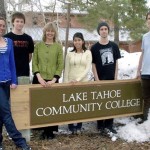
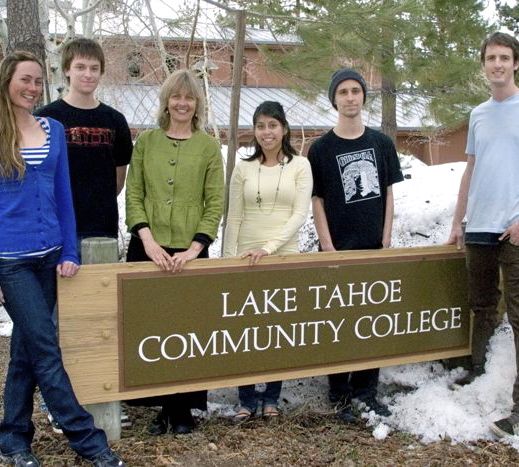
LTCC science students flank instructor Cathleen Cox before heading to Houston with their science experiment. Photo/Provided

LTCC science students flank instructor Cathleen Cox before heading to Houston with their science experiment. Photo/Provided

The group, former students of LTCC physics Professor Cathleen Cox, submitted a 15-page proposal detailing their study of gravity’s effect on soap bubbles to NASA in January for its Reduced Gravity Education Flight Program.

Two months later, the students received their acceptance letter. But with medical examinations, stress analysis and NASA inspections, the group has little time to celebrate.

In June, Cox and the four students –- with one being unable to attend — will travel to NASA’s Johnson Space Center in Houston to perform their experiment on an aircraft flying 30 parabolic maneuvers in 25-second intervals over the Gulf of Mexico.

The study, titled the “Structural Integrity and Mathematical Modeling of Singular Soap Bubbles in Microgravity and Hypergravity,” researches specific aspects of a bubble, such as its color pattern and longevity at different gravity levels.

The soap bubbles will be blown in a tube drilled through a polycarbonate box, which is located within a bigger box made of the same material with rubber attached to the corners. Overall, the entire experiment will fit within the glove box NASA provided the group with.

“(The experiment) is definitely tougher than what we thought, however it’s still a really simple project compared to other projects, which is a good thing,” Burton said.

Despite providing the students with research experience, Cox said being accepted into the program benefits the community as well.

“One thing that’s good about (the program) is it promotes science in the Tahoe basin,” Cox said.

Promoting science after the experiment is something the LTCC students have already started planning. Burton, a 24-year-old South Shore resident, said the group will work on curricula for schools throughout the Tahoe region to help students learn more about soap bubbles and gravity.

“First, we are required to develop a website, as well as publish our paper and present our results at a conference,” Cox said.

The members of the group have recently created a science club at LTCC. This year was the first time community college proposals were accepted into the program.

In addition to Andrew Burton, the students attending the trip to Houston include Melissa Thaw, Jeff Guarino and Jared Szi. Eva Gonzales also helped with the project.


Opinion: Education reform key to solving California’s budget crisis

By George P. Shultz and Eric Hanushek

Do we really need someone in Sacramento writing three paragraphs in the California Education Code containing 1,132 words that lay out the rules for school field trips? How about state approval of lesson plans for farm labor vehicle training? Of course not. And from these, we see an opportunity to break the gridlock in our state capital.

Sacramento is awash with discussions of deals about the budget (though apparently, despite the talk, there is no deal). The proposals generally involve pain from cuts in resources for many programs and services that is “balanced” by pain from increased tax rates. Not surprisingly, many legislators have been reluctant to sign on to such “deals.” The negotiators, and the public, do not see how their lives are improved through the proposals. So we are left with the unwelcome choice between an unsustainable fiscal condition for the state that leaves our future in doubt or further cuts that seem unacceptably draconian.

We offer a real deal: Our children are our future, so Part One of the deal must be improving the quality of K-12 education, because California rates 47th in student achievement out of the 50 states.

We also have a stubborn state budget deficit, and the main word being used in addressing it is “cut.” A better term for Part Two of the deal is “reform.” When one makes that change, the money will be there.

George P. Shultz and Eric Hanushek are senior fellows at Stanford University’s Hoover Institution. Shultz was U.S. secretary of state from 1982 to 1989. In 2010, he was a co-chair of the No on 23 campaign. Hanushek is a member of Hoover Institution’s Koret Task Force on K-12 Education.

Read the whole story


Great American Backyard Campout coming in June

By Julie Leibach, Audubon

Have you planned your summer vacation yet?

With recession fallout still falling, and high gas prices still rising, the task may seem daunting. Here’s an easy idea for a mini-vacay: Join nature-lovers across the country on June 25 by participating in the Great American Backyard Campout.

Part of the National Wildlife Federation’s “Be Out There” campaign, the event encourages campers from all generations to find a site anywhere—backyards, balconies, parks—where they can connect with nature and each other. Judging by a few testimonials on NWF’s website, it sounds like a good time: “It was the most fun night of my life. All of my friends and family became closer and got to know each other a lot better. I’m so glad we were all together, it was the best night ever!”

If slumbering in your own yard isn’t “wild” enough, and you’ve got the traveling means, search for a park using the US Forest Service’s kid-friendly site, DiscovertheForest.org. (Register to camp as an individual or team here. If the 25th doesn’t work, you can still sign up and camp on a different day.)

Read the whole story


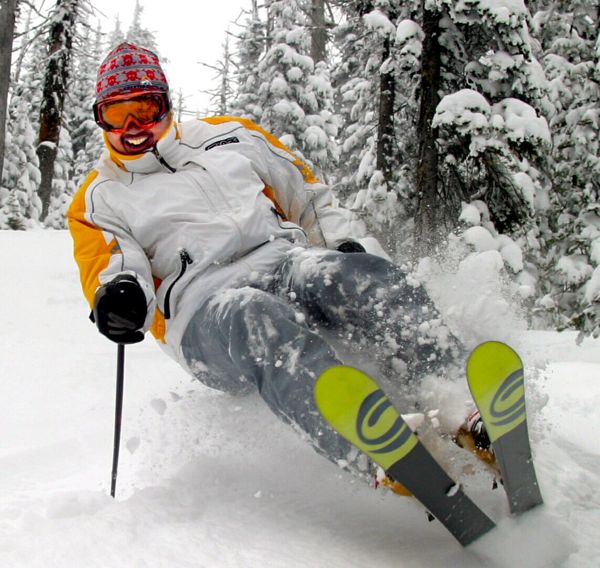
Ski report: It’s going to be an egg-ceptional day

curtisThis is the final ski report of the season — and the final day to ski at many Lake Tahoe area ski reports.

Here is the Easter ski report from Curtis Fong, the Guy from Tahoe.


Life in tiny Alaskan town comes to life in fun book

By Kathryn Reed

An obituary writer and social columnist in a small town writing about her experiences might not seem like a book worth reading. Think again.

Heather Lende’s “If You Lived Here, I’d Know Your Name” is a delightful and entertaining glimpse into life in Alaska as well as the characters filling the town.

alaskaLende delves into the struggles of living in such a remote location. Though she doesn’t glamorize the ruggedness, she doesn’t whine about the hardships either. They just are what they are.

When one person goes out for a long skate on a frozen pond the drama created makes you wonder if the man will survive. There’s just enough suspense to make you forget for a moment this is non-fiction. It proves that real life is so much richer than anything anyone can make up.

Lende is able to capture life in Haines, Alaska, in a way that brings the town and its people to life. It’s almost like I felt as though I became friends with these people. And then as the pages turn she is writing about one of their deaths. It’s poignant.

Writing a good obituary is a bit like creating good art. It’s hard. But she makes these people real. She shows that their lives mattered.

My friend Susan gave me the book before moving to Chicago, saying I would find it entertaining. She was correct. This was published in 2005. I would imagine Lende would have enough fodder to publish a sequel or something else about her world 90 miles north of Juneau.

Besides writing for the local paper, Lende also contributes to the Christian Science Monitor and NPR’s Morning Edition. She also writes a column for the Anchorage Daily News.


Dog trained to sniff out aquatic invasive species

By Leigh Paynter, News 10

OAKDALE — Debi DeShon had been training dogs to sniff out contraband for the last 15 years, but a decline in the economy and a rise of an eco-threatening animal made her swap narcotics for nature.

At her new business she’s using some of the same techniques she used to “Mussel Dogs” is DeShon’s new detective venture, and She’s training dogs to find invasive species of mussels – the quagga and zebra mussels.

According to DeShon and park officials at the Woodward Reservoir in Oakdale, the Quagga and Zebra mussels can multiply out of control and dramatically change the ecosystem. They are often transported from lake to lake by boaters. The mussels are only about the size of a finger nail, and their larvae can be microscopic, making them tough to find. Quagga and Zebra mussels can also live for up to 30 days out of the water. The mussels have been found in lakes in surrounding states and in southern California.

Read the whole story


Boomers redefine retirement living

By Sally Abrahms, AARP Bulletin

For years, boomers have denied they are going to get old. Now, with knees that need scoping and birthday cakes with way too many candles, the defiant generation is finally thinking about the future — especially where and how to live.

Visits to their parents in sterile, regimented assisted living or nursing homes are leaving boomers dismayed. They want better choices for Mom — and for themselves. While they may be a decade or more away from needing care, they’re overhauling or honing traditional models and inventing new ones.

In choosing how they want to age, and where, boomers are helping shape the future of housing. “They have changed expectations every decade they’ve gone through; I don’t think it will stop now,” says John McIlwain, senior fellow for housing at the Urban Land Institute. Down the road, he says, “there won’t be one single trend. People will be doing a lot of different things.” They already are. The common denominator in existing and still-to-be-created models, say experts, is the desire to be part of a community that shares common interests, values or resources. People want to live where neighbors know and care about one another and will help one another as they age. That doesn’t mean they’ll become primary caretakers; if it gets to that point, outside professionals may need to help.

They also won’t necessarily retire from their jobs if they live in a “retirement” community. Today’s housing options reflect the attitude of older Americans: Stay active, keep learning, develop relationships and have fun for as long as possible.

Read the whole story


Opinion: Suggestions for the financial sector

By Rex Ghosh

As the world closes in on the three-year mark of the beginning of the global financial crisis, I believe it’s not enough to rely on new regulations to prevent future disasters – a fundamental change in mindset is required.

The global financial crisis, marked by the bankruptcy of Lehman Brothers in September 2008, has taken an enormous economic, financial, and social toll.

In the United States and abroad, regulations, laws, and practices are being changed to help ensure that such crises do not recur. But these regulations – running to the thousands of pages – are enormously complex. It may be years before they are all adopted and absorbed into the daily lives of those in the financial sector. The real prevention rests in the notion that leaders need to work toward changing the very culture of the sector to rely on more fundamental and basic practices based in prudence and responsibility.

I would like to see the financial sector learn the following lessons:

· For the Federal Reserve – Central banks such as the Fed should not only look at goods price inflation, but also at important asset prices, such as the stock market and housing sectors. It also needs to be more mindful of lending and credit booms, especially in the face of weakening credit standards. That’s what paved the road to hell three years ago. We do not want to repeat that option again. Traditional monetary policy tools (like the Fed’s interest rate) may need to be bolstered by counter-cyclical capital requirements (requiring banks to hold more capital in “boom” times).

· For Banks – Boring is good. Banks should get used to being a much smaller proportion of the economy, like it was before the 1990s. Bankers should also be aware of credit and counterparty risks. They need to know who they’re doing business with, know to whom they are lending and not rely solely on credit ratings.

· For Regulators – They need to watch the kids and the cookie jar. They should not count on banks to manage their risks prudently. They should think seriously about “tail risks” – just because something has not happened before, such as a nation-wide decline in house prices, doesn’t mean it cannot happen in the future.

These are not incredibly difficult precepts. The short answer is that the Fed needs to broaden its view of what constitutes inflation, banks need to look past the paperwork and avoid risk, and regulators need to realize their jobs don’t end with the passage of new rules. For every regulation created, there are 50 new ways created to get around it. We need to realize that the practices of the past won’t go away until we match the letter of the regulations with the culture of the financial sector.

Rex Ghosh received his A.B. in economics from Harvard University, MSc. in development economics from Oxford University, and his M.A. and Ph.D. in economics from Harvard University. He has taught at Princeton University and Georgetown University. He is the author of several books on international economics and numerous articles in professional journals.


Kingsbury Grade control burn continues this week

U.S. Forest Service fuels management crews will continue prescribed fire operations on Kingsbury Grade near North Benjamin through this week if favorable weather conditions persist.

Residents and visitors can expect to see smoke from prescribed fire project areas. This and other prescribed fire projects are designed to reduce

wildfire risks to communities and critical resources. Smoke management is part of every prescribed fire burn plan, and efforts will be taken to reduce actual or potential smoke impacts on community areas.