El Dorado County couple — martyrs or drug dealers?

By Peter Hecht, Sacramento Bee

Dr. Marion P. “Mollie” Fry packs for federal prison in her red “Marijuana Medic” T-shirt.

She is an activist who wears her cause, who clutches a medical cross with a cannabis leaf, who points animatedly at her chest hollowed by radical breast cancer surgery. Her emotional account has stirred rallies demanding acceptance for the “medicine” that alleviated her suffering.

Now, in a widely followed saga, Fry, 54, and her husband, Dale Schafer, 56, are to surrender Monday to serve five years in federal prison for conspiring to produce and distribute marijuana.

They are headed to prison after spurning a plea deal that would have spared Fry any time behind bars and given her husband 1 1/2 years. They are losing their freedom, said federal Judge Frank Damrell, due to their own “self-aggrandizement” as “missionaries for marijuana” that left them feeling impervious to the law.

To California medical marijuana advocates, Fry and Schafer are martyrs for the cause. They portray the El Dorado County couple, a physician who recommended pot and an attorney who counseled patients on marijuana law, as compassionate servants who believed in the healing properties of cannabis.

Read the whole story


Truckee nonprofit bring sustainability to the slopes

By Katie Schou, Triple Pundit

The newly formed Mountain Riders Alliance is a grassroots movement committed to changing the way the ski industry conducts business. Shifting the focus of resort development from profit oriented real estate sales and over-priced restaurant and boutique income, MRA aims to develop mountain playgrounds that are values-driven, environmentally friendly, and rider-owned.

The nonprofit, Truckee-based organization hopes to shift the ski industry toward sustainability, environmental protection, and positive influence on the surrounding communities’ cultural, social and economic concerns, and seeks to involve community members in every step.

To generate awareness of this ideological shift in ski area management, MRA has invested its efforts heavily in social media and online presence to gain community interest and buy-in through the use of Facebook, Twitter, and blog posts. And, the community has responded in full support of the MRA mission and vision.

MRA has established partnerships with like-minded community and environmental snow sports organizations and other non-profit such as Protect Our Winters, Ski Duck, High Fives, and Winter Wildlands Alliance. However, MRA has neglected to reach out to private companies and investment firms with heavy influence in the ski industry and resort development.

Read the whole story


Children’s shelter sets date for open house

Austin’s House is having an open house May 21 from 11am-3pm.

Austin’s House is located at 3589 North Sunridge Drive in Minden just one half mile east from the intersection of 395 and Jack’s Valley Road.

Food donations are greatly appreciated but not required to attend the open house.

Austin’s House is the only emergency children’s shelter in rural Northern Nevada. The children are placed at Austin’s House after being removed from their homes due to abuse or neglect. These children have no place else to go. Austin’s House provides the basic living necessities including proper nutrition, hygiene, rest, nurturing, recreation, companionship, education, and life skills training.

For more information, call (775) 267.6711.


Firewood permits for Tahoe National Forest go on sale this month

Woodcutting permits for the Tahoe National Forest can be purchased beginning May 11.

The price for permits is $15 per cord with a two-cord minimum and an annual 10-cord maximum per household. Permits can be obtained at all TNF ranger stations, the forest headquarters or by mail. Applications for mail-in permits can be found online under “Passes and Permits”.

Firewood season will extend into the fall, until rain and snow traditionally make the roads impassable.

On the Yuba River Ranger District, woodcutting will end no later than Nov. 6 to protect hardwood trees that lose their leaves and may appear to be dead. The remainder of the forest will be open for cutting until Dec. 4, weather and road conditions permitting.

In general, the woodcutting permit allows removal of dead and down wood on TNF system lands unless otherwise designated. It does not allow cutting on private land. It authorizes removal of standing dead conifer trees within 200 feet of some roads. Trees may not be cut if marked with paint, wildlife signs, boundary signs, other official signs or in areas closed to woodcutting.

As summer progresses and the forest dries out, preventing fire is critical. Calling the woodcutting hotline is important to make sure that cutting is permitted that day. Wood cutters are also reminded that they are required to keep a serviceable shovel at least 46 inches long and an approved fire extinguisher (2 pound dry chemical or 1 pound foam type – ABC or greater) within 25 feet of where saws are being operated. All gasoline-powered saws and other internal combustion engines such as motorized splitters must have a USFS approved spark arrester installed. Transportation load tickets will be issued along with the permit.


Opinion: Advocating for class-size reduction

By Bob Miller

I am speaking out today for a cause I believe in deeply.

More than 20 years ago, when I took office as governor, I made reducing class sizes in Nevada elementary schools the chief goal of my new administration.

I believed then and believe now that nothing is more important than giving children in primary grades the best start in school we can. That means having them in classrooms where they receive more individual instruction in reading, writing and math. In short, it means classes with fewer students per teacher.

The first phase of class-size reduction was put in place for kindergartners and first-graders in the 1990-91 school year. In 1991, the Nevada Legislature appropriated funds to reduce pupil-teacher ratios in the first and second grades and selected kindergartens to 16-1.

It is important to remember that in late 1991, the state faced a massive budget shortfall, and we severely cut back on state spending and programs. But we preserved class-size reduction, because it was a cornerstone of our commitment to helping every child in Nevada succeed in school.

Bob Miller was governor of Nevada from 1989 to 1999.

Read the whole story


USFS supe brings experience, forward-thinking to basin

Publisher’s note: Lake Tahoe News sent Nancy Gibson, who came on board in April as supervisor of Lake Tahoe Basin Management Unit, a series of questions. She obliged us with the following responses in between countless meetings and unpacking boxes.

Name?: Nancy Gibson
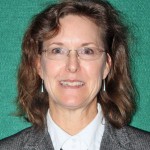
Nancy Gibson

Nancy Gibson

Age?: Umm. How about, I have 33 years of Forest Service experience in three regions (Region 1, Montana; Region 6 Oregon; and Region 5, California) working with multiple administrative and natural resources staffs in both National Forests and a Regional Office. I’ve lived primarily in rural communities in Missoula and Stevensville, Montana; Dufur, Oregon; Yreka, Eureka and, now, South Lake Tahoe, California. I was born and raised in Tucson, Arizona.

Why did you apply for the supervisor position of Lake Tahoe Basin Management Unit?: Being a line officer somewhere in the Western United States has been a long-held career goal of mine. When I took a 120-day temporary assignment to the Lake Tahoe Basin in the winter of 2007, this place went to the top of my list for a unique place to live and work. My tenure on the Six Rivers National Forest was a particularly valuable springboard because of the concerted restoration activities and key emphasis on hydrologic systems in the coastal range. I believe my administrative schooling and natural resources-based experiences mesh very well for the leadership tasks of this position.

What do you anticipate will be the most significant differences between being a deputy supervisor and now being supervisor?: Any differences will be subtle given my emphasis on teamwork between these two positions. Typically, there isn’t a legal distinction in delegated authorities between the deputy forest supervisor and forest supervisor. I will provide leadership direction in determining program priorities while working closely with the deputy to ensure we are speaking with one voice. From an organizational standpoint, the deputy will tend to focus on operational functions and the supervisor will focus on external relationships. Again, these functions will, at times, be interchangeable. This is a successful model I’ve witnessed in my past two assignments and will likely adopt here.

In the Six Rivers National Forest where you last worked the archaeological dig programs at the Chinese mining camps were popular for the public to participate in. Do you think doing something like that in cooperation with the Washoe Tribe might be instituted in the Lake Tahoe Basin? Why or why not?: The Passport in Time program is a valuable avenue for engaging the public in understanding past experiences for better cultural awareness. Whether or not we would look at local participation depends on a number of factors, including the desire of local partners, such as the Washoe Tribe, current staffing availability, and funding via appropriated dollars or partnership contributions. I’m somewhat familiar with the very successful Conservation Education program of the basin and will delve deeper into these and other opportunities as I progress in my tenure.

The U.S. Forest Service was responsible for safety on rivers like the Smith in your former jurisdiction. Might the USFS look into doing something like that on the Upper Truckee River? Why or why not?: Public safety is a shared responsibility of a variety of public entities. Again, I will become more familiar with such local cooperative agreements in the months ahead. Generally speaking, the Forest Service takes a lead role in natural resources management and protection within its boundaries while other agencies take the lead, and we assist, with regard to public safety. Oftentimes, due to our remote administrative sites, Forest Service personnel are “first responders.” However, this doesn’t preempt the responsibilities of other public resources such as city/county fire departments, search and rescue, and the like for whom we play a supporting role.

Fire lookouts generated cash at your last job as overnight venues for backpackers. Could you see implementing some sort of backcountry hut system in Desolation Wilderness or in cooperation with an entity like the Tahoe Rim Trail Association? Why or why not?: My familiarity with the Lookout Rental Program stems from experiences on the Bitterroot and Mt. Hood National Forests (Montana and Oregon, respectively) with respect to existing decommissioned administrative sites (lookouts). Again, the management of such sites presents a future commitment of staffing and funds and, if penciled out, could very well be self-sustaining and worth looking into. With respect to the Desolation Wilderness, much depends on what infrastructure already exists and whether or not any proposals are in keeping with the spirit of the Wilderness Act. Of course, pursuing these opportunities is best done with an eye toward partnerships, which, through local commitment, is one of the best ways to ensure a good idea sticks.

What are your thoughts about engaging the public in being volunteers on National Forest lands? Most of the Desolation Wilderness volunteers are from outside the basin and some inside the basin who have tried to participate have had negative experiences.: The Volunteers in the National Forests Act of 1972 was designed especially for the purpose of engaging local volunteers in the recreational and conservation education activities of the National Forest. I’m a true believer in the benefits of this act and have used this authority many, many times. I’m curious to hear any specifics regarding the negative experiences because I believe volunteer programs of the Forest Service are of real benefit to both the Forest Service and our rural communities in terms of gaining experience and understanding of our public service role.

Money is always an issue. The federal government – of which your agency is part of – almost shutdown this spring. Funding for projects in the basin is evaporating as cash from the Southern Nevada Public Lands Management Act dry up, plus the Lake Tahoe Restoration Act reauthorization is languishing in Congress. How do you cope with a stagnant or declining cash flow?: In general, we operate on annual appropriations and it is always a challenge if the pendulum of federal funding swings too quickly in either direction. The best we can do is spend a bit of concerted effort in workforce planning to forecast anticipated resources needs and obligations while developing a skilled workforce to match those needs. Target accomplishment is not only specific to meeting the current needs as designed through these appropriated or other funds (such as SNPLMA) but also to insure we are well positioned for resources challenges five- to 10-years out.

Each person who occupies the White House seems to change the rules about roads on Forest Service property. What is your philosophy on roads?: A common adage for roads is nobody likes them, but everybody uses them. My philosophy is best depicted as the wise management of roads that can be maintained, both environmentally and financially, over time. That being said, what we can’t necessarily afford today may also be the best level of access needed in a fire suppression activity, as well as a resources restoration and monitoring activities, today and into the future. Like many things driven by the uncertain nature of the natural world, it is sometimes best to take heed on a case-by-case basis without unnecessarily jeopardizing future opportunities.

The Tahoe National Forest has two people who work on avalanche forecasting. LTBMU has zero. Any thoughts about increasing the basin’s number?: We’re fortunate that the Sierra Avalanche Center, a partnership with the Tahoe National Forest, actually forecasts for the entire Central Sierra, including the Lake Tahoe Basin. The Lake Tahoe Basin Management Unit features a link to the center’s advisories on our main webpage, to assist those planning backcountry excursions.

Fuels reduction has been a hot topic in the basin following the destruction of 254 houses in the June 2007 Angora Fire. Most of the 3,000-plus acres that burned on the South Shore belong to the USFS. What is your philosophy when it comes to preventing a catastrophic fire?: Prevention, on the part of public and private landowners, is key and I will continue with the basin’s focus on an aggressive hazardous fuels reduction program. Prevention carries with it a dual responsibility. I am very familiar with the idea of defensible space, but, for my own benefit as a prior landowner, prefer the term “survivable” space. I would hate to see a firefighter or any emergency responder die or become seriously injured in the course of protecting property that has, by the nature of its location, created an extreme vulnerability. For my own property, I did brush work that didn’t require anyone to “defend” it. Rather, I created fire protection zones that, should a fire come through, the structure would likely survive or, if it didn’t, I would know I did what I could and no lives would be lost. We can only operate within the scope of public lands (and public land interface) within the funding established for this purpose. Other property owners must heed the risks they’re willing to take in managing what fuels exist in their immediate vicinity along with the building and landscaping materials they use in their structures.

What type of outdoor recreation activities do you like to partake in?: I do, and have done, many things on a seasonal basis. Typically, I take day hikes, camp, and generally like to explore the surrounding areas, both indoors (museums, lighthouses, historical sights) and outdoors (mountain peaks, lakes, rivers and streams). I also mountain bike, though am an admitted novice. In Montana, I regularly ice fished and cross country skied throughout the winter months and backpacked during the summer. Now, on many of my free weekends, my husband and I like to arrange visits with our children; son, Brady, in Klamath Falls, Ore., and daughter, Brenna, in San Francisco.


Editorial: Killing is not the answer to world peace

Can the death (killing) of one man change a world?

Time will answer that question.

Clearly, the confirmation of Osama bin Laden having taken his last breath May 1 in Pakistan will reverberate throughout the world.

Bin Laden, 54, was the mastermind behind 9-11 nearly 10 years ago.

“Justice has been done” is what President Obama told the world when he took to the airwaves about 8:40pm Sunday night.

Crowds gathered outside the White House – cheering, singing the national anthem.

Bin Laden, as some have said, was the face of terrorism. His image will not be erased for years to come. One has to wonder whose face might become the poster child for terrorism as the world moves forward.

Terrorism should never be tolerated. Differences among people will always exist. Hijacking planes, flying them into buildings and killing more than 3,000 innocent people is such an incredibly heinous crime that no explanation for why it happened will ever be acceptable.

The United States government is not perfect. No religion is perfect. No person is perfect.

But does violence and killing really solve anything?

Does this one death justify the killing of thousands on Sept. 11, 2001? Obama, and apparently the United States government as a whole, say “yes”.

But this murder with the blood on the hands of the United States does not change the philosophy of bin Laden’s followers.

It is simplistic to believe negotiating and compromise will foster amicable relationships. But it has also been proved that invading countries that never had weapons of mass destruction is a senseless waste of American lives. The money and other resources spent in Iraq and Afghanistan are secondary to the thousands of soldiers and civilians who have lost their lives.

An eye for eye – is that what the United State has come to?

Lake Tahoe News is not a supporter of terrorism at any level. It is also not a supporter of violence.

Killing people one does not agree with (even if for incredibly good reason) is not the way people in a country that believes in human rights should ever behave.

The United States has a penchant for switching teams. There was a time when bin Laden was the good guy according the federal government; same with Augusto Pinochet in Chile.

Lake Tahoe News is no friend of these terrorists. But what Lake Tahoe News wants is for the citizens of the United States to become actively engaged in what the federal, state and local governments are doing. The government is the people. Does what the government at all these levels is doing represent you? If not, what are you going to do about it?


Osama bin Laden dead; crowds celebrating in U.S.

By Peter Baker and Helene Cooper, New York Times

WASHINGTON — Osama bin Laden, the mastermind of the most devastating attack on American soil in modern times and the most hunted man in the world, was killed in a firefight with United States forces in Pakistan on Sunday, President Obama announced.

In a dramatic late-night appearance in the East Room of the White House, Mr. Obama declared that “justice has been done” as he disclosed that American military and C.I.A. operatives had finally cornered the Al Qaeda leader who had eluded them for nearly a decade and shot him to death at a compound in Pakistan.

“For over two decades, Bin Laden has been Al Qaeda’s leader and symbol,” the president said in a statement carried on television around the world. “The death of bin Laden marks the most significant achievement to date in our nation’s effort to defeat Al Qaeda. But his death does not mark the end of our effort.” He added: “We must and we will remain vigilant at home and abroad.”

The death of Mr. Bin Laden is a defining moment in the American-led war on terrorism. What remains to be seen is whether the death of the leader of Al Qaeda galvanizes his followers by turning him into a martyr, or whether it serves as a turning of the page in the war in Afghanistan and gives further impetus to the Obama administration to bring American troops home.

The death of Mr. bin Laden came nearly 10 years after Al Qaeda terrorists hijacked four American passenger jets and crashed them into the World Trade Center in New York, the Pentagon outside Washington and the countryside of Pennsylvania. Late Sunday night, as the president was speaking, cheering crowds gathered outside the gates of the White House shortly before midnight as word of his death began trickling out, waving United States flags, shouting in happiness and chanting “USA! USA!”

Read the whole story


NV Energy profits increase

Las Vegas-based NV Energy announced Friday a financial turn around compared to a year ago.

The company had profits of $2.3 million in the first quarter of 2011, while in 2010 it posted a loss of $1.7 million.

NV Energy no longer provides electricity to the California side of the Lake Tahoe Basin. It has about 365,000 customers in Northern Nevada.

— Lake Tahoe News staff report


Varied opinions about redistricting in El Dorado County

Publisher’s note: The redistricting meeting in South Lake Tahoe is May 19 from 6-8pm at Lake Tahoe Airport.

By Carlos Alcalá, Sacramento Bee

As El Dorado County works to draw new supervisorial districts to match 2010 census figures, one of five draft maps is drawing attention – good and bad.

The county must redraw lines to reflect the county’s growth – about 25,000 more people than 10 years ago – but there are different ways to do that.

“No. 3 down there is clearly an abomination,” said Jack Sweeney, the District III supervisor, as the five maps were introduced to the Board of Supervisors last week.

The No. 3 option is also known as “the accordion” for the way it puts districts into north-south stripes that squeeze close on the west end of the county – where population is dense – and expand to the east.

But one man’s accordion crime is one woman’s ideal.

Read the whole story