Opinion: Grand jury needs to reprimand S. Tahoe City Council

To the community,

After watching the dysfunctional, capricious, dishonest and heartless tactics of the South Lake Tahoe City Council in attempting to gut Proposition 215 and target sick people, I believe the current City Council is a threat to the health and safety of the entire community and not just medical marijuana patients. Clearly, the City Council is continuing to engage in the same behavior that has already prompted the El Dorado Grand Jury to warn the City Council it is incompetent and probably guilty of criminal violations. As a result, serious questions exist regarding the legitimacy and authority of the current City Council to pass or enforce any ordinance.

Frankly, the South Lake Tahoe City Council’s selection of Hal Cole as mayor is an insult to this community, since he is the single biggest reason we have a huge crater in the middle of town. It’s now over five years since the $400-plus-million convention center-retail-hotel complex that broke ground in 2006 has become a crumbling pile of concrete and rust. Not only has the City Council failed to address this problem, it appointed the guy responsible for this crater as their new mayor.

The real reason that this huge crater can’t be fixed, is because the city never required a performance bond. In fact, then Mayor Hal Cole, who also served as the Redevelopment Agency board chairman, not only let the developer off the hook for the performance bond, Mr. Cole signed the contract first, even though the contract specified the developer must sign first. Why Mr. Cole suspended the performance bond and signed first remains a mystery and is a matter that should still be investigated by the Grand Jury.
kubbyWorst of all, on July 10, 2006, Mayor Hal Cole told the public, “The developer is assuming all the risk.”

Given that the city ended up with an enormous crater and no funds to fix it, Mayor Cole’s comment was not only false and deceptive, his re-appointment as mayor has created an unacceptable level of mistrust in our City Council.

The grand jury was also quite clear about Councilman Bruce Grego. Here is what the Grand Jury had to say about Mr. Grego and the $935.50 that was paid to him: “A member of the City Council requested reimbursement for legal fees paid to an outside law firm. The legal advice consisted of a legal opinion and preparation of a letter to the Fair Political Practices Commission. No contract had been signed and the City Council had not approved the expenditure in advance. The City Manager stated that he gave verbal approval for the expenditure. California State Law clearly states that government contracts for payment may not be backdated. All unusual expenditures should be approved in open session. The City’s Purchasing Policy and Procedure Manual calls for the presence of written contracts when professional services are sought, and makes no provision for payment and reimbursement absent the presence of a contract.”

Clearly, the grand jury has made a finding that Mr. Grego’s reimbursement was in violation of California state law, yet Mr. Grego continues to insist he did nothing wrong and refuses to return the money.

In an editorial dated July 28, 2010, the Tahoe Daily Tribune said, “The City Council’s response to the critical and scathing El Dorado Grand Jury report is embarrassing and disheartening.” The editorial then went on to point out that instead of accepting responsibility, the City Council adopted a response that was peppered with the phrases: “the city does not agree in part with the finding,” “the city agrees and does not agree in part,” and “the city does not completely agree with the statement,” among others. That didn’t fly with the Tribune, which reminded the City Council and the citizens of South Lake Tahoe, “The first step to solving a problem is admitting to having one.”

It has been over a year and neither the City Council, nor Mr. Cole, nor Mr. Grego are willing to admit they have a problem and continue to insist that we should ignore the grand jury report and trust them instead. But the 19 distinguished members of the El Dorado Grand Jury, as well as the citizens of South Lake Tahoe have learned that they cannot trust the City Council, especially if Mr. Cole and Mr. Grego are allowed to remain on the Council.

The Grand Jury concludes its report with a stern warning: “This Grand Jury is of the opinion that an accusation for malfeasance or nonfeasance by this City Council may be appropriate… The Grand Jury only touched the ‘tip of the iceberg’ in its investigation and recommends that the citizens of South Lake Tahoe get involved with their City government. It is up to the citizens to establish the kind of governance they desire, to exercise their democratic right to vote, and get a City government that works for the common good and in an efficient manner for its citizens.”

The South Lake Tahoe City Council has not heeded any of the warnings of the El Dorado County Grand Jury and continues to violate the law. It is time for the grand jury to revisit this issue and open up a new investigation.

Steve Kubby, South Lake Tahoe
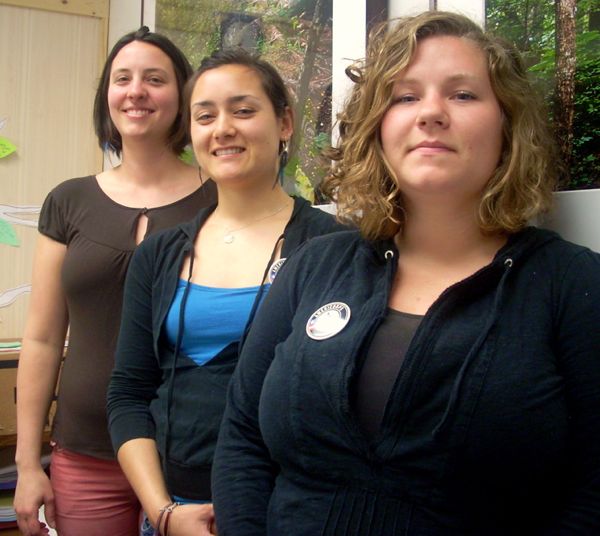


AmeriCorps members gaining real life experience in Tahoe

By Jessie Marchesseau

Each year more than a dozen AmeriCorps members help educate residents and preserve the environment in the Lake Tahoe Basin. They come from all over the country and work for little pay in exchange for valuable work experience.

“I’ve gotten an incredible amount of experience, more than I ever expected to,” said Reyna Yagi, who is serving her second year as an AmeriCorps member. “I’ve probably learned more things than I could ever learn in an entry level position with some other agency.”

Yagi, 24, is a Sierra sustainable communities assistant for the Sierra Nevada Alliance in South Lake Tahoe. She has spent both years of her AmeriCorps service working on the Truckee River Friendly Landscaping Program helping homeowners deal with stormwater and erosion control on their properties. A 2009 graduate of UC Davis, Yagi applied to be an AmeriCorps member after realizing how well some of the available positions tied in with her degree in environmental policy analysis and planning.

SNAP Regional Coordinator Allison Peeler, from left, and AmeriCorps members Reyna Yagi and Kelly Miller. Photos/Jessie Marchesseau

SNAP Regional Coordinator Allison Peeler, from left, and AmeriCorps members Reyna Yagi and Kelly Miller. Photos/Jessie Marchesseau

“I’ve seen it as such a substantial and huge move for me to make after college,” she said, “and I probably couldn’t have made a better decision, to be honest.”

Working alongside Yagi at the Sierra Nevada Alliance is Kelly Miller. Miller, who is originally from South Carolina, began her first year of AmeriCorps service in January. She holds a bachelor’s degree in landscape architecture from Clemson University. However, after working in the industry for a while, Miller realized she was not interested in doing conventional residential landscape design.

Excited about now working for a nonprofit, she says her work with AmeriCorps has given her the opportunity to explore the possibilities of using her degree for projects that are not traditional forms of landscape architecture.

Yagi and Miller are just two of 27 AmeriCorps members who take part in the Sierra Nevada Alliance’s Sierra Nevada AmeriCorps Partnership (SNAP) each year. SNAP places these members with myriad conservation agencies and organizations in the Sierra from Redding to Kernville.

“Without their work, much needed restoration and environmental education wouldn’t be taking place in the basin,” Allison Peeler, SNAP regional coordinator said.

However, SNAP is not the only organization assigning AmeriCorps members to service positions in Lake Tahoe. The Great Basin Institute also sends members to the area, mostly to fill resource management positions.

But the AmeriCorps members here are only a few of the more than 70,000 people who serve in AmeriCorps each year. Much like a state-side version of the Peace Corps, AmeriCorps was formally launched in 1993 as a means of meeting the country’s needs in education, public safety, health and environment. Since then, more than half a million Americans have participated.

Members receive a modest living stipend in place of traditional wages or salaries along with an educational award at the end of their service. While it is a welcome reward, most members choose to participate more for the experience than the compensation.

AmeriCorps member Megan Dee says she believes the best part of AmeriCorps and the Great Basin Institute is they give people like her who are unsure about their future career paths the opportunity to explore a variety of options and find their true passion.

Dee works in the Interpretive Services Department at the Lake Tahoe Basin Management Unit and has recently discovered an affinity for conservation education. As a Lake Tahoe native, she says the conservation the region’s natural environment has always been close to her heart.

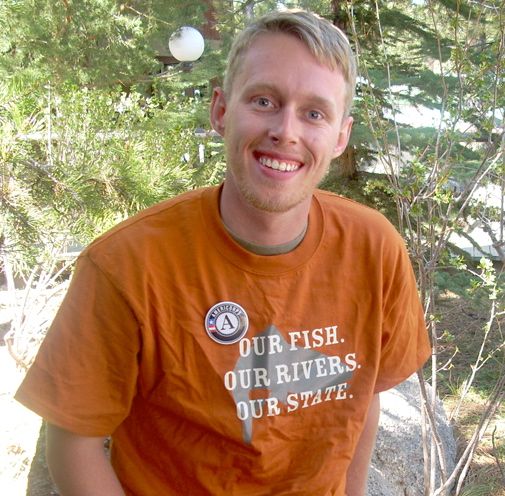
But one does not need to be raised here to appreciate the beauty and environmental concerns of the Lake Tahoe Basin. Taylor Currier, 24, hails from San Antonio, Texas. Currier is a second year AmeriCorps member and the first one to work in California Trout’s South Lake Tahoe office.

Taylor Currier, 24, is the first AmeriCorps member to work at CalTrout's South Lake Tahoe office.

Taylor Currier, 24, is the first AmeriCorps member to work at CalTrout's South Lake office.

“One thing that I love about AmeriCorps is that it’s given me the opportunity to just travel to a place that I’ve always wanted to go and live there for a year,” said Currier, who spent his first year of AmeriCorps working in Bellingham, Wash., and chose Tahoe for his second year of service. “These are destinations that I dreamed about in the flat lands of Texas.”

Currier credits AmeriCorps for providing him a type of professional experience that a person cannot get in school.

“Every day of the job brings something new that I have to tackle,” he said.

While AmeriCorps has experienced budget cuts like so many other federal programs, it has not lost funding entirely.

AmeriCorps Week is coming up — May 14-21 — and Currier and the other Lake Tahoe members will be joining AmeriCorps workers nationwide in an effort to bring more recognition to the program and its benefits to communities.


Lecture focuses on healthy cycling

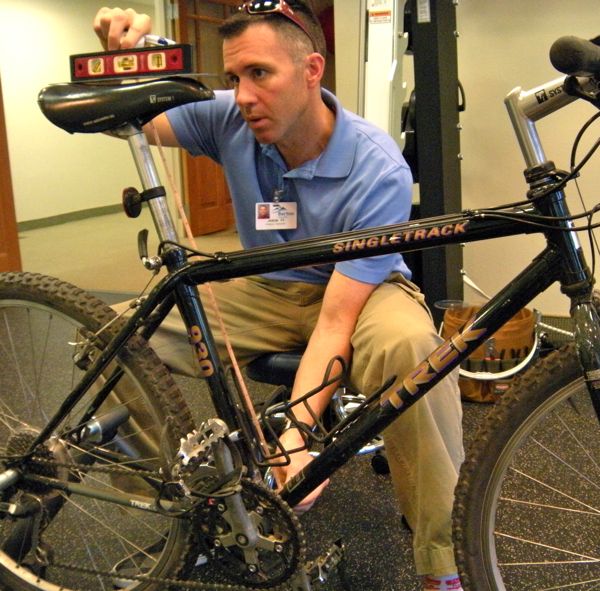
As a part of the 10-day countdown to Amgen, Barton Health physical therapist, certified strength and conditioning specialist and professional bike fitter Jason Collin will join Lake Tahoe Community College’s certified strength and conditioning specialist Walter Morris to present Pedaling to Peak Performance.

The event is May 12 from 6-8pm at Embassy Suites.

Jason Collin

Jason Collin

Collin will address reducing or eliminating back, neck and knee pain while riding.

This is one of Barton’s 2011 wellness lectures.


Death of photojournalists puts a lense cap on the truth

By Joshua Hammer, Newsweek

We depend on them for truth, for glimpses into human vileness, even as we cut their jobs and cut their space and treat their work as if it’s the most disposable part of the ever-shrinking media. When photojournalists Tim Hetherington and Chris Hondros were killed last week in Libya, it made you furious. First, furious at the madmen who took their lives. Then furious at a world so bloody fatigued by war that Tim and Chris were two of the last on the scene to see it to its horrible conclusion. War correspondents—in particular, combat photographers—have always worked with their lives on the line. But in the last few decades the body count has risen dramatically. Since 1992, 861 journalists have been killed in the field, according to the Committee to Protect Journalists. The worst years were 2006 and 2007, when more than 200 journalists died, most of them in Iraq. But this year is shaping up to be morbidly historic in its own right. Of the 21 media deaths so far this year, almost half were photographers or cameramen, many of them freelancers.

New York Times photographer João Silva lost both legs to a land mine while embedded with U.S. troops in Afghanistan. Speaking from Walter Reed Army Medical Center in Washington, D.C., where he is recovering, Silva recalled his first firefight—the exhilaration, the terror, and the clarity that kept drawing him back to the front lines. “My motivation was always to be on the edge of history, to get the message out,” he said, even as he admitted that this reason was an attempt at self-justification. “If I could go back and do it all again, would I do it? Yeah, most certainly, because this is what I do…I’m fortunate enough to get to see people’s lives in some of the most intimate moments, and record history.”

The deaths of two vital young photographers serve as reminders of mortality—and reminders, too, that in the chaos of war, not even the most experienced combat journalists are safe. On the murky front lines of contemporary conflicts, they are no longer considered untouchable observers but rather legitimate targets for kidnappings and killings. “When something like this happens, of course I pause and think, is it worth it?” says Lynsey Addario, a friend of Hondros and a longtime war photographer who was captured with three New York Times journalists in Libya last month and held under often brutal conditions for days. “Do people really care? Is it worth one of our lives? Is it worth anyone’s life?”

Both Hetherington and Hondros would undoubtedly have answered yes. They were surely motivated by many things: wanderlust, the thrill of seeing history through the shutter, a curious feeling of comfort in conflict zones. But above all, say colleagues, they were driven by a sense of mission, dedicated to the principle of truth-through-proximity.

Read the whole story


Spaghetti dinner to raise money for TAP

Bert’s Café is hosting a spaghetti night fundraiser for Tahoe Arts Project on May 11 from 5:30-7:30pm.

For $10, guests may enjoy all you can eat spaghetti, Caesar salad and garlic bread. Wine will be served by donation in a TAP logo wine glass for people to keep.

Save room for dessert because there will also be a bake sale.

Board members and volunteers of Tahoe Arts Project will be your servers for the evening.

Purchase tickets in advance at the California and Nevada visitors center, Sessions Salon or from TAP board members. Tickets will also be available at the door.

For more information, call (530) 542.3632.

Tahoe Arts Project is a nonprofit organization that presents professional performing arts in the schools and community of South Lake Tahoe.


Snippets about Lake Tahoe

hot tub• Hot Springs Spas is back at Lake Tahoe with a store between Dart Liquor and Lakeside Inn in Stateline. It’s open Wednesday-Saturday.

• Find out about Kirkwood’s June bike camps at this website.

• Annual Tour of the California Alps — better known as the Death Ride — is July 9 starting in Markleeville. For information about the cycling event, check out this website.

• Hot August Nights: The South Lake Tahoe Experience returns with a celebration of classic cars Aug. 6-9. MontBleu is the home for the classic car event that offers free family fun with automotive exhibits, vendors, ’50s and ’60s-style live entertainment on outdoor stages.

• With the abrupt departure of Sue Niehoff as VP of Business Services at Lake Tahoe Community College, the board is toying with what to do next. At the April 26 meeting it tabled an item that would have expanded the roll of Marc Sabella, director of fiscal services. The president won’t release the separation agreement between the college and Niehoff. The issue is back on the May 10 agenda.

• Here is the Sierra roadwork schedule from Caltrans for May 8-14. And in this is the Tahoe roadwork plan.


Caregiving support class in South Lake

Caregiving is a difficult and often challenging role that one can undertake, and taking the opportunity to share information and feel connected to others who are providing care is a vital step to perform this task to the best of your ability.

Take the opportunity May 12 from 5:30-7:30pm, South Lake Tahoe Senior Center, 3050 Highway 50, South Lake Tahoe, to become connected and rejuvenated at a local support group.

Refreshments will be served. Free respite care is available to qualified caregivers.

Pre-authorization is required for respite services.

Call (530) 621.6151 for more information.


LTCC accepting entries for student art show

Lake Tahoe Community College Art Department is opening entries for the 2011 annual student exhibition in May. Submissions will be taken May 18 from 8am to 6pm and May 19 from 8am to 8pm at the Fine Arts Building loading dock.

Every LTCC college student registered in art classes during the quarters of spring 2010 through spring 2011 is eligible to submit one to five pieces with an entry fee of $10 per artist (not per work) and $15 per artist for six to 10 pieces. All two-dimensional work must be properly framed, ready to hang with wire (no string) and under glass or acrylic, clip-frames no larger than 18 by 24 (uni-frames) are acceptable.

This year there will be 18 categories juried within the exhibit, including: painting, drawing, watercolor/water media, 2-dimensional figure (as subject), 2-D portraiture, printmaking, film photography for black and white and color, digital photography, digital art, 2-D mixed media, sculpture, figure sculpture, metal sculpture, cast metal sculpture, ceramic sculpture, functional ceramics, and color and design.

First, second, third, and honorable mentions will be awarded in each category. A ribbon for “Best of Show” will also be awarded to an individual piece for most outstanding work. A special award is the “People’s Choice Award,” voted by the viewing audience within the first week of the exhibit.

A separate team of jurors will select artworks to be awarded the cash prize of the Patricia Amundson Purchase Award, which will also place these works into the college’s permanent art collection. In recent years, local businesses have contributed to the awards by giving gift certificates and cash awards to award-winning students. The award winners for all categories will also be exhibiting in a group show, on display in the student gallery during the fall 2011 school year.

The 2011 Annual Student Art Exhibit will have an opening reception May 22 from 2 to 5pm with the award ceremony starting at 3:30pm. The exhibit will be open to the public and on display through June 16.

For more information, call the LTCC Art Department at (530) 541.4660, ext. 335, 251, 228 or 360.


Opinion: Time for Tahoe to embrace Hot August Nights

To the community,

I have participated with a classic car since the late ’80s in the Reno/Sparks Hot August Nights nostalgic car celebration that is said to draw as much as $300 million to that area just a stones throw away. The participants have all kinds of cars and most are quite valuable and some with paint jobs that cost in the tens of thousands. The car owners are generally middle aged and many are the retired boomers with money to spend.

In the last few days the news broke that after a year of upset about Long Beach being brought on board as a new venue for Hot August Nights they are now out. The city of Reno was run through the ringer about the Long Beach addition and many thought HAN might leave all together.

Instead of Tahoe being the kick-off city it was Long Beach and we were given a small spot starting before the Reno event Aug. 7-9. Last year Tahoe came alive with the hope of future expansion for the event. Everything went great in a very small way.

Harrah’s and Harveys did the wait and see and did little to promote the event and now with a Sunday-Tuesday probably wont do much again.

This should be a yearly car celebration that is the true kick-off to Reno. Many like the idea of being up in the cooler air and out of the Reno crowds. I know all our efforts are focused on Amgen, but if the people who survive up here had a clue about the potential of this massive event and the revenue it brings, they might finally do something that puts Tahoe on the another map and pumps us up like we should be. So often our struggling town just doesn’t get it right.

This door is open to a proven successful event that could and should be expanded upon. How to make that happen is anybody’s guess as we tend to go halfway with many things up here. Perhaps that could change.

Phil Blowney, South Lake Tahoe


South Lake Tahoe fire chief submits resignation

By Kathryn Reed

South Lake Tahoe Fire Chief Lorenzo Gigliotti tendered his resignation Thursday. His last day on the job will be Sept. 1.

In a sweeping interview in his office May 6, Gigliotti looked like a man ready to take on new challenges – possibly in the Lake Tahoe Basin – but also as one who is wistful about his six years at the helm of SLTFD and what the future might bring.

The 46-year-old said he likes to be an innovator. He calls himself an “architect of significant change.” With economic constraints placed on the city, the department has fiscal limitations that don’t lend themselves toward the changes he likes to make.

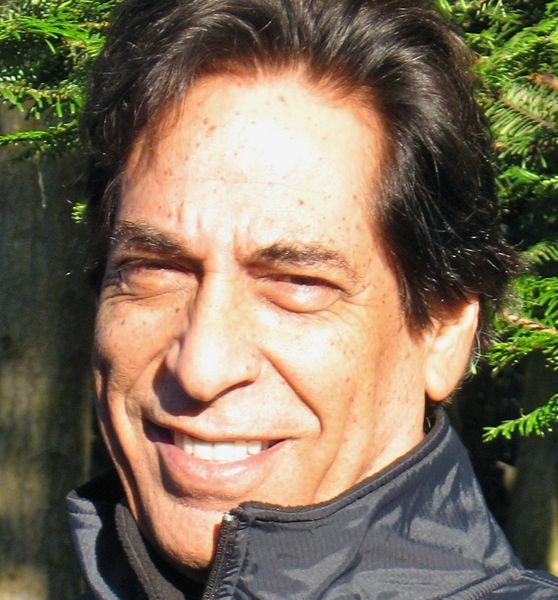
Lorenzo Gigliotti

Lorenzo Gigliotti

While he survived the round of layoffs and incentivized early retirements in the city’s reorganization plan earlier this year, Gigliotti knows his departure will be a financial savings to the city. He also survived a vote of no confidence from the firefighters union.

In his letter of resignation, Gigliotti wrote, “My hope is that any realized savings or economies from my leaving can be used to preserve the integrity of the response system the community presently enjoys.”

To Lake Tahoe News he said his decision to leave had nothing to do with all the changes City Manager Tony O’Rourke has made since coming on board in August.

“We have a real strategic plan after all these years. It’s all good stuff,” Gigliotti said. “But they need a fresh set of eyes.”

O’Rourke does not know how the hierarchy in the department will shake out.

“The good news is we have sufficient time to proceed in an orderly fashion to arrange for an effective transition,” O’Rourke said.

Besides the traditional routes of considering internal or external fire chief candidates, O’Rourke said he would look at the entire public safety structure to see if one person in charge of police and fire would be viable. The city has done this before.

“We also need to know how it’s going to go with collective bargaining because if we don’t get some of the concessions that are built into the five-year plan, that will have some weight on what direction we go,” O’Rourke said.

Time in Tahoe

Since his arrival in January 2005, Gigliotti has been part of the 2007 Angora Fire, the recent signing of another five-year ambulance agreement with Lake Valley Fire and El Dorado County, managing 43 employees two years ago to 39 today, changes in council members, and a change in who his boss is.

The dated alder wood and green paint that were in his office when he arrived are still there. Same with the well worn brown chairs.

The 2,000-magazines and other debris were hauled out. Now manuals and binders fill the space in his office on the second floor of the station near the Y.

After the 2005-06 flooding on the South Shore that required about $1.5 million in cleanup costs, Gigliotti’s responsibilities increased to be the city’s emergency response manager.

This is his third year he will manage the mutual aid between the nine California and nine Nevada fire agencies that include the basin and reach up to Reno.

It’s those interagency agreements that account for mutual aid support on a routine basis as well as during catastrophes like the 2007 Angora Fire.

In the last four years the city has bought three wildland firefighting engines. Pre-Angora it had a couple pickups that could go off-pavement.

When he talks about how the assault on the fire was executed it is with a certain calm, but also with a bit of authority.

All that Gigliotti would have changed is the weather. That Sunday nearly four years ago was so incredibly windy. When the winds shifted, it sent flames racing toward the 254 houses that were eventually reduced to ash.

When it comes to medical care, South Lake Tahoe and Lake Valley fire departments were awarded the ambulance contract by El Dorado County earlier this year after having first secured the contract 10 years ago.

One thing Gigliotti will be working on before he leaves is what to do with station No. 2. He said an internal study shows the station on Highway 50 across from South Tahoe Middle School is functioning fine.

O’Rourke wants an independent evaluation, which will be done May 18-20 when a consultant from Texas comes to town to assess the level of service and response from that station and at the two other main ones in town. A fourth station is unmanned at the airport.

In the last 10 years, the department has averaged about 2,900 calls a year.

What’s next?

Gigliotti, who with his wife has six children ranging in age from twin 9-year-olds to a 29-year-old, wants to stay in the basin. As he wraps up things in the department, he will contemplate where he goes next.

He’s been in the fire service business for 29 years, having started as a paramedic in San Diego.

Gigliotti is entrenched in Rotary and has been instrumental in getting the Cub Scouts being viable at Bijou.

When he’s not in uniform, Gigliotti can be found touring on his motorcycle.